
BUSINESS
Senate Hands Trump Tariff Power Over Russian Oil Buyers
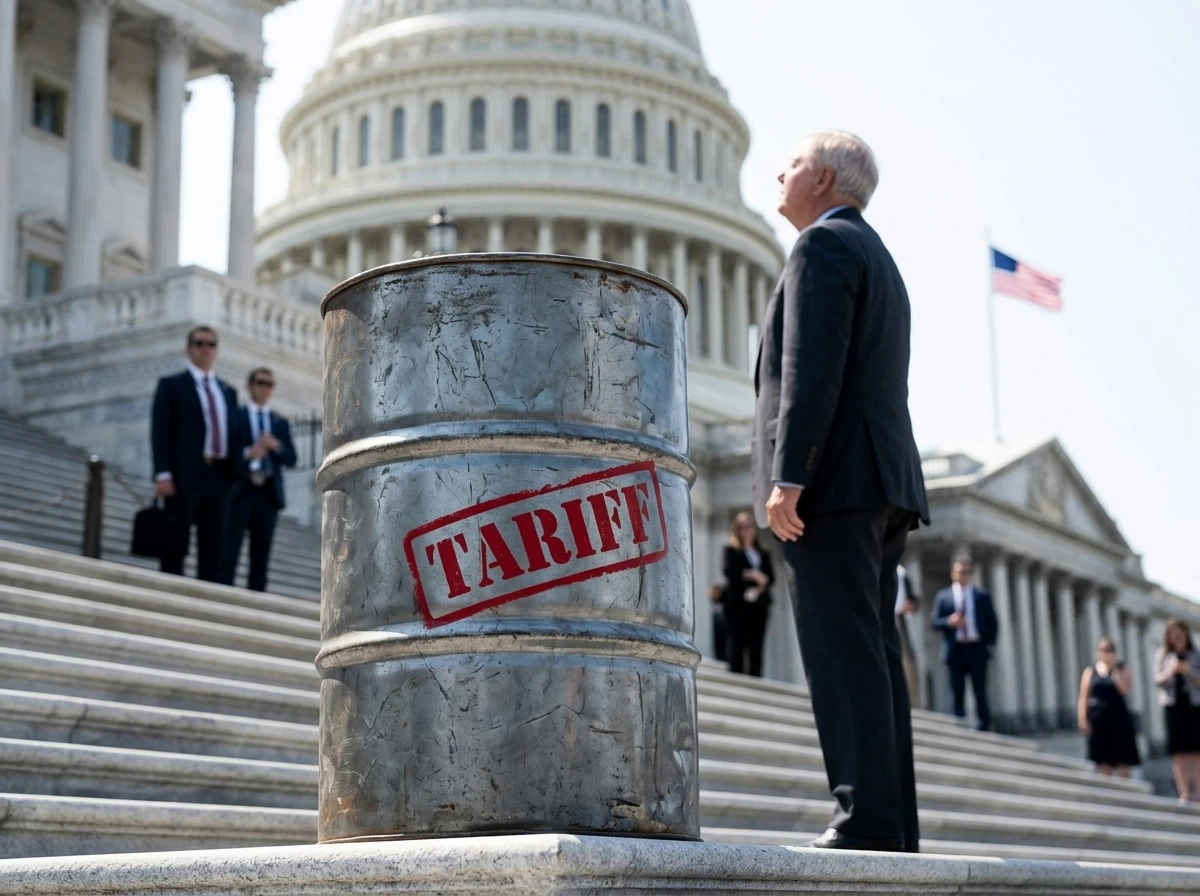
The 86-11 Senate vote on the Lindsey Graham Russia and Iran Act authorizes up to 100% tariffs on top oil buyers.

The US Senate voted 86-11 on Friday to pass the Lindsey O. Graham Sanctioning Russia and Iran Act of 2026, authorizing President Donald Trump to impose tariffs of up to 100% on goods from the top five importers of Russian oil and gas. The measure also hits Russian leaders, banks, the shadow tanker fleet and extends Iran energy sanctions authority.
Named for the late South Carolina Republican who died July 11 one day after striking a White House deal, the bill now moves to a skeptical House. Its second-order effect is new discretionary leverage over major buyers such as China and India, rather than automatic strangulation of Moscow’s war revenue.
What the Package Contains
The legislation requires sanctions on Vladimir Putin, senior political and military figures, Russian financial institutions and energy projects. It expands measures against older reflagged tankers used to move oil around existing restrictions. On Russia itself the president must raise duties to as high as 500% ad valorem.
For third countries the key new tool is tariffs of up to 100% on all goods from nations that rank among the five largest importers of Russian-origin crude oil and natural gas in the twelve months before enactment, if they continue new purchases. The same applies to the top five facilitators of sanctions evasion. A bill summary on Congress.gov lays out the full set of mandatory and discretionary steps, including investment bans and securities trading limits.
| Provision | Detail |
|---|---|
| Russia tariffs | Up to 500% on all goods and services |
| Top-five buyer tariffs | Up to 100% if new oil/gas purchases continue |
| Shadow fleet | Property-blocking on vessels transporting Russian crude, uranium, coal |
| Iran extension | Prevents lapse of energy and weapons funding restrictions, to 2031 |
| Waivers | President may waive on national-interest certification to Congress |
Exceptions exist for countries that take less than 15% of their natural gas from Russia and are actively reducing that share. The White House can lift tariffs once a country drops off the buyer or facilitator lists.
Why the Vote Landed Now
Graham and Democrat Richard Blumenthal of Connecticut had pushed versions of the bill for more than a year. Trump had preferred keeping sanctions decisions inside the executive branch after taking office in January 2025. A deal with the White House was announced July 10. Graham, just back from Ukraine, died the next day, likely from an aortic tear.
His sister Darline Graham, appointed to the seat, helped carry the final vote. Ukrainian President Volodymyr Zelenskyy visited the Capitol the week before, met senators and watched early procedural votes from the gallery. After the final tally the chamber applauded as Darline Graham read the numbers.
Today, President Zelenskyy is watching from Ukraine, and Putin is watching from Moscow. I would like to think Lindsey Graham is watching, too. Today we say to the people of Ukraine: You are not alone. And today we say to Vladimir Putin: You will not conquer Ukraine.
Sen. Richard Blumenthal said those words on the floor. The Ukrainian embassy in Washington called the passage a timely step that strengthens pressure on Russia.
The Five Buyers in the Crosshairs
Media reports and aides have frequently named China, India, Slovakia, Hungary and Azerbaijan as the current top crude purchasers. Independent trackers show some variance. According to the Centre for Research on Energy and Clean Air, in recent months China accounted for 50% of Russian crude exports while India took 36%. Turkey often ranks high on oil products and overall fossil fuels.
- China: Largest buyer by volume and revenue, roughly 47-50% of crude; also major pipeline gas customer.
- India: Second-largest crude buyer at 36-38%; refiners have swung between Russian discounted barrels and Middle East alternatives depending on sanctions pressure and Hormuz risks.
- European holdouts: Hungary and Slovakia remain notable pipeline or product customers inside the EU; France and others still take LNG.
- Others in mix: Azerbaijan, Turkey and occasional East Asian or Middle East players appear depending on the exact twelve-month window and data source chosen at enactment.
The final list will be set by the administration after the bill becomes law. That flexibility is the point. India has already faced earlier tariff pressure and Rosneft/Lukoil sanctions that pushed temporary diversification, only for Russian barrels to rebound when Gulf supplies tightened.
Guardrails, Waivers and the House Fight
Democrats and some Republicans worried about giving Trump open-ended tariff tools that have already raised import costs. An amendment by Sen. Rand Paul (R-Ky.) and Sen. Ron Wyden (D-Ore.) to strip the tariff powers failed. Only Paul among Senate Republicans voted no on final passage; most of the 11 no votes came from progressive Democrats.
Sen. Raphael Warnock (D-Ga.) extracted a written commitment from U.S. Trade Representative Jamieson Greer on guardrails. Tariffs would come off once countries leave the buyer or facilitator lists. Warnock said the choice should not be between checking Putin and checking an expansive tariff regime; if the president oversteps, courts remain available.
What we know
- Senate passage is final at 86-11; bill text includes national-interest waivers.
- House returns from recess August 31; leadership has not committed to a floor schedule.
- Trump has signaled support after the July deal with Graham.
What’s unconfirmed
- Exact top-five list and data source the administration will use.
- Whether and how quickly any tariffs would actually be imposed versus waived.
- House amendment strategy from Democrats led by Rep. Gregory Meeks, who calls the tariff authority too broad and potentially weaponized against Americans.
Meeks and others note a separate House-passed Ukraine aid and Russia sanctions package from June already exists. Slim GOP majorities mean any conference or rewrite could narrow the secondary-tariff language.
Trade Leverage That Outruns the Battlefield Effect
Russian oil revenues have already fallen under Ukrainian drone strikes on refineries, lower prices and earlier sanctions. Floating storage hit high levels earlier this summer. Codifying more sanctions and targeting the shadow fleet adds friction. Yet analysts note that without tight enforcement and stable alternative supplies from the Middle East, Asian buyers will keep shopping for discounted barrels.
The sharper near-term pressure lands on the buyers. For India the choice is energy security versus risk of 100% U.S. tariffs on its exports. Past rounds produced temporary shifts to Saudi and Iraqi crude, then rebounds when the Strait of Hormuz tightened. China has answered earlier tariff escalations with rare-earth export controls that hit U.S. and European defense and tech supply chains. Another 100% round risks the same cycle of retaliation and negotiation rather than clean compliance.
U.S. importers and consumers sit downstream. Tariffs on Chinese or Indian goods would raise prices on a wide range of products even if framed as Russia policy. That is the second-order reality: a Ukraine-support vehicle that expands executive trade tools at a moment when Trump has already used tariffs aggressively, drawing Trump ire over energy major profits and export policy.
Europe receives more carve-outs. The bill’s design protects allies reducing gas dependence while focusing secondary pressure on the largest non-allied buyers. Crowd reaction on X quickly noted the asymmetry: senators publicly named India and China as main culprits, yet the text leaves pure discretion and European exceptions.
How This Fits the Longer Sanctions Arc
Earlier Graham-Blumenthal drafts carried 500% secondary tariffs across a wider set of countries. Negotiations with the White House cut that to 100% and limited it to top-five lists, adding the Iran extension Trump wanted and the shadow-fleet language. The result is more targeted on paper and more usable by the president in practice.
Similar secondary pressure has appeared before. U.S. sanctions on Iranian oil buyers and the earlier Russia price-cap regime both relied on enforcement and alternative supply. Tanker workarounds chipping at Iran leverage show how fleets adapt. The new bill tries to close that gap by going after vessels and facilitators directly.
Congress has repeatedly asserted itself on foreign policy tools when the executive preferred flexibility. The same dynamic appears in other files, including how Congress holds real power on nuclear deals. This vote is the latest example of lawmakers writing their preferences into statute while still leaving the president room to calibrate.
What the Numbers and Voices Show Right Now
Russian fossil-fuel export revenue was still running hundreds of millions of euros per day in June even after a 1% monthly drop, with China alone taking more than 40% of the top buyers’ share. India set a monthly crude import record in some tallies. Those flows fund the war; they also keep Asian refiners supplied at a discount.
Blumenthal and Darline Graham framed the vote as moral and strategic solidarity. House Democrats frame the same text as a tariff Trojan horse. Both readings can be true at once. The bill’s design makes the president the decisive actor after any House passage and signature. Waivers, timing, list methodology and enforcement intensity will determine whether the main impact is tighter Russian cash flow or a new round of bilateral trade friction with New Delhi and Beijing.
The Senate has done its part. The consequential choices now sit with the House calendar and the White House.

-
 TECH1 year ago
Where Garmin Watches are Made and How They are Assembled
-

 AUTO3 months ago
Tesla’s Roadster Is ‘a Few Weeks Away,’ Says Its Chief Designer
-
 NEWS10 years ago
Samsung Releases Galaxy Note7 TV Ad as Reddit AMA Leaks Specs
-
 NEWS10 years ago
Android 7.0 Nougat Rolls Out To Nexus Devices With New Emoji, Features
-
 FINANCE9 years ago
Cardano Price Surges as ADA Enters the Crypto Top Ten List
-
 NEWS10 years ago
Pre-Order the First Camera Made for Facebook Live Streaming Video
-
 FINANCE1 year ago
Binance Suspends Trading and Withdrawals for a System Upgrade
-
 FINANCE9 years ago
RChain Price Jumps Nearly 150% to a New All-Time High of $2.03