
FINANCE
Oil Slips as Tanker Workarounds Chip Away at Iran Leverage
Crude eased 1% on 39 Bab el-Mandeb exits even after fresh US-Iran strikes and a Damietta drone hit.

Brent crude slipped to $89.46 a barrel and West Texas Intermediate to $83.54 on Thursday, both down about 1% from Wednesday’s close, as ship-trackers reported 39 commodity carriers clearing the Bab el-Mandeb Strait even after fresh US strikes on Iran and a drone hit on LNG tankers in Egypt.
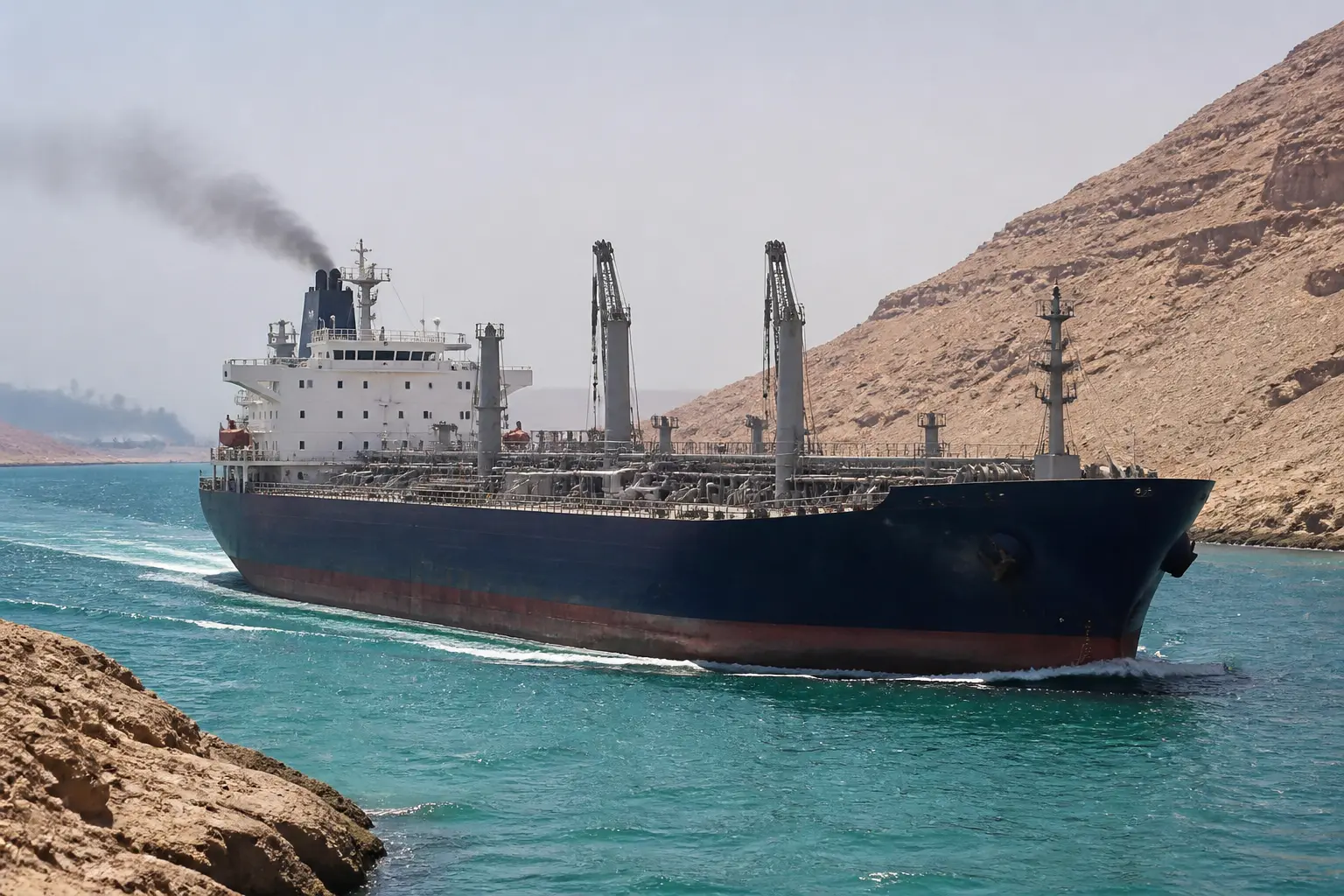
Traders looked past the headlines to the physical flows still leaving the region. Hormuz traffic stayed thin, yet oil kept leaking out through other channels.
Fresh Strikes Meet Steady Tanker Counts
US Central Command said American forces began launching strikes against Iran at 8 p.m. ET Wednesday. The command called the action a powerful response to yesterday’s attempted attacks on US forces in the Middle East. Iran had fired missiles at US troops in Jordan. US and Saudi forces hit Iran-aligned groups in Iraq that were reportedly preparing strikes on Saudi energy sites.
Egypt confirmed an explosion at the Damietta LNG terminal. Maritime security firm Ambrey and shipping sources identified a drone strike on the US-owned floating storage tanker Energos Winter; fire spread to the LNG carrier Gaslog Salem. No casualties were reported. Egyptian authorities later said an investigation was under way and denied a confirmed drone attack in some statements.
Houthis claimed further action against Saudi shipping in the Red Sea. Yet the price reaction stayed muted.
| Benchmark | Price | Change |
|---|---|---|
| Brent crude | $89.46 | about -1% |
| WTI crude | $83.54 | about -1% |
| Bab el-Mandeb exits (Tue) | 39 carriers | highest since Jul 19 |
| Hormuz commodity ships (Tue) | 8 | mostly subdued |
Kpler data showed 39 ships through Bab el-Mandeb on Tuesday, with 17 exiting. Three Aframax tankers carried crude among the exits. Only a handful of ships moved through Hormuz the same day.
Why the Market Looked Past the Headlines
Ship-tracking evidence of continued movement outweighed the military updates. Traders treated the attacks as serious but not yet closing the remaining exit routes.
IG Group analyst Tony Sycamore told Reuters that overall volumes are reduced, yet oil continues to leak out through multiple channels and additional workarounds are being explored. The longer the situation lasts, he said, the more those alternatives erode Iran’s leverage over the Strait of Hormuz.
That reading matched the crowd view on X: physical flow data, not the strike count, set the tone for the session. Prices eased after recent sharp gains once the tanker numbers hit screens.
- Bab el-Mandeb traffic rebounded to a multi-day high even with Houthi threats active.
- Specific crude cargoes still cleared southbound toward the Gulf of Aden and beyond.
- Some ships may sail with transponders off, so actual flows could be higher than AIS shows.
- China has held direct talks with Houthis to keep its tankers moving through the Red Sea.
The result was a classic fade of geopolitical premium once the tankers kept sailing.
Workarounds Quietly Cut Iran’s Chokepoint Power
Normal oil flows through Hormuz once averaged a 20 million barrels per day average, roughly one-fifth of global petroleum liquids consumption and more than a quarter of seaborne oil trade. In the first half of 2025 the figure held near 20.9 million b/d. Current daily ship counts sit at a small fraction of that baseline.
Saudi Arabia and the UAE already operate pipelines that bypass Hormuz. The EIA estimates about 2.6 million b/d of spare capacity on those routes could be available in a disruption. Saudi’s East-West line to Yanbu and the UAE’s line to Fujairah have already seen heavier use in earlier Red Sea disruptions. Iran’s own Goreh-Jask pipeline offers limited additional capacity.
Every extra week of constrained Hormuz traffic pushes more volume onto these alternatives and onto Red Sea or Cape routes. The second-order effect is structural: Iran’s ability to hold global oil hostage shrinks as buyers and producers lock in the workarounds.
Middle Distillates Carry the Real Pain
Crude prices can ease while product markets scream. ING commodity strategists noted that Saudi oil infrastructure is increasingly targeted and the risk of prolonged supply disruptions grows, especially in middle distillates. Crack spreads are still breaking records.
The ICE gasoil crack above $70 per barrel hit record levels. The prompt gasoil timespread moved into a backwardation above $80/bbl. Little near-term relief is visible.
Stats snapshot
- Jazan refinery: 400,000 b/d Saudi Aramco unit shut after Houthi strike, expected offline into mid-August.
- Gasoil crack: broke above $70/bbl to records.
- Timespread: backwardation above $80/bbl on prompt ICE gasoil.
- OPEC+ path: 188 kb/d September increase still on track, then likely pause.
A confirmed Jazan outage removes refined product supply just as Persian Gulf and Russian disruptions already tighten the complex. Diesel and jet buyers feel the pinch first.
What We Know About the Expanding Front
What we know
- CENTCOM confirmed new strikes on Iranian targets in response to attacks on US forces.
- Iran fired on US positions in Jordan; US-Saudi forces hit groups in Iraq.
- Damietta saw fire on two LNG vessels; Ambrey and traders reported drone involvement.
- Houthis claimed attacks on Saudi tankers and earlier strikes on Saudi sites.
- 39 commodity ships moved through Bab el-Mandeb on Tuesday per Kpler.
What’s unconfirmed
- Exact damage extent and downtime at Damietta beyond the two tankers.
- Whether further Iranian or proxy strikes will hit major Saudi export infrastructure.
- How quickly Hormuz traffic can recover if diplomacy advances.
- Full scale of any silent (AIS-off) tanker movements.
The fresh US and Saudi strikes on Iran-aligned targets keep the military track hot even as commercial shipping finds paths around the worst choke points.
Asia Feels the Freight and Product Squeeze First
Eighty-four percent of the crude and condensate that normally moves through Hormuz heads to Asia. China, India, Japan and South Korea take the bulk. Those importers already pay higher freight for longer routes and face tighter middle-distillate balances.
India’s refiners and banks have felt earlier waves of the same shock. A sustained elevated crude and product complex adds to the crude shock pressure on Indian bank stocks and complicates rate-cut hopes. Equity markets elsewhere have shown the flip side: a Sensex lift as oil eases and FIIs buy when the immediate premium fades.
European gas markets also bounced on the same tension. Qatar LNG force majeure extensions and lower EU imports leave storage below seasonal norms heading into winter.
How Earlier Chokepoint Crises Played Out
Past Hormuz scares and Red Sea disruptions produced the same pattern: an initial price spike, then rapid adaptation via pipelines, inventory draws and longer sailings. Freight rates and product cracks often stay elevated longer than the crude benchmark.
This episode fits. Crude has already given back part of its jump. The adaptation layer (Bab traffic rebound, pipeline diversion, alternative routing) is visible in the data within days. The unfinished business sits in refined products and the risk that Saudi facilities take further hits.
OPEC+ still plans a modest September output rise before pausing. Paper barrels and actual barrels remain two different stories while physical logistics stay disrupted.
Traders are betting the workarounds hold. Every successful transit that bypasses Hormuz makes the next one easier and Iran’s leverage thinner. The same disruption that calms the crude screen is quietly rewriting the map of Middle East oil exits, while diesel buyers keep paying the highest cracks on record.

-
 TECH1 year ago
Where Garmin Watches are Made and How They are Assembled
-

 AUTO3 months ago
Tesla’s Roadster Is ‘a Few Weeks Away,’ Says Its Chief Designer
-
 NEWS10 years ago
Samsung Releases Galaxy Note7 TV Ad as Reddit AMA Leaks Specs
-
 NEWS10 years ago
Android 7.0 Nougat Rolls Out To Nexus Devices With New Emoji, Features
-
 FINANCE9 years ago
Cardano Price Surges as ADA Enters the Crypto Top Ten List
-
 NEWS10 years ago
Pre-Order the First Camera Made for Facebook Live Streaming Video
-
 FINANCE1 year ago
Binance Suspends Trading and Withdrawals for a System Upgrade
-
 FINANCE9 years ago
RChain Price Jumps Nearly 150% to a New All-Time High of $2.03