
NEWS
Wyndham ChatGPT App Turns Hotel Search Into a Gate Fight

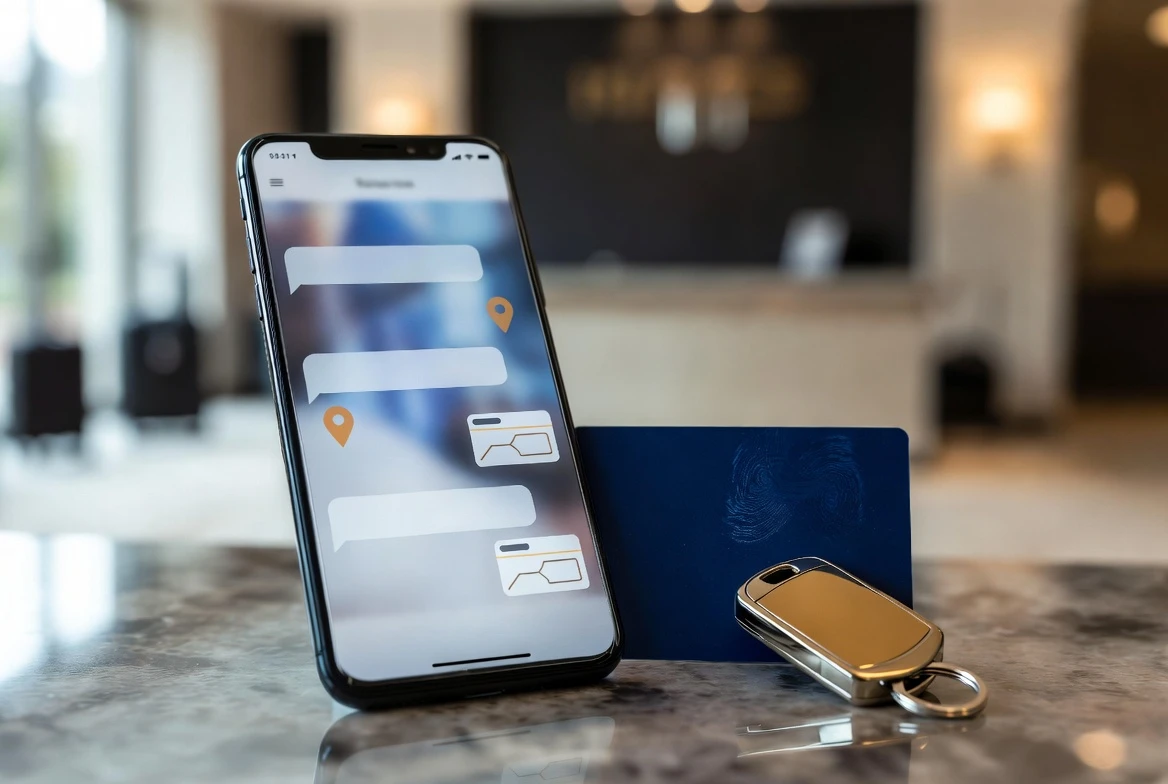
The Wyndham ChatGPT app puts hotel search inside a conversation, letting travelers browse roughly 8,400 properties with maps, amenity filters and interactive hotel cards before moving to WyndhamHotels.com to book. The larger move is about the discovery layer, because artificial intelligence (AI, software that can generate or act on prompts) is becoming a new gate between travel intent and hotel revenue.
For Wyndham Hotels & Resorts, the Parsippany, New Jersey based franchisor behind brands such as Days Inn, Super 8 and La Quinta, the launch is a wager that the hotel chain can meet travelers before they ever open Google, Expedia or Booking.com. That makes the app less a novelty than a distribution test.
A Hotel Search Box Lands Inside ChatGPT
Wyndham announced the ChatGPT app on May 6, saying users can search its global portfolio through natural-language prompts, map navigation, filters and hotel cards inside OpenAI’s interface. The trip still closes on WyndhamHotels.com, which keeps payment and confirmation on the company’s own site rather than handing the final step to ChatGPT. The company’s Wyndham ChatGPT app announcement describes it as the first native hotel app from a major U.S. economy and midscale franchisor.
That distinction matters because Wyndham’s core customer is not usually the first target for premium travel tech. Economy and midscale hotels compete on convenience, price, roadside visibility and loyalty value. Putting those properties into a chat interface means conversational search is moving beyond luxury inspiration and into everyday trip planning.
OpenAI, the San Francisco based maker of ChatGPT, opened apps inside ChatGPT with early partners including Booking.com, Expedia, Canva, Coursera, Figma, Spotify and Zillow. Its ChatGPT apps and Apps SDK launch said developers could build interactive experiences that respond to natural language and appear inside the chat when relevant. Software development kit (SDK, a set of tools developers use to build apps) is the important phrase here, since hotel groups can now build for ChatGPT as a platform rather than wait for a search result page to send traffic.
Direct Booking Is the Prize
Hotel companies have spent years pushing guests toward brand sites and loyalty apps because direct bookings bring better customer data and cleaner margins. Online travel agencies (OTAs, third-party sites that compare and sell hotel inventory) still matter, especially for travelers who do not know which brand they want. AI assistants could sit above both camps.
Wyndham’s design shows the compromise. Travelers can discover and refine hotel options inside ChatGPT, but the booking handoff goes to WyndhamHotels.com. That keeps the brand in control at the point where loyalty sign-in, cancellation rules, ancillary offers and guest data all become valuable. In that sense, direct booking control is the commercial point of the integration.
OpenAI’s own app rules also explain why this moment is early. The company says users connect apps with permission prompts, developers need privacy policies, and future app discovery may include directories and featured placements. Those rules will shape whether hotel apps become neutral utilities, paid placement channels, loyalty extensions or something closer to an AI-era metasearch shelf.
For travelers, the shift is simple enough:
- They can ask for a hotel in plain language instead of setting filters one by one.
- They can compare location, amenities and likely trip fit without leaving the conversation.
- They still need to verify prices, policies and availability on the booking page before paying.
The Franchisee Test Is Already Underway
Wyndham’s AI pitch is aimed as much at owners as at guests. The company said it has invested more than $450 million in technology since 2018 and moved fully to the cloud in 2020. Its stack includes Aven Hospitality, Oracle, Amazon Web Services, Adobe and Salesforce, according to the same company release.
The clearest owner case sits below the ChatGPT headline. Wyndham said AI tools in its call centers reduced average handle time by 7 percent, while Wyndham Connect and Wyndham Connect PLUS, its Canary-powered guest engagement platforms, helped the most engaged hotels average more than $60,000 in incremental revenue last year. That is why owner ROI keeps surfacing in the company’s language: franchisees pay attention when a technology tool can point to labor, upsell or booking gains.
- 8,400 hotels sit in Wyndham’s portfolio for the ChatGPT search experience.
- $450 million has gone into Wyndham technology investment since 2018.
- 7% was the reported reduction in average call center handle time from AI-powered tools.
A Wyndham proxy filing added another detail: the company said it had nearly 350 agentic AI agents handling millions of guest calls and reservation requests, and that it was working with public large language models (LLMs, AI systems trained to interpret and generate language) including ChatGPT and Google AI Mode to connect hotel data directly with guests. The Wyndham proxy discussion of AI agents makes the ChatGPT launch look less like a one-off press event and more like the consumer face of a longer systems rebuild.
The Competitive Map Is Filling In
Wyndham is early in its own segment, but it is not alone in hotel AI. Hilton Worldwide, the McLean, Virginia based hotel company, launched Hilton AI Planner on hilton.com. Accor, the Paris based hospitality group, launched an ALL Accor app in ChatGPT. Choice Hotels International, the North Bethesda, Maryland based lodging franchisor, has rolled out a broader AI toolset for owners.
| Company | AI Move | Booking Path | Strategic Emphasis |
|---|---|---|---|
| Wyndham | Native ChatGPT hotel app | Redirects to WyndhamHotels.com | AI discovery plus franchisee value |
| Accor | ALL Accor app in ChatGPT | Redirects to ALL Accor booking platform | Loyalty rates, multilingual reach and brand visibility |
| Hilton | Hilton AI Planner on hilton.com | Stays within Hilton digital channels | Trip planning, property comparison and personalization |
| Choice Hotels | Choice AI tools for owners | Direct and enterprise workflows | Business travel, group demand, staffing and pricing |
The table shows two schools forming. One puts a brand’s inventory inside external AI platforms, as Wyndham and Accor are doing with ChatGPT. The other builds AI into the brand’s own website or owner systems, as Hilton and Choice are emphasizing. Most large hotel groups will probably need both.
Expedia Group, the Seattle based travel platform operator, shows why the distinction is messy. Expedia’s own ChatGPT page says travelers can explore dynamic flight and lodging results in ChatGPT, but booking happens on Expedia. The same architecture can support an OTA, a hotel group or a loyalty platform. The fight is over whose data, whose card and whose final checkout button the assistant chooses to surface.
That is a tougher fight for smaller hotel operators. A global franchisor can fund platform integrations, clean room metadata and owner training. A single independent property may depend on whatever data an OTA, Google Business Profile or old website already exposes to AI systems.
AI Search Rewards Different Content
The strongest case for Wyndham’s move comes from how AI search appears to cite sources. A March academic paper by Peiying Zhu and Sidi Chang audited 1,357 Google Gemini citations across 156 Tokyo hotel queries. The hotel AI search citation study found experiential queries drew 55.9 percent of citations from non-OTA sources, compared with 30.8 percent for transactional queries.
The study is narrow. It looked at Tokyo, one AI search system and a controlled set of prompts. Still, the pattern is useful. When a traveler asks for a cheap room near a station, the model may lean toward transactional sources. When the traveler asks for a quiet hotel with workspace, neighborhood feel and late-night food nearby, the model has more reason to pull from richer descriptions, reviews, local guides and hotel-owned content.
That makes context beats inventory the new working rule for hotel marketers. Static room lists are less useful when the query is about mood, constraints, companions and purpose.
Hotel teams now need to think about three kinds of machine-readable evidence:
- Property facts, including parking, pet rules, breakfast, accessibility, check-in windows and renovation status.
- Experience signals, including neighborhood descriptions, work-friendly details, family use cases and event proximity.
- Trust signals, including direct booking pages, recent content, consistent photos and policy language that matches third-party listings.
Platform Power Moves Upstream
The risk for Wyndham is that winning inside ChatGPT still means playing by someone else’s interface rules. OpenAI decides how apps are suggested, how permissions are shown, which experiences get featured and how checkout may work as agentic commerce matures. Google will make similar choices in AI Mode. Anthropic will make them in Claude. Hotel groups can integrate early, but they do not set the whole market design.
Travelers also have reasons to move slowly. Expedia’s own ChatGPT page warns that AI-powered results may occasionally include errors or outdated information and tells users to double-check before booking. That warning applies across the category. A hotel stay includes prices, fees, cancellation windows, room types and loyalty terms. Small mistakes can become expensive fast.
Even so, the distribution logic is hard to ignore. If travelers begin with conversational prompts, the old search funnel weakens. Brands that feed clean data into AI platforms may get discovered earlier. Brands that wait may find their properties summarized by intermediaries, stale pages or generic web snippets.
If Wyndham can turn ChatGPT browsing into measurable direct bookings for franchisees, its economy and midscale footprint gives the experiment real weight. If the traffic stays small or the platform changes the rules, the app becomes a useful test rather than a channel shift. Either way, hotel discovery just moved one step farther from the search box travelers used to know.

-
 TECH1 year ago
Where Garmin Watches are Made and How They are Assembled
-

 AUTO3 months ago
Tesla’s Roadster Is ‘a Few Weeks Away,’ Says Its Chief Designer
-
 NEWS10 years ago
Samsung Releases Galaxy Note7 TV Ad as Reddit AMA Leaks Specs
-
 NEWS10 years ago
Android 7.0 Nougat Rolls Out To Nexus Devices With New Emoji, Features
-
 FINANCE9 years ago
Cardano Price Surges as ADA Enters the Crypto Top Ten List
-
 NEWS10 years ago
Pre-Order the First Camera Made for Facebook Live Streaming Video
-
 FINANCE1 year ago
Binance Suspends Trading and Withdrawals for a System Upgrade
-
 FINANCE9 years ago
RChain Price Jumps Nearly 150% to a New All-Time High of $2.03