
NEWS
Asus Pad OLED Launch Mixes Bright Screen With Hard Limits
Asus Pad hits India August 6 at Rs 45,990 with 12.2-inch dual-layer OLED and 9000mAh battery, but early notes flag Widevine L3 and no update policy.

Asus has priced its new Pad tablet from Rs 45,990 in India, pairing a 12.2-inch 2.8K dual-layer OLED with a 9,000mAh battery and MediaTek Dimensity 8300. Sales open August 6 on Flipkart, the Asus eShop, Reliance Digital and authorised stores, with the 8GB/256GB model at Rs 49,990.
The return after years away looks sharp on paper. Early hands-on notes already point to limits that cut against the entertainment pitch.
The Hardware Package That Turns Heads
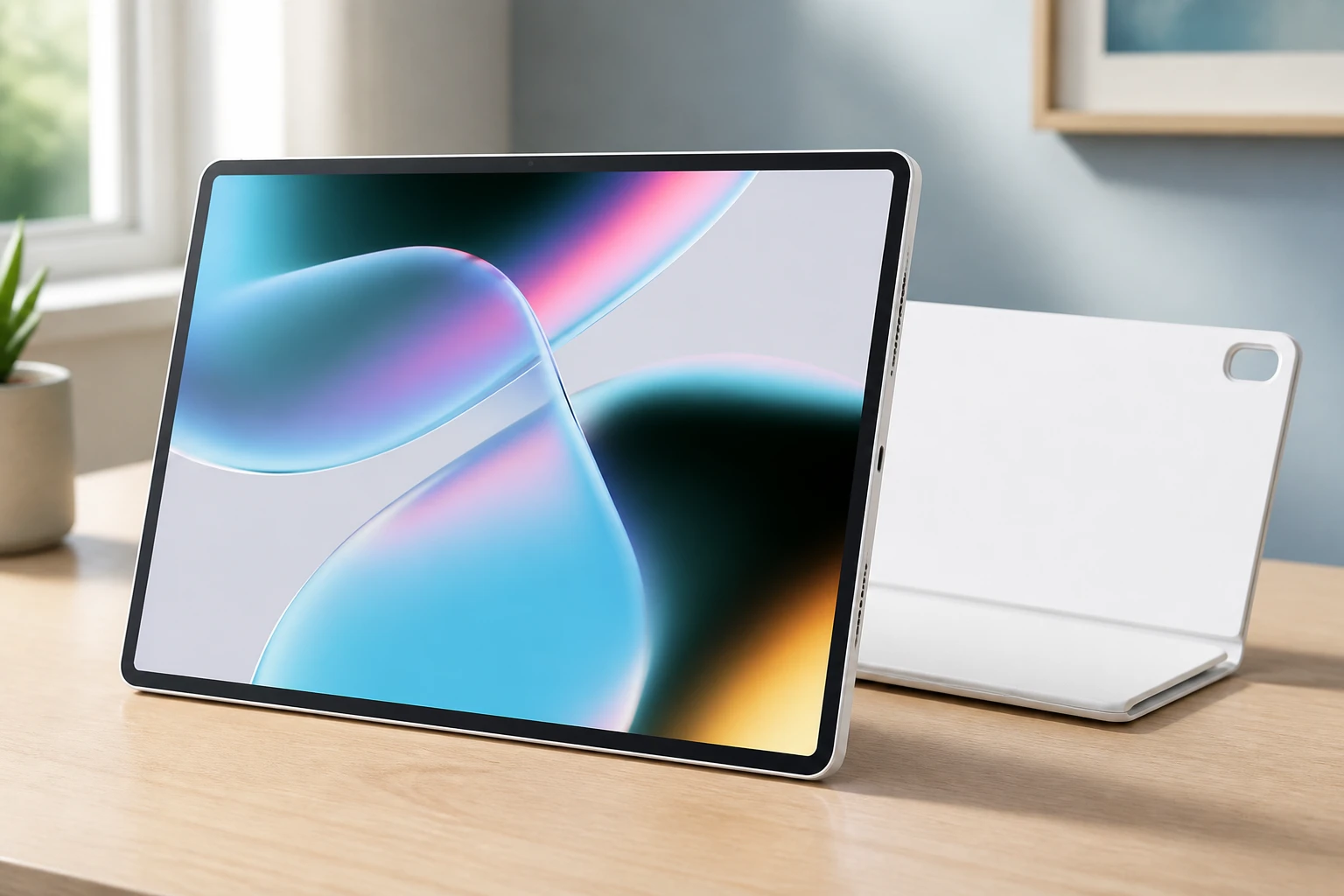
The Asus Pad T3201 measures 6.5mm thick and weighs 523g. Asus uses a magnalium chassis with fiberglass back cover and ships a protective case in the box. Colour is Pure White only.
Display is the centrepiece: 12.2-inch dual-layer OLED at 2800×1840, 3:2 ratio, 144Hz, 92% screen-to-body, 600 nits typical and 2,000 nits peak, 100% DCI-P3, Dolby Vision, TÜV Rheinland low blue light and flicker-free. Dual-layer stacks two emission layers for better efficiency and longevity than single-layer OLED.
Audio runs four speakers with Dolby Atmos. Cameras are 13MP rear with autofocus and 5MP front. Storage is UFS 3.1 with microSD to 1TB. Connectivity covers Wi-Fi 6E, Bluetooth 5.3 and USB-C with DisplayPort 1.4 and 45W PD. It supports the Asus Pen 2.0 and Bluetooth keyboards.
- Display: 12.2-inch 2.8K dual-layer OLED, 144Hz, 2,000 nits peak
- Chip and memory: MediaTek Dimensity 8300, 8GB LPDDR5X, 128GB or 256GB
- Battery: 9,000mAh, 45W charging to 50% in 30 minutes
- Software extras: Android 16, GlideX, Circle to Search, Face Login, Gemini features
Full official claims for the 12.2-inch dual-layer OLED and 523g build sit on the Asus India product page.
Price Tags Meet a Soft Tablet Market
The 8GB + 128GB model is Rs 45,990. The 8GB + 256GB jumps to Rs 49,990. Buyers get up to 12 months no-cost EMI, with instalments starting near Rs 3,833. Launch window is noon IST on 6 August 2026.
India’s tablet market has been choppy. Full-year 2025 shipments sat around 4.4 million units in some tallies, with Samsung near 37% share and Apple near 26%. Lenovo and Xiaomi fill much of the rest. Consumer demand has shown pockets of growth, yet overall volumes have contracted in recent periods. Asus is re-entering a category where Samsung still sets the volume pace and Apple holds the premium floor.
| Variant | Price (Rs) | Storage |
|---|---|---|
| Asus Pad | 45,990 | 8GB + 128GB |
| Asus Pad | 49,990 | 8GB + 256GB |
| Market context | – | Samsung ~37% share 2025 |
Those Samsung Galaxy tablet operating pressures show even the leader faces margin fights. Asus is aiming at the gap between value Android slates and true premium glass.
Why Dual-Layer OLED Changes the Viewing Math
Single-layer OLED tablets already look good. Dual-layer (tandem) adds a second emission stack. Asus says this lifts brightness consistency, cuts power draw and extends panel life. Peak 2,000 nits and 144Hz target bright rooms and smooth scrolling. The 3:2 aspect suits documents and split-screen better than pure video 16:9 panels.
The same panel technology is part of a wider OLED panel race in larger devices. On a 523g slate it becomes the main differentiator against LCD mid-rangers and older OLED rivals.
Eye-comfort certifications matter for long reading or study sessions. Asus positions the Pad for entertainment, learning and light creative work rather than pure gaming or pro video edit.
Chip, Battery and the Cross-Device Hook
The MediaTek Dimensity 8300 is a 4nm octa-core (four Cortex-A715 + four A510) with Mali-G615 GPU and NPU 780 for on-device AI. MediaTek quotes strong efficiency gains and support for high-refresh panels, LPDDR5X and fast storage. Real-world tablet scores put it in solid mid-to-upper midrange territory, enough for multitasking, casual games and 4K playback.
Battery is the other headline: 9,000mAh with 45W charging. Asus claims 0-50% in 30 minutes under lab conditions. Video playback and browsing numbers on the product page are listed as “up to” figures that will vary with brightness and refresh.
Software glue is GlideX. It lets the Pad extend or mirror screens, transfer files and share control with Windows, macOS, Android and iOS devices over wired or wireless links. One keyboard and mouse can drive multiple machines. That feature is free and multi-platform, a practical bet if homes already mix laptops and phones.
Details on the Dimensity 8300 4nm efficiency specs and on GlideX cross-device screen sharing sit with the chip and software makers.
The ASUS Pad has launched in India for ₹45,999! 12.2″ 2.8K 2000 Nits Tandem OLED Display, but HDR tuning is not good. Widevine L3, so only 480p content on streaming platforms. Dolby Atmos Speakers but not good tuning. Android 16 with no OS Updates and no multitasking features. Plastic Back.
That summary from Beebom’s account, which drew more than 15,000 views, captures the early counter-narrative circulating on X.
The Caveats That Sit Beside the Specs
Widevine L3 is the sharpest complaint. L3 restricts most streaming apps to 480p. An entertainment tablet that cannot deliver HD or HDR Netflix, Prime or Disney+ in full quality loses its main job for many buyers. Asus has not publicly confirmed or denied the level in the materials reviewed; the claim comes from early unit checks and is already shaping conversation.
Software support is another open. Asus ships Android 16 yet has not published an OS upgrade or security-patch schedule for the Pad. Several X posts call the policy “zero updates.” Competing Android tablets now commonly promise two or three major OS bumps. Buyers who want multi-year security will notice the silence.
Build is fiberglass-backed plastic rather than metal or glass. At 523g and 6.5mm it stays light, yet the feel and long-term durability differ from premium glass tablets. Speaker tuning and HDR tone mapping also drew early knocks in the same Beebom post. Multitasking features are described as basic relative to some rivals.
What early checks show
- Display and battery match the headline claims on paper
- Widevine reported as L3 on checked units (SD streaming only)
- No public multi-year OS update commitment
- Fiberglass back and plastic elements confirmed in materials
What remains open
- Final Widevine certification after any launch firmware
- Actual EMI and retail stock levels on day one
- Stylus and keyboard pricing and bundle availability by region
None of these erase the dual-layer panel or the thin chassis. They do change the value calculation for anyone whose first use is premium streaming or long software life.
Who the Pad Is Built For
Students and light productivity users get a large 3:2 canvas, Pen 2.0 support, split-screen, Circle to Search and GlideX file sharing. The included case and microSD slot add practicality. Media consumers who already tolerate 480p or use local files and YouTube will enjoy the bright OLED and Atmos speakers. Travellers gain the 523g weight and fast top-up.
It is less obvious for buyers who demand guaranteed HD streaming, three OS upgrades or glass construction. Those shoppers still look first at Samsung Galaxy Tab models or Apple iPads, even at higher prices. OnePlus and Xiaomi pads occupy the same rough price band with different software promises.
Asus last made a serious tablet push years ago with Transformer lines. The official Computex announcement details framed this as a clean return focused on everyday companions rather than gaming flagships. The India pricing under Rs 50,000 keeps it accessible. Whether the DRM and support gaps are fixed before or after launch will decide if the hardware wins converts or simply sits as an interesting also-ran.
Sales start in less than a week. The dual-layer OLED will look excellent in store demos. The fine print on streaming quality and updates will decide who walks out with one.

-
 TECH1 year ago
Where Garmin Watches are Made and How They are Assembled
-
 AUTO3 months ago
Tesla’s Roadster Is ‘a Few Weeks Away,’ Says Its Chief Designer
-
 NEWS10 years ago
Samsung Releases Galaxy Note7 TV Ad as Reddit AMA Leaks Specs
-
 NEWS10 years ago
Android 7.0 Nougat Rolls Out To Nexus Devices With New Emoji, Features
-
 FINANCE9 years ago
Cardano Price Surges as ADA Enters the Crypto Top Ten List
-
 NEWS10 years ago
Pre-Order the First Camera Made for Facebook Live Streaming Video
-
 FINANCE1 year ago
Binance Suspends Trading and Withdrawals for a System Upgrade
-
 FINANCE9 years ago
RChain Price Jumps Nearly 150% to a New All-Time High of $2.03