
BUSINESS
Shiprocket Lists 35 Percent Higher While Still Reporting Losses
Shiprocket shares debuted at a 35 percent premium to the Rs 97 IPO price, lifting market cap past Rs 9,400 crore even as the group remains loss-making on.

Shiprocket shares listed at Rs 131 on the NSE on 19 August 2026, a 35.05 percent premium to the Rs 97 upper end of the IPO band, and at Rs 129.50 on the BSE. The debut lifted the e-commerce enablement company’s market capitalisation to Rs 9,422 crore after a 99.38-times subscribed offer.
The Rs 1,617.5 crore issue, which closed 14 August, had drawn strong grey-market interest near 34-38 percent. Listing day prices sat almost exactly where that premium pointed.
Shiprocket Opens 35 Percent Above the IPO Price
The public issue combined a fresh component of roughly Rs 885 crore with an offer for sale of about Rs 732 crore. Anchor investors had already taken Rs 727 crore on 11 August. Post-issue share count reached about 72.8 crore.
Subscription broke down with QIBs near 123 times, NIIs around 89-93 times and retail near 46 times, according to exchange data. Lot size was 154 shares, or about Rs 14,938 at the top of the band.
- NSE listing: Rs 131 (+35.05%)
- BSE listing: Rs 129.50 (+33.51%)
- Post-listing mcap: Rs 9,422 crore
- Overall subscription: 99.38 times
Grey-market expectations had clustered in the mid-30s percent range in the final days, so the open delivered little surprise. Volume and early trade direction will decide how much of the premium sticks for allottees who choose to sell immediately.
How the Platform Makes Money
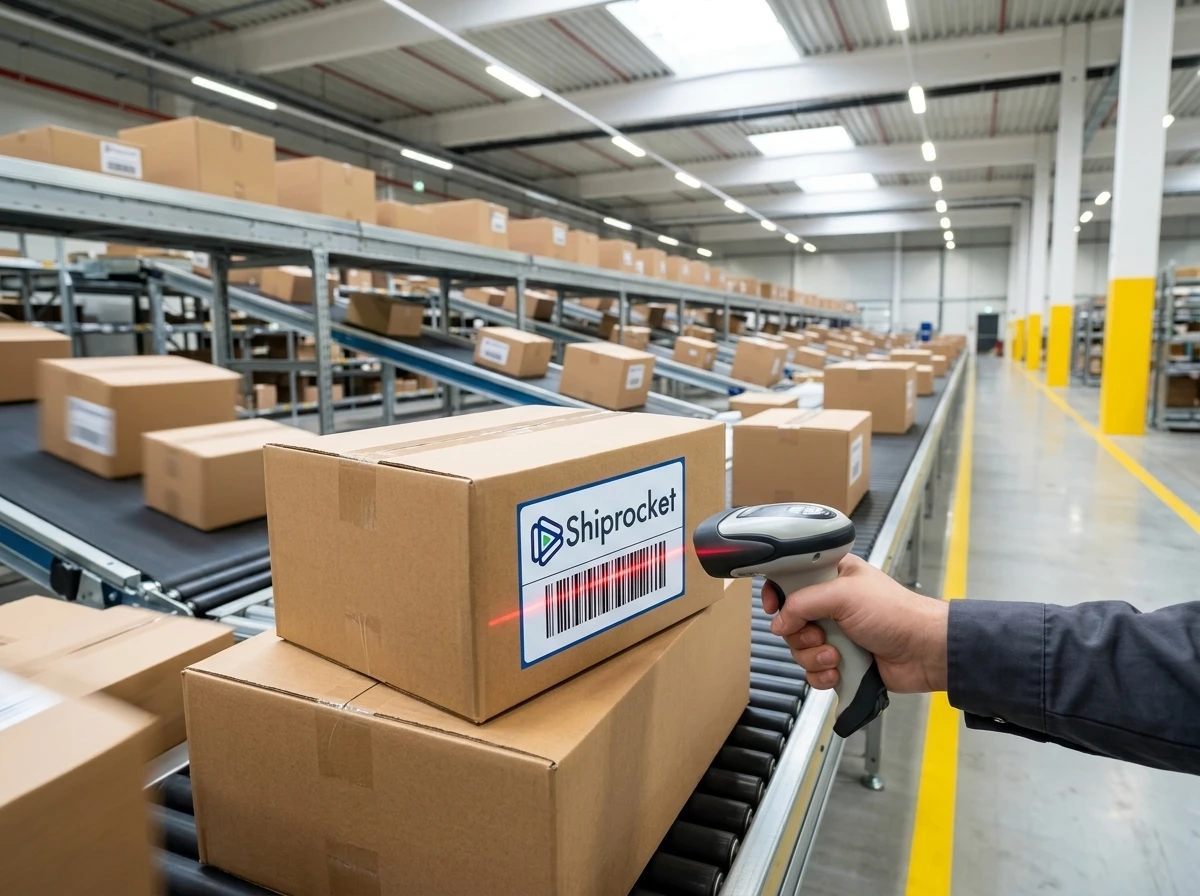
Shiprocket began as a shipping aggregator and now positions itself as a full-stack e-commerce enablement platform for D2C brands and MSMEs. Merchants connect once, compare rates across dozens of courier partners, print labels, track parcels and handle COD collections from a single dashboard.
Revenue is usage-based: fees per shipment, transaction or GMV processed. The company splits operations into two segments.
- Core business: domestic shipping and shipping applications (roughly three-quarters of operating revenue)
- Emerging businesses: cargo and fulfilment, cross-border shipping, advertising and marketing tools, capital solutions and hyperlocal deliveries
It works with more than 40 active couriers. Five of them handled the bulk of volumes in the latest year. The model is asset-light; Shiprocket does not own the trucks or hubs. It earns the spread after paying carriers and layers on software for routing, RTO risk scoring and merchant tools. Power merchants (those doing more than 100 transactions a month) form a small share of the base yet generate nearly nine-tenths of revenue.
Core Profits Still Cover Emerging Losses
Financials show a clear split. Group revenue rose to Rs 2,024 crore in FY26 from Rs 1,632 crore in FY25 and Rs 1,316 crore in FY24. Net losses stayed in a narrow band near Rs 74-79 crore. Adjusted EBITDA turned modestly positive at the group level, but the path is uneven.
| Metric (Rs crore) | FY26 | FY25 | FY24 |
|---|---|---|---|
| Revenue | 2,024 | 1,632 | 1,316 |
| Adjusted EBITDA | 18 | 7 | -128 |
| EBIT | -103 | -95 | -369 |
| PAT | -76 | -74 | -348 |
| Net worth | 1,524 | 1,491 | 1,286 |
The domestic shipping core generated healthy adjusted EBITDA near Rs 187 crore in FY26 and has been cash-positive for years. Emerging segments lost roughly Rs 169 crore on the same basis. High employee costs relative to segment revenue keep the newer lines in investment mode. Operating cash flow did turn positive at Rs 52.6 crore in FY26 after heavy outflows earlier, giving the balance sheet more room.
Customer acquisition costs in the core have fallen as organic and self-serve onboarding rose. Unique transactions climbed past 200 million. Yet the concentration risk is plain: growth in the highest-value merchant cohort has slowed to a crawl.
Why the Premium Still Leaves a Valuation Question
At the issue price the company sought a market capitalisation near Rs 7,057 crore, or roughly 3.5 times FY26 revenue. The listing pop pushed that multiple higher. Because the group remains loss-making, no meaningful P/E exists. On a retained-revenue basis after courier payouts (Shiprocket keeps only a fraction of billed value), the multiple looks richer still when set against smaller profitable software peers such as Unicommerce.
A detailed breakdown of core versus emerging margins makes the irony clear. Investors are paying for a proven, efficient shipping engine while also funding the build-out of lines that have yet to cover their costs. Fresh proceeds are earmarked for platform growth and marketing (hundreds of crores), technology, about Rs 210 crore of debt repayment that should leave the company nearly debt-free, plus inorganic opportunities and general corporate use.
Key risks sit in plain sight:
- Dependence on non-exclusive third-party couriers who could raise rates or build competing merchant tools
- Heavy revenue concentration among a few thousand power merchants whose numbers have barely grown
- Continued losses in emerging businesses that currently offset core gains
- Competitive and fragmented Indian logistics and e-commerce enablement market
The private-market valuation had once sat higher; the IPO price already reflected a haircut. The listing premium restores some of that optimism without yet proving the full platform thesis.
What Allottees and Fresh Buyers Are Being Told
Narendra Solanki, Head of Fundamental Research at Anand Rathi Shares and Stock Brokers, pointed to the still-negative operating and net numbers on annualised FY26 earnings and the absence of a P/E. He still saw structural support from India’s e-commerce growth and a profitable core that can fund upside if emerging lines scale.
We recommend investors who received allotment to book partial profits on a premium listing and hold the remaining shares for the long term.
Solanki added that the competitive market remains a concern even as fully managed infrastructure helps merchants grow.
Mahesh M. Ojha, Vice President Research at Kantilal Chhaganlal Securities, struck a similar note. Existing allottees could book partial listing gains and keep a balance for potential long-term growth while watching margins and results. Fresh investors, he said, may wait for the next one or two quarterly prints for clearer revenue growth, operating leverage and a path to profitability.
That advice matches the arithmetic of a 35 percent day-one gain on a still-unprofitable name. Retail allottees who received shares at Rs 97 can lock in a solid return without abandoning the story entirely. New money faces a higher entry point and must underwrite execution on the loss-making pieces.
From Private Peak to Public Haircut and Back
Shiprocket is professionally managed with no identifiable promoter under SEBI rules. Early and institutional holders include Temasek-linked vehicles, Zomato (Eternal), Info Edge, Bertelsmann, Lightrock, Tribe Capital and the founders. Several investor selling shareholders and limited individual sellers participated in the OFS; the largest strategic names largely stayed out of the sale, a signal they are not treating the listing as a full exit.
The company had been valued higher in private rounds. The IPO priced at a deliberate discount to that peak, a pattern also visible in other recent logistics and consumer-tech offerings, including the recent quick-commerce IPO valuation pressure seen elsewhere. Strong QIB and mutual-fund demand in the anchor and public books showed institutions were willing to underwrite the revised entry point. Retail participation was solid but secondary to the institutional book.
Merchant count sits in the low hundreds of thousands active, with annual shipments and GMV measured in the hundreds of millions of parcels and tens of thousands of crores. The platform already reaches deep into tier-II and tier-III pin codes. That footprint is the real asset the market is capitalising today.
Debt Free Balance Sheet Meets the Next Earnings Tests
After the debt repayment tranche the company should sit close to debt-free, with positive operating cash flow and a larger war chest for technology and marketing. That clean-up removes one overhang. The next tests are simpler and harder: whether emerging revenue can grow fast enough to shrink its cash burn, whether power-merchant counts and ARPU keep expanding, and whether courier economics stay favourable.
Quarterly results over the coming year will show if the listing premium was early payment for a completed turnaround or a down-payment on one still in progress. Allottees who banked part of the 35 percent gain already crystallised the market’s first verdict. The rest of the share price will track the slower verdict of the profit-and-loss statement.
Frequently Asked Questions
What does Shiprocket do for merchants?
Shiprocket aggregates courier partners and software tools so D2C brands and MSMEs can ship domestically and internationally, manage fulfilment, run marketing, access capital products and handle hyperlocal deliveries from one platform, earning fees on usage rather than owning physical logistics assets.
How large was the Shiprocket IPO and what was the price band?
The issue raised Rs 1,617.5 crore through a fresh issue of about Rs 885 crore and an OFS of about Rs 732 crore at a price band of Rs 92-97 per share, with a final issue price of Rs 97 and a lot size of 154 shares.
Is Shiprocket profitable yet?
No. The group reported a net loss of roughly Rs 76-79 crore in FY26 on revenue of Rs 2,024 crore; the core domestic shipping business is adjusted-EBITDA positive and cash generative, while emerging segments still post material losses that offset those gains.
How will Shiprocket use the fresh IPO proceeds?
Net proceeds are allocated mainly to platform growth and marketing, technology infrastructure, repayment of about Rs 210 crore of borrowings, potential acquisitions and general corporate purposes, leaving the company nearly debt-free after the repayment.
Who are the major shareholders and is there a promoter?
Shiprocket has no identifiable promoter; it is professionally managed with significant holdings historically linked to Temasek, Zomato (Eternal), Info Edge, Bertelsmann, Lightrock, Tribe Capital and the co-founders, several of whom sold shares in the OFS.
Disclaimer: This article is for informational purposes only and does not constitute investment advice. Equity investments carry risk of loss. Consult a SEBI-registered adviser before making decisions.

-
 TECH1 year ago
Where Garmin Watches are Made and How They are Assembled
-

 AUTO3 months ago
Tesla’s Roadster Is ‘a Few Weeks Away,’ Says Its Chief Designer
-
 NEWS10 years ago
Samsung Releases Galaxy Note7 TV Ad as Reddit AMA Leaks Specs
-
 NEWS10 years ago
Android 7.0 Nougat Rolls Out To Nexus Devices With New Emoji, Features
-
 FINANCE9 years ago
Cardano Price Surges as ADA Enters the Crypto Top Ten List
-
 NEWS10 years ago
Pre-Order the First Camera Made for Facebook Live Streaming Video
-
 FINANCE1 year ago
Binance Suspends Trading and Withdrawals for a System Upgrade
-
 FINANCE9 years ago
RChain Price Jumps Nearly 150% to a New All-Time High of $2.03