
NEWS
Trump’s Drill Cut Turns Readiness Into a Bargaining Chip
The order halves Ulchi Freedom Shield and scales field training, repeating 2018 patterns while risking OPCON progress and alliance consultation over Kim.

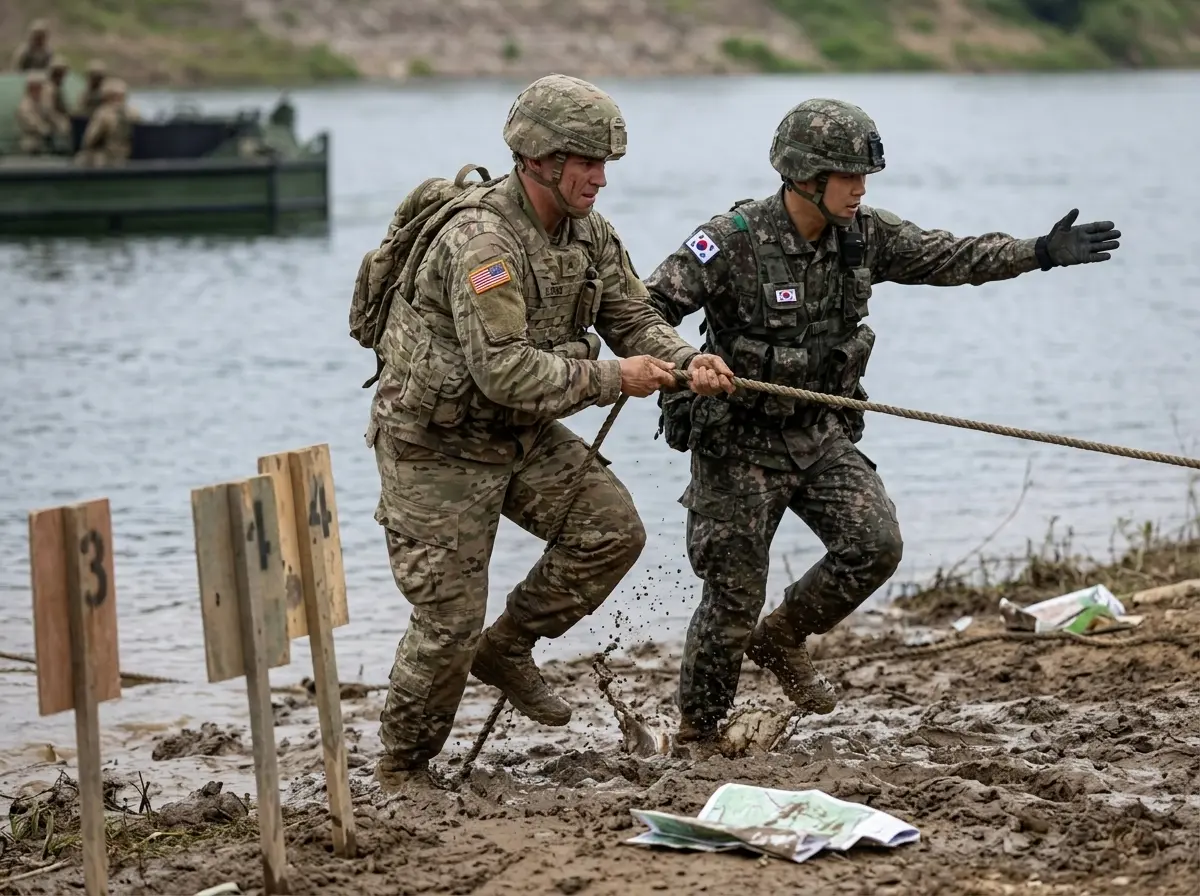
President Trump ordered a substantial reduction in the ongoing Ulchi Freedom Shield exercises with South Korea, cutting the annual drill from roughly 11 days to five and scaling back field training after it had already begun. The allies will now end the exercise on August 21 rather than August 27. Trump cited the cost, his very good relationship with Kim Jong-un, and Seoul’s refusal to join U.S. action against Iran.
South Korean and U.S. officials confirmed the changes mid-exercise. Current and former officers warn the move undercuts readiness at a moment allies already question U.S. commitments, while North Korea has dismissed the cut as changing nothing about the drills’ nature.
What the Order Changed on the Ground
Ulchi Freedom Shield opened August 17 as a combined command-post and field exercise. About 18,000 South Korean troops were set to take part. The Pentagon has not released a final U.S. troop figure for this year’s iteration. Past editions have drawn 17,000 or more American personnel alongside larger South Korean contingents.
South Korea’s Joint Chiefs of Staff said the duration and scale were adjusted at the U.S. request. Joint field training exercises held alongside the simulated command work would be partially reduced. A Pentagon official said the department substantially reduced the exercise while continuing training that enhances tactical capability. Certain live events were canceled or converted to simulations.
Reports in South Korean media indicated the second phase, a simulated counterattack that Pyongyang has long denounced, was effectively scrapped to produce the early end. Pentagon language stressed that essential readiness and training objectives would be preserved with no degradation to U.S. goals.
- August 16: Trump posts on Truth Social directing a substantial reduction, calling the drills costly and a totally inappropriate and hostile signal.
- August 17: Exercise begins as scheduled despite the order.
- August 19: Both sides confirm the end date moves to August 21 and field components shrink.
- August 20: Kim Yo Jong issues North Korea’s first formal reaction.
The U.S. stations about 28,500 troops in South Korea. The exercise is designed to fortify the combined defense posture and response capabilities against a spectrum of threats, including lessons from recent wars such as drones, GPS jamming and cyber attacks.
- Original plan: 11 days, Aug. 17-27, with defensive then counteroffensive phases.
- Revised: Five days ending Aug. 21, defensive focus retained, counteroffensive and many live events cut.
- Scale: ~18,000 South Korean personnel; U.S. numbers undisclosed this year.
- Format shift: More simulations, fewer outdoor live-fire or battalion-level field events.
Trump’s Stated Reasons and the Iran Thread
In his Truth Social post Trump wrote that the exercises send a signal that is totally inappropriate and hostile to a country that, as long as he has been president, has been unthreatening and respectful. He highlighted his very good relationship with Kim Jong-un and noted it was too late to cancel entirely.
He also linked the decision to South Korea’s stance on Iran. “While somewhat unrelated (?), I recently asked the President of South Korea if they would like to join us in the Denuclearization of the Islamic Republic of Iran, and they said, ‘No thanks!’” Trump wrote. South Korea’s Blue House said it was reviewing the comments and discussing potential military contributions while weighing peninsula readiness and domestic legal procedures.
The Iran reference lands amid broader pressure on allies over that conflict. Separate reporting has tracked shipping shifts away from Iran’s Hormuz route and the leverage questions that follow. Trump has long pressed South Korea on defense-cost sharing and economic issues, including follow-through on a prior investment deal and a dispute involving the e-commerce firm Coupang.
Analysts see dual motives. Jenny Town of the Stimson Center’s 38 North program said the decision may form part of a larger effort to create a diplomatic opportunity with Pyongyang, though the haphazard nature is unlikely to impress Kim. Victor Cha of the Center for Strategic and International Studies suggested Trump may also want to engage Kim as a way to impede deepening Russia-North Korea ties, given North Korean troops’ battlefield experience supporting Russia in Ukraine.
Seoul Learned of the Cut From a Social Media Post
South Korea’s foreign minister, Cho Hyun, told a parliamentary hearing that government officials on both sides had not known about the directive in advance. “Our government officials, of course, and the US government officials hadn’t known about it in advance,” he said.
The surprise has fueled domestic debate. Conservatives have criticized the Lee Jae-myung government for appearing soft on the alliance. Progressives have long favored scaled-back exercises as a tension-reduction step. President Lee’s office expressed hope that the friendly relationship between the U.S. and North Korean leaders would lead to meaningful dialogue. Opposition figures later slammed any praise of the cuts as a peace milestone.
Dokyoung Koo, a former Republic of Korea Army major and Atlantic Council fellow, called the lack of consultation the most troubling aspect. Announcing a major change on the day the exercise began falls short of the respect allies should expect. Other U.S. partners may draw their own conclusions about how Washington manages alliances.
Diplomacy is worth pursuing. But readiness is not a bargaining chip. It should not be on the negotiating table.
Bee Yun Jo, nonresident senior fellow, Atlantic Council Scowcroft Center, and research fellow at the Sejong Institute
Jo listed five concrete problems: exercises form the foundation of alliance readiness; cutting them after planning costs have already been sunk wastes leverage; North Korea is unlikely to reciprocate and may next target trilateral U.S.-South Korea-Japan drills; the timing coincides with North Korean gains from Ukraine combat experience; and unilateral moves strengthen voices inside South Korea that question the alliance’s reliability.
The 2018 Precedent and What Readiness Lost
This is not Trump’s first intervention. After the 2018 Singapore summit he suspended major U.S.-South Korea exercises, calling them provocative and a money saver. The pause created diplomatic space but produced a measurable degradation in combined-force readiness, according to later military assessments. Three Trump-Kim meetings produced no lasting limits on North Korea’s nuclear or missile programs.
Exercises were also scaled back during the Covid-19 period. Earlier pauses in 1992 and 1994 were decided well before start dates. The 2026 cut is unusual because it arrived after the drill was already underway and after months of bilateral planning.
| Year / Event | Action | Context | Noted Effect |
|---|---|---|---|
| 2018 | Major exercises suspended | Post-Singapore summit diplomacy | Readiness degradation reported; no denuclearization progress |
| 2020 | Scaled back | Covid-19 | Training continuity interrupted |
| 2026 Ulchi Freedom Shield | Cut from 11 to 5 days; field events reduced mid-drill | Kim outreach + Iran pressure | OPCON assessment risked; consultation trust hit |
Yang Uk of Seoul’s Asan Institute noted that commanders rotate. A prolonged gap leaves new leaders less familiar with procedures when exercises resume. Theater-level decision-making, logistics, missile defense coordination and civil-military links cannot be fully reproduced by smaller unit training.
How Combined Machinery and OPCON Hang in the Balance
Ulchi Freedom Shield does more than rehearse tactics. It tests the systems that let two national forces operate as one: command relationships, intelligence flows, reinforcement timelines and the conditions-based transition of wartime operational control. Seoul had hoped a successful 2026 assessment would support certification of the future Combined Forces Command’s full operational capability and a transition timeline discussion later this year.
A last-minute redesign complicates that project. The 2026 U.S. National Defense Strategy calls for South Korea to take primary responsibility for deterring North Korea with more limited U.S. support. That shift requires exactly the kind of validated combined planning that large exercises provide. Curtailing them makes the stated burden-sharing goal harder to execute.
Jihoon Yu wrote in The Diplomat that one shortened exercise will not undo the defense posture. Repeated uncertainty over whether future exercises will proceed, however, could weaken readiness, disrupt the OPCON transition and reduce confidence in alliance consultation. Conditioning peninsula exercises on an out-of-area Iran request further muddies the 1953 Mutual Defense Treaty text, which centers on common danger in the Pacific area.
- Unilateral timing erodes the habit of joint decision-making on core activities.
- OPCON certification milestones tied to this exercise cycle face delay or redesign.
- North Korea’s two-hostile-states policy and Russia military cooperation already favor bilateral U.S.-DPRK deals that sideline Seoul (“Korea passing”).
- Domestic South Korean politics polarize further between alliance hawks and independence advocates.
- China and Russia gain a narrative opening as more predictable partners.
Sungmin Cho of Sungkyunkwan University and the Atlantic Council noted that the Iran linkage, not the reduction itself, may prove most consequential inside South Korea. Many there had not realized the depth of Trump’s dissatisfaction on that front.
North Korea’s Response and the Diplomacy Bet
Kim Yo Jong, sister of Kim Jong-un, said North Korea has no interest in the reduced drills. “The provocative, aggressive nature of the drills won’t change even though their duration and size were reduced,” she stated via KCNA. She denied any communications between Trump and her brother, though she noted her brother’s past good memories of Trump. The tone was milder than usual, avoiding the harshest rhetoric.
Trump has said Kim responded positively to outreach and has discussed a possible meeting as early as the northern autumn, potentially around the APEC summit in China. Wall Street Journal reporting cited unnamed officials on that push. Past summits collapsed over the gap between North Korean demands for sanctions relief and U.S. insistence on denuclearization steps first.
Bee Yun Jo and others argue that offering readiness cuts in advance, without reciprocal North Korean restraint, repeats the 2018 mistake. North Korea continues missile tests (two ballistic launches since August 6) and has threatened to strengthen its nuclear deterrent in response to the original exercise plan. Its troops’ Ukraine experience and Russia ties give Pyongyang less incentive to freeze capabilities for atmospherics alone.
The pattern fits a broader transactional style visible in other files, including Trump’s earlier Hamas disarmament sequencing standoff, where process and leverage questions repeatedly stalled progress.
Expert Warnings on the Precedent Itself
Seoul-based fellows on readiness as bargaining chip converge on one point: the immediate military effect of five fewer days may be limited, yet the signal that combined training can be altered overnight for diplomatic or secondary-policy reasons is lasting. Koo warned that Washington may spend one of the alliance’s most valuable assets without knowing what it is purchasing in return.
Yu recommended a joint political-military review to protect command-post functions, the OPCON assessment and critical U.S. enablers, plus clear rules that any future diplomacy-linked adjustments be jointly decided, time-limited, reversible and tied to observable North Korean action. Exercise policy should stay separate from trade disputes and out-of-area requests.
South Korea is already increasing defense spending and conventional capabilities. Greater self-reliance makes the alliance more resilient to posture changes, yet it cannot fully substitute for the shared muscle memory that large exercises build. Deterrence rests on an adversary believing the two forces can fight together.
As the shortened Ulchi Freedom Shield winds down on August 21, the allies still face the same North Korean missile inventory, the same OPCON timeline pressures, and the same unanswered question of whether any Kim meeting will produce more than photographs. The readiness machinery that was interrupted mid-cycle will have to be rebuilt under a new set of expectations about who decides when it runs.

-
 TECH1 year ago
Where Garmin Watches are Made and How They are Assembled
-

 AUTO3 months ago
Tesla’s Roadster Is ‘a Few Weeks Away,’ Says Its Chief Designer
-
 NEWS10 years ago
Samsung Releases Galaxy Note7 TV Ad as Reddit AMA Leaks Specs
-
 NEWS10 years ago
Android 7.0 Nougat Rolls Out To Nexus Devices With New Emoji, Features
-
 FINANCE9 years ago
Cardano Price Surges as ADA Enters the Crypto Top Ten List
-
 NEWS10 years ago
Pre-Order the First Camera Made for Facebook Live Streaming Video
-
 FINANCE1 year ago
Binance Suspends Trading and Withdrawals for a System Upgrade
-
 FINANCE9 years ago
RChain Price Jumps Nearly 150% to a New All-Time High of $2.03