
BUSINESS
Ships abandon Iran’s Hormuz route and gut its leverage
Kpler data shows over 80 percent of recent Strait of Hormuz vessels using the Omani channel.

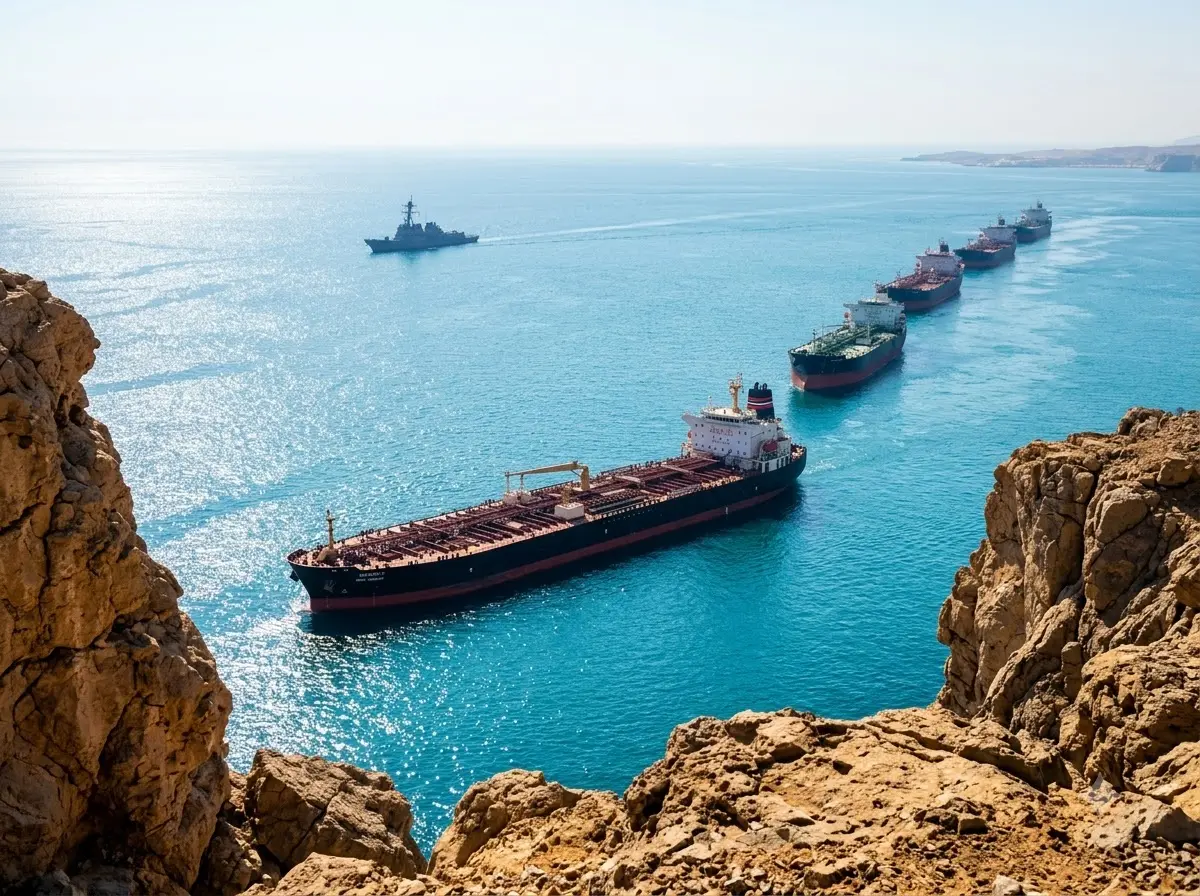
More than 80 percent of vessels that crossed the Strait of Hormuz over the past two weeks used the Omani route, a UN-authorized channel Iran rejects, according to vessel tracker Kpler cited by CNN. The pattern marks a sharp break from a month earlier, when virtually none took that southern path, and it has blocked Tehran from collecting the tolls it resumed seeking after a US-Iran memorandum expired.
US naval patrols and escorts now dominate the southern channel. Iran still mounts attacks and claims full control. Oil keeps leaving the Gulf at roughly 15 million barrels a day through a mix of escorted sailings, dark tankers and ship-to-ship transfers outside the danger zone.
Eighty percent of traffic now hugs Oman
Kpler data, drawn from transponders and satellite imagery, shows the Omani preference holding across the most recent fortnight. Homayoun Falakshahi, head of crude oil analysis at Kpler, put the shift in plain terms.
It increasingly looks like Iran has at least partially lost control of the strait.
Falakshahi’s assessment tracks the numbers. A month ago the Omani route saw almost no traffic. Today it carries the bulk of what still moves. Iran has attacked dozens of ships that tried the northern coastal route it prefers. Most operators now ignore those demands and sail south under US protection.
Daily volumes remain far below the pre-war norm of more than 130 ships. Reuters reported nine commodity vessels on one mid-August Thursday against an August daily average of 12 so far, with five inbound and four outbound, mostly still on the Iranian side that day. MarineTraffic recorded a 19.5 percent weekly drop to 95 crossings in one recent stretch, with some days showing only three sailings and zero confirmed Omani-route crossings in its count. The gap between trackers itself reflects the heavy use of AIS-off “dark” sailing that confuses open-source tallies.
- 80%+ of recent two-week Hormuz transits on Omani route (Kpler)
- ~12 vessels daily average in August so far (Kpler via Reuters)
- 9 vessels on one tracked Thursday, five in and four out
- 0 Omani-route crossings in one MarineTraffic weekly snapshot
US officials report substantially higher oil volumes than traditional trackers because escorts give them direct eyes on dark ships.
Competing claims leave both sides short of full control
President Donald Trump has repeated that the United States holds “total control over the strait.” Energy Secretary Chris Wright said combined oil moving through the strait and around it via pipelines reached around 15 million barrels per day over a recent week, closer to the pre-war 20-million-barrel average. Iran’s Basij head declared the waterway “under Iran’s control and management.” Attacks on UAE-linked vessels continue.
| Claimant | Stated position | Supporting evidence | Counter-evidence |
|---|---|---|---|
| United States | Total control via naval blockade and escorts | Wright’s 15 mb/d regional total; southern-route dominance; higher US-counted volumes | Continued Iranian attacks; oil still below pre-war levels; mines still reported |
| Iran | Strait under Iranian control and management; tolls authorized | Attacks on non-compliant ships; northern-route preference claims; Basij statements | 80%+ traffic on opposed Omani route; no successful toll collection; traffic far below pre-war |
| Observed reality | Partial US operational edge on southern channel; neither side absolute | Kpler route split; US-facilitated dark sailings; JMIC severe threat level | Low absolute volumes; tracker disagreements; ongoing Oman-Iran talks |
Dan Pickering, founder of Pickering Energy Partners, said Iran’s goal looks more like deterrence than complete day-to-day command: “It feels like their goal is deterrence, in order to be validated as in-control. I think they are still deterring.” Andy Lipow of Lipow Oil Associates added that it is fair to say Iran has partially lost control.
Gulf producers rewrite the exit playbook
Kuwait, Saudi Arabia and the UAE have chartered VLCCs, the largest crude carriers, to move oil out through Hormuz then transfer it to customer tankers in the quieter Gulf of Oman. The method keeps the big hulls out of prolonged Iranian reach.
- Charter VLCCs for the short, high-risk Hormuz leg under escort or dark
- Switch off AIS transponders for days or weeks to reduce targeting
- Conduct ship-to-ship transfers outside the immediate danger zone
- Expand pipeline alternatives that already move 5-7 million barrels a day around the strait
- Accept higher insurance and demurrage costs in exchange for any flow at all
These tanker workarounds that chip at Iran leverage explain how regional oil export totals can approach 15 million barrels a day even when open-source vessel counts stay in single digits. Dark traffic eludes some trackers yet remains visible to US forces coordinating the escorts. The same pattern has appeared in other chokepoints when security deteriorates.
Tolls that never got collected
The US-Iran memorandum’s expiration this week restored Iran’s theoretical right to charge transit fees. Kpler data indicates Tehran has been unable to enforce them. Traffic has deserted the Iranian-preferred northern path that would have made collection straightforward. “Iran’s request to collect tolls is something that most Middle East folks don’t want to do and haven’t been doing,” Pickering said. “So the Oman route absolutely makes the most sense.”
That revenue loss is the quiet second-order hit. In spring Iran had managed some collections. The current pattern cuts that stream while the war already squeezes Tehran’s broader oil income. Gulf producers gain a freer hand on the southern side; Iran loses both cash and the daily reminder of its veto.
Oman and Iran talk without Washington
While the United States asserts operational primacy, Oman and Iran have kept bilateral channels open on navigation. Earlier Oman and Iran Muscat talks on navigation safety in July, chaired by Foreign Minister Sayyid Badr Albusaidi and Iran’s Seyed Abbas Araghchi, agreed to continue political and technical discussions under international law. More recent rounds have focused on safe inbound and outbound lanes that would operate without US involvement.
Iran has said coordinates for new routes were agreed and the understanding is in final stages. Omani public confirmation has been thinner, feeding some skepticism on X and among analysts that the deal remains one-sided Iranian messaging. Trump has expressed dismay at any arrangement that freezes the United States out. If the talks produce a durable Oman-Iran corridor, it could further normalize the southern route Iran once opposed and lock in the very traffic pattern that undercuts its leverage.
The long-standing IMO traffic separation scheme adopted in 1968 sits unused in the center of the strait, still considered unsafe because of residual mines. Temporary northern and southern coastal routes have replaced it for the duration of the conflict. Clearance operations continue, yet JMIC advisories still rate the threat level severe and note rising attack frequency.
Oil volumes recover without full reopening
Pre-war oil and products through Hormuz averaged near 20.9 million barrels a day in first-half 2025, or about one-fifth of global petroleum liquids consumption and a quarter of seaborne oil trade. Roughly 80 percent of that volume headed to Asia. Current US-counted regional outflows of about 15 million barrels a day combine escorted Hormuz sailings (around 8-9 million on some recent averages) with expanded pipelines and other bypasses.
That recovery helps explain why oil stayed below 100 after earlier Hormuz shocks and why a Hormuz oil premium that sticks for Asia refiners has not exploded further. Flows are still 25 percent light of the old baseline. Any fresh spike in attacks or a collapse of the Oman channel preference would reverse the gains quickly. Tracker disagreements over exact daily counts underline how incomplete the open picture remains when so many hulls sail dark.
JMIC and MarineTraffic data continue to show multi-day stretches of near-zero recorded commercial traffic even as US officials describe steady escorted movements. The dual reality is the new normal: low visible sailings, higher actual barrels under military cover, and a southern route that Iran can harass but no longer dominate.
Iran’s partial loss of the southern channel has already cost it tolls and daily leverage. The United States has operational reach it did not possess months earlier. Neither side has sealed the waterway. Gulf producers and shipowners have simply rerouted around the gap, and the barrels keep leaving.

-
 TECH1 year ago
Where Garmin Watches are Made and How They are Assembled
-

 AUTO3 months ago
Tesla’s Roadster Is ‘a Few Weeks Away,’ Says Its Chief Designer
-
 NEWS10 years ago
Samsung Releases Galaxy Note7 TV Ad as Reddit AMA Leaks Specs
-
 NEWS10 years ago
Android 7.0 Nougat Rolls Out To Nexus Devices With New Emoji, Features
-
 FINANCE9 years ago
Cardano Price Surges as ADA Enters the Crypto Top Ten List
-
 NEWS10 years ago
Pre-Order the First Camera Made for Facebook Live Streaming Video
-
 FINANCE1 year ago
Binance Suspends Trading and Withdrawals for a System Upgrade
-
 FINANCE9 years ago
RChain Price Jumps Nearly 150% to a New All-Time High of $2.03