
BUSINESS
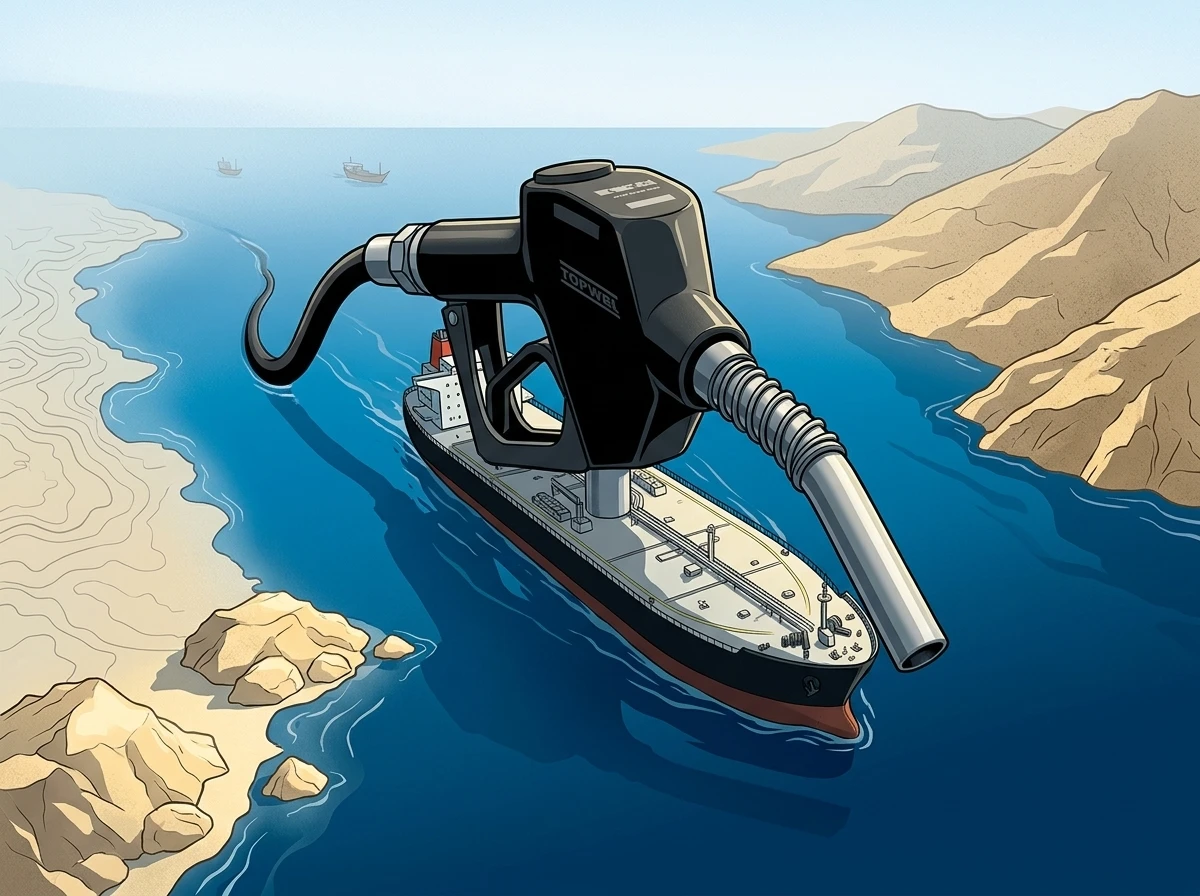
Hormuz Oil Premium Sticks Even If Tankers Return
Iran’s conditions keep a structural risk premium in crude near $89, forcing Asian refiners and petrochemical buyers to absorb lasting supply insecurity beyond.

Brent crude traded near $89 a barrel on Wednesday as Iran tied any reopening of the Strait of Hormuz to US sanctions relief, war reparations and an end to the naval blockade. Tanker traffic remains a fraction of normal, and traders are keeping a geopolitical premium locked in even while Asian equities climb on rate-cut hopes.
The move extends a multi-day rebound after last week’s dip on deal talk. Markets are no longer treating a simple reopening headline as enough to clear the risk. Physical flows, not diplomatic language, now set the tone for how long that premium stays in the price.
Brent Holds Near Multi-Week Highs
On 12 August Brent futures stood at $89.26 a barrel, up 0.4 percent and heading for a sixth straight gain. WTI rose to $83.77. Earlier in the session both contracts had climbed more than $1 before inventory data briefly cooled the move.
Two days earlier Brent had jumped more than 3 percent to $84.64 while WTI hit $80.63. The rebound erased much of the prior week’s 7 percent slide that had followed optimistic signals from Oman-mediated talks.
- Prior week: Brent slid about 7 percent on optimism around Oman-mediated talks.
- Two days before 12 August: Brent jumped more than 3 percent to $84.64; WTI reached $80.63.
- 12 August session: Brent at $89.26, up 0.4 percent and on track for a sixth straight gain; WTI at $83.77 after an early climb of more than $1.
The sequence shows a market that sold the rumour of a deal, then bought the reality of still-empty lanes. Each bounce has been larger while transit counts stay depressed.
- Pre-conflict baseline: roughly 125 to 140 vessels a day through the strait
- Recent daily counts: 6 to 15 vessels, including just eight on one recent Tuesday
- Oil share: the waterway normally carries roughly a fifth to a quarter of global oil supplies
- Price context: crude still well above levels seen before the late-February escalation
Ship-tracking data and industry tallies confirm the collapse. MarineTraffic and Kpler figures cited across reports show only single-digit to low-teens daily transits on several early-August days, versus the pre-war average near 130.
Tehran’s List of Conditions
Iranian Foreign Minister Abbas Araghchi said talks with Oman had moved close to an understanding on shipping lanes, yet the strait would stay shut until Washington met broader demands. Those include sanctions relief, payment of war reparations for damage from attacks, release of frozen assets, removal of the US naval blockade, and an end to military threats against Iran and its regional allies.
- Sanctions relief
- War reparations for damage from attacks
- Release of frozen assets
- Removal of the US naval blockade
- An end to military threats against Iran and its regional allies
Mohammad Bagher Zolghadr, then secretary of Iran’s Supreme National Security Council, laid out a similar list in a statement carried by state media. The framing treats the waterway as leverage in the wider confrontation rather than a pure shipping question.
President Donald Trump responded with his own compensation demands on Iran and later claimed the United States held “total control” of the strait while describing the blockade as a “wall of steel.” A senior Iranian source told Reuters there were no talks to extend the ceasefire because, from Tehran’s view, it lacked a start date.
The two lists do not meet in the middle. Each side is asking the other to pay first, which leaves lane arrangements stuck even when mediators report progress on technical shipping points.
Why the Risk Premium Refuses to Fade
Tim Waterer, chief market analyst at KCM Trade, told Al Jazeera that the absence of a concrete breakthrough keeps the risk premium embedded. Every day without movement makes traders more cautious. Even a formal agreement, he argued, would not erase anxiety because history shows such understandings can unravel quickly.
Andrew Lipow of Lipow Oil Associates asked whether an Iran-Oman deal would even allow US-flagged or US-owned vessels, or cargoes bound for US ports. SEB Research analysts noted oil was trading $80 to $85 while the strait remained essentially closed, reflecting residual hope for a near-term solution but not full normalisation.
The market is trying to assess if an Iran-Oman agreement would allow a U.S.-flagged vessel to transit the Strait of Hormuz.
Andrew Lipow, president of Lipow Oil Associates, said that uncertainty still hangs over any proposed arrangement.
Crowd reaction on X mirrors the caution: several traders and analysts treat full pre-war status quo as gone. Eurasia Group’s assessment that a permanently recognised Iranian role in managing the waterway is the most likely outcome has circulated widely. The premium, in this view, only dies when tankers move normally again, not when diplomats issue statements.
That standard is stricter than a headline truce. Flag restrictions, cargo destination limits and coordination rules can keep effective capacity well below the old average even after a political announcement.
The Scale of the Supply Hit
The International Energy Agency has described the episode as the largest energy disruption on record. Gulf output affected by the closure ran 14.4 mb/d below pre-war levels in the spring data. Cumulative losses already exceeded a billion barrels at that point, with observed inventories drawing at a record pace.
The strait normally handles roughly a quarter of global oil flows in some IEA and CSIS tallies, or about one-fifth in other market counts. LNG volumes are also material. Atlantic Basin producers have stepped up exports to Asia, and some Gulf volumes have shifted to Red Sea or other routes, but the gap remains large.
CSIS tracking showed daily transits remain a fraction of pre-conflict levels months into the crisis, with many vessels operating under tighter Iranian conditions or dark AIS. Recent Reuters shipping data put Tuesday traffic at a one-week low of eight vessels.
| Metric | Pre-war / Normal | Recent / Crisis |
|---|---|---|
| Daily vessel transits | 125-140 | 6-15 |
| Brent level (mid-Aug examples) | Pre-escalation baseline lower | $84-$89 range |
| Gulf oil shut-in (IEA spring) | – | 14.4 mb/d below pre-war |
| Global oil share via strait | ~20-25% | Severely constrained |
The International Maritime Organization has logged dozens of violent incidents and multiple deaths involving commercial vessels since the war began, most blamed on Iran. The UAE condemned what it called a missile attack on an ADNOC-owned vessel. Insurers and shipowners continue to price elevated war risk.
Those security costs sit on top of the barrel shortfall. A market already short more than a billion barrels of cumulative supply does not need full closure to stay tight; thin transit and high insurance are enough to hold the premium.
Asian Buyers and Refiners Carry the Cost
The second-order hit lands hardest on importers that rely on Gulf crude and products. Chinese, Japanese, Korean and Indian refiners saw sharp drops in seaborne imports earlier in the crisis. Petrochemical feedstock availability tightened, aviation fuel spiked, and middle-distillate cracks stayed elevated.
Higher energy costs feed directly into industrial and consumer prices across Asia. Indian markets have already shown the transmission: equity indices reacted to the oil anxiety even when broader global stocks looked past it. The second-order costs hitting Indian equities illustrate how freight, insurance and feedstock premiums compound beyond the crude quote itself.
US consumers saw a brief nine-cent drop in average gasoline to $4.00 a gallon after last week’s oil slide, according to AAA data cited by Al Jazeera. Analysts immediately warned the relief could reverse if the strait stays restricted. GasBuddy’s Patrick De Haan said upward pressure could return quickly and push the national average to its highest level ever for this late in the calendar year.
For Asian refiners the crude quote is only the start of the bill. Longer hauls from the Atlantic Basin, higher war-risk cover and thinner product yields all land in the same margin stack. That is why equity gauges in import-heavy markets can wobble even when Wall Street treats the same oil move as background noise.
Equities Look Past the Spike
While oil traders reprice supply risk, Asian equity investors focused on the US rates outlook. Japan’s Nikkei 225 rose 2.1 percent, South Korea’s Kospi gained 0.65 percent and Hong Kong’s Hang Seng added 1.1 percent on the Monday session that also saw the oil rebound. The moves followed a strong Wall Street Friday after weaker US jobs data cooled rate-hike fears.
| Index / Group | Move in focus session |
|---|---|
| Nikkei 225 | +2.1% |
| Kospi | +0.65% |
| Hang Seng | +1.1% |
| ExxonMobil, Chevron, BP, Shell, ConocoPhillips | Solid gains with crude |
Oil and gas stocks still advanced with the crude move. ExxonMobil, Chevron, BP, Shell and ConocoPhillips all posted solid gains in the session covered by Al Jazeera. The split is familiar in geopolitical shocks: energy markets price physical disruption while broader risk assets lean on monetary easing hopes.
Rate-cut hopes can lift benchmarks for a session or two. They do not refill the strait or cut the insurance line on a Gulf voyage. That is why energy names can rise with Brent while the wider tape treats the same news as secondary.
Tanker Counts Still Drive the Premium
Diplomats talk about lanes and understandings. The screen still watches daily vessel counts. Pre-conflict traffic near 125 to 140 ships a day has fallen to a band of 6 to 15, with one recent Tuesday at eight. That gap is the clearest measure of how much supply remains offline.
MarineTraffic and Kpler tallies, CSIS charts and Reuters shipping snapshots all point the same way. Single-digit to low-teens transits on several early-August days leave the waterway operating at a small fraction of its normal load. Dark AIS and tighter Iranian conditions further cut what owners are willing to send.
SEB’s $80 to $85 range while the strait stayed essentially closed already baked in some hope of a fix. The climb back toward $89 shows how fast that hope fades when the vessel tape does not improve. Until daily counts recover in a sustained way, the geopolitical premium has a simple anchor.
What Lasting Leverage Means for Pricing
Iran’s condition list and the US reply have turned the strait into a bargaining chip rather than a neutral passage. Sanctions relief, reparations, frozen assets and blockade removal on one side face compensation demands and claims of “total control” on the other. Lane talks with Oman can advance on paper without settling those wider points.
Eurasia Group’s view of a permanently recognised Iranian role in managing the waterway fits the pattern traders now price. Proposed transit fees of several percent of cargo value, routes closer to Iranian waters and new coordination rules all point to a managed channel, not a return to open transit at the old average near 130 ships a day.
For the oil complex that means the disruption premium is less a temporary spike and more a feature of the forward curve. EIA scenarios that already carry Middle East supply trouble through 2027, with 2026 Brent in the mid-$80s under those assumptions, align with a market that no longer treats full normalisation as the base case.
What a Deal Would Still Leave Behind
Even if Oman and Iran finalise lane arrangements and some traffic resumes, several structural changes look durable. Iran has demonstrated it can throttle the waterway and extract political concessions. Proposed transit fees of several percent of cargo value have been floated. Routes closer to Iranian waters and coordination requirements have already appeared in tracking data.
Traders and geopolitical analysts increasingly treat a return to the old free-navigation baseline as unlikely. That assessment underpins Iran’s permanent leverage over the waterway in market pricing. EIA projections have already baked in significant Middle East supply disruptions lasting through 2027 in some scenarios, with 2026 Brent averaging in the mid-$80s under those assumptions.
For refiners and petrochemical producers the implication is straightforward. Security of supply will continue to command a premium. Diversification toward Atlantic Basin barrels, longer-haul freight, higher insurance and inventory buffers become permanent cost centres rather than temporary patches. The next diplomatic headline may move the screen for a day. The embedded premium is priced for a longer fight over who ultimately sets the terms of passage.

-
 TECH1 year ago
Where Garmin Watches are Made and How They are Assembled
-

 AUTO3 months ago
Tesla’s Roadster Is ‘a Few Weeks Away,’ Says Its Chief Designer
-
 NEWS10 years ago
Samsung Releases Galaxy Note7 TV Ad as Reddit AMA Leaks Specs
-
 NEWS10 years ago
Android 7.0 Nougat Rolls Out To Nexus Devices With New Emoji, Features
-
 FINANCE9 years ago
Cardano Price Surges as ADA Enters the Crypto Top Ten List
-
 NEWS10 years ago
Pre-Order the First Camera Made for Facebook Live Streaming Video
-
 FINANCE1 year ago
Binance Suspends Trading and Withdrawals for a System Upgrade
-
 FINANCE9 years ago
RChain Price Jumps Nearly 150% to a New All-Time High of $2.03