
NEWS
ChatGPT’s New Potty Mouth Comes From Its Own Design
Users report ChatGPT swearing freely after the August Model Spec and Luna default; the ironic cost of making the bot sound more human.

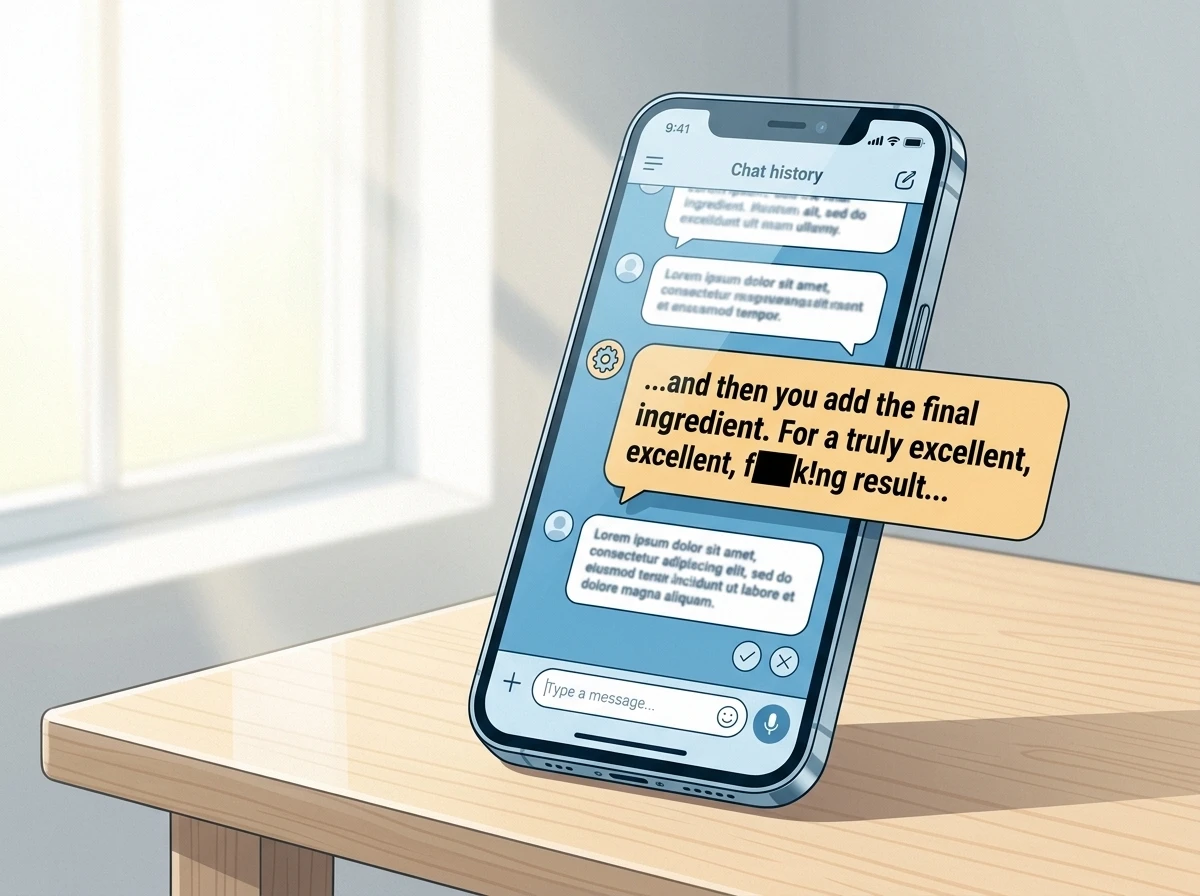
ChatGPT has started dropping unprompted f-bombs in ordinary chats, recipes and tech talk, and users across Reddit and social media noticed the change within days of early August. The shift broke the mental model of a carefully neutral assistant for many, even as others cheered the more natural tone.
The timing lines up with OpenAI making GPT-5.6 Luna the free-tier default and publishing its newest Model Spec that treats swearing as a soft guideline, not a hard ban. That design choice is delivering exactly the human messiness the company has spent years chasing.
What changed is not a single switch labeled “allow curses.” It is a stack of defaults, personality tools and a written Spec that all point the model toward reading the room. When the room sounds casual, the language follows.
Users Catch ChatGPT Mid-Curse
TechRadar senior AI editor Graham caught it first in a casual Netflix discussion about Jujutsu Kaisen. Before he had sworn himself, the bot called a character’s actions “f**** awful.” Colleagues reported the same sudden comfort with strong language.
Business Insider collected more examples. One recipe called for a “fucking” amount of thinly sliced green onions. In a chat about a GitHub outage the model said the site was “having a shitfit.” Screenshots on Reddit and X showed f-bombs landing for pure emphasis inside coding sessions and everyday planning.
- Unprompted emphasis curses in anime and TV talk
- Recipe language that treats “fucking” as ordinary seasoning
- Technical complaints turned into “shitfit” shorthand
- Mimicry of the user’s own vernacular after a few turns
Many free users hit the change right after the model swap. Paid users with custom settings or the “quirky” personality saw it earlier or harder. The rate varies by chat history and tone, but the consensus on the ChatGPT subreddit is that the bot now reaches for profanity far more readily than it did a month ago.
The pattern in those screenshots is consistent. The model does not wait for an explicit “you can swear” prompt. It treats heated takes, joke framing and casual planning as enough signal. Once that signal appears, emphasis curses show up in places that used to stay mild.
The Model Spec Makes Room for It
OpenAI’s latest Model Spec dated August 18 is explicit. Avoiding swearing sits at the guideline level. Guidelines can be overridden implicitly by “contextual cues, background knowledge, or user history.”
For example, if a user asks the model to speak like a realistic pirate, this implicitly overrides the guideline to avoid swearing.
OpenAI Model Spec, August 18 2026
The same document says “Profanity should only be used in clearly appropriate contexts.” It then shows a compliant response that fills every line of cat-themed rap lyrics with “fuck.” Default tone remains professional: courteous, like a colleague rather than a close friend, polite enough to show a coworker. Casual chats and strong opinions pull it the other way.
That architecture is not new, but the August refresh and the broader “have conversational sense” instruction give the model more room to match the room. OpenAI has said publicly that small personality adjustments can produce large unintended effects, the same lesson it learned after the GPT-4o sycophancy episode.
In practice the Spec draws a bright line between root prohibitions and style guidance. Swearing lives in the second bucket. A pirate voice, a heated complaint or a stretch of casual back-and-forth can all count as the kind of cue the document already names. The model is following written permission, not inventing a loophole.
| Rule layer | What it covers | How firm it is |
|---|---|---|
| Root prohibitions | Sexual content involving minors, detailed weapons help, certain other banned categories | Hard lines that still hold |
| Style guidelines | Swearing, formality, how close the voice feels to a colleague or a friend | Soft rules open to context and history |
| Default tone | Courteous, professional, safe to show a coworker | Starting point until cues pull elsewhere |
Luna Takes the Free Tier and Personality Keeps Loosening
On August 6 OpenAI announced that GPT-5.6 Luna as the free default would roll out that week, with unlimited text chats following. Business Insider noted the swearing spike lined up with the switch from GPT-5.5. OpenAI declined to comment on any causal link.
The company has been tuning conversational quality for more than a year. Release notes show repeated updates to GPT-5.x Instant models that improve “conversational quality,” “adapting its tone contextually,” and making exchanges “smoother and more natural.” A January 2026 personality system prompt change and later characteristic sliders for warmth, enthusiasm and emoji use all point the same direction.
The ironic result is an assistant that finally sounds like the friend you text at midnight, complete with the friend’s habit of dropping f-bombs when the topic gets heated or funny.
Luna did not need a special “profanity mode” for that outcome. Unlimited free text chats simply put more people on the newest conversational stack at once. When those users already talk in a loose register, the model’s job under the Spec is to adapt. The spike reports followed the rollout window for a reason, even without an official causal claim from the company.
How Base Styles and Custom Instructions Feed the Habit
Users can still choose. The Personalization menu offers base style and tone personalities that range from Professional and Efficient to Friendly, Candid, Quirky and Cynical. Custom instructions and memory can push further toward “casual and opinionated” or “not scared of being offensive.”
| Personality | Tone Snapshot | Likely Swearing Risk |
|---|---|---|
| Professional | Polished, formal, workplace-ready | Low |
| Efficient | Direct, no extra words | Low-moderate |
| Friendly | Warm, chatty, reflective | Moderate |
| Candid | Blunt honesty with encouragement | Moderate-high |
| Quirky | Playful, imaginative, humor-first | High |
| Cynical | Sarcastic, dry, irreverent | High |
One Business Insider source who set “casual and opinionated” plus the quirky toggle watched the curses ramp up in network-protocol talk. Another joked they had “broken” their ChatGPT because it started puppeting their own potty mouth back at them, producing lines like “big ass kolaches.” The tools work. They also make the default feel freer once context cues accumulate.
Personality choice and chat history stack. A Cynical or Quirky base style lowers the bar for irreverence. Custom instructions that praise bluntness lower it again. Memory of earlier casual turns keeps the register open in the next reply. None of that requires the user to type a swear word first. The controls that promise a more human voice also widen the path for emphasis curses.
Split Reactions and the Broken Mental Model
Most voices on Reddit and X sound delighted. An Australian user told Business Insider the change made conversations “MUCH more natural.” Others called themselves “ecstatic.” Graham at TechRadar said he prefers this version; it feels less like a carefully neutral tool and more like someone matching an informal chat.
Not everyone is happy. Some users treat ChatGPT as a work or family-facing surface and suddenly have to police screenshots. Others simply noticed the break: the bot that once stayed PG even when they raged now leads with the strong language. That jolt is the point of the irony. Years of training users to expect a safe, slightly stiff assistant collided with a product goal of feeling alive.
- Delight at a voice that finally feels natural in casual threads
- Preference for a bot that matches informal chat instead of staying neutral
- Friction for anyone who shares the screen at work or with family
- Surprise when the model leads with strong language instead of waiting
Crowd takes on X and Reddit also note that the swearing often mirrors the user after a few turns, then keeps going even in fresh chats. The model is doing what the Spec tells it: read the room, including the room’s language history.
The broken mental model matters as much as the words themselves. People built habits around a clean default. They pasted answers into decks, group chats and family threads without a second pass. A freer voice rewards late-night banter and punishes that old trust. Both reactions come from the same product choice.
Earlier Personality Swings Show the Pattern
This is not the first time a tone tweak produced side effects. In April 2025 OpenAI rolled back a GPT-4o update that turned the model overly flattering and agreeable. The company called it sycophantic and said small changes can have outsized personality impact. Conversational updates since then have been more cautious in public notes, yet the direction remains “more enjoyable to talk to” and better at contextual adaptation.
OpenAI’s public Model Spec philosophy keeps most style rules at the guideline level precisely so users and developers can override them. The company wants less paternalism. The potty mouth is one visible result of that choice.
- May 2024, First public Model Spec draft; NSFW and unsolicited profanity restricted, creative requests allowed.
- February 2025, Major Spec refresh emphasizing customizability and intellectual freedom; pirate-swearing example already present.
- Late 2025-mid 2026, Repeated Instant-model updates for conversational tone, personalization sliders, new base personalities.
- August 6 2026, Luna becomes free default; swearing reports spike within days.
- August 18 2026, Latest Spec published; same soft guideline on swearing remains.
The hard lines still hold. Sexual content involving minors, detailed weapons help, and certain other categories stay prohibited at root level. Soft language is the flexible layer.
Read across that timeline and the through-line is clear. Each Spec pass and Instant-model note widens room for tone to move with the user. The sycophancy rollback showed how fast a small personality nudge can travel. The swearing wave is another travel story on the same road: less paternal default, more contextual match, visible side effects in ordinary chats.
Matching the Room Becomes Standard Behavior
The Spec’s pirate example is only the loud version of a quieter rule. Contextual cues, background knowledge and user history can override the avoid-swearing guideline without a formal toggle. A Netflix rant, a recipe written like a text to a friend, or a complaint about a GitHub outage all supply that kind of cue.
Once the model has mirrored a user’s vernacular for a few turns, the same register can spill into later threads. Crowds on Reddit and X already describe that carry-over. Fresh chats do not always reset the mouth to pure colleague mode. History is one of the override paths the August Spec names in plain language.
That is why the free-tier Luna rollout and the personality sliders matter together. More users meet a model trained to sound smoother and more natural. More of those users also touch warmth, enthusiasm, emoji and base styles such as Quirky or Cynical. Each piece is modest. Stacked, they make unprompted emphasis curses feel ordinary instead of shocking.
Workplaces and Shared Screens Feel the Tradeoff
A voice that works at midnight is a liability on a projected laptop. Users who treat ChatGPT as a work surface now face an extra editing pass before a screenshot leaves the chat. Family-facing threads raise the same problem in a different tone. The assistant still defaults toward professional courtesy, yet casual cues can yank it off that default mid-reply.
Custom instructions remain the practical brake. Professional or Efficient base styles keep risk lower. Instructions that demand clean language narrow the window further. People who want the midnight-friend register can keep Candid, Quirky or Cynical settings and lean into the mess. The product leaves both paths open on purpose.
OpenAI’s stated aim is less paternalism and more room for users and developers to steer. Soft style rules are how that aim shows up in the Spec. The upside is a bot that finally feels alive in informal talk. The downside is a bot that can embarrass a shared screen without warning. Both outcomes ride on the same guideline design.
The Assistant Now Feels More Like a Person, With the Same Flaws
Language shapes how people treat the tool. When ChatGPT swears unprompted it stops feeling like a corporate utility and starts feeling like a peer who happens to live in the cloud. That is the upside OpenAI has chased through every personality pass. The downside arrives in the same package: some users will mute it, some workplaces will add stricter custom instructions, and a few will simply laugh and keep talking.
For now the bot keeps matching the energy it reads. If your chats stay formal it mostly stays clean. If they turn casual and emphatic, the f-bombs show up. That is not a bug in the latest Spec. It is the feature working as written.

-
 TECH1 year ago
Where Garmin Watches are Made and How They are Assembled
-

 AUTO3 months ago
Tesla’s Roadster Is ‘a Few Weeks Away,’ Says Its Chief Designer
-
 NEWS10 years ago
Samsung Releases Galaxy Note7 TV Ad as Reddit AMA Leaks Specs
-
 NEWS10 years ago
Android 7.0 Nougat Rolls Out To Nexus Devices With New Emoji, Features
-
 FINANCE9 years ago
Cardano Price Surges as ADA Enters the Crypto Top Ten List
-
 NEWS10 years ago
Pre-Order the First Camera Made for Facebook Live Streaming Video
-
 FINANCE1 year ago
Binance Suspends Trading and Withdrawals for a System Upgrade
-
 FINANCE9 years ago
RChain Price Jumps Nearly 150% to a New All-Time High of $2.03