
NEWS
iOS 26.6.1 already carries the iOS 27 beta security fixes
Apple’s August 17 point update backports nearly 30 fixes from iOS 27 betas, many found by AI tools, changing the calculus of waiting for the fall release.

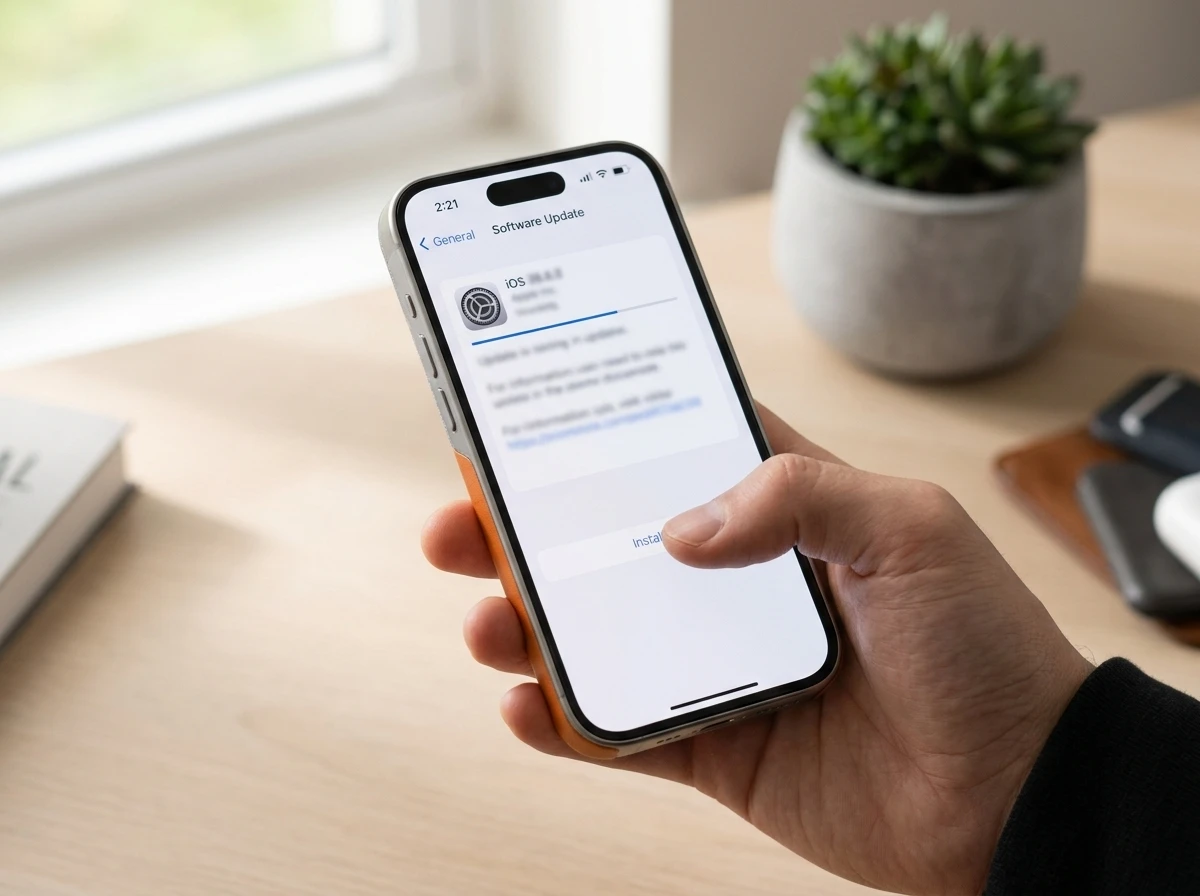
Apple released iOS 26.6.1 and iPadOS 26.6.1 on August 17, 2026, delivering 29 security fixes detailed by Apple that first appeared in the iOS 27 and iPadOS 27 betas. The update is available for iPhone 11 and later. It carries no consumer features, only patches for Audio, ImageIO, Kernel, Telephony, WebKit and related components.
The usual debate is whether to install a small point release or hold out a few weeks for the major version. That framing misses what this build actually does. Because the fixes were already validated in the beta channel, the stable OS now sits much closer to the security baseline Apple is shipping to testers. Waiting for iOS 27 has become a stability choice more than a protection one.
Point releases once felt optional when the next major train was only weeks away. This one is different in kind. The same hardening work already under test for iOS 27 is now on the shipping train, so the delay cost is measured in exposure rather than in missing features.
Apple shipped the patches into the stable channel first
The release notes on Apple’s support site are explicit: the update “delivers security fixes that were first made available in the iOS 27 and iPadOS 27 betas.” None of the listed issues is described as actively exploited in the wild. Once the details are public, however, the window for opportunistic attacks opens for anyone still on earlier 26.x builds.
- 29 CVEs addressed across iOS and iPadOS 26.6.1
- 21 of them tied to WebKit
- Nine credits to OpenAI Codex Security
- One Telephony fix unique to iPhone that can let a privileged network attacker bypass IPSec authentication
MacRumors and other outlets counted the same totals after reviewing the document. The volume is high for a.1 release, but it fits a pattern Apple has been running through the summer: more frequent security drops as researchers using large language models and automated tooling surface bugs faster than the traditional monthly cadence can absorb.
Public documentation of the CVEs removes any remaining obscurity advantage. Attackers and defenders read the same notes. That is why a build with no consumer features still carries urgency for anyone who remains on 26.6 or earlier.
The beta backports change the wait-or-update math
In earlier cycles, a user who delayed the final point release of a major version sometimes accepted a short security gap in exchange for fewer installs. That calculation weakens when the point release already contains the same kernel and WebKit hardening the next major version is testing.
iOS 27 is still expected in the fall. Apple’s own site states “iOS 27 coming this fall,” and industry reporting continues to point toward mid-September, most often the week of September 14 alongside the next iPhone hardware. Early major-version builds can introduce new interface changes, AI features and compatibility friction. Users who prefer to let the first week of crash reports settle now keep a more complete set of current protections by installing 26.6.1 rather than staying on 26.6 or earlier.
| Choice | Security posture | Feature and stability exposure |
|---|---|---|
| Install 26.6.1 now | Kernel and WebKit hardening already validated in the iOS 27 betas | No new interface changes or AI features |
| Hold on 26.6 or earlier | Gap once CVE details are public | Avoids one install cycle, keeps older baseline |
| Wait for iOS 27 day one | Depends on installing 26.6.1 first for a clean handoff | Early major-version friction possible |
The second-order effect is simple. Apple is treating the stable channel as a rapid delivery vehicle for beta-proven fixes. The gap between “current” and “next” has narrowed on the security axis even while the feature axis remains wide.
That split is the practical takeaway. Feature patience and security patience are no longer the same decision.
WebKit and the kernel absorbed most of the work
| Component | Sample impact | Example CVE style |
|---|---|---|
| WebKit (21 entries) | Safari crash, memory corruption, process termination from malicious web content | Out-of-bounds access, use-after-free, locking issues |
| Kernel (multiple) | Unexpected system termination, kernel memory read or corruption by an app | Use-after-free, out-of-bounds read |
| ImageIO | Denial-of-service or arbitrary code execution from a crafted image | Integer overflow, improved checks |
| Audio | App may leak sensitive user information | Logic issue with improved checks |
| Telephony | Privileged network attacker may bypass IPSec and intercept traffic | Authentication issue with state management |
| IOGPUFamily | Memory corruption from malicious web content | Improved memory handling |
The heavy WebKit concentration is typical. Safari and every other browser on iOS share the engine, so a single class of bugs multiplies risk. Several of the WebKit entries also carry dual credits, including repeated mentions of OpenAI Codex Security alongside human researchers.
Kernel entries matter for a different reason. An app-level flaw can stay sandboxed; a kernel memory read or corruption path reaches further. Pairing that work with ImageIO and Audio fixes closes routes that do not require a browser visit at all, only a crafted file or a local process.
The Telephony item stands apart because it is unique to iPhone and hinges on network position. A privileged attacker who can interfere with IPSec authentication sits in a narrower threat model than a random webpage, yet the impact (intercepted traffic) is direct when the conditions line up.
Who feels the pressure to install sooner
Not every user faces the same exposure. The practical groups break down cleanly:
- People who use the phone for banking, work email, password managers or two-factor codes
- Owners of older but still supported hardware (iPhone 11 through the mid-range 14 and 15 models) who often stay longer on the current major version
- Anyone who browses freely or opens links from messages and mail
- Devices that sit on shared or public Wi-Fi where the Telephony IPSec issue could matter
Performance and battery after a point release remain device-specific. Some users report temporary drain while Spotlight reindexes and apps update in the background; that usually settles within a day or two. Aging batteries and full storage still dominate day-to-day slowdowns more than the patch itself. Freeing several gigabytes before the download helps the installer finish cleanly.
Owners on the older supported tier have a sharper version of the choice. They are eligible for 26.6.1, they often postpone major upgrades longer, and they still open the same mail links and web pages as everyone else. For them, the point release is the main security event until they decide on iOS 27.
AI tools keep raising the patch tempo
Nine of the 29 CVEs credit OpenAI Codex Security. Earlier 2026 releases already listed Anthropic’s Claude, Z.AI’s GLM and other AI-assisted findings. Apple has publicly shortened the interval between disclosure and customer delivery because AI can also accelerate exploit development. The result is more.1 and.2 drops inside a single major version than many users are used to seeing.
This update delivers security fixes that were first made available in the iOS 27 and iPadOS 27 betas.
That single sentence from Apple’s security document is the operational change. The company is no longer holding every fix for the next major train. It is shipping the validated ones immediately into the current train. Forum commenters have already noted the obvious consequence: the industry may be heading toward weekly or near-weekly security responses across current OS lines for some time.
The crowd reaction on X and tech forums has been mostly pragmatic. Outlets highlighted the 29-count and the WebKit share. A few users still running 26.6 listed devices for sale without the new build. The dominant advice across the posts that gained traction was simply to install once a backup exists, because public CVE details remove the “nobody knows yet” cushion.
Credits to multiple AI-assisted research efforts across 2026 releases show the pattern is not a one-off. When discovery speed rises on both sides, the stable channel has to move faster or the public notes become a roadmap for anyone still unpatched.
How the August timeline lines up
The dates already on the record sketch a short runway between this point release and the next major version.
- August 17, 2026. iOS 26.6.1 and iPadOS 26.6.1 ship with the 29 fixes first seen in the iOS 27 and iPadOS 27 betas. Devices too old for iOS 26 receive 18.7.10 the same day.
- Remainder of August and early September. The stable channel holds the beta-proven set while iOS 27 continues in testing. Further.1 or.2 drops remain possible if tooling keeps surfacing issues.
- Mid-September, often the week of September 14. Industry reporting ties the iOS 27 launch window to the next iPhone hardware. Apple’s own site continues to say iOS 27 is coming this fall.
That sequence is why the wait-or-update framing shifted. The security work is not locked behind the September event. It is already on the August build for every supported iPhone 11 and later device that checks in.
Users who still prefer to skip day-one major releases can treat 26.6.1 as the floor for the rest of the stretch. The feature jump stays optional; the patch set does not need to wait with it.
How older hardware fits the same day drop
Apple’s parallel 18.7.10 release on August 17 matters for anyone outside the iOS 26 eligibility list. The company did not leave those devices on an older security baseline while it moved 29 fixes into 26.6.1. Both trains received attention on the same calendar day.
For households that mix newer and older iPhones, that alignment reduces the odd case where one handset is current and another is weeks behind after a high-volume disclosure. The mechanisms differ by OS generation, yet the delivery choice is the same: ship validated fixes when they are ready, not only when a major version turns over.
Supported devices on iOS 26 still take the clearer path. They get the WebKit-heavy set, the kernel work, and the iPhone-only Telephony fix inside 26.6.1, and they remain on the train that leads directly into iOS 27 this fall.
How to get the update on without drama
The steps are the familiar ones, but the sequence matters when storage or battery is tight.
- Back up first. iCloud Backup under Settings > [name] > iCloud, or a local Finder / Apple Devices backup on a computer.
- Check free space. Several gigabytes free is safer even if the final package is smaller than the download.
- Connect to power and solid Wi-Fi. Cellular downloads can stall or burn battery.
- Open Settings > General > Software Update. The build appears as iOS 26.6.1 when offered. Follow the on-screen prompts.
- After restart, update key apps from the App Store so they pick up any compatibility adjustments.
Apple also documents how to update the software on your iPhone in a short support article if the Settings path is unfamiliar. Automatic Updates under the same menu can handle future security responses with less manual checking. Some users still prefer to wait a day for early reports; that is reasonable only if the current build already includes the August 17 patches.
If the download fails or the installer complains about space, free more local storage and retry on power rather than forcing a cellular attempt. The patch set is large in CVE count even when the consumer-facing changelog is empty, and a clean run avoids half-applied states that only create support noise.
The stretch to September now looks different
With iOS 27 coming this fall, the remaining weeks of iOS 26 will almost certainly see at least one more security response if AI tooling continues to surface issues. The Apple security releases list already shows 26.6.1 as the current latest for supported iPhones. Devices too old for iOS 26 received a parallel 18.7.10 drop on the same day.
Users who plan to jump to iOS 27 on day one still benefit from a clean, patched 26.6.1 baseline. The install will be shorter, the migration more predictable, and any residual 26-era bugs already closed. Users who intend to wait a week or two after the major launch for stability reports keep full current protections by installing now rather than later.
The practical recommendation is therefore narrow. Check Settings today. If 26.6.1 is offered, take the backup, free the space, and install. The security work Apple already validated in the iOS 27 betas is sitting on the stable channel. Leaving it unapplied is the riskier of the two short-term choices.
Between a quiet point release and a feature-heavy fall launch, the safer short-term move is the one that closes the 29 public CVEs without waiting on September hardware. Install when offered, then decide on iOS 27 on stability grounds rather than on patch hunger.

-
 TECH1 year ago
Where Garmin Watches are Made and How They are Assembled
-

 AUTO3 months ago
Tesla’s Roadster Is ‘a Few Weeks Away,’ Says Its Chief Designer
-
 NEWS10 years ago
Samsung Releases Galaxy Note7 TV Ad as Reddit AMA Leaks Specs
-
 NEWS10 years ago
Android 7.0 Nougat Rolls Out To Nexus Devices With New Emoji, Features
-
 FINANCE9 years ago
Cardano Price Surges as ADA Enters the Crypto Top Ten List
-
 NEWS10 years ago
Pre-Order the First Camera Made for Facebook Live Streaming Video
-
 FINANCE1 year ago
Binance Suspends Trading and Withdrawals for a System Upgrade
-
 FINANCE9 years ago
RChain Price Jumps Nearly 150% to a New All-Time High of $2.03