
FINANCE
NSE Plans Dual Trading for Its Shares After BSE Listing
NSE could let its shares trade on its own platform under permitted-to-trade after listing on BSE.

NSE shares could trade on the exchange’s own platform under its existing permitted-to-trade framework once the company lists on another bourse, an industry source told PTI on Thursday. The move would require no fresh Sebi nod for each security because the system already lets exchanges offer trading in shares listed elsewhere without creating a new listing.
That distinction matters for NSE’s long-delayed public debut. Indian rules force the exchange to list on a rival, almost certainly BSE, yet the permitted route would still put the stock on NSE screens for everyday investors.
How Permitted-to-Trade Already Works Across Exchanges
The permitted-to-trade category lets an exchange open its order book to securities that carry their official listing and disclosure duties on a different recognised exchange. The secondary venue simply matches buyers and sellers. No extra listing agreement, continuous disclosure burden or listing fee attaches to the permitted venue.
NSE already runs this system for more than 200 companies. MSEI and NCDEX together permit trading in around 4,000 securities that are not listed on those platforms. The framework needs no separate Sebi clearance for each name because it never creates a listing relationship.
| Exchange | Approx. Permitted Securities | Role of Framework |
|---|---|---|
| NSE | More than 200 | Trading access without listing |
| MSEI + NCDEX | Around 4,000 | Same dual-venue model |
| BSE (historical) | Varies by period | BSE-listed names often permitted on NSE |
A company listed only on BSE can already appear for trading on NSE this way, and the reverse has happened for years. The difference for NSE’s own stock is that the primary listing would sit on BSE while the bulk of India’s cash and derivatives liquidity lives on NSE.
In practice the model splits two jobs that investors often treat as one. The listing exchange polices disclosures, corporate actions and compliance. The permitted venue only supplies matching, price discovery and access for members already logged into that system. Because those roles stay separate, the framework can scale across hundreds or thousands of names without a fresh listing file each time.
- Listing exchange: Holds the formal agreement, disclosure duty and listing fee.
- Permitted venue: Opens the order book and matches trades only.
- Investor demat: Remains unified under India’s depositories either way.
- Sebi clearance per name: Not required when no new listing relationship is created.
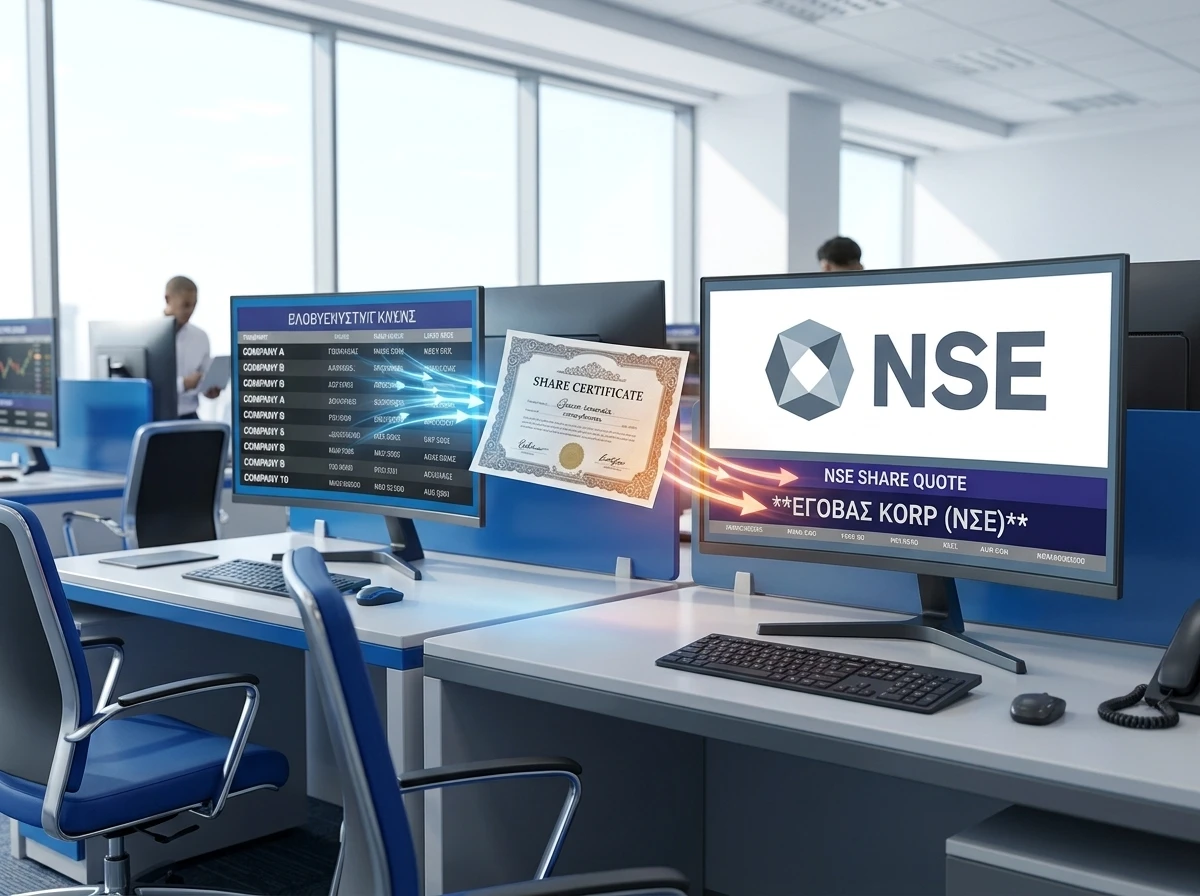
Why NSE Must List on BSE First
Under the Securities Contracts (Regulation) (Stock Exchanges and Clearing Corporations) Regulations, a recognised stock exchange may apply to list its securities on any other recognised exchange but not on itself or an associate. The ban exists to prevent an exchange from regulating its own stock and creating a clear conflict of interest.
NSE MD and CEO Ashish Chauhan has confirmed the exchange will list elsewhere. “It’s a regulation of India, and we have to abide by that,” he said earlier this year. The practical destination is BSE, which itself listed in 2017 and remains the only fully listed exchange peer.
NSE filed its draft red herring prospectus in June 2026 for a pure offer for sale of up to 149 million shares in the pure OFS, or about 6 percent of equity. No fresh capital is raised. Selling shareholders include SBI (up to 24.75 million shares), Morgan Stanley affiliates, Canada Pension Plan Investment Board, Temasek’s Aranda, Bank of Baroda and several PSU insurers. LIC, the largest holder at roughly 10.7 percent, is not selling. Grey-market talk has put the issue size near ₹30,000 crore and a valuation above ₹5 trillion.
FY26 numbers in the filing showed revenue of ₹16,601 crore (down 3 percent) and profit of ₹10,302 crore (down 15 percent), driven by softer transaction and clearing income. The regulator’s review of the DRHP is under way; final observations typically take longer for a market-infrastructure institution of this scale.
The pure OFS design means the company itself does not absorb IPO proceeds. Selling institutions set the float that reaches public hands, while LIC’s decision to hold keeps the largest single stake intact through listing. That mix shapes free-float maths once dual trading begins and index talk eventually starts.
The Liquidity Shift That Follows Dual Access
Once listed on BSE, NSE can simply add its own shares to the permitted-to-trade list. Investors who already hold demat accounts and trade almost exclusively on NSE would then buy and sell the stock without switching platforms or brokers. That convenience is the second-order effect the headline underplays.
BSE’s share price fell as much as 2.5 percent from the day’s high and closed down about 1.5 percent after the report surfaced, according to market coverage. Traders immediately priced the risk that a meaningful slice of secondary-market volume in NSE stock would migrate to the deeper NSE order book. Listing fees and prestige remain with BSE; the ongoing trading franchise does not.
- Investor access: Most retail and institutional flow already sits on NSE terminals and apps.
- Index eligibility: Dual trading could ease eventual inclusion discussions once free-float and liquidity thresholds are met.
- Broker economics: Firms that clear more business on NSE capture more of the stock’s turnover.
- BSE revenue: Cash-market transaction charges and any NSE-related product interest face a direct competitor on the same name.
The source cited by PTI said NSE “may not be required to take Sebi approval for allowing its own shares to trade on the platform as far as it lists its shares on another exchange.” Other reports, including those drawing on Bloomberg, note that as a market-infrastructure institution the exchange may still need an explicit nod. That point remains unresolved.
Price discovery would still begin on the listing venue, yet day-to-day depth would likely follow where members already concentrate cash and derivatives flow. The BSE reaction on the day the report surfaced showed how quickly that split was marked into another exchange’s own equity.
A Decade of Delays Ends With a Structural Workaround
NSE first filed IPO papers in 2016. The co-location investigation, leadership changes and a ₹1,300 crore Sebi settlement in January 2026 pushed the process into 2026. Board approval for the OFS came in February after the no-objection certificate. The June DRHP filing finally put paper in the regulator’s hands.
BSE’s own listing in 2017 showed that an exchange can be a public company without self-listing. NSE’s scale is larger: it dominates equity derivatives and holds the bulk of cash-market volume. Allowing its shares to trade on that same dominant platform simply extends the permitted-to-trade model that already covers hundreds of other names.
- 2016: Original DRHP filed; process stalled by co-location probe.
- January 2026: ₹1,300 crore settlement clears path for refiling.
- February 2026: Board approves OFS after Sebi NOC.
- June 2026: Fresh DRHP filed for up to 149 million shares.
- August 2026: Permitted-to-trade discussion surfaces as IPO timing firms up for later in the year.
The arrangement keeps the formal listing relationship and all continuous disclosure obligations on BSE while giving NSE the practical trading home most of its users already prefer.
Each pause on the path had a different cause, from the co-location probe to leadership turnover to the settlement that cleared the latest filing. The permitted-to-trade discussion now arriving as timing firms up is a market-structure answer to a regulatory constraint that never allowed self-listing in the first place.
Who Gains and Who Absorbs the Cost
NSE gains a cleaner investor experience and the chance that its stock becomes one of the more liquid names on its own screens. That visibility can support valuation during and after the IPO. Existing shareholders selling in the OFS also benefit if dual-venue trading lifts demand.
BSE gains the listing prestige and the associated one-time fees, plus whatever residual cash-market volume stays on its platform. It loses the exclusive secondary-market franchise many expected when the largest exchange chose its rival as home. Over time the volume split could matter more than the listing day headlines.
Retail investors who trade only on NSE avoid the friction of a second exchange. Institutions that already route most Indian equity flow through NSE terminals get a single-book experience. Brokers with heavier NSE concentration capture more of the turnover. The regulatory perimeter stays intact because the listing itself never moves to NSE.
NSE may not be required to take Sebi approval for allowing its own shares to trade on the platform as far as it lists its shares on another exchange.
Industry source familiar with the development, cited by PTI
Global investors who heard the idea during recent roadshows will weigh the dual-liquidity story when they decide how much of the OFS they want. The source material makes clear the discussion is already live.
The Offer for Sale Sets the Public Float
The June DRHP frames a pure offer for sale rather than a fresh issue. Up to 149 million shares, or about 6 percent of equity, can change hands without the exchange raising capital for its own balance sheet. Grey-market talk has clustered near a ₹30,000 crore issue size and a valuation above ₹5 trillion, figures that will tighten only when the price band arrives.
| OFS Element | Detail in Filing or Market Talk |
|---|---|
| Shares on offer | Up to 149 million |
| Equity stake | About 6 percent |
| Capital raised by NSE | None (pure OFS) |
| Grey-market issue size talk | Near ₹30,000 crore |
| Valuation talk | Above ₹5 trillion |
| Largest holder stance | LIC at roughly 10.7 percent, not selling |
Named sellers span public sector and global capital. SBI may sell up to 24.75 million shares. Morgan Stanley affiliates, Canada Pension Plan Investment Board, Temasek’s Aranda, Bank of Baroda and several PSU insurers also appear on the selling list. LIC’s choice to stay invested leaves the single largest stake outside the offer.
FY26 revenue of ₹16,601 crore and profit of ₹10,302 crore, both lower year on year on softer transaction and clearing income, give buyers a recent earnings base against those valuation markers. Dual-venue trading after listing would then decide how much of the new free float turns over on BSE screens versus NSE screens.
Dual Venues Leave Settlement Rules Unchanged
Permitted trading does not rewrite clearing or demat mechanics. Once the shares list on BSE and join NSE’s permitted list, the same depositories continue to hold investor balances. Brokers already connected to both markets can route a client order to whichever book shows better depth at that moment.
That is why the convenience argument lands hardest for retail and institutional users who almost never leave NSE terminals today. They would not need a new broker relationship or a second trading login merely to deal in the exchange’s own equity. Continuous disclosure and listing obligations would still run through BSE under the regulations that bar self-listing.
BSE’s 2017 listing proved an exchange can live as a public company on another venue. NSE’s version of that path adds scale: dominance in equity derivatives and the bulk of cash-market volume mean the permitted book, if opened, starts with an audience already assembled for other products. The formal issuer-exchange relationship and the everyday matching venue can therefore diverge without breaking settlement unity.
What Still Hangs on Sebi and Timing
Whether the permitted route for NSE’s own shares needs an extra board-level or Sebi-level green light is the open question. The PTI source sees the existing framework as sufficient. Other coverage treats a market-infrastructure institution as special enough to require explicit permission. Until that is settled, the dual-trading plan remains a plan.
The DRHP review continues. Price band, roadshow dates and final listing window all still sit ahead, with market talk pointing to later in 2026. Once the shares are listed on BSE, adding them to NSE’s permitted list can happen quickly if the legal reading holds. Investors will then trade the same stock on both platforms, with settlement and demat already unified under India’s depositories.
For now the second-order consequence is already visible in BSE’s price reaction and in the quiet recalculation of where the liquidity of India’s largest exchange IPO is likely to live. The formal listing will sit on one exchange. Most of the daily trading may not.

-
 TECH1 year ago
Where Garmin Watches are Made and How They are Assembled
-

 AUTO3 months ago
Tesla’s Roadster Is ‘a Few Weeks Away,’ Says Its Chief Designer
-
 NEWS10 years ago
Samsung Releases Galaxy Note7 TV Ad as Reddit AMA Leaks Specs
-
 NEWS10 years ago
Android 7.0 Nougat Rolls Out To Nexus Devices With New Emoji, Features
-
 FINANCE9 years ago
Cardano Price Surges as ADA Enters the Crypto Top Ten List
-
 NEWS10 years ago
Pre-Order the First Camera Made for Facebook Live Streaming Video
-
 FINANCE1 year ago
Binance Suspends Trading and Withdrawals for a System Upgrade
-
 FINANCE9 years ago
RChain Price Jumps Nearly 150% to a New All-Time High of $2.03