
FINANCE
Why Oil Stayed Below $100 After the Strait of Hormuz Closed
Oil trades near $96 despite the worst supply shock in history. Three emergency buffers kept crude from $200 after the Hormuz closure, and each one is now running out.

Three months after US and Israeli strikes on Iran shut down the Strait of Hormuz and removed more than 10 million barrels a day of Middle Eastern oil from global supply, Dated Brent crude trades near $96 a barrel. Forecasters had warned of $200; Trump said at the outset that some people had feared $300. The gap between those forecasts and the current price traces to a set of emergency buffers that worked better than almost anyone expected and are now depleting faster than the oil market has priced in.
The Workaround Economy
The most visible fix was American production. US shale capacity, built across the previous decade, turned the country into the world’s most important swing exporter after Persian Gulf barrels stopped clearing the strait. May crude exports hit a new monthly record, far above 2025 averages, as Asian and European refiners who would otherwise have bought Middle Eastern crude turned to US Gulf Coast terminals instead. The Trump administration pledged 172 million barrels from the US Strategic Petroleum Reserve as its share of a coordinated release with allied governments, the largest emergency reserve draw in history.
Beijing’s absence from the spot market has been equally decisive. China, the world’s largest crude importer, sharply cut purchases in the weeks after Hormuz closed. Two years of precautionary buying had built aboveground crude stockpiles to a record roughly 1.25 billion barrels by early May, per Kpler and Vortexa, two cargo-tracking firms, giving Chinese refiners room to step back from a stressed spot market. With refining margins in deeply negative territory, Rystad Energy analyst Ye Lin described the strategy as “allowing inventories to draw down gradually rather than bidding aggressively into a tight market.”
Alternative routing provided a third layer. Saudi Arabia pushed crude through its East-West pipeline to Red Sea export terminals; the UAE shifted barrels to Fujairah, a port that geography places safely outside the chokepoint. Together those two pipelines carry a fraction of the 20 million barrels a day that once cleared the strait, but they absorbed enough early-weeks flow to prevent a complete supply vacuum. “Over three months into this conflict, the world has proven surprisingly resilient,” said Maria Angelicoussis, chief executive of Angelicoussis Group, the largest Greek shipowner by vessel count, in rare public remarks this week. Commodity prices are still up 50% to 60% from pre-war levels and Asian LNG (liquefied natural gas) prices by 90%, she noted, “but they’re not at the sky-high levels that at least I would have personally expected.”
- 5.6 million barrels per day – US crude exports in May, a monthly record
- 6.36 million barrels per day – China’s seaborne crude imports in May, the lowest in a decade (Kpler)
- 400 million barrels – oil and refined products released from strategic reserves by coordinated allied government action, the largest such program in history
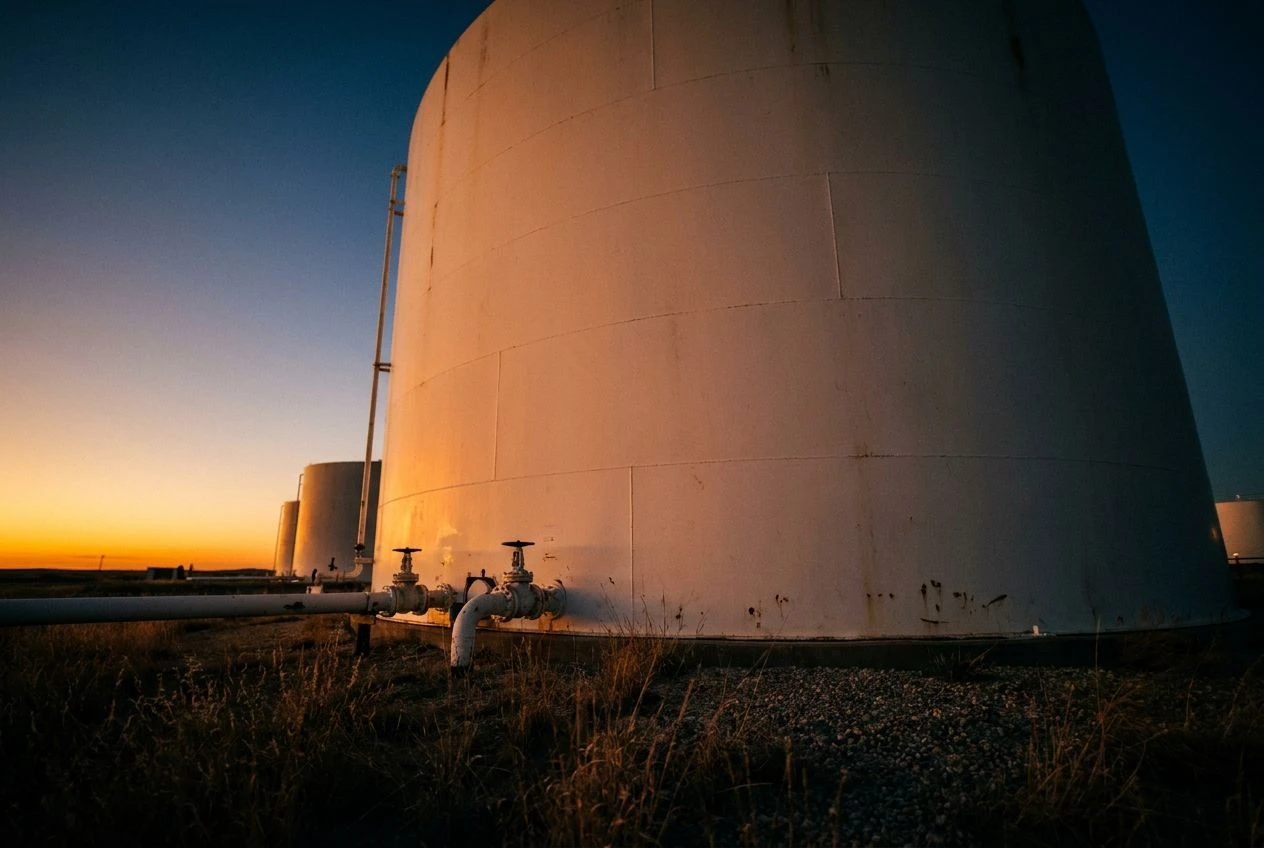
America’s Tanks Run Low
The SPR’s Shrinking Cushion
The Trump administration’s primary market stabilization tool was the US Strategic Petroleum Reserve (SPR), the federally managed emergency stockpile held in underground salt caverns along the Texas and Louisiana Gulf Coast. On March 11, Energy Secretary Chris Wright announced Washington would release 172 million barrels over approximately 120 days, part of a broader International Energy Agency (IEA) coordinated 400-million-barrel global release. By the week ending April 24, the Department of Energy (DOE) had drawn down 17.5 million barrels total, including 7.1 million barrels in a single week, the heaviest weekly drawdown since October 2022. Nearly half of those barrels were shipped overseas to Europe and other destinations, routing US emergency reserves into the global supply chain rather than domestic refiners alone.
The planned rate matters. At 172 million barrels over 120 days, the administration was running the SPR at roughly 1.43 million barrels per day. The Biden-era 2022 emergency release moved 180 million barrels over six months, or about 1 million barrels a day. The SPR held more than 400 million barrels before the war began, entering the crisis as the world’s largest publicly known emergency stockpile.
Cushing’s Thin Line
At the other end of the pipeline network, the Cushing, Oklahoma storage hub, the physical delivery point for WTI (West Texas Intermediate) crude and the basis for North American benchmark futures contracts, has been draining toward the level at which oil stops flowing cleanly.
Inventories at Cushing fell to 22.4 million barrels as of May 29, according to EIA (U.S. Energy Information Administration) weekly data, down about 4 million barrels from February 27, the day before the war began. Storage tracker AlphaBBL, which uses drones and satellites to measure tankage, recorded another 500,000-barrel decline in the five days through June 2. Refiner Phillips 66 believes Cushing could reach its operational minimum, according to two people familiar with internal assessments who asked not to be named. Jeremy Irwin, global crude lead at analytics firm Energy Aspects, has put that minimum at around 20 million barrels, the level at which blending becomes difficult and outbound pipeline flow can slow or stop.
The broader US inventory picture follows the same trajectory, with commercial crude stocks declining sharply across the country since the war began.
| Buffer | Before the War | Early June 2026 | Effective Limit |
|---|---|---|---|
| US Strategic Petroleum Reserve | More than 400 million barrels | 172 million barrels being released over 120 days | Running at record drawdown rate; roughly half shipped overseas |
| Cushing, Oklahoma storage hub | ~26.4 million barrels | 22.4 million barrels | ~20 million barrels operational minimum |
| US commercial crude stocks | Pre-war baseline | Down 63.9 million barrels (-7.5%) | Two-decade low |
| Global oil inventories | Pre-war level | 250 million barrels drawn in March-April alone (IEA) | IEA projects continued market deficit through Q3 |
“Each week that goes by, the system is tightening by 70 to 80 million barrels. You can’t do that forever,” said Greg Sharenow, head of Pacific Investment Management Co.’s (PIMCO) commodity portfolio investment team, which manages nearly $24 billion. “Over the course of the next few months, generously speaking, you’ll really be staring at a system that could be lacking flexibility because the buffers have been really depleted,” he added at the same conference.
China’s Strategic Silence
Beijing’s demand withdrawal has surprised commodity analysts more than any other single development in three months of war. May seaborne crude imports fell to a decade-low from 11.39 million barrels per day in February, the last pre-war month, as Chinese refiners drew from existing stockpiles rather than compete in a market priced above $100 a barrel. Refinery throughput fell to around 13 million barrels a day in May from 14.8 million across all of 2025. Imports dropped roughly 44% over that span; throughput fell about 12%. The record aboveground stockpile built before the war covered the arithmetic gap between those two numbers.
By late May, Vortexa’s China crude import analysis showed those aboveground reserves drawing down at around 1 million barrels a day as refiners ran plants on existing inventory. Refining margins recovered from a low of negative $60 a barrel in mid-April to around negative $2 a barrel in late May, per Oilchem, a Chinese oil market data provider, still too weak to justify aggressive spot-market buying. State-owned refiners, including Sinopec, have signaled to counterparties that they plan to hold June and July run rates largely unchanged.
Warren Patterson, head of commodities strategy for ING Groep NV in Singapore, noted that the pullback’s scale “has taken most of the market by surprise,” large enough to offset between a third and a fifth of all the barrels lost to the Hormuz blockade depending on the supply-loss estimate used. Structural demand forces compound the picture. China’s shift toward producing petrochemicals from coal rather than crude, combined with a domestic electric vehicle boom that has begun compressing gasoline consumption, means some of this withdrawal has a life independent of the war. Commercial gasoline and diesel inventories remained near two-year highs in May despite multi-year lows in refinery run rates, per Oilchem data. When Chinese state refiners do return to the spot market in volume, Kpler’s analysis of China’s crude market return warns that physical prices could reprice sharply higher.
How Does Oil Still Move?
The physical architecture holding some flows together rests primarily on two overland pipelines. Saudi Arabia’s East-West Pipeline (Petroline) crosses the Arabian Peninsula to Yanbu on the Red Sea, with an emergency capacity of 7 million barrels per day following 2019 conversions of natural gas liquids lines to carry crude. The UAE’s Abu Dhabi Crude Oil Pipeline (ADCOP) links inland fields to Fujairah, rated at close to 1.8 million barrels per day. Together, the IEA’s Hormuz bypass capacity assessment puts available alternative export routes at 3.5 to 5.5 million barrels per day, a meaningful but still limited offset to the 20 million barrels a day the strait once carried.
Iran has targeted these exit ramps directly. A drone strike on a Saudi pipeline pumping station in April cut throughput by 700,000 barrels per day before Aramco restored it within three days. Iranian strikes hit Fujairah storage tanks in March, suspending loadings on multiple occasions. Neither pipeline was designed to sustain maximum flow indefinitely, and Yanbu’s port loading infrastructure was never sized to match the pipeline’s theoretical ceiling.
Commercial vessel transits through Hormuz have fallen to two or three per day, against roughly 100 before the war, per shipping tracking data. Some tankers continue clearing the strait using increasingly opaque routing to evade military threats, complicated by GPS jamming that has made satellite tracking unreliable. Pavel Molchanov, an analyst at Raymond James, has described the bar for a meaningful recovery as at least 20 ships per day, consistently, for a full week, a level he does not expect without a durable US-Iran settlement.
Russian crude has been the quieter substitute. Flows to India, the world’s third-largest crude importer, averaged 1.76 million barrels per day in May, 63% above the February baseline. A temporary US Treasury sanctions waiver issued in early March allowed Russian oil stranded at sea to be delivered to Indian refineries, which had been configured to process the medium-sour Persian Gulf grades that Hormuz normally supplies and found Russian Urals crude close enough in specification to serve as a replacement.
Open interest in Brent crude futures has fallen to its lowest level since August as elevated volatility forces traders to reduce risk exposure. Trump’s repeated public comments that a settlement is within reach have driven oil bulls to the sidelines, leaving them holding small positions for brief periods. That financial restraint has been its own buffer, keeping futures markets from amplifying the physical tightness into a full-scale price spiral.
The Billion-Barrel Gap
By early June, the world had lost more than a billion barrels of cumulative oil supply since the war began, per aggregate EIA and IEA monthly figures. The IEA’s May 2026 Oil Market Report projects global oil supply declining by 3.9 million barrels per day on average across all of 2026, even assuming Hormuz flows gradually resume from June, with the market remaining in deficit through the third quarter. The agency said the market “will remain severely undersupplied through the end of Q3 2026, even assuming the conflict ends by early June.” Rebuilding the cumulative inventory drawdown, projected to reach 900 million barrels by September, would require roughly 1 million barrels per day of surplus supply sustained for three years.
No matter how quickly production is restored, you’re still left with … a billion barrels of oil that is missing.
Tom Baker, head of Vitol Bahrain, a unit of the world’s largest independent oil trader, said that at an industry conference this week.
Global oil demand is on track to contract by 420,000 barrels per day across all of 2026, 1.3 million barrels a day below the IEA’s pre-war forecast, as rising prices, a weaker economic environment, and demand-saving measures chip away at consumption. The steepest losses have been in petrochemicals and aviation, where jet fuel prices nearly tripled after Middle Eastern exports were cut off. But demand destruction has not been large enough to close the supply gap, and the summer fuel season, when road transport and seasonal aviation activity typically lift consumption, is arriving as inventories sit at their lowest in years. The IEA warned that “further price volatility appears likely ahead of the peak summer demand period.”
Trump’s repeated suggestions that a peace deal is close have functioned as their own buffer, making it hard for oil bulls to accumulate positions needed to drive prices materially higher. Brent open interest at its lowest since August captures that hesitancy: traders believe a resolution is possible, so they won’t bet heavily against one. The result is a market that has absorbed a historic supply shock through institutional restraint as much as through physical supply alternatives, and both of those props have a finite shelf life.
By mid-July, the SPR’s 120-day release program will be spent. Cushing, Oklahoma held 22.4 million barrels as of early June, 2.4 million above the threshold where operational flow disruptions begin.

-
 TECH1 year ago
Where Garmin Watches are Made and How They are Assembled
-

 AUTO3 months ago
Tesla’s Roadster Is ‘a Few Weeks Away,’ Says Its Chief Designer
-
 NEWS10 years ago
Samsung Releases Galaxy Note7 TV Ad as Reddit AMA Leaks Specs
-
 NEWS10 years ago
Android 7.0 Nougat Rolls Out To Nexus Devices With New Emoji, Features
-
 FINANCE9 years ago
Cardano Price Surges as ADA Enters the Crypto Top Ten List
-
 NEWS10 years ago
Pre-Order the First Camera Made for Facebook Live Streaming Video
-
 FINANCE1 year ago
Binance Suspends Trading and Withdrawals for a System Upgrade
-
 FINANCE9 years ago
RChain Price Jumps Nearly 150% to a New All-Time High of $2.03