
NEWS
WhatsApp Media Glitch Returns as Text Holds Across Countries
Photos videos stickers stuck while text works in India UK France and more; the latest in a pattern of multimedia server strain on a 3.3 billion user platform.

WhatsApp users across India, Britain, France, Brazil, Canada, Mexico, Spain and Colombia reported stuck photo, video, sticker and GIF uploads on Monday morning while text messages largely continued to land. Downdetector logged the early spike in complaints, with 41 percent tied to messaging, 40 percent to the app and 13 percent to notifications.
Meta issued no public statement on the disruption by the time reports spread. Trackers later showed the service recovering toward normal.
Stuck Uploads While Chats Keep Moving
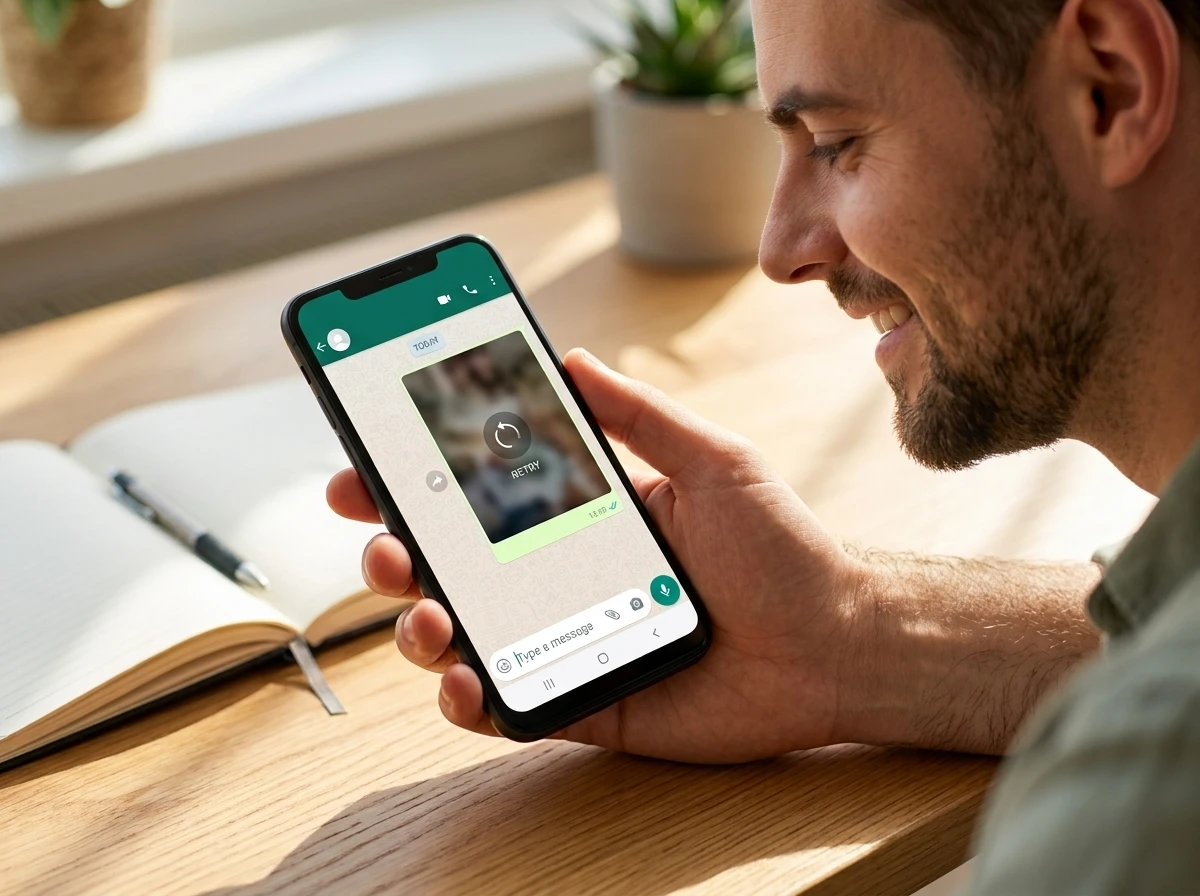
Many people could type and receive plain text without trouble. Media was another story. Images sometimes appeared in the chat window yet never finished uploading. Loading icons spun. Retry prompts flashed. Larger files timed out or delayed for minutes.
Stickers and GIFs failed in the same window. Users in multiple time zones described the same split: conversation text worked, the visual layer did not. That pattern pointed past local Wi-Fi or device glitches toward WhatsApp’s own multimedia path.
Common fixes brought little relief. Restarting phones, toggling between Wi-Fi and mobile data, and reinstalling the app left media uploads broken for a stretch of the morning.
Where the Complaints Landed
The geographic list was broad enough to rule out a single carrier or regional network. Reports clustered in high-usage markets that treat WhatsApp as default messaging.
| Tracker detail | Share or note |
|---|---|
| Messaging-related reports | 41 percent |
| App-related reports | 40 percent |
| Notification reports | 13 percent |
| Countries named in early coverage | India, UK, France, Brazil, Canada, Mexico, Spain, Colombia |
| Text vs media | Text often worked; media stalled |
Later checks on live user reports on Downdetector and StatusGator showed the surge easing and the service listed as operational, with only dozens of residual complaints in a 24-hour window. A similar media-focused incident had already appeared on August 3 lasting nearly six hours according to one tracker.
Billions of Daily Media Transfers Sit Behind the Glitch
WhatsApp carries enormous visual traffic every day. Independent tallies put the platform past 3.3 billion monthly active users early in 2026, with roughly 2.3 billion daily actives and more than 150 billion messages exchanged per day. Of those, media transfers run into the tens of billions daily, including billions of videos.
- 3.3 billion monthly active users as of January 2026
- 19 billion daily media transfers in recent tallies
- 200 million-plus businesses using WhatsApp Business tools
- India remains the single largest market by a wide margin
When the media path stutters, the volume makes the failure visible fast. Family groups, small shops sending product photos, and office chats that lean on images all hit the same wall at once.
Why Text Survives When Media Freezes
WhatsApp routes plain messages and media through different pipelines. Text is lightweight and resilient. Photos, videos and stickers require sustained uploads to processing servers, compression steps, and storage hand-offs before the recipient can pull them down.
That design explains the selective outages that keep returning. Connection blips, server load spikes or backend glitches hit the media layer harder than chat text. File size caps, format rules and the need for stable bandwidth add more failure points. One technical breakdown notes that media uploads hit separate servers and lack the same tolerance for packet loss that voice or text enjoy.
Past days have shown the same split. August 3 brought a multi-hour media sending problem. Older full-platform blackouts have taken down everything, yet the media-only flavor has become a recurring complaint in user forums and trackers.
Who Feels a Media Blackout First
In markets where WhatsApp penetration tops 65-85 percent of the connected population, the app functions as basic infrastructure. India alone accounts for hundreds of millions of users. Brazil, Indonesia, Mexico and much of Europe and the Middle East run heavy daily traffic through the same green bubbles.
Small businesses that share catalogs or order photos lose a sales channel when images refuse to leave. Family groups that coordinate with videos and stickers fall back to delayed text descriptions. Status updates and Channels that lean on media go quiet. The frustration compounds because the rest of the app looks healthy.
Users who already keep troubleshooting notes for the app often reach for the same short list of steps covered in guides to common WhatsApp problems and fixes. On Monday those steps did not clear the media queue for many.
- August 3, 2026, Multi-hour media sending and image/video issues logged by trackers, never officially detailed.
- June 12, 2026, Broader Meta platform disruption that briefly touched WhatsApp alongside Facebook and Instagram.
- Earlier 2024-2025 windows, Periodic full or partial outages that restored within hours after spikes on Downdetector.
- August 10, 2026, Fresh media-focused reports across the listed countries, text largely intact, recovery underway by midday trackers.
The pattern is short duration and incomplete visibility. Meta’s consumer status channels stay quiet more often than not. The Meta business status page listed no known issues for WhatsApp Business Platform during the latest window, consistent with a consumer-media layer problem that does not always surface on the enterprise dashboard.
Fixes Users Tried and the Limits They Hit
The Monday reports followed a familiar script of self-help that rarely works when the backend is the culprit.
- Restart the phone and reopen the app
- Switch from Wi-Fi to mobile data or the reverse
- Clear WhatsApp cache or reinstall
- Update to the latest store version
- Send the file as a Document instead of media to bypass compression
Some of those steps help with local storage, outdated clients or size limits. They do nothing against a server-side media stall. Users who waited reported gradual recovery as the morning progressed, matching the drop in live complaint volume.
Crowd reaction on X stayed lighter than full blackouts of prior years. The shared observation was simple: text ticks arrived, media spun. That mismatch made the outage feel more annoying than catastrophic, yet still disruptive for anyone whose chats are mostly visual.
Reliability Gaps on a Utility-Scale App
WhatsApp has grown into the default messaging layer for a large share of the planet outside China. End-to-end encryption, group scale and free global reach locked it in. The same growth concentrates risk on the media infrastructure that now carries billions of daily transfers.
Selective failures of the kind seen Monday do not take the whole service offline. They still interrupt the parts of conversation people rely on most for clarity, commerce and connection. Until the upload path matches the resilience of the text path, the historical pattern is likely to repeat in shorter or longer bursts.
For now the green ticks are back for most users. The next media stall will look familiar.

-
 TECH1 year ago
Where Garmin Watches are Made and How They are Assembled
-

 AUTO3 months ago
Tesla’s Roadster Is ‘a Few Weeks Away,’ Says Its Chief Designer
-
 NEWS10 years ago
Samsung Releases Galaxy Note7 TV Ad as Reddit AMA Leaks Specs
-
 NEWS10 years ago
Android 7.0 Nougat Rolls Out To Nexus Devices With New Emoji, Features
-
 FINANCE9 years ago
Cardano Price Surges as ADA Enters the Crypto Top Ten List
-
 NEWS10 years ago
Pre-Order the First Camera Made for Facebook Live Streaming Video
-
 FINANCE1 year ago
Binance Suspends Trading and Withdrawals for a System Upgrade
-
 FINANCE9 years ago
RChain Price Jumps Nearly 150% to a New All-Time High of $2.03