
BUSINESS
Vodafone Idea Q1 Gains Buy Time as Funding Clock Ticks Louder
Vi posts first subscriber adds since merger and 10% ARPU jump to Rs 195, but deferred dues and stalled large funding package raise the stakes on execution.

Vodafone Idea narrowed its consolidated net loss to Rs 3,754 crore in the June quarter from Rs 6,608 crore a year earlier while revenue from operations rose 6% to Rs 11,689 crore. The quarter also delivered the company’s first net subscriber addition since the Vodafone-Idea merger and the industry’s fastest ARPU growth.
CEO Abhijit Kishore called FY27 the year of execution. The numbers back the claim on operations. They also tighten the remaining pressure point: closing a large funding package still under discussion with lenders.
Key Metrics That Moved in Q1
Revenue from operations reached Rs 11,689 crore, up 6% year on year and 3.2% sequentially from Rs 11,332 crore in the March quarter. EBITDA climbed 9.1% to Rs 5,034 crore. The margin held at 43.1%, matching the prior quarter and rising from 41.8% a year ago.
| Metric | Q1 FY27 | Q1 FY26 | Change |
|---|---|---|---|
| Revenue from ops (Rs cr) | 11,689 | ~11,023 | +6% |
| EBITDA (Rs cr) | 5,034 | 4,612 | +9.1% |
| EBITDA margin | 43.1% | 41.8% | +130 bp |
| Net loss (Rs cr) | 3,754 | 6,608 | -43% |
| ARPU (Rs) | 195 | 177 | +10.2% |
| Subscribers (m) | 193.1 | – | +0.3 QoQ |
Total income stood at Rs 11,884 crore. The quarter included Rs 1,611 crore of net exceptional gains, mainly from remeasurement of settlement assets. That compares with a far larger one-time benefit that produced a headline profit of Rs 51,970 crore in Q4 FY26. Stripping those items, the underlying loss trend improved.
Capex came in at Rs 1,930 crore. The company has already placed orders worth Rs 9,000 crore against its three-year guidance of Rs 45,000 crore.
First Subscriber Adds Since the Merger
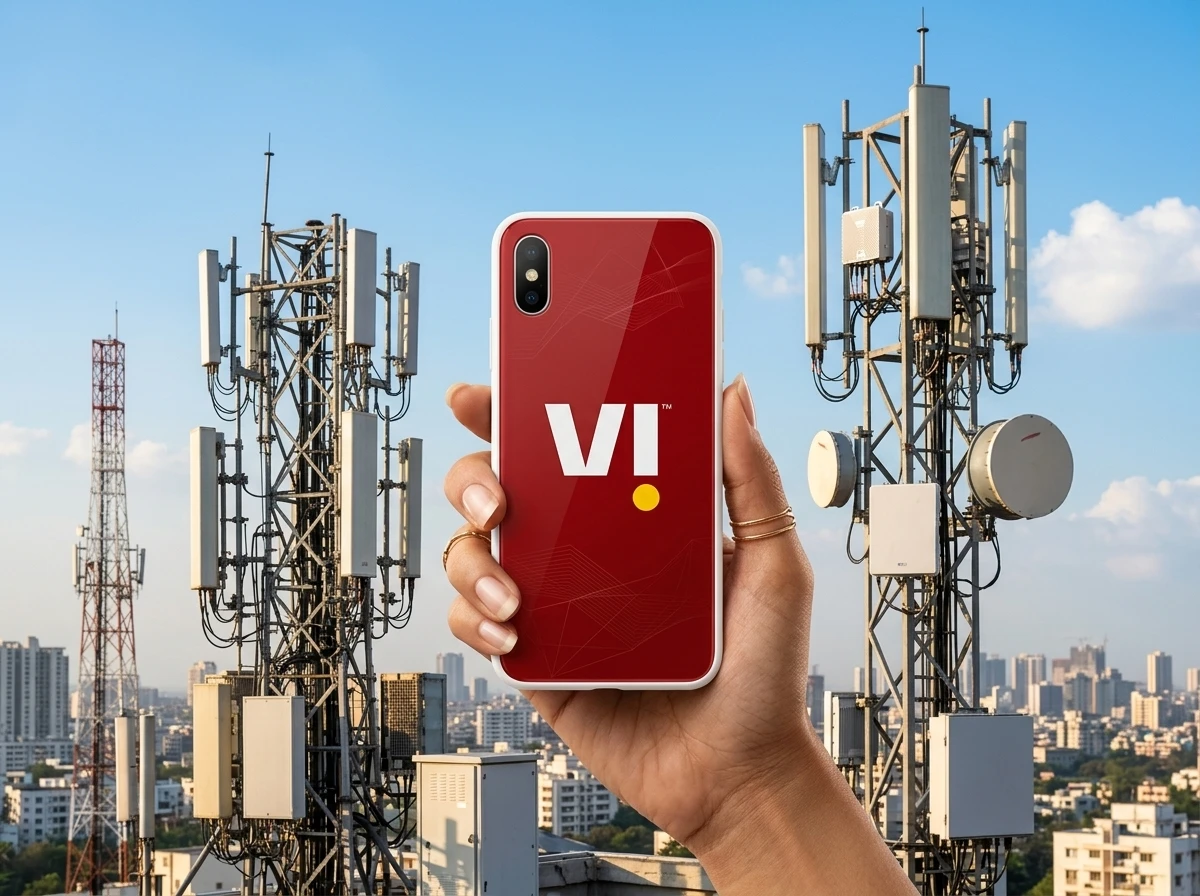
The customer base ended the quarter at 193.1 million, up from 192.8 million in March. It is the first positive net addition since the 2018 merger. The 4G and 5G base rose to 130.1 million from 127.4 million a year earlier.
- ARPU Rs 195: up 10.2% year on year, the highest growth rate among major operators this quarter.
- Data traffic: 88.4 petabytes per day, a 27.9% jump from 69.1 PB.
- 5G footprint: live in more than 200 cities and towns across 17 circles.
- 4G coverage: 87% of population, with a target above 95% in those circles.
Kishore highlighted the subscriber milestone directly. “During the quarter, we have delivered on all the critical business parameters we measure our success on, including subscriber addition, first since merger, and we will continue to drive this,” he said.
Our robust Q1FY27 performance is a strong validation of our defined strategy and disciplined execution.
Abhijit Kishore, CEO of Vodafone Idea, also pointed to revenue growth of 6% and EBITDA crossing Rs 5,000 crore.
Network Orders Keep Pace With Traffic
Fresh orders went to Ericsson, Nokia, Samsung and other partners. Broadband towers added more than 15,600 over the past year, taking the total near 205,000. The traffic surge shows customers are using the network more heavily once they stay or upgrade.
That usage creates its own demand for capacity. The three-year Rs 45,000 crore plan is meant to close coverage and quality gaps that once drove heavy churn. Cash and bank balances stood at Rs 6,558 crore at end-June, helped by warrant proceeds. The company said it has secured Rs 6,400 crore of funding including warrants and facilities, and remains engaged with lenders on the larger plan.
The Deferred Obligations That Still Dominate
Bank debt is low. Debt from banks stood at Rs 211 crore in one company disclosure, with total outstanding debt from banks and others around Rs 3,708 crore including accrued interest. That is a fraction of earlier levels after earlier restructurings and equity raises.
The larger stack sits in deferred payments. Spectrum deferred payment obligations reached Rs 130,299 crore. AGR dues stood at Rs 25,759 crore. Together they dwarf the operating cash generation of any single quarter.
| Liability Type | Amount (Rs cr) |
|---|---|
| Spectrum deferred | 130,299 |
| AGR deferred | 25,759 |
| Bank and other debt (approx) | 3,708 |
| Cash and bank | 6,558 |
Earlier government relief on AGR timing and one-time gains improved the headline. The remaining schedule still requires steady cash and fresh capital to keep the network competitive.
Lender Talks and the Promoter Guarantee Question
A larger package discussed with an SBI-led consortium has been described in market reports as roughly Rs 35,000 crore (Rs 25,000 crore funded plus non-fund facilities). Lenders had broadly accepted moderated financial projections, yet the process stalled earlier on demands for promoter guarantees from the Aditya Birla Group and Vodafone Group.
Company commentary on the August results stayed consistent with prior language: discussions continue and management has confidence of successful closure. The details on the moderated 35000 crore package show how the bottleneck shifted from business viability to risk-sharing structure. Until that closes, the full capex cadence stays constrained relative to the two larger rivals.
Warrant issuance and smaller facilities have already lifted cash. Full execution of the network plan still hinges on the bigger close.
Where Airtel and Jio Still Lead on Monetisation
Vi’s ARPU of Rs 195 marks clear progress and the best growth rate this quarter. It remains well below recent figures reported for Bharti Airtel (around Rs 264) and Reliance Jio (around Rs 215). The gap matters because higher ARPU funds denser 5G rollouts, spectrum purchases and marketing that lock in premium users.
Market share data tracked through the TRAI telecom subscription data series continues to show a clear three-player private market with Vi in third place. Positive net adds reverse years of erosion, yet the absolute base and revenue share still trail. Data usage growth at 28% year on year is healthy, but the capacity race is expensive.
Parent company updates appear in the broader Vodafone Group quarterly updates archive, which track international performance separately from the Indian associate’s local funding and spectrum path.
Execution Year Meets the Funding Test
The June quarter delivered on the metrics management said it would measure: revenue growth, EBITDA above Rs 5,000 crore, ARPU expansion, first subscriber gains, and visible 5G expansion. Cash is higher. Orders are placed. Bank debt is minimal.
Those gains do not erase the deferred stack or the need for the larger lender package. Soaring daily data traffic and the ARPU gap with the top two operators mean the network must keep improving or the recent subscriber stability risks reversing. Kishore’s confidence rests on closing the remaining talks. The next few months will show whether the operational momentum survives long enough for that capital to arrive and be spent.
For now the company has bought itself clearer runway and a cleaner set of operating trends than it has shown in years. The second-order pressure is simply that the same numbers that look strong also raise the cost of any further delay on funding.

-
 TECH1 year ago
Where Garmin Watches are Made and How They are Assembled
-

 AUTO3 months ago
Tesla’s Roadster Is ‘a Few Weeks Away,’ Says Its Chief Designer
-
 NEWS10 years ago
Samsung Releases Galaxy Note7 TV Ad as Reddit AMA Leaks Specs
-
 NEWS10 years ago
Android 7.0 Nougat Rolls Out To Nexus Devices With New Emoji, Features
-
 FINANCE9 years ago
Cardano Price Surges as ADA Enters the Crypto Top Ten List
-
 NEWS10 years ago
Pre-Order the First Camera Made for Facebook Live Streaming Video
-
 FINANCE1 year ago
Binance Suspends Trading and Withdrawals for a System Upgrade
-
 FINANCE9 years ago
RChain Price Jumps Nearly 150% to a New All-Time High of $2.03