
NEWS
Microsoft Layers Windows Fee Hike Atop AI-Driven PC Cost Crisis
Microsoft raised Windows OEM licenses 7-10% from July while AI shortages it fueled already pushed components sky-high, forcing another 5% PC price rise in Q3 2026.

Microsoft raised average Windows OEM licensing fees 7-10% starting in July 2026, and PC brands now expect another 5% rise in end-product prices this quarter. The move lands on top of an AI-driven component crunch that has already driven memory and storage costs sharply higher.
United Daily News first reported the details after speaking with Taiwanese PC executives. The fee hike is steeper than the single-digit annual adjustments OEMs had grown used to.
The Fee Schedule Got Steeper in July
A PC brand executive told UDN that Microsoft lifts Windows OEM fees every year. Past increases stayed mostly in the single digits. This July the average jumped to 7-10%.
Fees are not flat. They scale with the processor tier. Machines with lower-end CPUs carry smaller licenses. Windows Pro and Enterprise versions, plus systems with higher-core chips, cost more. Higher-end CPUs therefore absorb the largest absolute increases.
- Average OEM Windows fee rise: 7-10% from July 2026
- Historical pattern: mostly single-digit annual lifts
- Pricing structure: tiered by CPU class and Windows edition
- Higher Pro/Enterprise and premium CPU SKUs hit hardest
Most OEMs have already baked the new fees into current pricing. The jump was simply buried inside the larger component inflation that began last year.
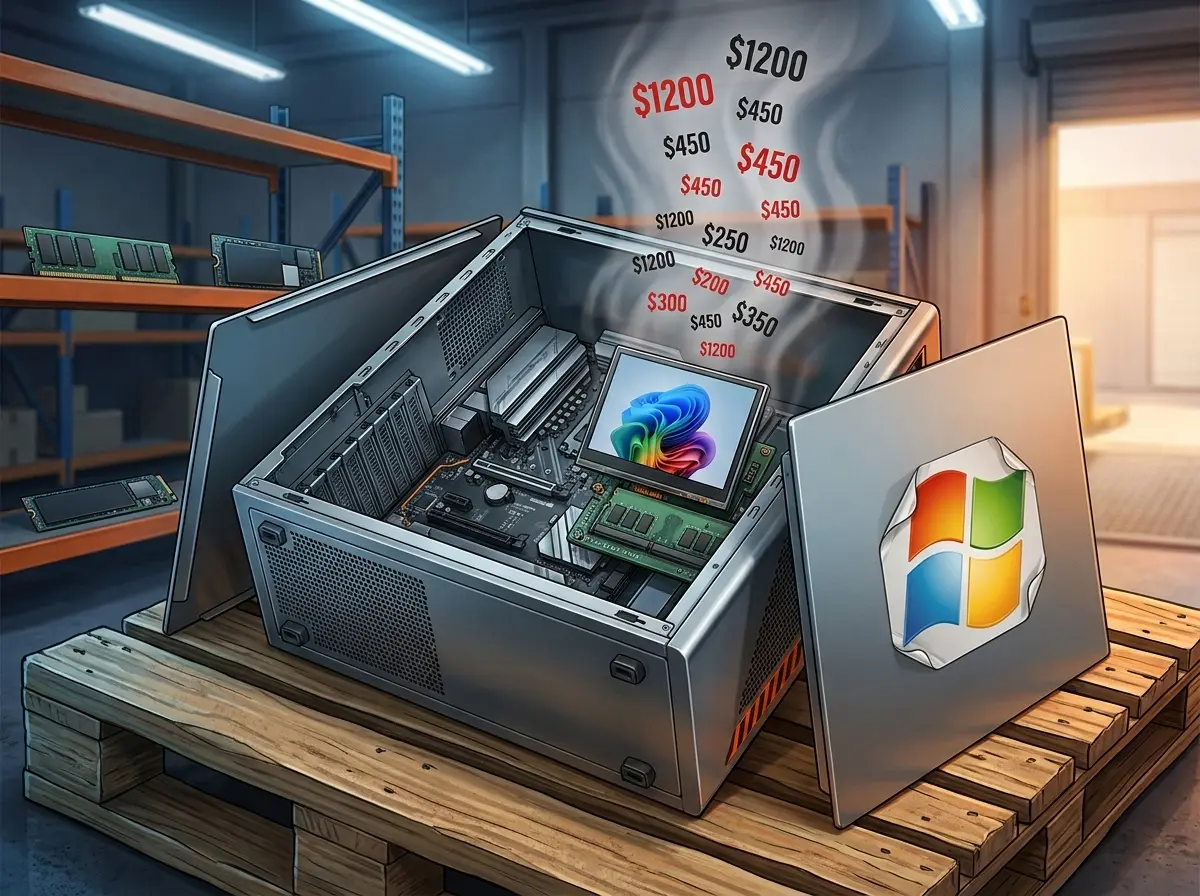
AI Demand Already Emptied the Component Shelves
Memory and storage prices exploded because AI data centers swallowed supply. Microsoft sits near the center of that demand through its OpenAI partnership and massive Azure build-out. DRAM contract prices climbed by triple digits in places. Some system builders reported RAM costs up 500% and SSDs doubled at points in late 2025 and early 2026.
BBC reporting put the manufacturing-cost hit for a typical 16GB laptop at $40 to $50. Memory’s share of total PC bill-of-materials rose from the traditional 15-20% range toward 30-40% in the worst cases. CPUs also tightened as fabs prioritized server silicon. PCBs, plastics and other materials later joined the list.
Stats snapshot of the squeeze
- RAM: multi-fold spikes, some tallies at 500% peaks
- SSD/NAND: roughly doubled on a per-terabyte basis in key windows
- CPU lead times: stretched from weeks to months for popular consumer parts
- BOM impact: memory alone can now claim 30-40% of build cost
The same company whose AI investments helped empty the shelves is now collecting a larger cut on every Windows machine that still ships. That timing is the irony.
Taiwanese Brands Are Passing the Bill
ASUS and Acer have already told the market that Q3 prices will climb again. ASUS Taiwan system general manager Liao Yixiang said cumulative price rises versus Q4 2025 had approached 30% by May. Q3 adjustments would be milder, in the single-digit range. Acer signaled similar single-digit or roughly 5% moves.
| Vendor / Metric | Detail | Source Window |
|---|---|---|
| ASUS cumulative rise | ~30% vs Q4 2025 | Through May 2026 |
| ASUS Q3 outlook | Single-digit further increase | Mid-2026 statements |
| Acer / industry Q3 | ~5% or single-digit | UDN August report |
| Global Q2 shipments | 65 million units, -4% YoY | Counterpoint |
Counterpoint Research recorded global PC shipments fell 4% to 65 million units in Q2 2026, the first year-over-year drop since Q1 2025. Windows migration cycles and AI PC marketing still supported some commercial refresh demand, yet rising memory and component costs squeezed OEMs from both sides.
Shipments Already Turned Down
Higher prices have not fully offset unit losses. Revenue may look healthier in spots, but volume is soft. Consumers and businesses delay purchases when a mid-range laptop suddenly costs hundreds more. System integrators and channel partners report the same hesitation.
The market entered 2026 with residual recovery momentum from earlier Windows 10 end-of-support and AI-PC hype. That support is now colliding with sticker shock. Pre-emptive buying in Q1 gave way to the Q2 contraction once the full cost wave hit shelves.
Enterprise Windows Pricing Moved in Parallel
Microsoft’s July 1 commercial pricing update hit volume Windows SKUs as well. The company’s own licensing page shows clear lifts.
| SKU | % Change | Old Price (USD) | New Price (USD) |
|---|---|---|---|
| Windows E3 | 15% | $6.63 | $7.63 |
| Windows Enterprise (per device) | 31% | $5.85 | $7.63 |
| Windows E5 | 9% | $11.81 | $12.81 |
That Windows Enterprise per-device fee rose 31% sits in the same July window as the OEM adjustment. Commercial customers renewing after the date face the new rates. Microsoft framed the changes as reflecting added security and management features, yet the direction matches the OEM pressure.
Buyers and OEMs Absorb the Double Hit
End customers see higher shelf prices with little ability to separate the Windows line item from the RAM or SSD surcharge. OEMs face margin compression if they absorb any portion of the fee. Channel partners must retrain sales teams on new configurations that still feel under-specced relative to cost.
- Consumers delaying mid-range and gaming upgrades
- Businesses stretching refresh cycles beyond Windows 10 sunset plans
- OEMs managing inventory risk on expensive memory-heavy AI PCs
- System builders watching DIY margins evaporate first
Microsoft has publicly pushed for higher RAM baselines. Its own messaging once called 32GB the “no worries” tier for Windows 11 gaming and AI features, a stance that sits awkwardly beside the current memory shortage. Readers tracking that tension can revisit Microsoft’s own 32GB RAM guidance for the full context.
Further Softness Looks Likely in Coming Months
If component costs stay elevated and the Windows fee becomes permanent, OEMs will keep lifting list prices. Unit demand is already negative. Another leg of increases risks a deeper volume trough through the rest of 2026. Some buyers will simply stay on older hardware longer or explore lower-cost Arm alternatives where Windows licensing dynamics differ.
Lon Seidman summarized the sequence many enthusiasts are watching: first RAM, then storage, now the Windows OEM price itself. That crowd observation tracks with the data. Microsoft’s AI investments created scarcity that made every PC more expensive; collecting a larger software royalty on the remaining machines compounds the damage.
Pressure from Windows on Arm competition pressure and efficiency critiques of Windows 11 only sharpens the contrast. Raising the toll while the road is already blocked is a choice that OEMs and their customers will remember at the next buying cycle.
PC prices keep climbing. Microsoft is collecting a bigger cut of each one.

-
 TECH1 year ago
Where Garmin Watches are Made and How They are Assembled
-

 AUTO3 months ago
Tesla’s Roadster Is ‘a Few Weeks Away,’ Says Its Chief Designer
-
 NEWS10 years ago
Samsung Releases Galaxy Note7 TV Ad as Reddit AMA Leaks Specs
-
 NEWS10 years ago
Android 7.0 Nougat Rolls Out To Nexus Devices With New Emoji, Features
-
 FINANCE9 years ago
Cardano Price Surges as ADA Enters the Crypto Top Ten List
-
 NEWS10 years ago
Pre-Order the First Camera Made for Facebook Live Streaming Video
-
 FINANCE1 year ago
Binance Suspends Trading and Withdrawals for a System Upgrade
-
 FINANCE9 years ago
RChain Price Jumps Nearly 150% to a New All-Time High of $2.03