
NEWS
iQOO Z11 Curved 5000-Nit Display Quietly Raises Midrange Bar
iQOO Z11 brings India’s first Dimensity 7500 Turbo and a 144Hz 3D curved 5000-nit AMOLED for immersive streaming under Rs 40,000 on August 20.

iQOO confirmed a 6.8-inch 1.5K 3D curved AMOLED display with 144Hz refresh rate and 5,000 nits peak brightness for the Z11, set to launch in India on August 20 as the country’s first phone with the MediaTek Dimensity 7500 Turbo.
The panel also hits 2,000 nits high brightness mode and 3,000 nits local peak, paired with eye-care tuning. That combination, plus the India-only curved treatment, quietly targets all-day streaming and outdoor visibility more directly than the chipset headlines alone suggest.
A 3D Curved Panel Built for Immersion and Daylight
Official teasers show the display measuring 6.8 inches (some materials list 6.83) at 1.5K resolution with a 144Hz refresh rate. Peak brightness reaches 5,000 nits. High brightness mode sits at 2,000 nits and local peaks at 3,000 nits. Eye-care features aim to keep long scrolling and streaming sessions comfortable.
iQOO India posted the details directly: the phone brings a 6.8 inch 1.5K AMOLED Curved Display with those brightness figures and eye-care tuning “designed to make every scroll, stream, and session easier on your eyes.” The 3D curve and one-piece narrow frame deliver thin bezels and a claimed high screen-to-body ratio for video.
This marks a clear step up from the iQOO Z10’s smaller FHD+ panel and lower refresh rate. The India model uses the curved glass while Chinese and Malaysian Z11 variants stick with flat screens, a deliberate localization choice.
| Model | Size / Type | Resolution / Hz | Peak Brightness |
|---|---|---|---|
| iQOO Z11 (India) | 6.8-inch 3D curved AMOLED | 1.5K / 144Hz | 5,000 nits |
| iQOO Z10 | 6.77-inch AMOLED | FHD+ / 120Hz | Lower (prior gen) |
| iQOO Z11 (China) | 6.83-inch AMOLED | 1.5K / up to 165Hz | High (different config) |
iQOO also claims the 2,000 nits HBM leads phones launched in 2026 under Rs 40,000 as of late July, based on internal research. That positions the screen for bright outdoor use without constant manual boosts.
India’s First Dimensity 7500 Turbo Arrives
The Z11 debuts the MediaTek Dimensity 7500 Turbo in India. iQOO states the chip has scored over 1.2 million on AnTuTu. Base Dimensity 7500 results sit near that mark already.
MediaTek’s official page details the core silicon: four Arm C1 Pro cores up to 2.6GHz plus four C1 Nano cores up to 2.0GHz on a 4nm process, paired with an Arm Mali-G625 MC2 GPU and MediaTek NPU 850. The chip supports primary displays up to 1344 x 2800 at 144Hz, matching the Z11 panel exactly.
- CPU leap: New Arm C1 architecture replaces older A78/A55 mixes for roughly 20% Geekbench gains over the Dimensity 7400 in early tests.
- AI ready: NPU 850 delivers over twice the prior-generation AI performance for on-device generative tasks.
- Efficiency: MediaTek lists 5-9% better power use in daily apps and 4-7% in games versus the previous generation.
- Multimedia: 4K HDR capture and playback plus support for larger 1.5K+ panels.
Independent tallies put a standard Dimensity 7500 at an AnTuTu score near 1.18 million. The Turbo variant and iQOO tuning push the claimed figure past 1.2 million. That sits well above typical Dimensity 7400 results in the 900k-1M range and gives the Z11 competent mid-range headroom for multitasking and lighter gaming.
Skyline Camera Bar Meets Slim Green and Blue Bodies
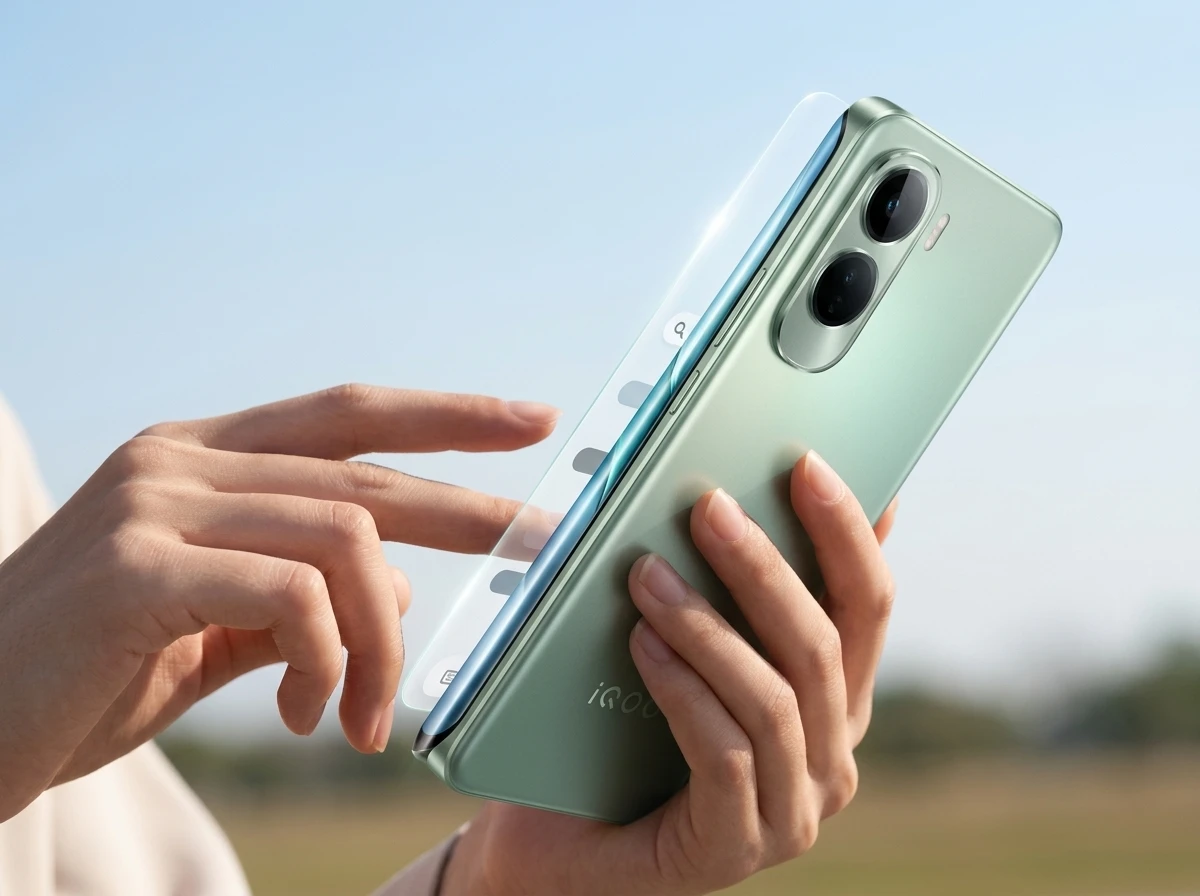
The phone measures 7.99mm thick and weighs 199g. Two finishes are confirmed: Aurora Green and Celestial Blue. Both feature a new Skyline Camera Module, a metallic horizontal bar that houses two sensors and an LED ring light.
iQOO has teased the module as flagship-inspired and seamless. The one-piece narrow frame pairs with the 3D curve to create a continuous feel that users on X have already called immersive and comfortable in hand. The design deliberately differentiates the India unit from the flat-screen China original.
Looks bigger. Feels better. The iQOO Z11 pairs a 3D Curved AMOLED Display with a One-Piece Narrow Frame, giving you an immersive viewing experience with 6.83 inch screen that sits comfortably in your hand.
That line comes from an official iQOO India post that also locked the August 20 launch date.
Battery, Cameras and Protection Still Tipped
Full final specs await the launch event, but consistent leaks and teaser language point to a large battery between 7,000mAh and 8,000mAh with 90W fast charging. The China Z11 carries a 9,020mAh cell, so the India version may trade some capacity for the curved glass and different chip thermal profile.
Camera expectations center on a 50MP primary with OIS plus a secondary sensor (often listed as 2MP) and a 32MP front camera. IP68 and IP69 dust and water resistance are widely tipped, along with an in-display fingerprint sensor and up to 12GB RAM. Android 16 is the expected software base.
| Area | Expected Spec | Notes |
|---|---|---|
| Battery | 7,000-8,000mAh + 90W | China model uses 9,020mAh |
| Rear camera | 50MP OIS + secondary | Skyline bar + LED ring |
| Front camera | 32MP | Confirmed in multiple leaks |
| Protection | IP68 + IP69 | Dust and high-pressure water |
| Build | 7.99mm / 199g | Official measurements |
Those numbers would keep the Z11 competitive on endurance. Mid-range devices already face multi-hour gaming drain tests; the 3-hour gaming battery test results on similarly sized packs show how large cells and efficient chips now matter as much as peak scores.
Where the Z11 Sits Against Redmi and Motorola Options
Pricing is expected under Rs 40,000, with some tips landing near Rs 35,000. That puts it against the Redmi Turbo 5 (often around Rs 38,000-41,000 with Dimensity 8500 variants) and Motorola Edge 70 series models that mix curved 144Hz panels and higher price tags up to the high 40ks.
The Z11 does not chase the absolute highest mid-range silicon. Instead it pairs a strong new 7500-series chip with a brighter, curved 1.5K panel and slim design that many rivals still treat as optional. Sustained performance will depend on cooling; flagship-adjacent approaches such as the liquid cooling heat management approach show how thermal design now separates lasting frame rates from short benchmark spikes.
For pure synthetic scores the higher Dimensity 8500 phones may lead. For daylight readability, immersion and everyday fluidity the Z11’s confirmed screen looks ready to stand out.
Multimedia Users and Z-Series Owners Gain First
The clearest beneficiaries are people who watch video outdoors, scroll long social feeds, or game casually on a large bright panel. The combination of 5,000 nits peak, 144Hz, thin bezels and eye-care tuning addresses exactly those habits.
- Z10 owners pick up a larger higher-resolution curved screen, fresher chipset architecture and modern design language.
- Buyers who prioritize display quality over maximum AnTuTu get a segment-leading brightness claim without jumping to flagship money.
- Content consumers who want IP68/IP69 durability and fast charging in a sub-40k package gain another serious option.
Crowd conversation on X has focused less on the chip name and more on the return of curved glass and the camera bar styling. That matches the sleeper read: the phone’s strongest differentiators sit in the everyday visual experience rather than a single benchmark number.
iQOO will reveal pricing and remaining details on August 20. Until then the confirmed display and first-in-India Dimensity 7500 Turbo already sketch a mid-ranger built for the way most people actually use their phones: bright screens, smooth motion and long comfortable sessions.

-
 TECH1 year ago
Where Garmin Watches are Made and How They are Assembled
-
 AUTO3 months ago
Tesla’s Roadster Is ‘a Few Weeks Away,’ Says Its Chief Designer
-
 NEWS10 years ago
Samsung Releases Galaxy Note7 TV Ad as Reddit AMA Leaks Specs
-
 NEWS10 years ago
Android 7.0 Nougat Rolls Out To Nexus Devices With New Emoji, Features
-
 FINANCE9 years ago
Cardano Price Surges as ADA Enters the Crypto Top Ten List
-
 NEWS10 years ago
Pre-Order the First Camera Made for Facebook Live Streaming Video
-
 FINANCE1 year ago
Binance Suspends Trading and Withdrawals for a System Upgrade
-
 FINANCE9 years ago
RChain Price Jumps Nearly 150% to a New All-Time High of $2.03