
NEWS
July Buck Moon Lights Saudi Skies and Rising Dark Tourism
July 29 Buck Moon and Asir Rutab Moon lit Saudi skies under clear conditions, highlighting folklore and the Kingdom’s certified dark-sky parks drawing photographers.

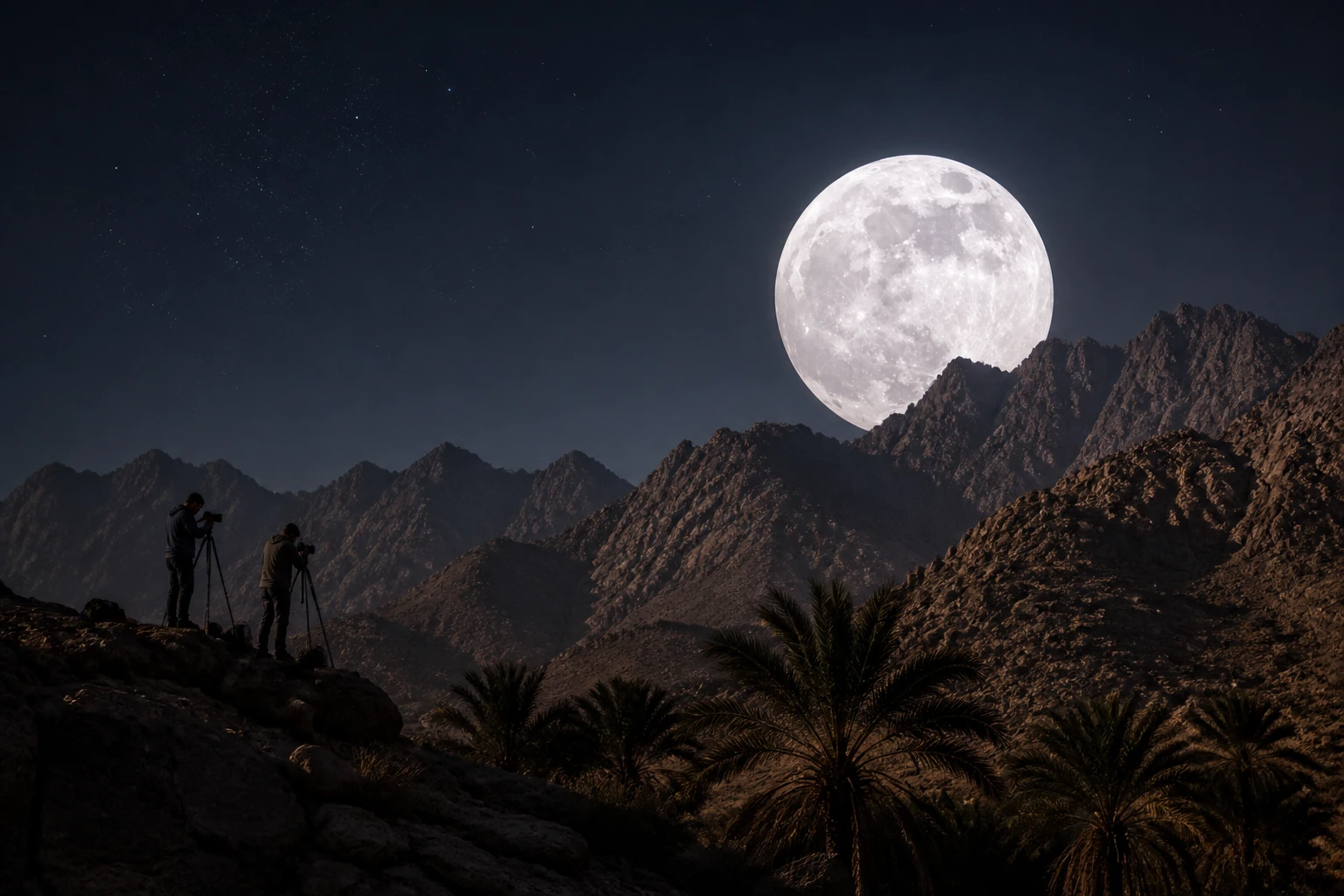
The July full moon lit skies across Saudi Arabia on July 29, drawing residents, photographers and club members from the Northern Borders to the Asir mountains under clear conditions that the Saudi Press Agency called ideal.
Known globally as the Buck Moon and locally in Asir as the Rutab Moon, the display mixed harvest folklore with the Kingdom’s expanding night-sky appeal.
Buck Moon and Rutab Moon Share One Sky
In the Northern Borders, Astronomy and Space Club member Adnan Khalifa explained the traditional North American name. Male deer grow new antlers in this season, so Indigenous folklore called it the Buck Moon or Deer Moon.
Other cultures use Mango Moon for the same lunar phase because it lines up with mango harvests. Khalifa stressed these labels come from cultural heritage, not astronomy. They show how people once tied lunar cycles to seasonal work and weather.
Asir residents watched the same full moon under the local name Rutab Moon. Rutab means the soft, fresh dates that ripen in summer. The bright disk cast a strong glow over the region’s mountains and pulled in skywatchers with cameras.
SPA noted the Rutab Moon has long sat inside local folklore, linking farm seasons, celestial events and daily life.
| Name | Region or Culture | Seasonal Link |
|---|---|---|
| Buck Moon / Deer Moon | North American Indigenous | Male deer grow antlers |
| Rutab Moon | Asir, Saudi Arabia | Summer date ripening |
| Mango Moon | Various tropical regions | Mango harvest |
| Raspberry Moon / Berry Moon | Algonquin, Anishinaabe | Berry ripening |
| Thunder Moon | Western Abenaki | Summer storms |
These names sit alongside others such as Feather Moulting Moon and Salmon Moon recorded in traditional calendars.
How a Full Moon Forms
A full moon occurs when the moon sits opposite the sun as seen from Earth. Sunlight then lights nearly the entire lunar disk, so the moon looks fully lit and especially bright.
Observers under clear skies can pick out craters, mountain ranges and highlands with binoculars or small telescopes. The phase is the most prominent in the lunar cycle.
- Peak illumination: July 29 at 10:36 a.m. Eastern Time (1436 GMT).
- Riyadh local time: Riyadh full moon at 5:35 pm local.
- Best look: After sunset facing southeast or east as it rises.
- Surface detail: Craters and highlands visible even with modest optics.
The moon can look oversized near the horizon because of the moon illusion. Rayleigh scattering often turns it yellow-orange when low.
Clear Desert Skies Do the Heavy Lifting
Saudi Arabia’s low humidity, sparse cloud cover and vast open landscapes give it natural advantages for night-sky viewing. The latest full moon followed the June Dhu Al-Hijjah full moon, the final one of the 1447 AH Hijri year, which also drew strong crowds in the Northern Borders under excellent conditions.
SPA said the Kingdom’s desert skies and varied terrain continue to attract astronomy enthusiasts and astrophotographers year-round. Full moons wash out the faintest stars and the Milky Way, yet they remain popular for landscape photography and simple naked-eye watching.
Global guides list the best viewing window after sunset facing east, with the Summer Triangle and Scorpius nearby once the moon climbs.
Dark Parks Already on the Map
The real story behind repeated clear full-moon nights is infrastructure. AlUla holds multiple International Dark Sky Park designations from DarkSky International.
The AlUla Dark Sky Parks spanning 6,146 square kilometres rank third globally in the park category. Phase one covered AlUla Manara and AlGharameel Nature Reserves in 2024. Phase two added Sharaan National Park and Wadi Nakhlah Nature Reserve in 2025.
The Royal Commission for AlUla enforced lighting controls, retrofits and education programs to keep skyglow low. Guided stargazing, overnight camping and ranger training now form part of the visitor offer.
Further north and south sit other strong sites. AlNufud Dark Sky Park in the Hail region is the largest certified site in the Middle East and North Africa. The Rub al Khali offers some of the darkest continuous desert sky on the planet. Northern Borders plateaus around Turaif and Arar also post very low light-pollution readings.
Independent guides note Bortle Class 1-2 skies across multiple deserts, where the Milky Way casts shadows on the clearest moonless nights. Full-moon nights simply shift the focus to lunar photography and cultural gatherings instead of deep-sky targets.
- 2024: AlUla Manara and AlGharameel certified as GCC’s first Dark Sky Parks.
- 2025: Sharaan National Park and Wadi Nakhlah added.
- Ongoing: AlNufud and other desert sites expand certified protection and visitor facilities.
What Club Members and Photographers Saw
Khalifa and other club members treated the event as both science outreach and cultural reminder. Clear weather in the Northern Borders gave unobstructed views. In Asir the mountain backdrop turned the Rutab Moon into a landscape spectacle.
Such names are rooted in cultural heritage rather than astronomy, reflecting how communities historically linked lunar cycles with seasonal and environmental changes.
Adnan Khalifa of the Astronomy and Space Club said that after the event. On X, residents and expatriates posted glowing sequences of the moon over Riyadh rooftops and open desert. One set of four Riyadh images drew dozens of likes within hours. The shared images showed the same public pull that SPA described from Borders to Asir.
Photographers gathered specifically for the seasonal light on mountain ridges. The combination of folklore names and easy access keeps these nights on local calendars even as modern parks add guided experiences.
Harvest Moons Still Mark the Calendar
The July full moon sits inside a longer pattern. Traditional societies across continents named each full moon for the work or wildlife of that month. Saudi versions stay tied to dates and local agriculture. North American versions track deer, berries and storms. European farming calendars once used Hay Moon or Corn Moon.
The Old Farmer’s Almanac keeps the full list of July Full Buck Moon peak times and traditions for gardeners and observers. In Saudi Arabia the same impulse appears in the Rutab label and in the attention paid to Hijri-month moons such as the recent Dhu Al-Hijjah full moon.
That continuity matters for tourism messaging. Visitors can now book dark-sky experiences in AlUla or Hail and still hear the local seasonal names that residents use. The July display was one more proof point that the infrastructure and the folklore already exist side by side.
Next full moon falls on August 28 as the Sturgeon Moon. Clear Saudi skies will almost certainly deliver another round of photos and club outings.
Frequently Asked Questions
When did the July 2026 full moon reach peak illumination?
Peak illumination occurred at 10:36 a.m. Eastern Time (1436 GMT) on Wednesday, July 29, 2026. In Riyadh the corresponding local clock time was 5:35 p.m. The moon still looked full to the naked eye on the evenings of July 28 and 29.
Why is the July full moon called the Buck Moon?
The name comes from North American Indigenous and colonial farming traditions. It marks the period when male deer, or bucks, grow new antlers. Alternative names include Deer Moon, Raspberry Moon and Thunder Moon depending on the culture.
What does Rutab Moon mean in Asir?
Rutab Moon is the local Asir name for the July full moon. It refers to the summer season when dates soften into rutab, the fresh ripe stage of the fruit. The name ties the lunar cycle to the palm harvest calendar still familiar in the region.
How large are Saudi Arabia’s certified Dark Sky Parks?
AlUla’s combined Dark Sky Parks cover 6,146 square kilometres and rank third globally among International Dark Sky Parks. Additional certified or protected dark-sky areas exist in AlNufud and other desert zones under DarkSky International standards.
Can you see lunar surface features during a full moon?
Yes. Under clear skies binoculars or a small telescope reveal craters, mountain ranges and highlands because the sun lights nearly the entire face of the moon. Contrast is lower than at first or last quarter, yet major features remain easy to spot.

-
 TECH1 year ago
Where Garmin Watches are Made and How They are Assembled
-

 AUTO3 months ago
Tesla’s Roadster Is ‘a Few Weeks Away,’ Says Its Chief Designer
-
 NEWS10 years ago
Samsung Releases Galaxy Note7 TV Ad as Reddit AMA Leaks Specs
-
 NEWS10 years ago
Android 7.0 Nougat Rolls Out To Nexus Devices With New Emoji, Features
-
 FINANCE9 years ago
Cardano Price Surges as ADA Enters the Crypto Top Ten List
-
 NEWS10 years ago
Pre-Order the First Camera Made for Facebook Live Streaming Video
-
 FINANCE1 year ago
Binance Suspends Trading and Withdrawals for a System Upgrade
-
 FINANCE9 years ago
RChain Price Jumps Nearly 150% to a New All-Time High of $2.03