
BUSINESS
Samudra Manthan Risk Share Aims to Unlock Private Deepwater Capital
Cabinet’s ₹84,084 crore Samudra Manthan scheme shares deepwater drilling risk and builds hubs to draw private investment beyond state explorers.

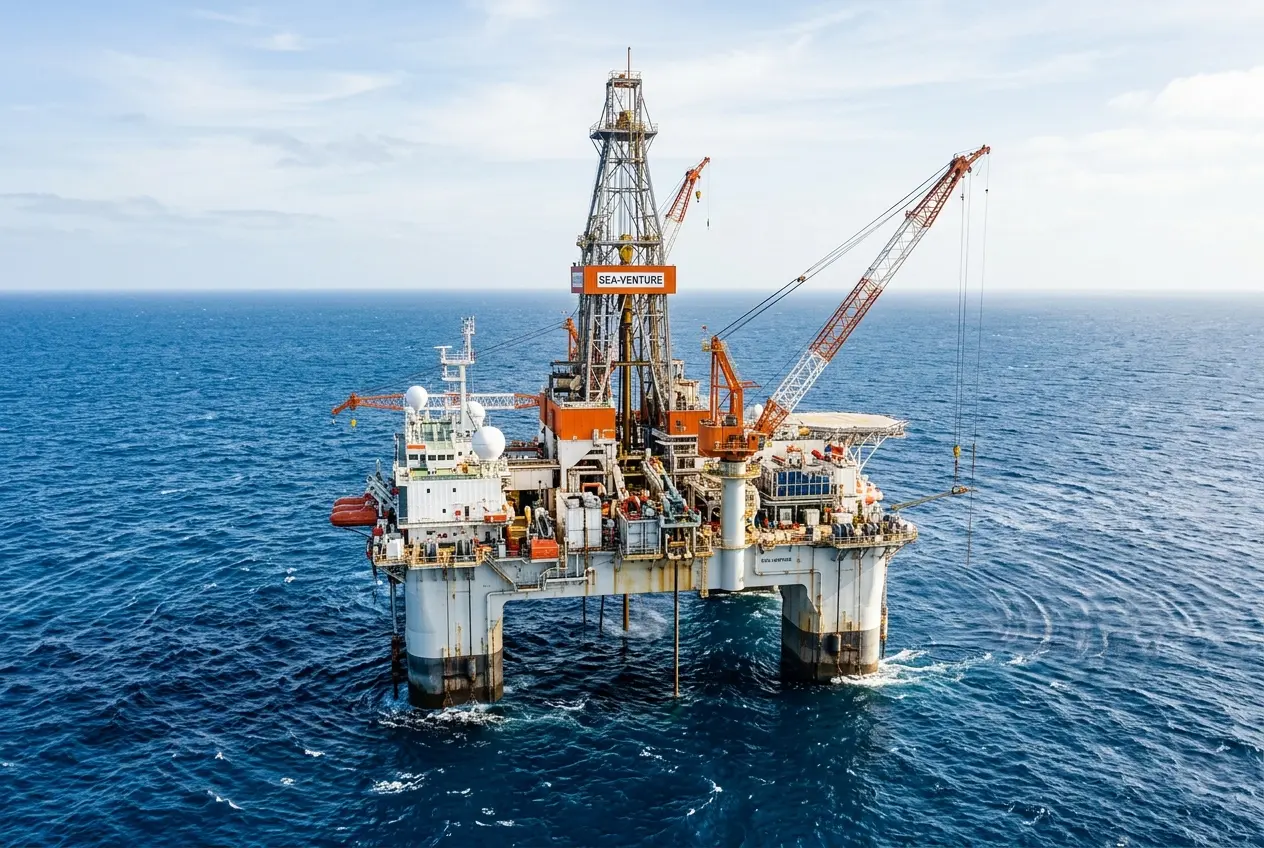
The Union Cabinet approved ₹84,084 crore on July 31 for Samudra Manthan, the National Offshore Exploration Scheme, to accelerate deepwater and ultra-deepwater hydrocarbon work through fiscal 2030-31. The money funds seismic mapping, 60 exploration wells with risk cover, shared infrastructure hubs and manufacturing zones. Officials say success could lift domestic oil and gas output from about 62 million metric tonnes of oil equivalent (MMTOE) a year toward 80 MMTOE and expand the resource base from 1.6 billion to 2.2 billion tonnes of oil equivalent.
That production lift is the headline. The deeper design is to change the risk math so private capital and service firms treat Indian deepwater as financeable rather than a state-only gamble. See the earlier Cabinet clearance details for the initial announcement framing.
The scheme does not replace existing licensing rounds. It sits alongside them as a fiscal bridge that makes those rounds more bankable once operators move from paper acreage to steel in the water.
Four Levers Inside the ₹84,084 Crore Package
The outlay splits into four clear buckets. Seismic data acquisition takes ₹28,534 crore to map seabed prospects in basins such as Krishna-Godavari, Cauvery, Mahanadi and the Andaman. Common offshore infrastructure hubs get ₹10,000 crore so discoveries can move to production without each operator building full systems alone. Oil and gas manufacturing and services zones receive ₹2,000 crore to localise equipment and skills. The largest slice, ₹43,200 crore, supports drilling 60 deepwater wells.
| Component | Outlay (₹ crore) | Purpose |
|---|---|---|
| Seismic data acquisition | 28,534 | Map location and properties of potential hydrocarbons |
| Common offshore infrastructure hubs | 10,000 | Enable commercialisation of discoveries |
| Oil and gas manufacturing and services zones | 2,000 | Promote domestic manufacturing and localisation |
| Drilling 60 deepwater wells | 43,200 | Exploration with government risk share |
Government support on the wells covers up to 50 percent of eligible drilling cost or ₹675 crore per well. A single deepwater exploratory well in these frontier areas can run $125 million to $150 million. The scheme also covers digital programme management, capacity building and international outreach.
Seismic work is the first cash to leave the door. Better maps shrink the dry-hole rate before any rig is contracted. The manufacturing tranche is the smallest line item yet aims to keep more of each later rupee inside India rather than in imported kit.
Taken together the four buckets form a sequence: data first, then risk-shared wells, then shared exit routes and a thicker local supply chain. Operators can plan campaigns knowing the state will carry part of the earliest, highest-risk spend.
Why the Risk-Share Formula Matters Now
Hydrocarbon exploration already carries five-to-ten-year gestation from block award to first oil. Deepwater and ultra-deepwater add advanced technology and higher capital. Existing fields are declining 6-7 percent a year on natural production loss. India cannot keep leaning only on ageing assets.
- High unit cost: $125-150 million per frontier deepwater well
- Probability problem: presence of hydrocarbons remains uncertain until drilled
- Decline drag: 6-7 percent annual drop in mature fields
- Target offset: move annual output from ~62 MMTOE toward 80 MMTOE
The government statement put it plainly: “Recognising the high-risk, high-cost nature of such exploration, the Government is adopting a risk-sharing approach to encourage sustained investment, accelerate exploration, and unlock India’s offshore hydrocarbon resources.” By cutting the private or joint-venture exposure roughly in half on the highest-cost step, the scheme lowers the hurdle rate that has kept many international oil companies and private Indian players on the sidelines.
Without that cut, a single unsuccessful well can wipe out the exploration budget of a mid-sized firm. With it, the same firm can stay in the game long enough for a second or third attempt. National companies already absorb large dry-hole risk on their balance sheets. The formula extends a similar buffer to private and foreign partners that have stayed cautious.
Andaman Proof Points and the Recent Campaigns
State firms have already started moving. Oil India Limited reported natural gas in Vijayapuram-2 and Vijayapuram-3 off the Andaman coast. ONGC has plans for 150 deepwater wells over seven years and sees roughly 5,600 MMTOE of deepwater and ultra-deepwater potential. It has also begun work in the Mahanadi basin under the broader mission.
- 2019 onward: OALP Round II awarded Andaman block AN-OSHP-2018/1 to Oil India
- 2024-2025: Oil India three-well campaign with Blackford Dolphin; gas confirmed at Vijayapuram-2 with ~87 percent methane in testing
- 2025: ONGC ultra-deepwater wells in Andaman and Cauvery; dual Mahanadi discoveries Konark and Utkal
- July 2025: ONGC-BP MoU on stratigraphic wells in Andaman, Mahanadi, Saurashtra and Bengal
- 2025-2026: OALP rounds 10 and 11 offer deepwater and ultra-deepwater blocks; ONGC spuds Mahanadi well
Rystad Energy’s Andaman basin gas discovery analysis notes the finds validate hydrocarbon systems but stresses that commercial scale, development cost and environmental management will decide whether the basin becomes a meaningful supply source. Sparse historical drilling left the area under-explored; successive wells are now reducing that uncertainty.
Each confirmed show improves the regional geological model. That model in turn guides where the next risk-share wells under Samudra Manthan are most likely to be placed. The Andaman results therefore function as both proof and pathfinder for the larger national programme.
Who Captures Early Upside
National oil companies remain central. ONGC and Oil India hold the bulk of current deepwater campaigns and acreage. Private E&P names with offshore positions, including Hindustan Oil Exploration Company, sit next in line for risk-share wells. The near-term activity spike lands hardest on service providers.
- Seismic and survey contractors that will execute the large 2D/3D programmes
- Drilling and offshore vessel operators that supply rigs and support fleets
- Equipment and subsea specialists that feed the new manufacturing zones
- Engineering and construction firms building the common infrastructure hubs
Market chatter on X has already listed Alphageo, Asian Energy Services, Jindal Drilling, SEAMEC and Aban Offshore among names likely to see order flow first. Shared hubs matter because they can turn otherwise marginal discoveries into viable projects by spreading evacuation and processing costs. That improves project economics for every later entrant.
Service contracts arrive earlier than production revenue. Seismic crews, rig operators and vessel owners therefore book work while the resource base is still being proven. That front-loaded cash flow is why equity markets have focused on the contractor list even before any of the 60 scheme wells spud.
The Quiet Bet on Hubs and Local Manufacturing
The ₹10,000 crore infrastructure tranche and ₹2,000 crore manufacturing zones receive less attention than the wells. They are the second-order engine. Common hubs reduce the capital each discovery must carry alone. Local zones aim to cut import of critical equipment and build a domestic services base that can support sustained campaigns rather than one-off wells.
Business Standard quoted Rajnish Gupta, partner at EY India: “Good results can catalyse greater private investments in the sector. The emphasis on shared infrastructure for production and evacuation is important, as it can improve project viability and create value by lowering costs for discoveries that may otherwise be considered marginal.”
This will support India’s efforts to reduce import dependence while building a more resilient energy ecosystem.
Gupta’s point lands on the scheme’s core logic. Direct production from the 60 wells is useful. The lasting shift is an ecosystem that keeps drawing capital after the initial government money is spent.
A discovery that must fund its own pipeline, processing platform and export route often fails the commercial test. The same discovery tied into a pre-built hub can clear the same hurdle. Manufacturing zones then keep more of the fabrication spend onshore, shortening lead times for the next campaign.
What the Numbers Look Like if Exploration Succeeds
Subject to success, the programme targets an additional 600-plus million tonnes of oil equivalent in reserve accretion. The government projects the extra domestic output could cut crude oil imports by nearly ₹1 lakh crore a year. India still imports the large majority of its crude; Petroleum Planning and Analysis Cell data track the ongoing production and import balance that makes any sustained lift material for the current account and energy security.
| Metric | Current or Baseline | Target if Successful |
|---|---|---|
| Annual domestic output | ~62 MMTOE | Toward 80 MMTOE |
| Resource base | 1.6 billion tonnes OE | 2.2 billion tonnes OE |
| Reserve accretion | – | 600-plus million tonnes OE |
| Annual import bill relief | – | Nearly ₹1 lakh crore |
OALP rounds continue to offer deep and ultra-deep blocks. Policy reforms have already opened most offshore acreage and modernised contracts. Samudra Manthan supplies the missing piece: hard cash that lowers the first-well risk and the shared kit that makes second and third wells cheaper. International partnerships such as the ONGC-BP MoU show interest is present once geological risk falls and commercial terms improve.
Crowds on X have noted that the official production step-up from 62 to 80 MMTOE can look modest against the outlay. That reading may miss the option value. Each successful well and each completed hub raises the probability that private balance sheets and foreign technology follow. The scheme runs through 2030-31. Results will arrive in phases: seismic first, then wells, then decisions on commercial development.
Phased Results Stretch Across the Decade
Fiscal 2030-31 is the outer edge of the funding window, not a single delivery date. Seismic acquisition and data processing occupy the early years. Risk-share wells follow once prospects are ranked. Commercial development decisions come last and depend on flow rates, hub readiness and oil and gas prices at the time.
That sequencing matches the five-to-ten-year gestation already built into deepwater projects. Operators that enter now under the scheme will still be drilling or tying back wells when the Cabinet outlay winds down. The intent is that private capital has by then taken over the heavier share of later spend.
- Early phase: seismic mapping across Krishna-Godavari, Cauvery, Mahanadi and Andaman basins
- Middle phase: 60 risk-share deepwater wells and continued OALP awards
- Later phase: hub construction, manufacturing zone output and first commercial tie-backs
ONGC’s own seven-year plan for 150 deepwater wells shows how national companies can keep momentum even after the scheme’s direct support ends. Private players that join the 60 scheme wells gain operating experience and subsurface data that lower their cost of capital for the next round of blocks.
Import Dependence Shrinks Only After First Oil
Reserve accretion of 600-plus million tonnes of oil equivalent is a stock figure. The flow figure that matters for the current account is the move from roughly 62 MMTOE toward 80 MMTOE of annual output. That gap, if closed, underpins the projected ₹1 lakh crore yearly reduction in crude import spend.
India still imports the large majority of its crude. Any sustained domestic lift therefore shows up quickly in the trade balance and in energy security planning. The scheme cannot deliver that lift on its own. It can only raise the odds that discoveries reach production scale instead of remaining stranded resources.
Shared hubs and local manufacturing are the links between a successful well and barrels that actually displace imports. Without them, even a strong discovery can sit undeveloped while import tankers continue to dock. With them, the path from drill bit to refinery shortens and the import bill feels the effect sooner.
India has chased deepwater potential for decades with limited private follow-through. Samudra Manthan puts real money behind risk-sharing and common infrastructure. If the wells deliver and the hubs function, the next capital will not need another Cabinet cheque of this size.

-
 TECH1 year ago
Where Garmin Watches are Made and How They are Assembled
-

 AUTO3 months ago
Tesla’s Roadster Is ‘a Few Weeks Away,’ Says Its Chief Designer
-
 NEWS10 years ago
Samsung Releases Galaxy Note7 TV Ad as Reddit AMA Leaks Specs
-
 NEWS10 years ago
Android 7.0 Nougat Rolls Out To Nexus Devices With New Emoji, Features
-
 FINANCE9 years ago
Cardano Price Surges as ADA Enters the Crypto Top Ten List
-
 NEWS10 years ago
Pre-Order the First Camera Made for Facebook Live Streaming Video
-
 FINANCE1 year ago
Binance Suspends Trading and Withdrawals for a System Upgrade
-
 FINANCE9 years ago
RChain Price Jumps Nearly 150% to a New All-Time High of $2.03