NEWS
Meta India Head Named in Hyderabad Deepfake Cases Over Modi Posts
Hyderabad cybercrime police named Meta’s India head in two FIRs over AI-morphed PM Modi posts from the CJP NEET protests, testing platform liability.

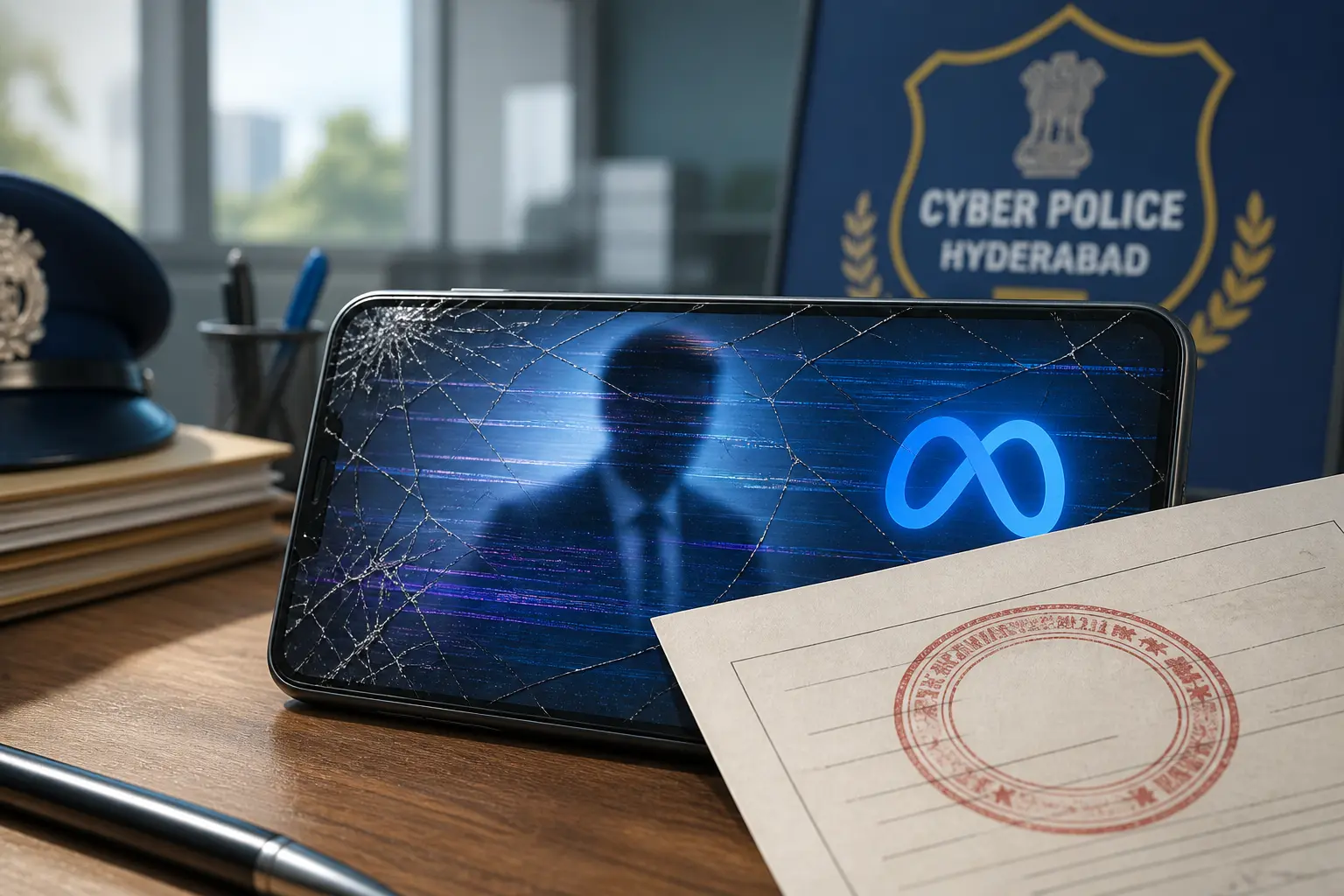
Hyderabad cybercrime police registered two cases on complaints by BJP supporters naming Meta’s India head Arun Srinivas and operators of Facebook and Instagram accounts over morphed and objectionable content targeting Prime Minister Narendra Modi during the Cockroach Janta Party-led NEET protests. Investigators invoked provisions of the Bharatiya Nyaya Sanhita and the IT Act, issued Meta a notice, and said they are tracing the account holders after the reported links went inactive.
The move puts a named local executive on the charge sheet for third-party posts, a step that raises the stakes beyond ordinary takedown requests.
Two FIRs and a Notice to Meta
Cybercrime police confirmed the cases by Thursday. One complainant handed over 20 Facebook and Instagram links. By evening those links were inactive. A cybercrime investigator said the force had “issued a notice to Meta about the cases registered and the objectionable links reported by the complainants” and was collecting details to identify and arrest the accused.
- Two separate complaints from Telangana BJP-linked individuals
- 20 links submitted in one filing alone
- Meta India head listed as co-accused with account operators
- BNS and IT Act provisions cited for morphed, derogatory and potentially order-disturbing content
Police described the material as manipulated videos and images. One complaint also mentioned the US President and former Union minister Dharmendra Pradhan appearing in the same obscene or misleading clips.
What the Complainants Told Police
T Saikiran Goud, 32, a social media core committee member of Telangana BJP, filed on Wednesday night. He wrote that certain Instagram accounts published content “derogatory towards Prime Minister and appear to promote narratives that may be prejudicial to the sovereignty, integrity and public order of the nation.” He asked police to identify the operators and act against Meta for hosting it.
S Aravind Reddy of Nampally filed the second complaint. He said he found “multiple morphed and digitally manipulated videos and images depicting the Prime Minister, US President and former Union minister Dharmendra Pradhan in an obscene, derogatory and misleading manner.” The content, he argued, could mislead the public, spread misinformation, incite unrest or outrage public decency.
Both framed the posts as more than rude memes. They cast them as threats to public order and dignity of high office during a charged national protest.
Platform Bind After a Separate PM Video Row
The FIRs landed days after Meta faced government pushback when a video from the Prime Minister’s own account was briefly blocked on Facebook. Meta later outlined extra safeguards: senior officials would vet prominent-account posts, with at least two layers of review. A meeting with the government on content regulation was already in the works.
That sequence leaves Meta in a familiar squeeze. Global community standards treat many political deepfakes as false or harmful only after review. Indian authorities treat certain morphs of the Prime Minister as potential criminal speech under BNS clauses on public order, defamation and obscenity. Local executives become the pressure point when platforms argue they are mere intermediaries.
On X, early reaction mixed dry humour about a “tech bro explaining Community Guidelines to an angry local hawaldar” with sharper free-speech jabs. The practical observation is simpler: once a named India head sits on the FIR, the cost of slow response rises for the company even if safe harbour still applies on paper.
Safe Harbour Meets the 2026 Synthetic Rules
Section 79 of the IT Act still shields intermediaries that observe due diligence and act on unlawful content after actual knowledge, usually via court or government notice. The Shreya Singhal standard remains the backbone. Yet the 2026 IT Rules amendments on synthetic media added fresh duties for “synthetically generated information,” defined as audio-visual material algorithmically created or altered so it appears real and depicts a person or event as if authentic.
| Requirement | Pre-2026 baseline | Post-amendment pressure |
|---|---|---|
| Knowledge trigger | Court order or government notice | Faster grievance and SGI labelling expectations |
| Deepfake / morph handling | Case-by-case under Community Standards | Explicit SGI definition and due-diligence language |
| Safe-harbour risk | Loss for specific items after notice | Heightened if platforms “knowingly permit” unlabelled synthetic harm |
| Local executive exposure | Rare in pure user-content FIRs | Rising when police name India heads as co-accused |
Meta has already restricted content in India under Section 79 notices. In one published example from West Bengal police, the company limited access to a dozen posts containing morphed and AI-generated material about a chief minister even though the material did not violate its own Community Standards. Meta’s own India content restriction case studies show the company routinely geo-restricts for local law while leaving the material up elsewhere.
The Hyderabad cases test whether that model still works when the target is the Prime Minister and the local MD is on the docket.
CJP Protests and the Deepfake Surge
The content surfaced during the Cockroach Janta Party agitation over the 2026 NEET paper leak and related exam failures. CJP, a satirical youth outfit, led weeks of protests at Jantar Mantar and elsewhere, demanding accountability from the education ministry and broader exam reforms. The agitation produced raw street energy and, online, a flood of abusive, satirical and manipulated clips.
- Mid-2026, NEET irregularities and paper-leak allegations spark student unrest
- June-July 2026, CJP and student groups occupy Jantar Mantar; “Sansad Chalo” march turns violent on 20 July
- Late July, CJP claims deal on task force, anti-leak law and FIR withdrawals, then warns of fresh action over unkept promises
- 29-31 July, Telangana complainants file; Hyderabad cybercrime registers cases naming Meta India head
Delhi Police had already ordered platforms to pull abusive PM material from the same protest wave. The Hyderabad FIRs add a southern jurisdiction and the executive-naming twist. Political deepfakes are no longer rare. Even official projects now use generative tools; the same technology that produces official AI avatars of national leaders also powers the crude morphs that land in police stations.
Why Naming the India Head Changes the Calculus
Account operators can vanish or stay anonymous. A country managing director cannot. Arun Srinivas took charge as Meta’s India managing director and country head in mid-2025 after running the ads business. He carries a long consumer-marketing résumé from Unilever and Reebok. Putting his name on the FIR does not automatically strip safe harbour. It does force Meta’s India legal and public-policy teams to treat the matter as an executive-risk file rather than a routine content ticket.
Police still have to prove the platform failed due diligence or that the head had the requisite knowledge. That bar is high. The signal to every large platform is lower: during politically sensitive moments, local leadership can be dragged into criminal process over user posts. Compliance speed, proactive detection of high-risk synthetic content about constitutional office-holders, and documentation of takedown efforts all become more expensive overnight.
Complainants from the ruling party’s state unit framed the posts as sovereignty and public-order threats. Critics on X saw selective enforcement. Both readings can be true at once. The legal machine now has an FIR number and a named Meta executive attached to it.
The Immediate Next Moves
Operators remain under trace. Meta has the notice. Links are already down. Further action depends on whether police can identify the account holders and whether prosecutors press the intermediary liability angle hard. No public statement from Meta on these specific FIRs had appeared by the time the cases became public. The company’s earlier assurance of senior-level vetting for the Prime Minister’s own posts shows it already understands the political temperature.
For other platforms the lesson is concrete. Synthetic content about national leaders during protest waves now carries a higher chance of executive-level process in Indian jurisdictions that choose to open cases. Safe harbour still exists. The cost of invoking it just went up.

-
 TECH1 year ago
Where Garmin Watches are Made and How They are Assembled
-
 AUTO3 months ago
Tesla’s Roadster Is ‘a Few Weeks Away,’ Says Its Chief Designer
-
 NEWS10 years ago
Samsung Releases Galaxy Note7 TV Ad as Reddit AMA Leaks Specs
-
 NEWS10 years ago
Android 7.0 Nougat Rolls Out To Nexus Devices With New Emoji, Features
-
 FINANCE9 years ago
Cardano Price Surges as ADA Enters the Crypto Top Ten List
-
 NEWS10 years ago
Pre-Order the First Camera Made for Facebook Live Streaming Video
-
 FINANCE1 year ago
Binance Suspends Trading and Withdrawals for a System Upgrade
-
 FINANCE9 years ago
RChain Price Jumps Nearly 150% to a New All-Time High of $2.03