
NEWS
Montenegro Turns Paris Cyber Trip Into EU Accession Test

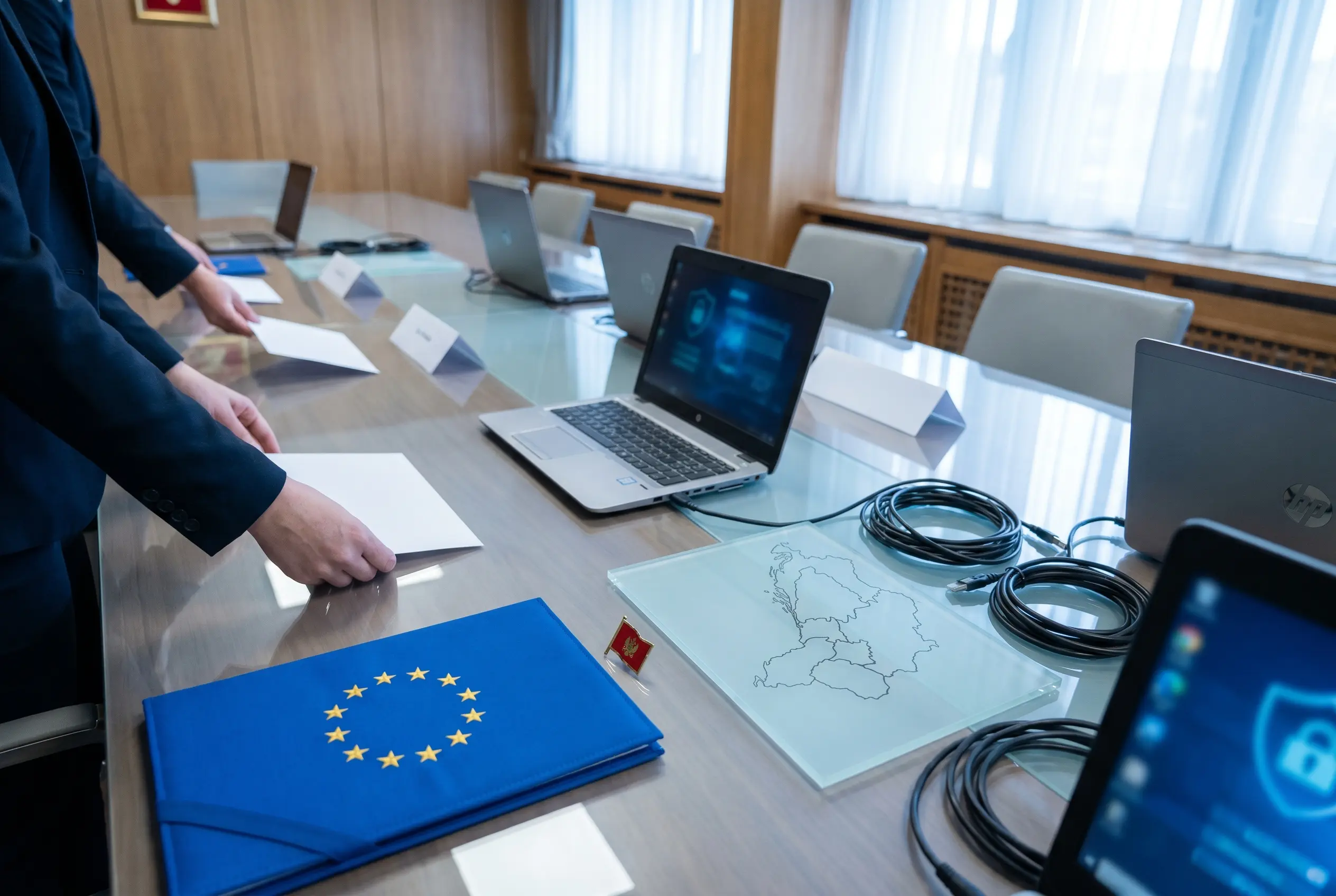
Montenegro’s Paris Cyber Summit push runs from June 1 to June 3, with Public Administration Minister Maraš Dukaj leading a Western Balkans ministerial visit built around the summit, a French Senate roundtable, Campus Cyber and talks with NATO, European and industry partners.
For the European Union (EU), cyber capacity is now part of the security and enlargement file. Podgorica’s bet is that convening neighbors in Paris will show it can supply regional coordination while still drawing on French, EU and NATO support.
The Trip Puts Cyber Diplomacy Before Tivat
The Montenegrin regional visit announcement says the Ministry of Public Administration, in cooperation with the Western Balkans Cyber Capacity Centre (WB3C, a training and cooperation body based in Podgorica), is organizing a regional ministerial visit from June 1 to June 3. The program includes a French Senate roundtable, participation in the Paris Cyber Summit, meetings with international institutions and companies, and a visit to Campus Cyber.
Dukaj is not arriving as a lone minister on a panel circuit. The delegation is meant to include ministers and senior officials from the region, which lets Podgorica sell cyber resilience as a shared accession service rather than a small-state niche.
The timing matters. Four days after the visit opens, leaders gather in Tivat for the EU-Western Balkans summit. That makes the Paris leg a rehearsal for a larger claim: digital security has moved from technical back office to enlargement politics.
Paris Gives Podgorica the Room It Wants
The European Cybersecurity Competence Centre event listing places the conference at Maison de la Chimie on June 2 and June 3. Its focus is cyber, artificial intelligence (AI, software systems that can automate analysis and content generation), digital sovereignty, cyber defence, cloud sovereignty, critical infrastructure and economic security.
Paris helps because the summit is an invitation-only, off-the-record forum rather than a vendor hall. The official page says it gathers governments, national security agencies, regulators, industry and academia from Europe and the United States. For a region often discussed as a security consumer, that mix matters.
The summit theme, The Transatlantic Reset, also fits the moment. Small candidate countries now have to translate big digital arguments into laws, budgets and staff rosters. They need to show that they can protect government services, police cooperation, energy systems and election processes before they sit fully inside EU institutions.
WB3C Gives Podgorica a Working Asset
The center is the reason the visit has more weight than a normal conference trip. The WB3C establishing agreement names France, Montenegro and Slovenia as founding members, puts the headquarters in Podgorica and gives it a purpose: training, practitioner expertise and regional cooperation in cyberspace.
That matters because cyber capacity is labor-intensive. Laws can be copied. Incident habits, crisis contacts and skilled public servants cannot be imported overnight. A standing training center gives the region a place to practice before the next attack, then use the same contacts when one happens.
| Instrument | Immediate Use | Strategic Test |
|---|---|---|
| Regional Paris Visit | Gets ministers and senior officials in the same rooms | Whether the region can speak with one cyber agenda |
| WB3C in Podgorica | Trains public-sector and infrastructure professionals | Whether training becomes repeatable capacity |
| Information Security Law | Aligns national rules with EU cyber expectations | Whether legal text changes institutional behavior |
| Campus Cyber Visit | Shows a French model for public-private cooperation | Whether lessons travel back into regional practice |
Institutions Carry the Cyber Test
The threat backdrop favors practical cooperation. The ENISA public administration warning said public administration accounted for 38% of incidents in its latest threat reporting, making government services a prime target rather than a peripheral one.
Paris gives Podgorica a stage; Tivat asks whether the region can use the same script.
That line is harsh but useful. Cybersecurity for ministries is procurement, staffing, reporting lines and trust between agencies. If one country sees a campaign first and another lacks a channel to receive the warning, the region loses time before the malware does any clever work.
The same problem appears when cloud, telecom, energy and local government networks cross borders. An attack rarely respects accession chapters. It follows weak credentials, neglected devices and slow decision chains.
That is why the ministry’s list of meetings matters less for protocol than for contact-building. A French Senate roundtable gives political cover. Company meetings test supplier options. Campus Cyber shows how a national hub can put public and private teams in the same building.
The Region Needs Shared Playbooks
The Paris delegation will meet European, French, North Atlantic Treaty Organization (NATO, the military alliance) and global partners, according to the ministry. That spread hints at the region’s problem: cyber defence sits across civilian ministries, police, intelligence, regulators and telecom operators.
Useful cooperation will be judged by small habits that rarely make communiques. The test is whether officials leave with shared methods, not only shared vocabulary.
- Incident reporting: common thresholds for when an event moves from local IT issue to national alert.
- Exercises: table-top drills that force ministries, police and infrastructure operators to make decisions under time pressure.
- Procurement: shared language for buying monitoring, response and recovery services without locking public systems into weak contracts.
- Talent: training paths that keep cyber staff in public service long enough to build memory.
None of this is glamorous. It is also the stuff that decides whether a phishing wave becomes a one-day nuisance or a cabinet-level crisis. Shared playbooks let small administrations borrow speed from each other.
Cyber Law Turns Into Accession Evidence
The sharper part of the story sits in legislation. A European Commission assessment of the information security law says the Law on Information Security was adopted by parliament on November 19, 2024, after government work and consultations on alignment with the Network and Information Security 2 Directive (NIS2, the EU baseline for cyber risk management and incident reporting). The assessment concluded, for that indicator, that the country had reached sufficient alignment with NIS2.
That word, sufficient, carries a warning. The same assessment noted certain NIS2 elements still had to enter domestic law through other instruments. Paris therefore points to the dull work of implementation: supervisors, fines, incident reporting, exercises and public-sector hiring.
For Brussels, cyber law also connects to funding and market access. Reform funds and single market steps are conditioned on evidence rather than speeches. A government that can host a center, convene neighbors and close legal gaps gives EU officials something measurable to cite.
Tivat Connects the Paris Message to Enlargement
The EU-Western Balkans summit agenda says leaders in Tivat will assess gradual integration, the Growth Plan, and security resilience including cyber and hybrid threats. That makes the Paris delegation a timely preface. It puts a cyber file on the table before presidents and prime ministers turn to enlargement.
The risk is overclaiming. A three-day visit cannot erase staffing gaps, uneven national agencies or the politics that still slow cooperation among neighbors. But diplomacy can set a minimum standard: the next intrusion should find ministries that know who to call, what to share and when to ask for help.
If Podgorica can carry that standard from Maison de la Chimie to Tivat, the trip will have done more than add another summit photo. If it cannot, Paris will join the long file of regional declarations that sounded better in the room than they worked on a bad network morning.

-
 TECH1 year ago
Where Garmin Watches are Made and How They are Assembled
-

 AUTO3 months ago
Tesla’s Roadster Is ‘a Few Weeks Away,’ Says Its Chief Designer
-
 NEWS10 years ago
Samsung Releases Galaxy Note7 TV Ad as Reddit AMA Leaks Specs
-
 NEWS10 years ago
Android 7.0 Nougat Rolls Out To Nexus Devices With New Emoji, Features
-
 FINANCE9 years ago
Cardano Price Surges as ADA Enters the Crypto Top Ten List
-
 NEWS10 years ago
Pre-Order the First Camera Made for Facebook Live Streaming Video
-
 FINANCE1 year ago
Binance Suspends Trading and Withdrawals for a System Upgrade
-
 FINANCE9 years ago
RChain Price Jumps Nearly 150% to a New All-Time High of $2.03