
NEWS
World Cup Final Ticket Prices Near $10,000 as FIFA Profits From the Surge
Resale prices for Sunday’s Argentina-Spain final neared $10,000 as FIFA’s own resale marketplace takes a 30 percent cut of the Messi-driven surge.

Resale prices for Sunday’s World Cup final between Argentina and Spain hit $9,627 by Saturday afternoon, a 34 percent jump in just three days. Kickoff at MetLife Stadium in East Rutherford, New Jersey, is barely a day away.
The get-in price, tracked by the ticket data service TicketData.com, has nearly tripled the cost of getting into Argentina’s own semifinal win last week. It has also outrun every other match of finals weekend by a wide margin. And FIFA’s own resale exchange collects a cut of that spike too, on a tournament already producing more revenue than any World Cup in history.
The Price Gap Between the Final and Everything Else
The get-in price for Saturday’s final ticket dropped as low as $6,636 on Monday before rebounding to a three-day average of $7,612 by Friday morning, then jumping again to $9,627 by 3pm ET Saturday, according to TicketData.com. That is a climb of roughly $3,000 in under a week.
Compare that to the rest of the bracket. Argentina’s semifinal win over England settled at a get-in price of $3,177 by kickoff. France’s win over Spain in the other semifinal commanded less than half that, just $1,315. Saturday’s third place match between France and England in Miami closed at $634, having fallen 50 percent over the same three days.
| Match | Get-In Price | Three-Day Trend |
|---|---|---|
| Final: Argentina vs Spain (Sunday) | $9,627 | Up 34% |
| Semifinal: Argentina vs England | $3,177 | Settled by kickoff |
| Semifinal: France vs Spain | $1,315 | Less than half Argentina’s semifinal price |
| Third place: France vs England | $634 | Down 50% |
That bronze medal match still delivered drama. Bukayo Saka scored a hat trick as England beat France 6-4 in a chaotic playoff, while Kylian Mbappe became the all time leading scorer in World Cup history. Both teams had higher ambitions this summer. France was outplayed by Spain in the semifinal, while England, as manager Thomas Tuchel later said the squad must learn to handle pressure after the exit, suffered a late collapse against Argentina. None of that history moved the market. A game with no Messi and no trophy on the line still lost half its value in three days.
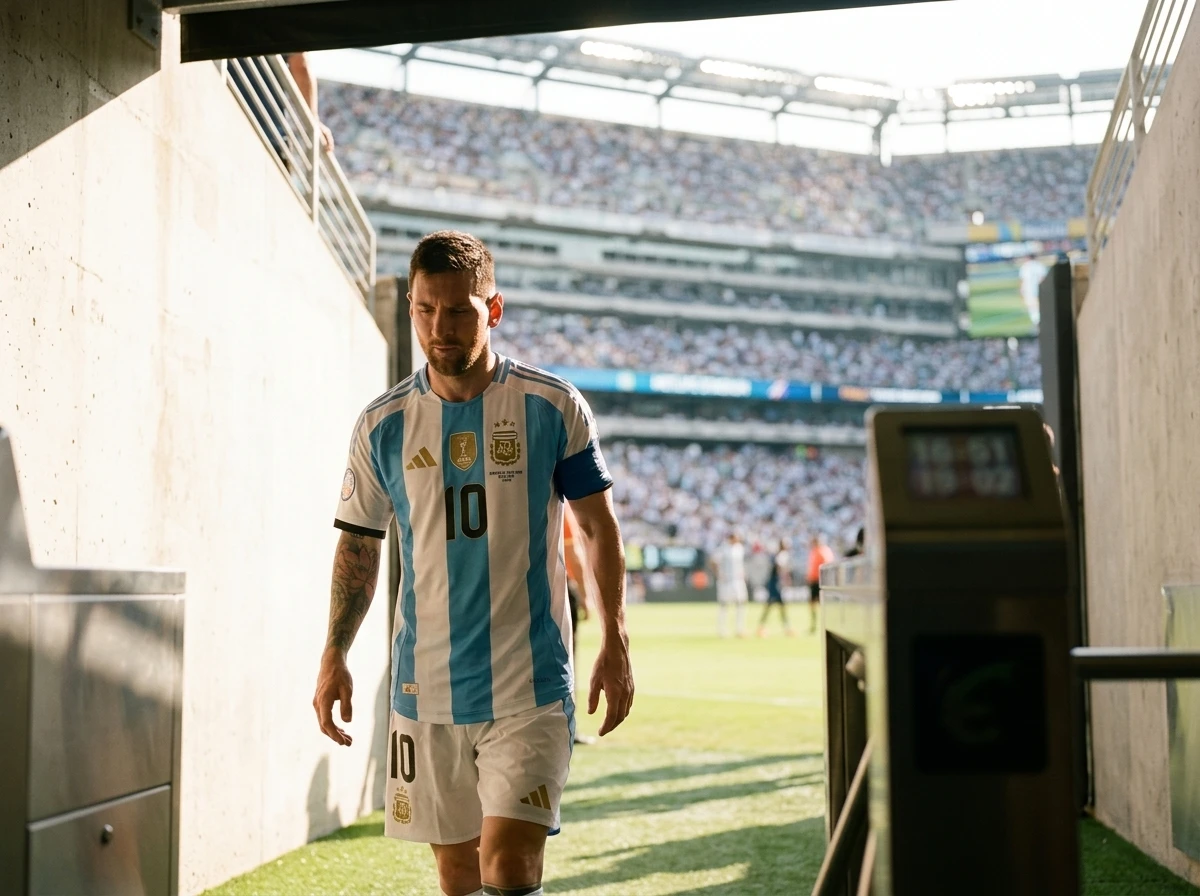
Is This Really Lionel Messi’s Last World Cup?
Messi has not confirmed retirement from international football, but at 39 he has stopped promising anything beyond the next match, and that ambiguity is exactly what the ticket market is pricing in.
Messi is making his sixth World Cup appearance, tied with Cristiano Ronaldo for the most in history. Ronaldo, by contrast, already confirmed his own World Cup farewell after Portugal’s run ended this summer. Messi has offered no such clarity. On his 39th birthday during the tournament, he told reporters, “I will continue for some time, as long as I can contribute, feel good physically, and help my teammates. I will keep playing.” After Argentina’s semifinal win over England, a visibly drained Messi admitted, “I’m really very tired, just like my other friends.”
He is still the tournament’s all time leading scorer and assist provider, and one win away from making Argentina the first team to defend a World Cup title since 1962. Spain, meanwhile, have conceded just one goal in seven matches, built around Lamine Yamal, the player many expect to inherit Messi’s mantle as the sport’s next singular star.
Every Final Since Brazil Has Cost More
The 2026 final is not just expensive by this tournament’s own standards. It obliterates every previous World Cup final on record.
Tickets for the 1994 final in the United States ran between $25 and $475, according to the Associated Press. Twenty years later, seats for Germany’s 2014 final win over Argentina in Brazil cost around $6,000, per CBS News. Prices then fell back for the next two cycles: Statista figures put the 2018 Russia final at an average of $1,100 for the top category, down to $455 for the cheapest, and the 2022 Qatar final, Argentina’s own penalty shootout win over France, averaged $1,607 for the top tier and $604 for the bottom.
| Final (Year, Host) | Reported Ticket Cost | Source |
|---|---|---|
| 1994 United States | $25 to $475 | Associated Press |
| 2014 Brazil | About $6,000 | CBS News |
| 2018 Russia | $455 to $1,100 | Statista |
| 2022 Qatar | $604 to $1,607 | Statista |
| 2026 United States | $9,627 resale get-in, up to $32,970 face value | TicketData.com and FIFA |
This is the first World Cup where FIFA used dynamic pricing, adjusting official face value the way airlines price seats. That policy pushed the top Category 1 face value from an initial $10,990 listing to $32,970, roughly twenty times Qatar’s top price. Compared with the average across the five tournaments from 2006 to 2022, even the cheapest seats this year rose by around six times, per an analysis credited to The Guardian. Qatar’s tournament carried its own set of controversies over cost and labor conditions, but nothing in that tournament’s pricing structure approached this year’s numbers.
FIFA Keeps 30 Percent of Every Resale
Here is the detail that separates this final from a normal scalping story. FIFA built its own authorized resale marketplace for the 2026 tournament, the first time it has run one directly, and it takes 30 percent of every transaction that clears through it.
That means the same Messi premium driving today’s $9,627 get-in price also lines FIFA’s own accounts, not just independent brokers on StubHub or SeatGeek. Four tickets for the final were listed on FIFA’s site this spring for close to $2.3 million each. FIFA president Gianni Infantino laughed the figure off at the Milken Institute Global Conference in Beverly Hills.
And if somebody buys a ticket for the final for $2 million, I will personally bring him a hotdog and a Coke to make sure that he has a great experience.
Pnina Feldman, an associate professor at the University of Virginia’s Darden School of Business, has studied why organizations increasingly want to run their own resale exchanges. “A main insight from my work on ticket reselling is that modern resale markets change the economics of ticketing,” she said, noting that an authorized exchange lets a seller collect fees on every transaction rather than losing that money to outside brokers.
Keith Pagello, the ticketing industry veteran who runs TicketData.com, has described FIFA’s process as unusually opaque even by the standards of major events. “They’re playing poker,” he said of FIFA’s approach to remaining inventory. “And they can see all the cards and nobody else can see.”
Lawmakers and a Mayor Push Back on the Price Tag
The final’s price tag has drawn pushback from three directions this year, none of which has slowed the market.
- US Congress: Democratic lawmakers led by Rep. Sydney Kamlager-Dove wrote to FIFA warning that “the extreme high demand for World Cup tickets should not be a green light for price gouging at the expense of the people who make the World Cup the most watched sporting event in the world.”
- European regulators: Football Supporters Europe and the consumer group Euroconsumers filed a complaint with the European Commission in March accusing FIFA of abusing its ticketing monopoly.
- New York City Hall: Mayor Zohran Mamdani ran a lottery offering 1,000 tickets to residents at $50 each for games at MetLife Stadium.
Infantino has brushed off each complaint. He applauded Mamdani’s effort but noted FIFA itself released 130,000 tickets at $60 through national federations and got, in his telling, no credit for it. President Donald Trump weighed in earlier in the tournament too, saying of tickets running past $1,000, “I wouldn’t pay it either, to be honest with you.”
A $13 Billion Tournament Built on Rising Ticket Costs
The final’s price surge sits inside a tournament already shattering FIFA’s own financial records, which is part of why Infantino has had little incentive to intervene.
- $13 billion is FIFA’s projected revenue across its 2023 to 2026 commercial cycle, revenue projected to top $10.9 billion this cycle in one widely cited breakdown of FIFA’s annual reports.
- $8.9 billion of that comes directly from the 2026 tournament itself, up from $7.6 billion for the entire four year Qatar cycle.
- $3 billion is the projected haul from ticketing and hospitality alone this year, versus about $950 million in Qatar, a 216 percent jump.
- 30 percent is the cut FIFA’s own marketplace takes from every ticket resold there, including tonight’s final.
Infantino has defended the structure directly. “As FIFA president, I have the statutory responsibility to generate the income which allows FIFA to invest in all of these countries, where otherwise nobody would invest,” he told reporters in Mexico City in June. He has also pointed to a jump in demand he called unprecedented, “by a factor of 10 or more,” for this edition compared with past tournaments.
Michael Edwards, a professor at North Carolina State University who studies sport finance, has cautioned that headline revenue figures rarely tell the whole story of who actually pockets the money from hosting a tournament this size, since public infrastructure costs and uneven local benefits rarely make the same headlines as ticket prices. FIFA has also raised total prize money to $871 million this cycle, part of the tournament’s $871 million prize pool, up from $440 million in Qatar.
Clear Skies Greet a Final Decades in the Making
None of the financial argument is visible on the ground in New Jersey today. After a week of wildfire smoke and thunderstorms, the sky over MetLife Stadium cleared for finals weekend, with a sunny 24 degrees Celsius, about 75 Fahrenheit, and the region’s air quality index back to moderate.
Thousands of staff, volunteers, halftime performers and journalists were already lining up outside a single stadium gate hours before the doors open to the general public at 11am local time. Ticket holders converged on the venue from every direction, with long queues reported at Secaucus Junction, the main rail link to the stadium, where fans have paid a widely criticized $98 return fare to make kickoff on time.
By Sunday evening, one number will matter more than any of the others on TicketData.com’s tracker: whether Messi lifts the trophy in what may be the last World Cup match of his career, ticket price notwithstanding.

-
 TECH1 year ago
Where Garmin Watches are Made and How They are Assembled
-
 AUTO3 months ago
Tesla’s Roadster Is ‘a Few Weeks Away,’ Says Its Chief Designer
-
 NEWS10 years ago
Samsung Releases Galaxy Note7 TV Ad as Reddit AMA Leaks Specs
-
 NEWS10 years ago
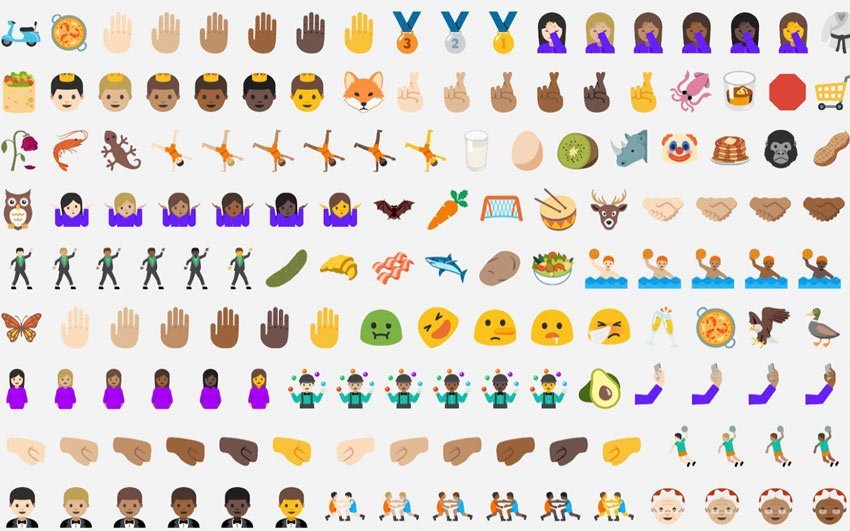
Android 7.0 Nougat Rolls Out To Nexus Devices With New Emoji, Features
-
 FINANCE9 years ago
Cardano Price Surges as ADA Enters the Crypto Top Ten List
-
 NEWS10 years ago
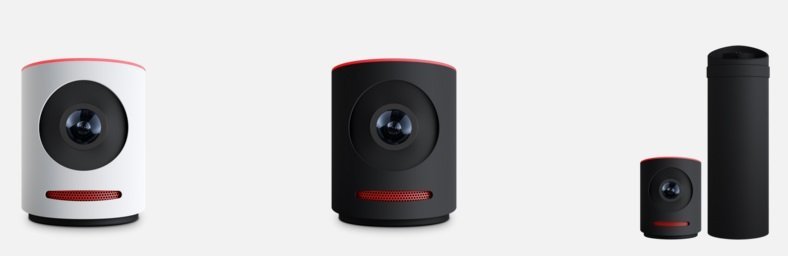
Pre-Order the First Camera Made for Facebook Live Streaming Video
-
 FINANCE1 year ago
Binance Suspends Trading and Withdrawals for a System Upgrade
-
 FINANCE9 years ago
RChain Price Jumps Nearly 150% to a New All-Time High of $2.03