
BUSINESS
US Locks 55 Percent Stake in 65 Billion Venezuelan Oil Barrels
Trump announced majority US control of 65 billion Venezuelan barrels via private JV and Pentagon capital office.

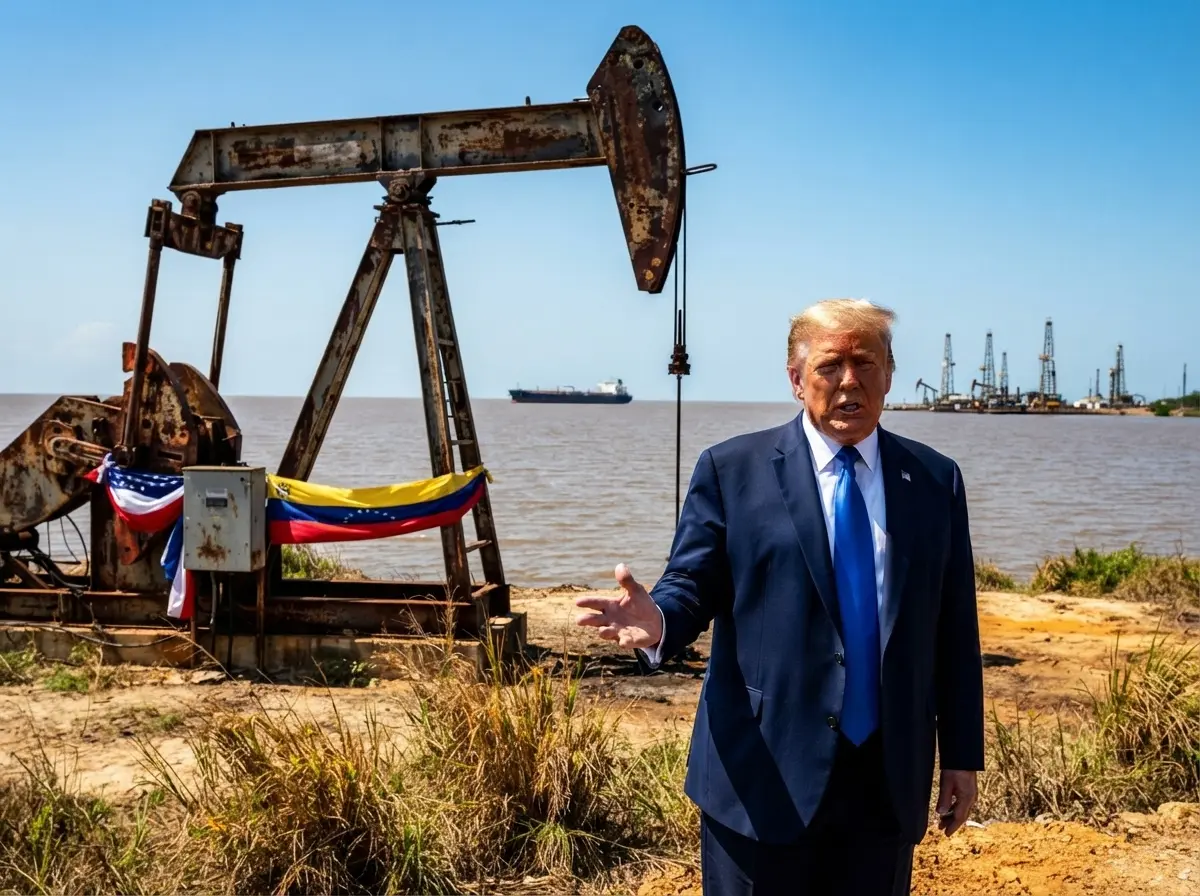
President Donald Trump announced Friday that the United States has secured majority control of more than 65 billion barrels of Venezuela’s proven oil reserves through a partnership with private business and interim President Delcy Rodriguez. He called it the biggest oil deal in world history, struck at no cost to American taxpayers.
Secretary of State Marco Rubio and Defense Secretary Pete Hegseth negotiated the terms. Rubio said the arrangement could draw nearly $100 billion in private investment into Venezuela while helping ease U.S. fuel costs. Venezuelan officials confirmed the package covers development of 17 fields and projects more than $209 billion in tax revenue for Caracas.
The 55 Percent Stake and Century-Long Concessions
A U.S. official familiar with the deal said Rodriguez granted a new private joint venture 100-year rights to the fields. The United States holds 55 percent effective output, split between an ownership stake in the holding company and guaranteed offtake oil purchased at cost.
That offtake is earmarked for the Strategic Petroleum Reserve, military needs and U.S. market supply. The venture would rank as the world’s second-largest private holder of proven reserves after Saudi Aramco. Oversight falls to the Pentagon’s Office of Strategic Capital, which finances projects tied to national defense.
- 17 strategic fields totaling more than 65 billion barrels of proven potential
- 55 percent U.S. effective share via equity plus at-cost offtake
- 100-year concessions granted by the interim government
- Projected $100 billion private investment and $209 billion in Venezuelan taxes
- No direct cost to U.S. taxpayers under the announced structure
Trump wrote on Truth Social that the transaction more than doubles American oil reserves and will substantially lower gas prices long into the future. U.S. proved crude and lease condensate reserves stood at 46.0 billion barrels of proved US crude reserves at year-end 2024, according to the Energy Information Administration. Adding control over 65 billion barrels would push the combined figure well past a doubling.
| Metric | United States | Venezuela | Deal Slice |
|---|---|---|---|
| Proved oil reserves | 46.0 billion bbl (YE 2024) | 303 billion bbl | 65+ billion bbl (17 fields) |
| Recent production | ~13+ million bpd crude | ~1.1-1.25 million bpd | Target ramp via private ops |
| Share of global reserves | ~3% | ~17-19% | ~4% of world total |
The arithmetic is straightforward. Control over more than 65 billion barrels beside the existing 46.0 billion leaves the United States with paper claim to a volume far larger than domestic proved stocks alone. Effective share, not fee-simple title to every barrel, is what the 55 percent formula delivers through equity and offtake together.
Details on the exact private operators remain undisclosed. Earlier separate deals had brought in service firm SLB and producer Hunt Oil for limited work with PDVSA. Sources previously floated names including energy investor Alejandro Betancourt as a possible middleman, but nothing is confirmed in the final package.
Why Gas Hit $4.09 as the SPR Fell Below 290 Million
The announcement lands six months into the Iran war that has throttled flows through the Strait of Hormuz, a route that once carried about a fifth of global petroleum supplies. U.S. drivers have felt it directly.
AAA put the national average of $4.09 a gallon on August 28, up from $3.21 a year earlier. August is on track for the most expensive month on record at the pump. Diesel sits near $5.61.
At the same time the government has drawn heavily on emergency stocks. SPR holdings near 290 million barrels as of the week ending August 21, down more than 100 million barrels since early 2026 and the lowest in more than four decades. Capacity is 714 million barrels. Safe draw rates have slowed as inventory thins.
- $4.09, AAA national regular gasoline average on August 28
- 289.7 million barrels, SPR crude stock as of late August
- ~125 million barrels, net SPR draw since the Iran conflict began
- $100 billion, private investment Rubio projects for Venezuela
The reserve now holds well under half its 714 million barrel design capacity. Each barrel drawn to cushion the Hormuz shock is a barrel that must later be replaced. Rubio’s offtake design points new Venezuelan volumes at that gap first.
Rubio framed the deal as securing stable, low-cost oil in the Western Hemisphere. “This deal is a huge win for both the American and Venezuelan people,” he wrote on X. Production from the new venture is meant to refill the reserve and supply U.S. refineries without new taxpayer outlays.
Rodriguez Trades State Monopoly for Tax Revenue
Days after taking power following the U.S. capture of Nicolás Maduro in January, Rodriguez began opening the oil sector to greater private participation. That reversed decades of socialist state control under PDVSA.
Her government issued a statement welcoming the agreement as historic. It said the 17 fields would generate more than $209 billion in taxes and support reconstruction. Rodriguez thanked Trump and Rubio and described a new era of production growth and jobs.
The agreement will allow for a significant increase in oil production with the participation of private operators.
Delcy Rodriguez, interim President of Venezuela, government statement
Independent tallies on X and analyst notes noted the implied fiscal take. Dividing the $209 billion tax figure by 65 billion barrels yields roughly $3.22 per barrel. At recent oil prices that is under 5 percent of barrel value, lower than some historical concession rates from the early 20th century Gómez era. Full contracts have not been released, so royalties, dividends and other streams may raise the effective government share. Still, the public numbers mark a clear shift from ownership of barrels in the ground to taxation of output.
| Public Figure | Amount |
|---|---|
| Projected Venezuelan tax take | $209 billion |
| Barrels covered by the package | 65+ billion |
| Implied tax per barrel | ~$3.22 |
| Share of barrel value at recent prices | Under 5 percent |
Venezuela’s proven reserves of about 303 billion barrels remain the world’s largest. Years of underinvestment, mismanagement and sanctions left production at roughly 1 percent of global supply despite that endowment. Most of the resource sits in the Orinoco Belt as extra-heavy crude that needs upgrading and steady power.
Venezuela Still Pumps Just One Percent of World Supply
Current output hovers near 1.1 million to 1.25 million barrels per day, according to OPEC secondary sources and U.S. import data. That is up from a 2025 average near 941,000 barrels per day, and U.S. imports of Venezuelan crude have climbed into the hundreds of thousands of barrels daily. Yet the volume remains a fraction of the country’s potential and of the 20 million barrels that once moved daily through Hormuz.
Reviving the industry will require new upgraders, pipelines, power plants and export terminals. Analysts tracking projects say full recovery could take a decade and hundreds of billions beyond the initial $100 billion figure. Smaller independents have moved faster than supermajors so far. Supermajors have stayed cautious about aging infrastructure and residual political risk.
- January 2026, U.S. operation captures Maduro; Rodriguez installed as interim president
- Early 2026, Rodriguez begins reversing private-participation limits in oil
- July-August 2026, Production climbs toward 1.1-1.25 million bpd; SLB and Hunt Oil sign limited PDVSA deals
- Late August 2026, Trump announces the 65-billion-barrel majority-control package with Rubio, Hegseth and Rodriguez
Trump has pressed U.S. firms to return, arguing greater stability now exists. The new JV structure aims to give them long-term title security that earlier openings lacked.
Even the recent climb from the 2025 average near 941,000 barrels per day leaves Venezuelan output far below the scale of the disrupted Hormuz corridor. Closing that gap is the operational test the 17 fields and the projected private capital must eventually meet.
Pentagon Capital and the Private Layer
The Office of Strategic Capital’s role is unusual for a commercial oil venture. The office normally backs defense-critical technologies and supply chains. Placing it over the Venezuela package signals that Washington treats the barrels as a national-security asset as much as a market commodity.
Equity rather than an outright purchase keeps the arrangement off the federal budget. Private capital carries the development risk and earns returns, while the U.S. government locks offtake rights and a controlling economic share. Venezuelan officials keep the tax stream and claim credit for jobs and reconstruction money.
- Private investors fund drilling, upgraders and logistics and take the commercial return
- The United States secures 55 percent effective output plus at-cost offtake for the SPR, military use and domestic markets
- Caracas collects the projected $209 billion tax stream and the political credit for reconstruction jobs
Whether major listed oil companies will commit the full $100 billion remains open. Public firms face disclosure rules and board scrutiny of 100-year political risk in a country that has nationalized assets before. The absence of named operators in the Friday announcements has already drawn skepticism from market watchers who want signed paper, work programs and financing schedules.
Offtake Rights Channel Barrels Into U.S. Supply
The offtake leg of the 55 percent formula is the mechanism that ties distant Orinoco barrels to immediate U.S. inventory needs. Oil purchased at cost can move into the Strategic Petroleum Reserve, cover military requirements, or reach domestic refiners without a separate appropriation.
That design matches the twin pressures visible in the August data: gasoline at $4.09 and SPR stocks near 290 million barrels after a net draw of roughly 125 million barrels since the Iran conflict began. Refill and market supply share the same contracted stream.
Because the barrels arrive under a long-term joint-venture right rather than spot purchase, the structure aims to steady volume across price cycles. The Pentagon oversight layer keeps the offtake aligned with defense planning even as private operators run the fields day to day.
Heavy Crude and the Decade-Long Rebuild Clock
Most of the resource in the deal package lies in the Orinoco Belt. Extra-heavy crude there does not flow like light shale. It needs upgraders, reliable power and export routes before it can replace lost Hormuz volumes or refill emergency stocks at scale.
Analysts tracking projects already describe a recovery path measured in a decade, with capital needs that can run beyond the initial $100 billion private figure Rubio cited. The 100-year concession length is meant to give operators time to amortize that infrastructure. Short political calendars do not match that engineering calendar.
SLB and Hunt Oil have taken limited roles with PDVSA in earlier separate deals. Those steps show service and production work can start in pieces. The larger joint venture still has to name operators, post work programs and line up financing before the 17 fields move from reserve counts into sustained daily output.
Durability Questions the Announcement Leaves Open
Constitutional and legitimacy issues hang over any multi-decade grant signed by an interim government installed after a foreign military action. Future Venezuelan leaders or courts could challenge the concessions. Crowds on X quickly flagged the reverse risk: U.S. firms spend tens of billions rebuilding fields, then a later government voids the paper.
Even if title holds, geology and infrastructure set the pace. Extra-heavy Orinoco crude does not flow like light shale. First incremental barrels from the 17 fields will take years, not months. That timeline sits poorly against the immediate political need to show lower pump prices before midterms and to rebuild the SPR before another supply shock.
Trump’s claim that the deal more than doubles U.S. reserves is arithmetically true on paper. Turning controlled reserves into delivered barrels at the pump is the second-order test. Rodriguez has the investment promise and the tax forecast. American motorists still face $4.09 gasoline and a reserve near its lowest modern level. The private partners who must actually drill, upgrade and ship have yet to step fully into the light.
The structure is now public. The barrels remain in the ground.

-
 TECH1 year ago
Where Garmin Watches are Made and How They are Assembled
-

 AUTO3 months ago
Tesla’s Roadster Is ‘a Few Weeks Away,’ Says Its Chief Designer
-
 NEWS10 years ago
Samsung Releases Galaxy Note7 TV Ad as Reddit AMA Leaks Specs
-
 NEWS10 years ago
Android 7.0 Nougat Rolls Out To Nexus Devices With New Emoji, Features
-
 FINANCE9 years ago
Cardano Price Surges as ADA Enters the Crypto Top Ten List
-
 NEWS10 years ago
Pre-Order the First Camera Made for Facebook Live Streaming Video
-
 FINANCE1 year ago
Binance Suspends Trading and Withdrawals for a System Upgrade
-
 FINANCE9 years ago
RChain Price Jumps Nearly 150% to a New All-Time High of $2.03