
NEWS
Samsung’s New Wide Foldable Is Cheaper Than the One It Replaces
Samsung’s wide Galaxy Z Fold 8 undercuts its own pricier Ultra sibling, even as record chip profits reveal who really wins from the memory shortage.

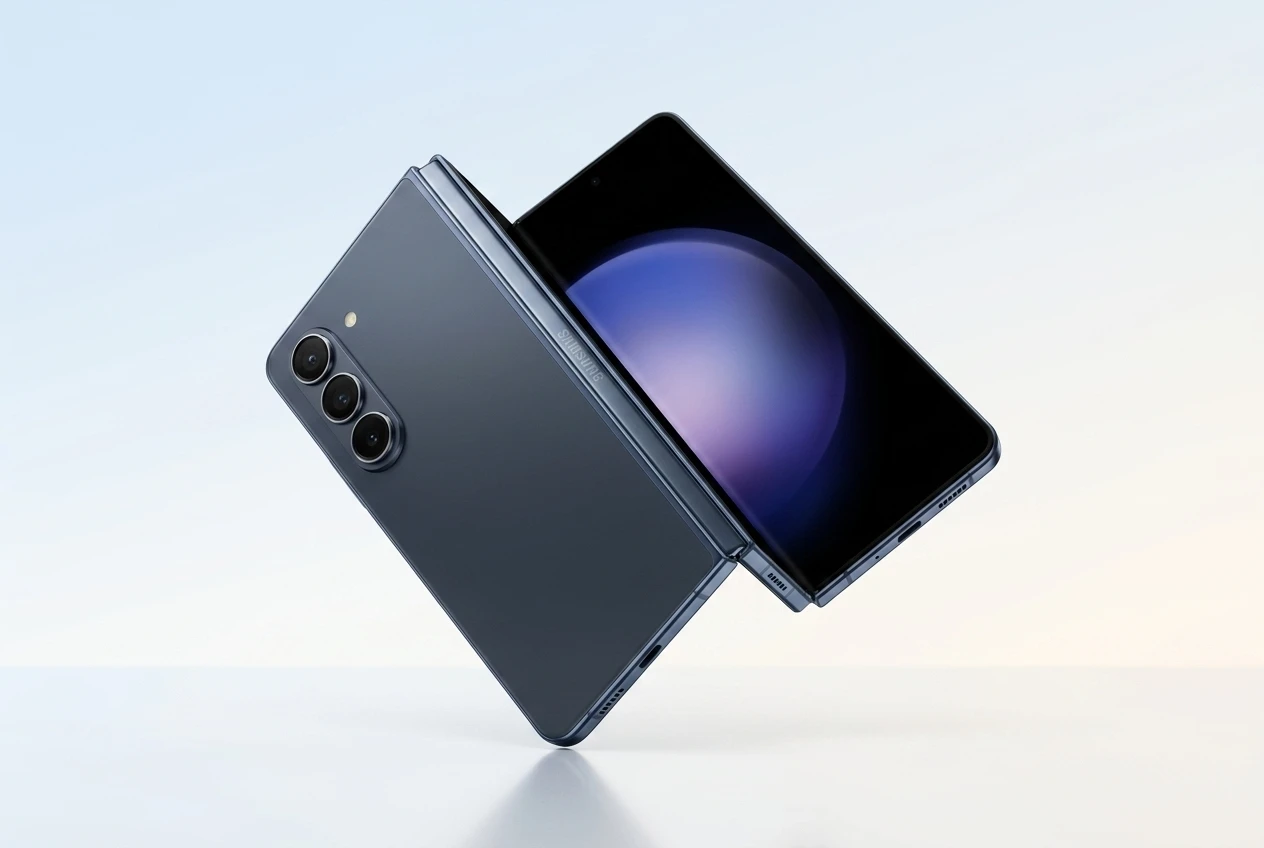
Samsung has confirmed a Galaxy Unpacked event for Wednesday, July 22, in London, where a new wide, passport shaped foldable takes over the plain Galaxy Z Fold 8 name. The familiar tall design gets bumped down to Ultra status, and a higher price. Leaked European pricing shows the redesigned wide phone will cost about 200 euros less than the barely changed Ultra it is nudging aside as Samsung’s flagship shape.
That pricing quirk points to something bigger than a spec sheet. Samsung’s chip division just helped deliver the largest single quarter operating profit any technology company has ever reported, fueled by the same memory shortage now pushing up the price of nearly every phone Samsung and its rivals sell.
A Cheaper ‘Flagship’ and a Pricier Afterthought
For six years, Samsung’s tall, book style Fold has carried the flagship name and the flagship price. At this Unpacked, that pattern breaks. Tom’s Guide and T3 both report that Samsung is giving its plain “Galaxy Z Fold 8” name to the new wide format phone, the one with a passport style profile: a 5.5 inch cover screen at a stubby 16:10 ratio that opens into a 7.6 inch inner display closer to a square 4:3. The taller, narrower shape that has defined every Fold since 2019 gets pushed into a new Ultra tier instead.
Leaked pricing obtained by the German outlet WinFuture, and repeated across multiple trackers including Notebookcheck, shows why the renaming matters. Every configuration of the redesigned wide phone comes in 200 euros under the equivalent Ultra tier.
| Model | 256GB | 512GB | 1TB |
|---|---|---|---|
| Galaxy Z Fold 8 (wide) | €1,999 | €2,199 | €2,599 |
| Galaxy Z Fold 8 Ultra | €2,199 | €2,399 | €2,799 |
| Galaxy Z Flip 8 | €1,299 | €1,499 | – |
The Ultra’s case for the extra money is thin. It keeps a third, telephoto camera lens the wide model skips, along with a larger battery. The wide model is rumored to weigh around 201 grams, about 9 grams lighter than the Ultra, according to leaker Ice Universe, a claim that would make it the lightest foldable Samsung has ever shipped.
- Galaxy Z Fold 8: the new wide, passport style model, with a 5.5 inch cover screen and 7.6 inch inner display, rumored to start at 1,999 euros.
- Galaxy Z Fold 8 Ultra: the familiar tall, book style design, with an extra telephoto camera and a bigger battery, rumored to start at 2,199 euros.
- Galaxy Z Flip 8: the clamshell model, rumored to start at 1,299 euros, up 100 euros from its predecessor.
None of these figures are official. They come from retailer sourcing and leak trackers, not Samsung.
What Samsung Has Confirmed, and What Is Still a Leak
Samsung itself has locked in a few details. The company confirmed the July 22 date, the London venue, and the 2 p.m. British Summer Time start, and said the show would reveal new foldables and Galaxy Watches. A Weibo teaser also confirmed the new wide foldable runs on Qualcomm’s Snapdragon 8 Elite Gen 5 chip. Everything else, including the final name, is still filtering through leak trackers.
Even the naming split isn’t settled. Notebookcheck refers to the cheaper device as the Galaxy Z Fold 8 Wide, while other outlets, including Digital Citizen and Android Authority, use the plain Fold 8 name. Which label survives at Unpacked matters. A “Wide” suffix would frame the phone as a side experiment. A bare “Fold 8” frames it as the new default shape going forward.
Racing Apple’s Six-Week Head Start
Samsung picked London over its usual rotation of Seoul, New York, or Paris, and picked a date that puts real distance between itself and Apple. Apple’s own foldable, widely nicknamed the iPhone Ultra online, isn’t expected until September, and early estimates put its price well above either new Samsung foldable, according to PhoneArena’s reporting.
Component costs are hitting Apple too. Reports peg the iPhone 18 Pro’s price increase at anywhere from $50 to $300, and average smartphone prices industry wide are on pace for a record, according to CNN’s reporting on Counterpoint Research data showing average selling prices rising toward $523 this year. Against that backdrop, a roughly 5 percent bump on the Fold 8 Ultra and a flat price on the new wide model reads like restraint.
Wide Phones Have Failed Before
Samsung is not the first company to try a squat, wide format, and the attempts so far have a mixed track record.
- 2014: BlackBerry’s Passport matched the size of a travel passport, keyboard included, and never folded at all.
- 2020: Microsoft’s Surface Duo bridged two flat screens with a hinge instead of one bending display.
- 2026: Huawei’s Pura X Max became the first true wide folding phone on sale, though only in China.
Huawei’s phone opens from a 5.4 inch cover display into a 7.7 inch inner screen, a squat shape close to what Samsung is expected to ship. Apple is reportedly circling a similar aspect ratio. If Samsung, Huawei, and Apple all land on roughly the same proportions inside a single year, the passport shape stops looking like a novelty and starts looking like where the whole category is headed.
The Memory Shortage Splits the Market in Two
Samsung’s pricing decisions aren’t happening in a vacuum. The chip shortage squeezing every device maker in 2026 traces back to a memory market reallocated toward artificial intelligence hardware almost overnight. IDC’s analysis of the crisis shows global DRAM supply growing just 16 percent this year and NAND just 17 percent, both well below the 20 to 30 percent the industry used to consider normal. Memory alone can eat 15 to 20 percent of the cost of building a mid-range phone, and 10 to 15 percent of a flagship.
Research firm TrendForce, in a press release tracking mobile DRAM contracts, found LPDDR5X chip prices climbing 78 to 83 percent quarter over quarter heading into the second quarter of 2026, with cheaper LPDDR4X chips up 70 to 75 percent over the same stretch.
The fallout isn’t evenly spread. Xiaomi has already cut its 2026 shipment target by 70 million units. OPPO and Vivo have trimmed forecasts by more than 20 percent and nearly 15 percent, concentrating the damage in mid and low end models. Research firm Omdia found that memory now eats almost 60 percent of total build cost on phones priced under $400, while the same cost share on phones above $800 rose from 11 percent to 26 percent in two quarters. Cheap phones absorb the shortage through worse specs. Expensive phones absorb it through higher prices that buyers, so far, still seem willing to pay. Global smartphone shipments are on pace to fall 12.9 percent this year, the sharpest drop in more than a decade, even as the above $400 tier is still expected to grow.
Samsung’s Chip Business Is Profiting From Its Own Phones’ Pain
Samsung isn’t just a phone maker paying more for memory. It’s also one of three companies setting that price.
Samsung’s preliminary second quarter guidance, released July 7, put consolidated operating profit at about 89.4 trillion won (roughly $58.4 billion), the largest single quarter operating profit any technology company has ever reported, ahead of both NVIDIA and Apple. That’s a jump of roughly 19 times from the 4.7 trillion won Samsung earned in the same quarter last year. Full division level results aren’t due until July 30, but the first quarter already showed where the money comes from. Samsung’s first quarter results release shows its semiconductor unit generated 93 percent of the company’s entire operating profit that quarter, on revenue that jumped 86 percent from the prior quarter.
Samsung’s own language doesn’t hide the flip side. Its first quarter shareholder release said the mobile business would spend the second half of the year on “efficiency initiatives to mitigate the impact of rising cost pressures on profitability,” even while “strengthening the product development of foldables.” The phones have to work harder to protect margins the chip business barely has to think about right now.
This has everything to do with the AI boom as memory companies continue to ride a tidal wave driven by limited supply and unprecedented demand.
Marc Einstein, an analyst at Counterpoint Research, said that after Samsung’s guidance landed, describing the results as among the best quarterly performances any chipmaker has ever posted. Samsung has already trimmed costs elsewhere this year, cutting jobs and moving its US headquarters from New Jersey to Texas, and a wage deal covering its chip division ties 10.5 percent of that unit’s annual profit directly to worker bonuses, a sign of how much cash is suddenly moving through the business.
A wide foldable priced to undercut its own Ultra sibling reads as a company using one part of its balance sheet to soften the price of the part that actually has to compete for buyers.
Samsung will find out in three days whether affluent buyers reward the bet. Apple has roughly six weeks to answer back.
Frequently Asked Questions
How much will the Galaxy Z Fold 8 Ultra cost in the US?
Leaked figures point to about $2,099 for the tall Ultra model, which would make it the first Samsung foldable to cross $2,000 in the United States. The redesigned wide Z Fold 8 could start closer to $1,899, though Samsung hasn’t confirmed either price ahead of the July 22 event.
How much is Apple’s rival foldable expected to cost?
Early estimates, including one from IDC relayed by PhoneArena, put Apple’s foldable iPhone at around $2,500 when it arrives later this year, which would make it notably pricier than either new Samsung foldable.
Will the new Fold lineup finally lose its crease?
Reports conflict. One leak claimed a 20 percent reduction in visible crease on the Ultra model, but leaker Ice Universe called the improvement minimal, and Samsung may reuse the same three year old OLED panel material rather than the newer type already used in the Galaxy S26 Ultra.
Is Samsung reinvesting its chip profits into more production?
Yes. Samsung has announced plans to spend roughly 400 trillion won building a new semiconductor manufacturing hub in southwestern South Korea, a site outside the country’s established chipmaking corridor that will need new supporting infrastructure built from scratch, according to Counterpoint Technology Market Research.
Is Samsung launching anything besides foldables on July 22?
Samsung is also expected to preview Google and Qualcomm built smart glasses at the event, a wearable push that would put it in more direct competition with Meta, on top of the new Galaxy Watch models already confirmed for the show.

-
 TECH1 year ago
Where Garmin Watches are Made and How They are Assembled
-

 AUTO3 months ago
Tesla’s Roadster Is ‘a Few Weeks Away,’ Says Its Chief Designer
-
 NEWS10 years ago
Samsung Releases Galaxy Note7 TV Ad as Reddit AMA Leaks Specs
-
 NEWS10 years ago
Android 7.0 Nougat Rolls Out To Nexus Devices With New Emoji, Features
-
 FINANCE9 years ago
Cardano Price Surges as ADA Enters the Crypto Top Ten List
-
 NEWS10 years ago
Pre-Order the First Camera Made for Facebook Live Streaming Video
-
 FINANCE1 year ago
Binance Suspends Trading and Withdrawals for a System Upgrade
-
 FINANCE9 years ago
RChain Price Jumps Nearly 150% to a New All-Time High of $2.03