
NEWS
IAF Wing Commander Arrest Fits Long Honey Trap Pattern
An IAF Wing Commander held since May under the Official Secrets Act after a Pakistan-linked social media honey trap joins a string of similar defence breaches.

A Wing Commander of the Indian Air Force was arrested on the night of May 31 by Delhi Police for allegedly leaking sensitive defence information and has been booked under the Official Secrets Act. He remains in judicial custody at Tihar Jail more than two months later, with the IAF confirming he was under active surveillance before the handover.
Police sources describe the case as part of a larger espionage network run by Pakistani intelligence that used a social-media honey trap to extract documents, photos, videos and unit movement data. The episode fits a pattern of similar breaches that has stretched across more than a decade.
The arrest closed one channel. The wider inquiry into handlers, secondary devices and the volume of material already sent is still open.
Arrested After Two Months of Silence
The Indian Express first reported the details on August 8. Senior Delhi Police sources said the IAF intelligence wing supplied specific information that led to the night-time arrest. The officer was initially held in police custody, then shifted to judicial custody.
An IAF spokesperson said: “He was under active surveillance and was handed over to the suitable law enforcement agencies.” Sources added he has been charged for sharing classified information and confidential documents related to national defence.
- Arrest date: night of May 31, 2026
- Custody: Tihar Jail, judicial
- Charge framework: Official Secrets Act provisions
- Status: investigation ongoing into handlers and data extent
Investigators are still determining whether the material compromised national security or was meant to enable hostile activity on Indian soil.
The gap between the May arrest and the August disclosure left the public record thin for weeks. Once the report landed, the sequence became clearer: internal IAF monitoring, a tip to Delhi Police, a night arrest, and a shift from police to judicial custody at Tihar.
That chain matters because it shows the service moved first. The handover followed active surveillance rather than a cold external tip.
A Woman on Social Media and Video Calls
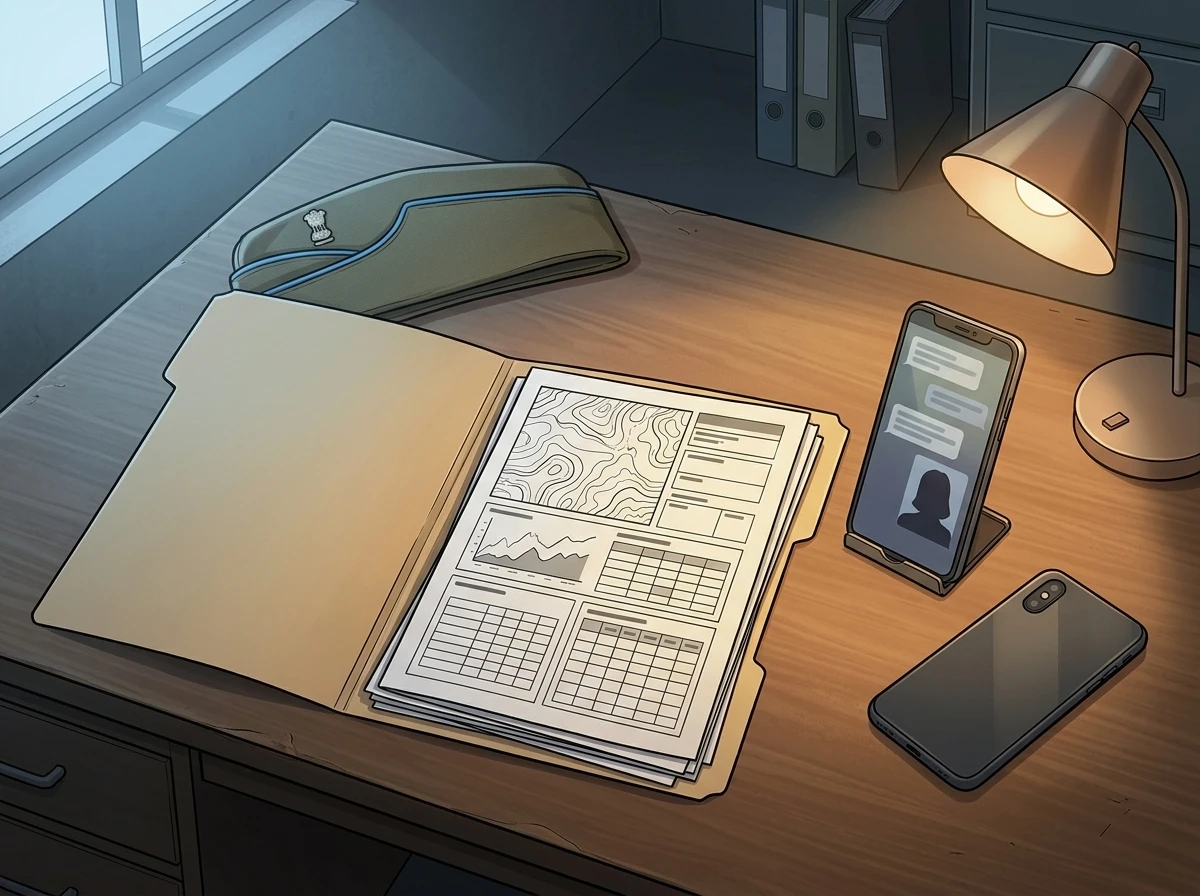
According to police sources, the officer was navigating a difficult stretch in his personal life when a woman approached him online. They began chatting, then moved to video calls. Once trust was established, she requested photos, videos and details on the movement and deployment of military units.
He allegedly transmitted crucial documents and data through digital channels. The woman, sources said, was acting for handlers based in Pakistan. The operation formed part of a coordinated module aimed at Defence personnel.
This matches the standard approach documented in earlier cases: lonely or stressed service members targeted via Facebook, Instagram or similar platforms by personas claiming to be Indian women, often with elaborate backstories.
The progression follows a familiar ladder. First contact is light. Video calls build the sense of a real relationship. Only after that do the requests for unit data and documents begin.
- Initial approach on social media during a period of personal difficulty
- Chat and video calls used to establish trust
- Requests for photos, videos and unit movement details
- Transmission of documents and data through digital channels
- Escalation to installing an app on a colleague’s phone
Each step lowers resistance for the next. By the time classified material is asked for, the target has already invested in the persona on the other end of the call.
Spyware Planted on a Colleague’s Phone
After the initial data haul, handlers escalated. The Wing Commander was allegedly instructed to install a particular app on a colleague’s mobile phone. Sources described it as targeted spyware or remote-access malware built to steal device data, track locations or intercept communications.
That step expands the breach beyond one compromised officer. It turns a personal device into a potential persistent collection node inside the unit.
- Steal stored device data
- Track real-time locations
- Intercept calls and messages
- Provide remote access to the handlers
Police are now mapping the full digital trail of those communications and identifying the overseas controllers.
A single officer sharing his own files is damaging. An officer who places malware on a second phone multiplies the risk. Location trails, message logs and stored files from another device can expose people who never spoke to the honey-trap persona at all.
That is why investigators treat the app installation as a separate and serious thread. It marks the shift from extraction to implantation inside the unit’s wider circle.
The Same Playbook Across a Decade
Indian security agencies have seen this script before. In May 2022, Delhi Police arrested IAF sergeant Devender Narayan Sharma, then 32 and working at the Subroto Park record office. He had been honey-trapped by a Pakistan-based woman, shared sensitive personnel and defence documents via WhatsApp, and received money. He was dismissed and charged under the Official Secrets Act.
In 2019, a 22-year-old soldier near the border was arrested after revealing troop and tank movements to a fake Facebook account run from Pakistan. Rajasthan Police described it as part of a wider catfishing problem. Earlier, group captains, army jawans, a BrahMos scientist sentenced to life, and embassy staff have fallen to nearly identical social-media approaches.
A 2024 Economic Times review of ISI social media honey trap methods detailed how operatives build fake profiles, use VoIP to hide origin, and spend months cultivating targets who are single, lonely or carrying grievances. UP ATS once flagged 125 suspect Facebook profiles linked to security personnel. The Wing Commander case shows the method remains effective against mid-rank officers even after years of public warnings.
Similar honey trap tactics in a separate JeM probe have appeared in non-military contexts as well, underscoring how widely the technique travels.
| Year | Case | Service | Key detail |
|---|---|---|---|
| 2026 | Unnamed Wing Commander | IAF | Spyware on colleague phone; Tihar custody |
| 2022 | Devender Narayan Sharma | IAF sergeant | WhatsApp docs; money received; dismissed |
| 2019 | Sombir Singh | Army jawan | Troop/tank movements via Facebook |
| Multiple | BrahMos scientist Nishant Agrawal | DRDO-linked | Life sentence; malware apps installed |
Analysts and officers on X have repeatedly noted that social media accounts for the bulk of these traps and that personal vulnerabilities remain the entry point.
Rank has not been a reliable shield. Sergeants, jawans, group captains and a Wing Commander have all appeared in the same pipeline. The platforms change little. Facebook, Instagram and WhatsApp recur because they are where stressed personnel already spend time.
Money appeared in the 2022 sergeant case. Malware apps appeared in the BrahMos scientist case and again here. The toolkit widens, but the opening move stays the same: a patient persona and a target under personal strain.
Fourteen Years Under the Secrets Act
The officer faces charges under the Official Secrets Act, 1923. Section 3 covers spying and communication of information useful to an enemy or prejudicial to the safety of the State. For offences linked to defence works, naval, military or air force affairs, the statute allows imprisonment that may extend to fourteen years.
If any person for any purpose prejudicial to the safety or interests of the State… obtains, collects, records or publishes or communicates to any other person any secret official code or password, or any sketch, plan, model, article or note or other document or information which is calculated to be or might be or is intended to be, directly or indirectly, useful to an enemy…
That language comes from the core text of Section 3. Section 5 separately addresses unauthorized disclosure and carries shorter terms. An overview of the full Official Secrets Act 1923 penalties and provisions notes the colonial-era law still anchors most defence leak prosecutions, even as critics argue it collides with modern transparency rules.
Conviction can also bring dismissal, as seen in the 2022 sergeant case. The present investigation has not publicly disclosed the precise sections invoked or any plea so far.
Section 3 is the heavier instrument because it ties the act of communication to enemy usefulness and State safety. Section 5 covers unauthorized disclosure with less severe exposure. Which path prosecutors take will shape the ceiling the Wing Commander faces if the case reaches trial.
Dismissal sits alongside any prison term. Service separation follows conviction in prior OSA matters and remains a live consequence here regardless of the final sentence length.
Digital Trail Still Being Mapped
Police say the focus now is the communication trail, the identity of overseas handlers, and the precise volume and sensitivity of material that left the country. They are examining whether the shared data enabled any concrete hostile planning.
What we know
- Arrest followed IAF internal surveillance tip to Delhi Police
- Honey trap via social media and video calls during personal difficulty
- Documents, unit movements, photos and videos allegedly shared
- Spyware app installed on a second officer’s phone
- Pakistani handlers alleged; larger network claimed
What’s unconfirmed
- Exact nature and volume of compromised files
- Whether any operational damage already occurred
- Identities and locations of the handlers
- Whether additional personnel were targeted in the same module
Rahul Shivshankar, in a widely viewed post, asked what exactly was sold and how deeply national defence secrets may have been compromised. That question sits at the center of the remaining probe.
Mapping the trail means rebuilding every chat, call log and file transfer tied to the persona. It also means tracing the path of the app placed on the colleague’s phone and any data that app may have sent.
Until those threads close, the difference between a contained leak and a wider operational breach stays unresolved in public.
How the Cultivation Window Stays Open
The 2024 review of ISI methods described months of cultivation before any hard ask. Fake profiles, VoIP routing and careful pacing give handlers time to learn a target’s stresses and adjust the persona.
That long window is the method’s main advantage. A rushed demand for unit maps would fail. A slow build through chat and video calls succeeds more often, especially when the target is already lonely or carrying grievances.
UP ATS once flagged 125 suspect Facebook profiles linked to security personnel. Volume on that scale means many approaches never reach the document stage. The ones that do share a pattern: patience on the handler side and personal strain on the target side.
Awareness drives and AI monitoring in some units aim to shrink that window. The Wing Commander case shows it has not closed. Mid-rank officers still appear in the net years after the first public warnings.
What Secondary Infection Means for Units
When handlers push a compromised officer to load spyware onto a colleague’s phone, the breach stops being personal. A second device can yield locations, messages and stored files from someone who never joined the original chat.
Earlier cases already showed malware apps in the mix, including the BrahMos scientist matter that ended in a life sentence. The present allegation follows that line: use the first recruit to open a door inside the unit.
For commanders, the implication is practical. One officer under honey-trap pressure becomes a vector. Vetting only the person in direct contact is no longer enough once secondary installation enters the playbook.
- Primary target shares own documents and unit data
- Handlers instruct installation on a colleague’s phone
- Spyware enables data theft, location tracking and intercepts
- Unit exposure widens beyond the original recruit
Police mapping of the digital trail is therefore also a unit-security task. Who else was near the infected device, and what that device held, will shape how far the damage assessment must run.
Ranks That Keep Getting Tested
The IAF’s surveillance caught this officer before further damage, according to its statement. Yet the recurrence across services shows the digital honey trap still works against trained personnel when personal stress meets a patient online persona.
Handlers continue to refine the kit: longer cultivation, malware delivery, secondary-device infection. Indian agencies have responded with awareness drives, AI monitoring in some units, and swift OSA cases. The pattern itself has not broken.
Until the digital trail yields the full network and the courts decide the Wing Commander’s fate, the case stands as another data point in a long series rather than an isolated failure.
The service acted on its own monitoring and handed the officer over. That limited further loss from this channel. It did not rewrite the wider script that has repeated from jawans and sergeants up through mid-rank officers for more than a decade.
Personal difficulty remains the opening. Social media remains the door. The Official Secrets Act remains the charging frame. Those three facts have held steady even as the malware and secondary-device steps have grown more deliberate.

-
 TECH1 year ago
Where Garmin Watches are Made and How They are Assembled
-

 AUTO3 months ago
Tesla’s Roadster Is ‘a Few Weeks Away,’ Says Its Chief Designer
-
 NEWS10 years ago
Samsung Releases Galaxy Note7 TV Ad as Reddit AMA Leaks Specs
-
 NEWS10 years ago
Android 7.0 Nougat Rolls Out To Nexus Devices With New Emoji, Features
-
 FINANCE9 years ago
Cardano Price Surges as ADA Enters the Crypto Top Ten List
-
 NEWS10 years ago
Pre-Order the First Camera Made for Facebook Live Streaming Video
-
 FINANCE1 year ago
Binance Suspends Trading and Withdrawals for a System Upgrade
-
 FINANCE9 years ago
RChain Price Jumps Nearly 150% to a New All-Time High of $2.03