
NEWS
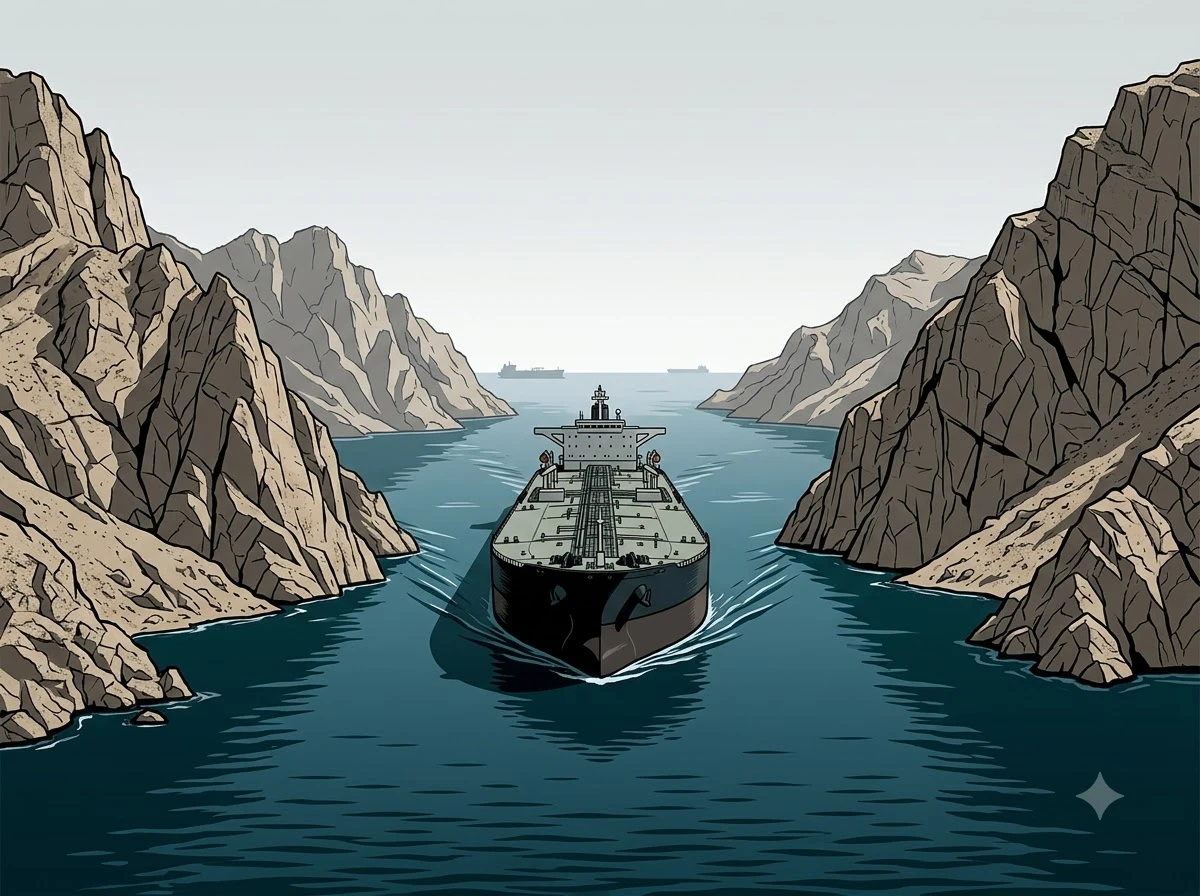
Iran Gains Hormuz Control as Oman Deal Nears Finish
Iran and Oman near a shipping route deal that would give Tehran inbound control and cargo fees of 5-7 percent, reversing free transit after five months of war.

Iran and Oman have locked in geographic coordinates for a new shipping route through the Strait of Hormuz and are finishing a joint draft, Iranian officials said this week, bringing a five-month war closer to a framework that would hand Tehran lasting inbound control and cargo fees.
Foreign Ministry spokesman Esmaeil Baghaei confirmed the coordinates agreement and said a joint statement sits in final review if no third parties obstruct it. Deputy Foreign Minister Kazem Gharibabadi called the talks “on the verge of being finalised,” with commercial ships set to pass through Iranian territorial waters on both legs.
The Coordinates Iran and Oman Already Locked
The deal under discussion is bilateral between the two coastal states that share the strait. Iran reported significant progress and insisted both inbound and outbound traffic would use its waters. Regional officials briefed on the talks described a temporary arrangement that would open the waterway and clear the path for renewed U.S.-Iran nuclear talks.
Baghaei stressed that any Iran-Oman understanding alone would not make the strait secure. He pointed to the continuing U.S. naval blockade of Iranian ports and other actions as the remaining threats. Reopening still hinges, in Tehran’s view, on Washington returning to commitments under a mid-June memorandum that collapsed.
That collapsed memorandum remains the political hinge. Without a return to its terms, Tehran treats the coordinates pact as incomplete, even if Muscat and Tehran finish their draft. The sequence of dates shows how quickly the war moved from open fighting to a map of control.
President Donald Trump has called a reopening deal imminent and said at a Las Vegas rally he prefers diplomacy: “I’d rather make a deal because I don’t want to kill people. I do not want to kill people, but at some point we’re gonna.” U.S. officials have repeated they will never accept Iranian control of the world’s most important energy trade route.
- February 28, 2026: U.S. and Israel launch war; Iran reports more than 3,400 deaths since; U.S. reports 18 military dead.
- Mid-June 2026: Memorandum of understanding on cessation collapses amid blockade disputes.
- August 5, 2026: Iran announces coordinates agreed with Oman; draft in final stage.
Before the war the strait was freely open to all ships with no fees. Any deal that grants Iran authority over traffic would mark a major regional power shift in Tehran’s favour.
The bilateral frame also limits who can object inside the draft itself. Third parties may pressure Oman or Iran from outside, yet the text under final review is written by the two coastal states alone. That design leaves Washington arguing against a finished map rather than shaping one.
Fees Split Three Ways and None Match
Money remains the sharpest split. According to a senior Iranian source and regional officials who spoke to Reuters, Iran seeks fees of between 5 percent and 7 percent of cargo value. Oman is discussing around 3 percent. Washington wants zero.
| Party | Proposed Fee | Control Stance |
|---|---|---|
| Iran | 5-7% of cargo price | Inbound (and preferably both legs) through its waters |
| Oman | ~3% of cargo price | Joint management, southern corridor role |
| United States | 0% | No Iranian control of the waterway |
One regional source said Gulf negotiators want any fees labelled voluntary and regional countries to supervise inspections. Making fees nominally voluntary is floated as a face-saver, yet the implied threat of Iranian attacks would leave most shippers little choice. Gharibabadi told IRNA the arrangement is designed so commercial ships pass through Iranian waters inbound and outbound.
- Sticking point one: definition of “control” and who inspects.
- Sticking point two: outbound traffic role for Iran versus Oman.
- Sticking point three: whether fees can be framed as security or environmental services rather than tolls.
- Sticking point four: U.S. insistence on free navigation versus Tehran’s demand for blockade lift.
The gap between 5 to 7 percent and zero is not a rounding difference. It is the distance between a toll regime and free passage. Oman’s middle figure of around 3 percent offers a numerical bridge that neither capital has accepted. Labelling the charge a security or environmental service would change the vocabulary without changing who collects.
Parliament speaker and top negotiator Mohammad Bagher Ghalibaf accused Trump of “theatre diplomacy.” On X he wrote of threats “on loop” and added: “Using bullying + broken promises + fake news as leverage is a failed strategy. Acknowledge the facts and fulfill your commitments. We don’t need more theater.”
Iran’s Veto Becomes the Exit Price
Control is the larger prize. The text already on the table, per the senior Iranian source, gives Iran authority over ships heading into the Gulf. That single change would turn the war launched to curb Iranian power into a transfer of leverage over a chokepoint that once moved a 20 million barrels per day average of oil, equal to about one-fifth of global petroleum liquids consumption, plus roughly one-fifth of global LNG trade, mostly Qatari.
UNCTAD has described the strait as carrying around a quarter of global seaborne oil trade along with fertilizers and other cargoes. Asian markets took 84 percent of the crude and condensate in 2024. China, India, Japan and South Korea alone accounted for 69 percent. Those buyers now face the prospect of permanent Iranian gatekeeping.
Markets have already shown how traffic freezes reshape prices. Earlier in the conflict oil stayed below 100 after the closure longer than many forecasts expected, thanks to stock draws and alternative routes. Yet the structural change proposed now is different: a lasting fee-and-permission regime rather than a temporary shutdown.
Inbound authority is the decisive clause. Once ships must clear Iranian waters to enter the Gulf, every later dispute over fees, inspections, or banned flags runs through Tehran first. Outbound terms can still be bargained with Oman. The entry gate cannot.
Gulf Energy Sites Now Sit in the Retaliation Zone
Tehran has raised the cost of any fresh U.S. strikes by warning Gulf states directly. Five sources told Reuters that Iran would hit critical energy infrastructure across the region if America targeted Iranian sites again.
The Iranian warning was unequivocal: if America targeted Iran’s infrastructure, they would retaliate by striking Gulf energy facilities and other regional targets.
One Gulf source relayed that message. Iran has already used missiles and drones against U.S. allies and has targeted commercial ships that transit without permission. The warning turns Washington’s closest regional partners into hostages to the next escalation decision.
Oman sits in a dual role: coastal state, mediator, and potential fee co-collector. Its southern corridor would still matter, yet the inbound Iranian control proposed would leave Muscat with less leverage than the geography once suggested.
That dual role also explains Oman’s fee posture. A share near 3 percent keeps Muscat inside the revenue stream even as inbound control shifts north. Joint management language preserves a formal seat at the table. The practical weight of that seat shrinks if the entry lane is Iranian.
Parliament’s Ban Bill Raises the Stakes
While the Oman talks advance, an Iranian parliamentary committee is reviewing a preliminary bill that would ban U.S., Israeli and other vessels deemed hostile from the strait. Violators would face fines up to 20 percent of cargo value. An Iranian lawmaker confirmed the review to Fars News Agency.
Key numbers now in play:
- 5-7% Iranian fee demand on cargo price
- ~3% Omani discussion level
- 20% proposed fine for banned vessels
- 3,400+ Iranian deaths reported since February 28
The bill would convert the temporary wartime restrictions into domestic law and give hardliners a permanent instrument even if a softer Oman deal is signed. It also signals that any U.S. or Israeli-flagged or owned tonnage could stay locked out long after a ceasefire.
A 20 percent fine sits far above the fee range under negotiation. It functions as a separate track: one path for ships that pay and pass, another for ships that Iran’s legislature brands hostile. Signing an Oman draft would not automatically retire the bill. Hardliners would still hold a statutory tool.
Shippers Face Permanent New Costs
For tanker owners and charterers the practical outcome is higher friction. Even “voluntary” fees under threat function as a toll. Insurance premiums, already elevated, would price in the new political risk. Routing workarounds via the Red Sea or pipelines have limits; Saudi and UAE bypass capacity is finite and already partly used.
Some traffic has already adapted. Tanker workarounds chipping at leverage appeared earlier when flows shifted, yet the bulk of Gulf crude still has no practical alternative to Hormuz. India’s refiners, heavy buyers of the region’s barrels, have carried an India’s elevated oil import bill throughout the conflict; a fee regime would add another structural layer.
Crowd reaction on X has treated fee collection as inevitable and the renaming of tolls as “fees” as the political grease that lets Trump claim an exit. Prediction-market odds on Iran charging by year-end have swung with every headline. Technical traders note charts pricing a possible drop toward $68-70 if a deal lands cleanly this weekend, then rebound if the ban bill or Gulf threats re-escalate.
Cost layers stack in a clear order for owners:
- Base freight and fuel through the strait
- Any “voluntary” fee tied to cargo value
- War-risk insurance already elevated by the conflict
- Potential fines if a vessel falls under a future ban list
U.S. commanders have already advised that long-range precision munitions stocks are nearly exhausted after months of strikes that failed to break Iran’s grip on the strait. Midterm pressure at home runs two-to-one against the war. Those constraints make a deal that concedes control politically easier in Washington than another round of attacks, even if the strategic cost is permanent.
Asian Buyers Carry the Heaviest Exposure
The trade figures already on record show where a lasting gatekeeping regime would land hardest. Asian markets took 84 percent of the crude and condensate moving through the strait in 2024. China, India, Japan and South Korea alone made up 69 percent of that flow.
Those four importers cannot reroute the bulk of their Gulf barrels at will. Bypass pipelines and Red Sea options remain finite, as shippers have already discovered. A fee assessed on cargo value would therefore pass into Asian refining margins and, downstream, into product prices across the same economies.
Fertilizers and other non-oil cargoes listed by UNCTAD would face the same permission structure. The strait’s share of global seaborne oil trade, described as around a quarter, is only the headline slice. Once inbound control is written into coordinates and a draft, the permission layer applies to whatever else moves with the tankers.
India’s elevated import bill during the conflict offers an early sample of the pressure. A permanent fee-and-permission regime would turn that wartime spike into a standing cost rather than a temporary shock.
Munitions Limits and Midterms Shape the Exit
Washington’s room to reject the new map is narrower than the public rhetoric suggests. Commanders have advised that long-range precision munitions stocks are nearly exhausted. Months of strikes did not break Iran’s grip on the strait. Another campaign would begin from a thinner magazine.
Domestic numbers point the same way. Midterm pressure runs two-to-one against the war. Trump has already said he prefers a deal and does not want to kill people, while leaving a threat on the table for later. That mix favors an exit that can be described as diplomacy even if it concedes inbound control.
The human ledger of the war sharpens the same choice. Iran reports more than 3,400 deaths since February 28. The United States reports 18 military dead. A framework that reopens traffic under Iranian coordinates stops the attrition without requiring a military breakthrough that stocks may no longer support.
U.S. officials still say they will never accept Iranian control of the route. The draft under final review tests whether that sentence survives contact with empty magazines, midterm math, and a bilateral map Oman and Iran have already drawn.
The coordinates are agreed. The draft is nearly ready. What remains is whether Washington accepts the new map of who decides who sails, and at what price.

-
 TECH1 year ago
Where Garmin Watches are Made and How They are Assembled
-

 AUTO3 months ago
Tesla’s Roadster Is ‘a Few Weeks Away,’ Says Its Chief Designer
-
 NEWS10 years ago
Samsung Releases Galaxy Note7 TV Ad as Reddit AMA Leaks Specs
-
 NEWS10 years ago
Android 7.0 Nougat Rolls Out To Nexus Devices With New Emoji, Features
-
 FINANCE9 years ago
Cardano Price Surges as ADA Enters the Crypto Top Ten List
-
 NEWS10 years ago
Pre-Order the First Camera Made for Facebook Live Streaming Video
-
 FINANCE1 year ago
Binance Suspends Trading and Withdrawals for a System Upgrade
-
 FINANCE9 years ago
RChain Price Jumps Nearly 150% to a New All-Time High of $2.03