
NEWS
Trump’s Catering Truck Ruse Echoes Clinton’s 2000 Decoy Flight
Trump left Turkey in a C-32A via catering container amid Iran threat, using the same misdirection Clinton deployed in Pakistan while the Qatar jet faced fresh.

President Donald Trump left the NATO summit in Ankara on July 8 inside an airport catering container, boarded a smaller C-32A military jet in secret, and used the older Air Force One as a flying decoy after U.S. officials flagged a credible Iranian assassination threat. The Washington Post first detailed the operation on August 10, drawing on a U.S. official and materials it reviewed. The move succeeded. It also replayed a security script written a generation earlier.
Journalists and some White House staff flew on the decoy 747 believing the president was with them. He was not. The same tradecraft kept Bill Clinton safe on a short, high-risk hop into Pakistan in 2000.
The episode hinged on timing, visual control, and a second aircraft that looked routine enough to ignore. Each piece had to hold until both jets were safely on the ground in Britain.
The Switch on the Ankara Tarmac
Trump boarded the older, powder-blue modified Boeing 747 from the left-side door in full view of cameras. Minutes later he and several aides entered a catering container raised to a door on the opposite side of the aircraft. The container was lowered onto a truck, driven a short distance across the tarmac, and raised again to the door of a waiting C-32A.
The smaller jet, painted blue and white with “United States of America” markings like the larger planes, carried Trump and Defense Secretary Pete Hegseth to RAF Mildenhall in Britain. Hegseth boarded separately via external stairs to keep the flight looking routine. The C-32A landed roughly nine minutes before the decoy Air Force One. Trump later emerged from the older 747 in view of cameras, then transferred to the Qatar-gifted 747-8 for the final leg home.
- Public boarding of legacy Air Force One captured by media
- Transfer via catering container on the far side of the aircraft
- Secret flight on C-32A with selected aides
- Reappearance from the decoy jet at Mildenhall before the Qatar aircraft
Reporters on the older plane were told to keep window blinds down. They learned only later that they had served as unwitting decoys.
The far-side container move mattered because it broke the camera line established at the public door. Once the truck rolled away, the story visible from the terminal and the press positions stayed fixed on the larger jet. That fixed picture is what the rest of the plan relied on.
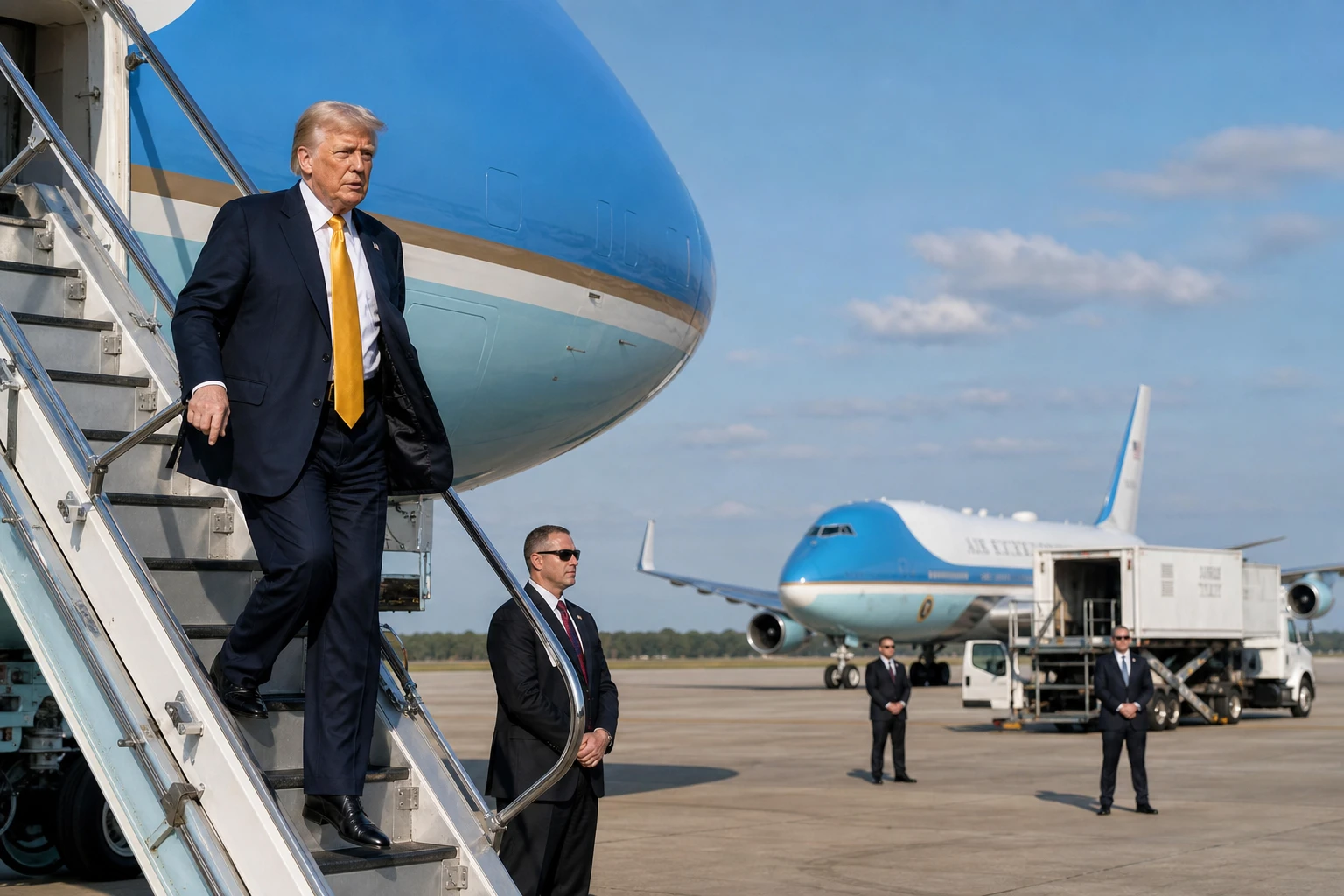
Why the Older Jet Came First
Trump had flown into Turkey on the luxury Boeing 747-8 donated by Qatar’s royal family. Publicly he said he would leave on the older jet “for old time’s sake” so U.S. service members in Britain could tour the new plane. Multiple outlets, including the New York Times, reported at the time that Secret Service concerns over the new aircraft’s incomplete defenses and a specific Iranian threat drove the initial switch.
The threat assessment arrived amid renewed U.S. strikes on Iran. One report cited an Israeli tip about a possible plot. White House communications director Steven Cheung later called the Qatar jet “state-of-the-art” and fitted with high-level protocols. He added that America has many enemies and uses every tool available. An Air Force statement said no risk was taken on security, safety or mission communications, though trades were made on less common mission sets.
The public line about nostalgia and a base tour gave cover for a decision already locked in by intelligence. Officials needed a reason that would not itself telegraph alarm. The older jet’s familiar silhouette did that work while the real departure ran on a quieter schedule.
The C-32A and Its Quiet Role
The C-32A is a modified Boeing 757-200 configured for high-priority personnel. According to the official Air Force fact sheet, the C-32 provides safe transportation for U.S. leaders, primarily the vice president under the call sign Air Force Two, plus cabinet members and others. It carries 45 passengers, cruises at 537 mph, and has an unrefueled range of 5,500 nautical miles.
| Aircraft | Base Model | Typical Role | Key Reported Trait in This Trip |
|---|---|---|---|
| Legacy Air Force One | Boeing 747 | Primary presidential transport | Used as public decoy out of Ankara |
| C-32A | Boeing 757-200 | VIP / Air Force Two | Secret carrier for Trump and aides |
| Qatar-gifted jet | Boeing 747-8 | Interim Air Force One | Flown into Turkey; used for final leg home |
Its high stance makes it easier to inspect underneath, a security plus. On this night it simply offered a lower-profile way out while the larger jet held the world’s attention.
Range and capacity were enough for the Ankara-to-Mildenhall leg with the small party that actually flew. The jet’s ordinary VIP markings helped it blend into the pattern of senior-travel movements rather than announce a presidential sortie. That blend was the point.
Clinton’s Playbook Replayed
In March 2000 President Bill Clinton needed to visit Pakistan for a few hours amid regional nuclear tension and terrorism concerns. He boarded an unmarked C-20 Gulfstream. A decoy aircraft painted in Air Force One colors and using the presidential call sign flew the same route minutes later. The unmarked jet landed largely unnoticed. The decoy drew the eyes.
- March 2000, Clinton pivots at the last moment in India from a C-17 to an unmarked Gulfstream for the hop into Islamabad while a marked decoy proceeds ahead.
- July 8 2026, Trump boards the marked older 747 in Ankara cameras, exits via catering container on the far side, and flies the C-32A while the marked jet continues as decoy.
- Arrival sequence, In both cases the real presidential aircraft lands with minimal fanfare; the marked jet absorbs the public attention.
Contemporary coverage described how Clinton flew to Pakistan under extraordinary security. The core idea has not changed: when the primary platform is compromised or incomplete, create a believable false picture and move the principal on a quieter bird.
The two operations differ in hardware and staging, yet share the same logic. One used an unmarked business jet and a painted decoy on the same route. The other used a marked VIP airliner and a catering-container shell game on the ground. In each case the audience was meant to track the wrong airframe.
| Feature | Clinton Pakistan Hop | Trump Ankara Departure |
|---|---|---|
| Real aircraft | Unmarked C-20 Gulfstream | C-32A (Boeing 757-200) |
| Decoy aircraft | Painted Air Force One colors, presidential call sign | Legacy Air Force One 747 |
| Switch method | Last-moment pivot in India | Catering container on far side of jet |
| Arrival effect | Unmarked jet largely unnoticed | C-32A nine minutes ahead; reappearance from decoy |
Qatar Jet Under the Same Lens
The donated 747-8 arrived after Trump criticized the aging fleet. It was quickly retrofitted and first carried him on July 1. Lawmakers and officials had already questioned whether the accelerated timeline left it without the full suite of anti-missile defenses and other systems standard on the older Air Force One aircraft. The Turkey threat assessment forced a second switch that quietly confirmed those gaps still mattered.
White House and Air Force statements insist the plane meets presidential requirements and prioritizes mission over aesthetics. Trump has since said the jet will be “maxed out” with further upgrades. The catering-container episode shows that, for now, the older airframes and smaller VIP jets still carry the highest-risk legs when intelligence lights up.
That pattern sits inside a wider set of Iran-related pressures, from Iran leverage over key waterways to deals that could give Iran gains tighter Hormuz control. The same intelligence environment that produced the Turkey warning keeps presidential travel under constant recalculation.
Entry on the new jet and exit on the old one underlined a split standard still in force. The donated aircraft was acceptable for the inbound leg and the final ride home once the threat window had closed. It was not the aircraft chosen for the segment officials judged most exposed.
How the Mildenhall Arrival Closed the Loop
The C-32A’s early landing gave the president a brief unmarked window on the ground before the decoy 747 arrived. When Trump later stepped off the older jet in view of cameras, the public sequence snapped back into a normal-looking presidential arrival. The transfer to the Qatar-gifted 747-8 for the flight home then looked like a routine change of planes rather than the end of a shell game.
Hegseth’s separate boarding in Ankara had already protected the outbound picture. Keeping the defense secretary on external stairs made the C-32A movement resemble ordinary senior-travel traffic. Together the early landing and the staged reappearance completed the false trail that began at the catering container.
- C-32A on the ground first, with minimal fanfare
- Decoy 747 arrival drawing cameras and attention
- President’s reappearance from the marked jet
- Final transfer to the Qatar 747-8 for the ride home
Anyone watching only the open tarmac saw a president leave Turkey on the legacy aircraft and later continue home on the newer one. The quieter jet that actually carried him between those two moments stayed outside the main frame.
Press as Decoys and What the Op Achieved
Reporters on the decoy flight had no idea the president was missing until after landing. Some White House staff were likewise left in the dark. The blinds-down instruction and the public boarding created a complete visual package for anyone watching, including potential adversaries.
President Trump outsmarted Iranian threats in Turkey by jumping in a CATERING TRUCK to swap planes when the world thought he was on the legacy Air Force One. This is a JAMES BOND-style mission.
Nick Sortor wrote that assessment on X, where the post drew more than 14,000 likes and nearly a million views within hours. The framing captures the public reaction: admiration for the Secret Service execution mixed with fresh jokes about the president smelling like airline meals. Skeptics on the platform treated the Iran threat itself as possible cover for simply not trusting the new jet yet. Both readings can sit side by side. The operation worked. The plane that required the extra step still needs more work.
Turkey’s role as host also sits inside shifting regional security arrangements, including Turkey’s place in new regional pacts that layer new deterrence questions onto an already tense neighborhood.
Leaving the press pool on the wrong aircraft was not a side effect. It was part of the picture the planners needed potential watchers to accept. Once blinds were down and the larger jet was airborne, the decoy carried its own proof of life until Mildenhall.
What the Episode Leaves Unsettled
The successful ruse does not resolve the underlying aircraft question. Officials still describe the Qatar jet as meeting core presidential requirements while also flagging further “max out” work. The Air Force note about trades on less common mission sets sits beside Cheung’s insistence on high-level protocols. Those statements can both be true and still leave a gap on the highest-threat departures.
Clinton’s unmarked Gulfstream and Trump’s C-32A both show that the backup fleet remains the practical answer when the primary platform is incomplete or the threat picture turns sharp. Until the donated 747-8 carries the full defensive suite of the older airframes, planners will keep the quieter options ready. The Ankara container run is the latest proof of that habit, not the last.
Frequently Asked Questions
What is the Air Force C-32A used for?
The C-32A is a military version of the Boeing 757-200 that normally flies the vice president as Air Force Two along with cabinet members and other senior officials. It seats 45, has a private stateroom, advanced communications, and a 5,500-nautical-mile unrefueled range, making it a ready backup when the primary presidential aircraft is unavailable or compromised.
How did Bill Clinton’s 2000 Pakistan flight work?
Clinton switched at the last minute to an unmarked Gulfstream while a decoy jet painted and call-signed as Air Force One flew the identical route minutes later. The unmarked plane landed first with little notice; the decoy drew attention and security scrutiny, allowing the short high-risk visit to proceed under heavy protection.
Why did the Qatar-gifted jet draw security questions?
The accelerated retrofit left open whether every defensive system standard on the older 747s, including certain anti-missile capabilities, had been fully installed. Officials have said no safety shortcuts were taken on core requirements, yet the plane has already been flagged for further “max out” upgrades and was not used for the highest-threat leg out of Turkey.
Did the press know they were flying without the president?
No. Journalists boarding the older Air Force One in Ankara were not told Trump had already transferred. Window blinds were ordered down, and they only discovered the ruse after both aircraft reached Mildenhall and Trump reappeared from the decoy jet.

-
 TECH1 year ago
Where Garmin Watches are Made and How They are Assembled
-
 AUTO3 months ago
Tesla’s Roadster Is ‘a Few Weeks Away,’ Says Its Chief Designer
-
 NEWS10 years ago
Samsung Releases Galaxy Note7 TV Ad as Reddit AMA Leaks Specs
-
 NEWS10 years ago
Android 7.0 Nougat Rolls Out To Nexus Devices With New Emoji, Features
-
 FINANCE9 years ago
Cardano Price Surges as ADA Enters the Crypto Top Ten List
-
 NEWS10 years ago
Pre-Order the First Camera Made for Facebook Live Streaming Video
-
 FINANCE1 year ago
Binance Suspends Trading and Withdrawals for a System Upgrade
-
 FINANCE9 years ago
RChain Price Jumps Nearly 150% to a New All-Time High of $2.03