BUSINESS
Shetty’s $15 Billion Suit Follows Baroda’s $600 Million Deal
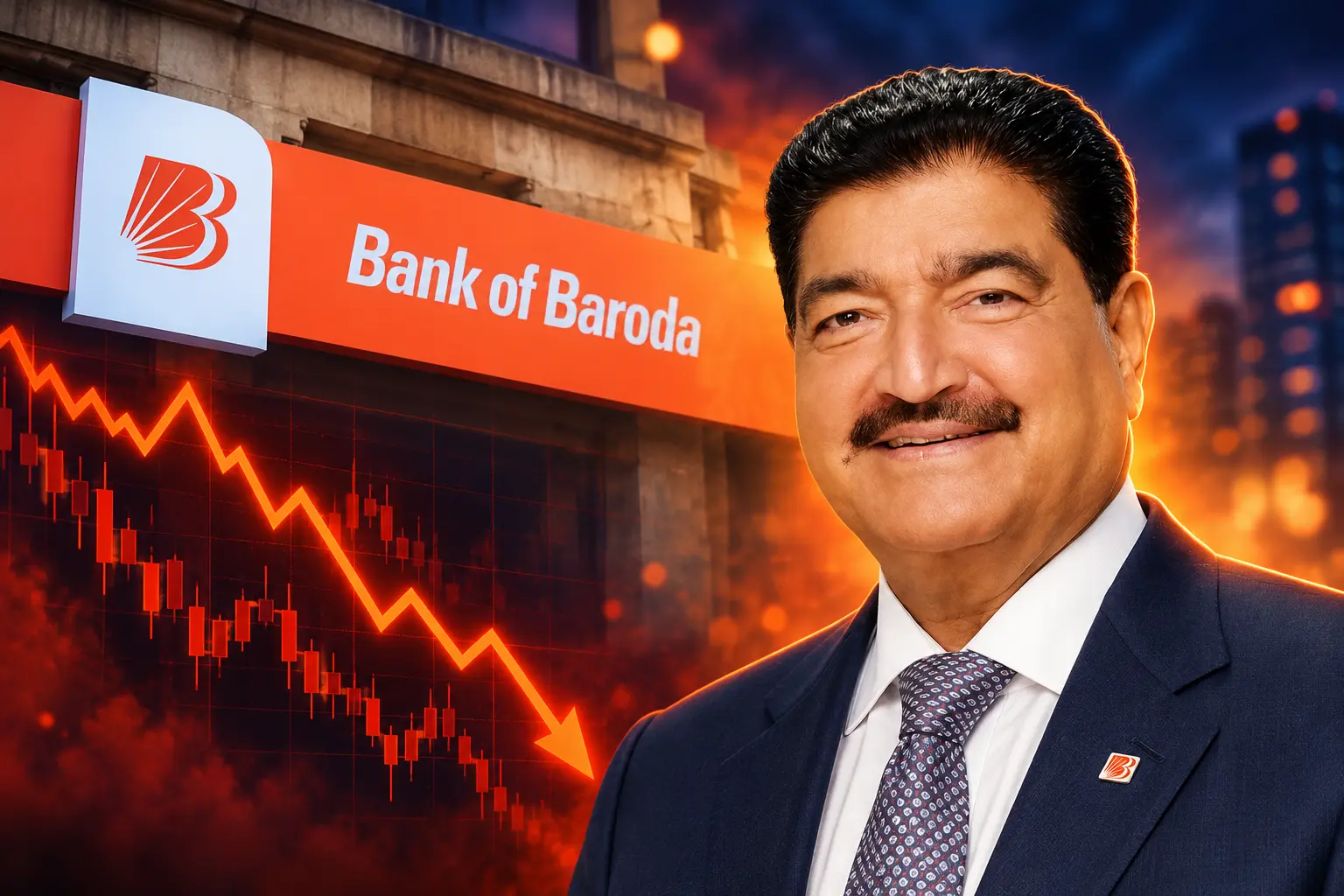
Bank of Baroda shares fell 3% after NMC founder BR Shetty filed a $15 billion suit, arguing the bank’s $600 million July settlement does not bind him.

Bank of Baroda shares fell 3% to Rs 231.30 on 14 October, the worst decline on the Nifty 100, after NMC Healthcare founder Bavaguthu Raghuram Shetty filed a $15 billion (Rs 1.44 lakh crore) damages suit in the Bombay High Court. The public sector lender closed Tuesday at Rs 238.43. The stock is down 22.7% in 2026, against a 13% decline in the Nifty 50, and the bank’s market value is about Rs 1.2 lakh crore.
The filing landed three months after Bank of Baroda paid $600 million (₹5,680 crore) to NMC’s joint administrators to end claims in Abu Dhabi and London. Shetty was not a party to that deal and now says it does not wipe out his own case. The bank says it has not received the papers, will fight them if it does, and is still chasing him for Rs 2,800 crore.
Bank of Baroda Says It Has Not Been Served
Company secretary S Balakumar wrote to the BSE and NSE at 8:52 a.m. on 14 October, after seeing reports of a suit said to have been filed the day before. The letter, made under SEBI listing rules, is short and careful. It does not admit the plaint, deny the facts in it, or put a number on any risk.
The Bank has not been served with such a suit and cannot comment on the contents of pleadings which are untested in court. If and when the Bank is served, the Bank will defend the suit firmly and take all steps necessary to protect its interests.
S Balakumar, Company Secretary, Bank of Baroda exchange notice, 14 October 2026
The same morning the lender told the market it has not been served with such a suit and will take every step it needs once the papers arrive. It also said it will bear no immediate liability until a court order lands, or until it has to book a provision for possible damages. India’s second-largest state lender was already the NMC group’s main banker until around 2019, according to the plaint.
The Sensex was down 51.72 points, or 0.07%, at 72,982.06 at 9:18 a.m., and the Nifty was down 33.30 points, or 0.15%, at 22,688.65. Breadth was still positive, with 1,299 shares up and 1,148 down. Baroda was the name that stuck out.
What the Bombay Suit Asks For
Shetty, who also founded UAE Exchange, names Bank of Baroda and 25 other defendants. The plaint, seen in court papers circulating on 13 October, splits the money into three equal slabs and then adds interest. It is not a finding. It is what he wants a court to award.
THE THREE HEADS OF DAMAGES
| Head | Amount | Who pays |
|---|---|---|
| Direct damages | $5 billion | All defendants, jointly and severally |
| Consequential losses | $5 billion | All defendants, jointly and severally |
| Reputational harm | $5 billion | Bank of Baroda alone |
| Interest | 18% a year | On the amounts claimed |
The reputational slab is tied to steps the bank took against him, including a lookout circular. The first two slabs sit on every defendant at once, so a win would not have to come from Baroda’s books alone. The interest clock, on Shetty’s drafting, starts when the suit was filed.
WHO THE PLAINT NAMES
- The lender: Bank of Baroda, sued as the group’s former principal banker.
- Bank staff: Ten current and former officials, accused of processing suspect transfers.
- Former NMC bosses: Prasanth Manghat, the chief executive at the collapse, and Promoth Manghat of Finablr.
- Two Indian firms: Avitis Super Speciality Hospitals Pvt. Ltd and SMARD Building Solutions Pvt. Ltd.
Shetty says the bank’s systems threw up more than 100 anti-money-laundering alerts on NMC group accounts and that those alerts did not stop the flow. He says the Abu Dhabi branch helped the Manghat team paper round-tripping so it would pass checks, and that personal guarantees used to chase him carry forged signatures. He says he often signed 100 to 200 papers a day, and that some marks were taken by deceit, copied, or faked. One concrete line in the plaint is about AED 42 million paid to Prasanth Manghat between May 2018 and January 2019 through an account linked to Guide General Contracting and Maintenance. A court has not tested any of that. MZM Legal LLP acts for Shetty; queries to the firm and the bank drew no reply when the plaint first circulated.
The $600 Million Deal Left Shetty Out
On 1 July 2026 Bank of Baroda’s Abu Dhabi branch paid $600 million to the joint administrators of NMC Health PLC, NMC Healthcare Ltd and NMC Holding Ltd, Richard Fleming and Benjamin Cairns of Alvarez & Marsal. The payment was disclosed to Indian exchanges the next day. Shares fell 4.18% to Rs 260.15 on that announcement. The bank said the deal capped its exposure, admitted no wrongdoing, and ended the cases against it in the Abu Dhabi Global Market Court of First Instance and the High Court of Justice in England and Wales.
Those ADGM claims had gone the distance. A 15-week trial ran before Sir Andrew Smith from 23 March 2026. Fountain Court, which acted for the administrators, said the settlement was reached during closing arguments. The same trial against Shetty and Prasanth Manghat, for civil fraud, wrongful trading and fraudulent trading, finished on 3 July 2026. Judgment in that limb is still reserved. Shetty’s Bombay papers say he was not at the settlement table and that the payment does not kill his separate claims.
THE JUNE QUARTER HIT
- Exceptional charge: ₹5,680 crore was debited to profit and loss for the quarter ended 30 June 2026.
- Reported profit: Standalone net profit fell to ₹1,278 crore from ₹4,541 crore a year earlier, a 72% drop.
- Without the charge: The bank said profit would have been ₹5,528 crore.
- Full-year base: FY26 net profit was ₹20,021 crore; the prior quarter, Q4FY26, was ₹5,616 crore.
Managing director and chief executive Debdatta Chand told investors the payout was a commercial call taken at the trial stage, not a change in the legal defence, and that recoveries against the main individual debtor would go on.
The financial impact of the settlement has been fully absorbed and recognised in the profit and loss account for the quarter ended June 30, 2026. This brings closure to a complex, long-standing cross-border dispute involving multiple jurisdictions, different legal systems, and prolonged legal proceedings.
Debdatta Chand, MD and CEO, Bank of Baroda, Q1 FY27 results
Closure lasted until the Bombay diary stamp. The man still in the ADGM dock used the same week’s peace as proof, in his telling, that the bank had something to buy its way out of, and that he was free to sue in India for a different loss.
New York Already Turned This Fight Away
Shetty and Neopharma LLC ran a similar story in New York Supreme Court, Commercial Division, in 2021. They said Baroda’s New York branch was the hub of round-tripping, channel stuffing and fake credit lines around NMC, then the largest private hospital group in the Middle East. They asked for $8 billion. Alston & Bird, working with Poovayya & Co., won a complete dismissal of an $8 billion lawsuit on 10 July 2024. Justice Joel M. Cohen threw the amended complaint out without prejudice on forum non conveniens, on the condition that the corporate defendants accept service in their home courts if the claims were filed there again.
Shetty called that a non-merits decision and said he would appeal or refile elsewhere. Bombay is that elsewhere, with a larger sticker and a fresh argument about the July payment. The underlying story is the same collapse. NMC’s board first disclosed $2.7 billion of hidden facilities in March 2020, on top of $2.1 billion already on the books. By 24 March 2020 the debt pile was put at about $6.6 billion. The London parent went into administration on 8 April 2020 after a UK judge found the company cash-flow insolvent; the UAE operating companies followed in September. Short seller Muddy Waters had opened the wound in December 2019. Shetty’s fortune was put above $3 billion in 2019, before the group came apart.
THE PAPER TRAIL SINCE 2020
- December 2019: Muddy Waters questions NMC’s cash, debt and deals, and the London-listed stock unravels.
- 8 April 2020: A UK court puts NMC Health into administration on a creditor application led by Abu Dhabi Commercial Bank.
- 2021: Shetty sues in New York; the Karnataka High Court restrains him from dealing with or alienating his assets.
- 10 July 2024: New York dismisses the $8 billion case on forum grounds, without ruling on whether the fraud claims are true.
- 1 July 2026: Bank of Baroda pays $600 million to NMC’s administrators and the cases against the bank are pulled.
- 3 July 2026: The ADGM trial against Shetty and Prasanth Manghat ends, with judgment reserved.
- 13 October 2026: Shetty files the $15 billion Bombay suit against the bank and 25 others.
The Bombay case is therefore not a new scandal so much as a new venue, filed after the bank had already written a nine-figure cheque to other parties in the same wreck.
The Bank Is Still Chasing Rs 2,800 Crore
Bank of Baroda’s other point is simpler: it says it is the creditor. In comments issued with the exchange clarification, the bank said it is pursuing recovery and enforcement in India and the UAE against Shetty for outstanding dues of approximately INR 2,800 crore and has obtained several decrees against him. The Karnataka High Court order from 2021 still sits on his assets. In later proceedings before the National Company Law Tribunal, the bank said, Shetty asserted that he is insolvent and cannot meet its dues.
A Dubai International Financial Centre court has already held him personally liable as guarantor for funds advanced to Neopharma, and in May 2025 his bid to appeal a $33 million Bank of Baroda judgment there failed. He has told courts that he did not sign the personal guarantees. Handwriting evidence went the other way in the DIFC. The bank also notes that the facts in the media reports are before the ADGM court, where judgment is reserved against Shetty and Prashant Manghat for fraud, wrongful trading and fraudulent trading, and that it cannot discuss those allegations while they remain sub judice.
That is the bind the $15 billion number papers over. The same man asking Indian judges for a sum larger than Baroda’s listed value is, on the bank’s own decrees, a judgment debtor who has told another Indian forum he cannot pay. If Bombay ever treated the two files as one dispute, the set-off question would arrive long before any damages cheque.
Shetty’s Claim Outruns Baroda’s Market Value
Traders did not need a law degree to do the first sum. The claim, at Rs 1.44 lakh crore, is larger than Bank of Baroda’s Rs 1.2 lakh crore market value. A listed bank is not limited to its market cap when it pays a judgment, but the headline still did the work of a shock figure. The plaint hit the screens on 13 October, during market hours, and the stock shook it off by the close. The selling arrived on 14 October, once the bank’s own notice confirmed it had seen the reports and had not been served.
THE CLAIM AGAINST THE STOCK
| Item | Amount |
|---|---|
| Shetty’s Bombay claim | $15 billion (Rs 1.44 lakh crore) |
| Bank of Baroda market value | Rs 1.2 lakh crore |
| July NMC settlement already paid | $600 million (₹5,680 crore) |
| Dues the bank is chasing from Shetty | Rs 2,800 crore |
The $15 billion is claimed damages, not an established liability, and the bank has said no provision is due until an order or a booking requirement arrives. The July payment already took 72% off a quarter’s profit. A second, larger hit is what the 3% print was pricing in, before any judge has read a page. For a state-owned lender, the residual holder of that risk is the government, which still owns the controlling stake, and the public shareholders who absorbed the ₹5,680 crore charge in June.
Abu Dhabi Has Not Delivered Its Judgment
Sir Andrew Smith still has the fraud case against Shetty and Prasanth Manghat. Bank of Baroda is no longer in that dock. Shetty’s answer in Bombay is that the bank’s absence from the ADGM caption, bought with $600 million, does not bind him and does not clean the guarantees he says he never signed. Baroda’s answer is the New York dismissal, the decrees, the Karnataka freeze, the insolvency plea, and a letter that refuses to discuss untested pleadings.
Until the ADGM judgment lands, and until the Bombay papers are actually served, the $15 billion figure remains a prayer in a plaint. The money the bank has already paid is not. That gap is what the share price moved on, and it is what a court, not a ticker, will have to close.
Disclaimer: This article is news reporting and analysis of a live court dispute and a listed bank’s share-price move, and it is for information only. It is not investment advice, legal advice, or a view on the merits of BR Shetty’s claim or Bank of Baroda’s defence, and it does not recommend buying, selling, or holding any security. Readers should consult a SEBI-registered investment adviser and a qualified advocate before acting on any figure, filing, or court case discussed here. Share prices, claim amounts, dues, and case status are taken from exchange notices, court papers, and company comments as dated in the piece and can change with the next hearing, order, or filing.

Bulk Scotch Still Faces Full Duty After India’s UK Deal

Typhoon Champi Loops Off Taiwan and Still Injures 527

PM Modi Opens Chinmaya’s AI Guru and Asks for Unity

Mahim Police Hold a JeM Suspect on Enmity Charges

Gold Falls Below $4,000 as Hormuz Oil Hits $117

The iPhone 18 Pro Max Splits Apple’s Fall in Two

OpenAI Calls GPT-6 Astra AGI Then Locks Its Exploits

Clancy Juror Says the Holdout Never Cited Evidence

Trump Claims Hormuz Control as Oil Holds Near $96

Russia Closes the Goethe-Institut Berlin Tried to Save

 NEWS2 months ago
The iPhone 18 Pro Max Splits Apple’s Fall in Two
- NEWS2 months ago
OpenAI Calls GPT-6 Astra AGI Then Locks Its Exploits
- NEWS1 month ago
Clancy Juror Says the Holdout Never Cited Evidence
- BUSINESS2 months ago
Trump Claims Hormuz Control as Oil Holds Near $96
- LIFESTYLE2 months ago
Russia Closes the Goethe-Institut Berlin Tried to Save
- AUTO2 months ago
Volkswagen’s Job Cuts Leave Four Plants Without Cars
- NEWS2 months ago
Dyson Puts Nurovi Robots on Sale Without the UV Flagship
- NEWS2 months ago
The Lincoln’s 286-Day War Cruise Ends at a Thai Pier