NEWS
Sri Lanka’s 430 Chase Follows the Johannesburg Pattern
Sri Lanka chased 430 against England in Rawalpindi, the second-highest ODI chase, 22 days after India hunted 406 and more than 20 years after Johannesburg’s 438.

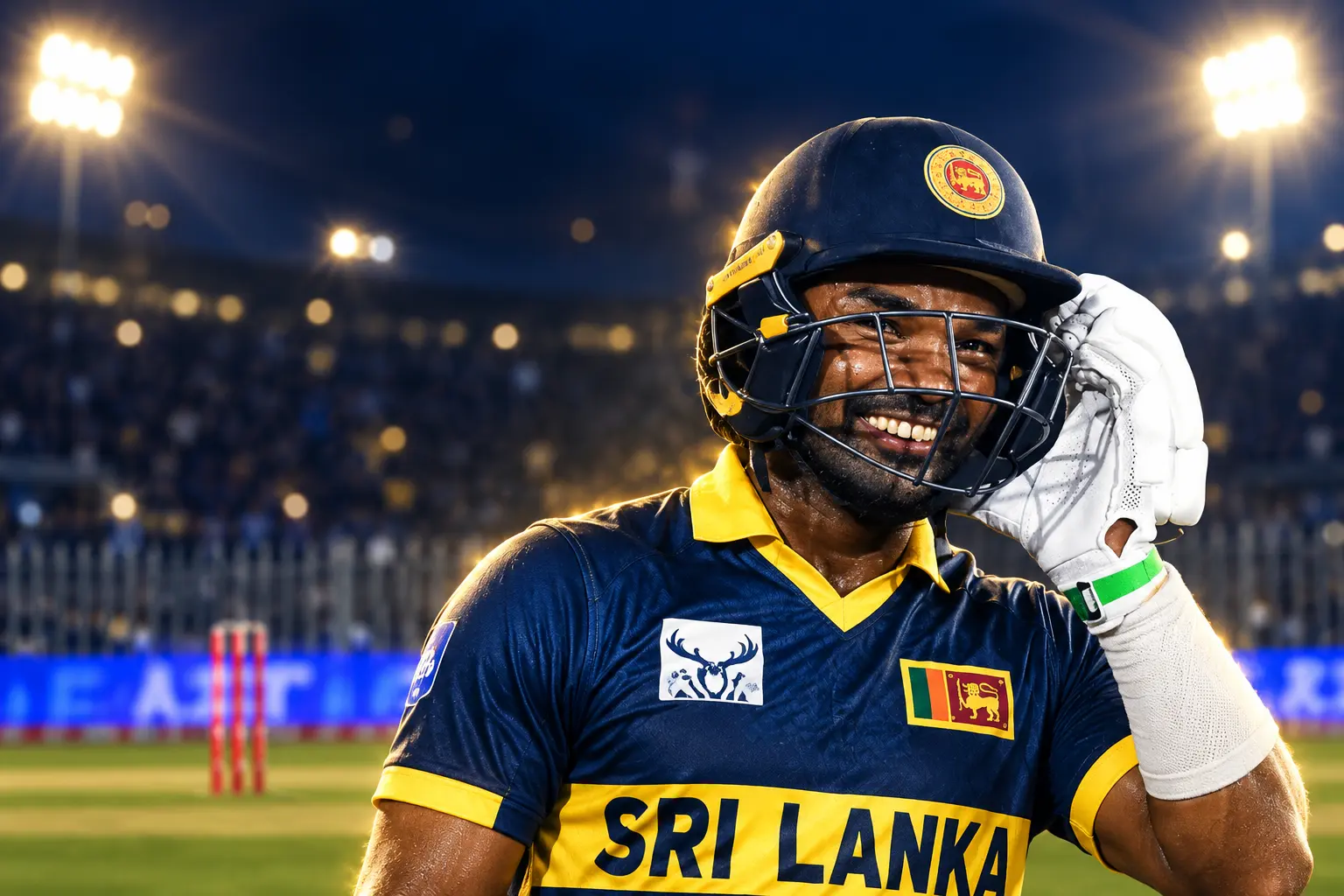
Sri Lanka chased 430 against England in Rawalpindi on October 22, 2026, and won by two wickets with one ball left. Pavan Rathnayake’s 130 and a six from Janith Liyanage over long-off overhauled Harry Brook’s 202, the first one-day double hundred by an England batter.
The night copied a match that had stood alone since March 2006. It also arrived 22 days after India hunted 406, so 400 is no longer a locked door.
The Johannesburg Script Returns in Rawalpindi
On March 12, 2006, Australia’s 434 for 4 in Johannesburg looked like the end of the argument. South Africa made 438 for 9 in 49.5 overs and won by one wicket with one ball remaining. Ricky Ponting had 164 off 105. Herschelle Gibbs had 175 off 111. The match total was 872.
Rawalpindi used the same skeleton. England made 429 for 4. Sri Lanka made 430 for 8 in 49.5 overs. The gap at the death was one ball, again. The match total was 859.
JOHANNESBURG AND RAWALPINDI
| Detail | Johannesburg, March 12, 2006 | Rawalpindi, October 22, 2026 |
|---|---|---|
| First innings | Australia 434 for 4 | England 429 for 4 |
| Chase | South Africa 438 for 9 | Sri Lanka 430 for 8 |
| Overs in the chase | 49.5 | 49.5 |
| Result | Won by 1 wicket, 1 ball left | Won by 2 wickets, 1 ball left |
| Top score, first innings | Ricky Ponting 164 off 105 | Harry Brook 202 off 116 |
| Top score, chase | Herschelle Gibbs 175 off 111 | Pavan Rathnayake 130 off 106 |
| Match total | 872 | 859 |
Kusal Mendis asked England to bat, then watched Brook take the afternoon apart. The call looked wrong at the break. Dew later made the ball hard to grip, and the chase stayed alive because the pitch had already shown what 400 looked like from the other end.
Brook’s 202 Is the First Double Hundred in Defeat
Brook is the first England batter to make an ODI double hundred, and the first man to make one and lose. He finished on 202 off 116 balls, with 21 fours and 10 sixes, 144 of those runs in boundaries. He was caught at backward point off Janith Liyanage from the last ball of the innings.
He started slowly, 13 off 24, then hit consecutive sixes off Kamindu Mendis and did not ease off. He reached 50 off 42 balls, 100 off 75, 150 off 97, and 200 off 114, so the second hundred took 39 balls. Joe Root made 69 off 66 in a stand of 159. Will Jacks finished 66 not out off 30 in a stand of 185. England took 156 off the last 10 overs.
Sri Lanka used only four specialist bowlers. Dasun Shanaka, Kamindu Mendis, and Liyanage sent down the fifth-bowler share and went for 123 off 10 overs for one wicket. Dunith Wellalage was the one who held a line, 2 for 56 from 10. Asitha Fernando took Root for 1 for 68. The rest of the attack was fodder once Brook found range.
It was a nice innings. Unfortunately, it doesn’t mean anything now. Being on the losing side, it has no value whatsoever in my eyes.
Harry Brook, England captain, after the match
He also said Sri Lanka had played a blinder and that England could not hit their straps with the ball. That was the honest half of the day. A 202 on a road still has to be bowled at, and England could not do it.
How Sri Lanka Chased Down 430
Josh Tongue knocked over Kamindu Mendis for 18, pinging the top of off in the fourth over. Kusal Mendis was then run out without facing, via Gus Atkinson’s fingertips, and Sri Lanka were 24 for 2. Avishka Fernando was given lbw with the reply still in the Powerplay; he reviewed and stayed.
Fernando and Rathnayake added 166 for the third wicket and took the required rate with them. Fernando fell for 97 off 83, a leading edge back to Jamie Overton, three short of a hundred. The second-highest successful run chase was still 240 away, with 22.5 overs left, and that was when Mendis and coach Gary Kirsten’s earlier plan kicked in.
They had talked about a normal start, then sending Shanaka up. He walked in at 190 for 3 and swung from the first ball he could reach.
Rathnayake, Shanaka and a 133-Run Stand
Rathnayake is 24, a Colombo batter who debuted in ODIs against Pakistan on November 16, 2025. He already had one hundred against England. This was better, because it won. He made 50 off 50 and 100 off 87, then 130 off 106 with 15 fours and three sixes, his highest international score, before holing out to Tom Banton at wide long-on off Sam Curran. Sri Lanka were 323 for 4 in the 41st, still 107 short, with 58 balls in the bank.
Shanaka’s 97 off 50, with six fours and eight sixes, was the burst that made 430 feel gettable. He was given out twice, caught behind off Atkinson on 32 and lbw to Liam Dawson on 41, and overturned both. He finally picked out Banton at long-on, trying to reach three figures off Dawson’s last ball, and Sri Lanka were 363 for 5 with 67 needed off 36.
The coach (Gary Kirsten) and I spoke about playing the first couple of overs normally. Then we decided Dasun Shanaka would come in earlier. We batted really well and everyone showed their character. Everyone believed we could do it.
Kusal Mendis, Sri Lanka captain, after the match
Liyanage had already been in since Rathnayake’s dismissal. After Shanaka fell he took the strike over, reverse-scooping and clubbing Curran, who finished with 2 for 103 in nine overs and could barely hold the wet ball. Sahan Arachchige mishit a full toss to long-on in the 47th, a delivery checked for height and ruled legal, and Sri Lanka were 406 for 6.
Liyanage Clears Long-Off With One Ball Left
Thirteen were needed off the last 12 balls when Liyanage and Wellalage traded blows off Jacks. Overton then gave away only five in the 49th, so eight were needed off the last six. Tongue, who finished with 3 for 79 in 8.5 overs, almost stole the game with two yorkers.
THE LAST OVER IN RAWALPINDI
- 49.1: Liyanage takes a single, 7 needed off 5.
- 49.2: Tongue flattens Wellalage’s middle stump, 423 for 7.
- 49.3: Malinga is yorked first ball, 423 for 8, Tongue on a hat-trick.
- 49.4: Asitha Fernando slices a single to deep third, 6 needed off 2.
- 49.5: Tongue’s slower ball lands in the slot with mid-off up, and Liyanage launches it over long-off.
Liyanage finished 61 not out off 27, with seven fours and three sixes, a fifty off 21. Asitha, who had hardly scored in ODIs, was 1 not out. Sri Lanka’s players ran onto the square while Liyanage was still running through the shot.
A loud take after the game was that Brook had padded stats on a flat strip. The bowling figures support the duller version of that point. When both sides clear 420 on the same pitch, a 202 is a great innings on a great pitch, and 430 is a chase with a method, not a miracle pulled from nowhere.
Guwahati’s 406 Made 430 Look Possible
Until this autumn, men’s ODI cricket had one successful 400 chase, and it was the 438 game at the Wanderers. That monopoly ended on September 30, 2026, in Guwahati, when India made 406 for 2 against West Indies. Shubman Gill was unbeaten on 223 off 133 and reached 200 in 117 balls, then the fastest double hundred in the format. Brook took that mark down to 114 balls 22 days later, and still lost.
400-PLUS CHASES IN MEN’S ODIS
- Johannesburg, 2006: South Africa 438 for 9 against Australia, won by 1 wicket with 1 ball left.
- Rawalpindi, 2026: Sri Lanka 430 for 8 against England, won by 2 wickets with 1 ball left.
- Guwahati, 2026: India 406 for 2 against West Indies on September 30.
Two of the three went to the final over. The third, India’s, was a cruise. Bowling sides that treat 400 as a win are now guessing. The better read, after Guwahati and Rawalpindi in the same window, is that 400 is a start, and the night belongs to whoever still has wickets and a long-off in the circle.
The Tri-Series Table After Three Matches
Pakistan have not played since October 20 and still sit clear. They beat Sri Lanka by 37 runs on October 18 (305 to 268) and England by 87 on October 20 (302 for 9 to 215 in 38.4 overs). England have now lost both of their games. Liam Dawson played this one in place of Adil Rashid, and the spin over at the death still went for plenty.
PAKISTAN ODI TRI-SERIES TABLE
| Team | Played | Won | Lost | Points | NRR |
|---|---|---|---|---|---|
| Pakistan | 2 | 2 | 0 | 4 | +1.240 |
| Sri Lanka | 2 | 1 | 1 | 2 | minus 0.348 |
| England | 2 | 0 | 2 | 0 | minus 0.892 |
England meet Pakistan in Lahore on October 25. Sri Lanka play Pakistan on October 27, then England again on October 29. The final is on October 31 in Lahore, a short tune-up for the ICC Men’s Cricket World Cup in 2027. Mendis said there would be a small party, then a shift to the next game.
Frequently Asked Questions
What is the highest successful chase in men’s ODI cricket?
South Africa’s 438 for 9 against Australia at Johannesburg on March 12, 2006, remains the record. Mark Boucher finished 50 not out, Johan van der Wath hit 35 off 18, and Mick Lewis bowled 10 overs for 113 without a wicket. Nathan Bracken still took 5 for 67 in a losing cause.
Who scored England’s first ODI double hundred?
Harry Brook, with 202 off 116 balls in Rawalpindi on October 22, 2026. The previous England record was Ben Stokes’s 182. Brook’s 200 came off 114 balls, three balls quicker than Shubman Gill’s 117-ball 200 against West Indies on September 30, 2026.
Had Pavan Rathnayake scored an ODI hundred before Rawalpindi?
Yes. He made 121 against England on January 27, 2026, at R. Premadasa Stadium in Colombo, in a match Sri Lanka lost. He was born in Colombo on August 24, 2002, and his ODI cap number is 219, earned against Pakistan on November 16, 2025, at this same Rawalpindi ground.
How many men’s teams have chased 400 in an ODI?
Three: South Africa, Sri Lanka, and India. India’s 406 for 2 in Guwahati was the comfortable one, closed with eight wickets and 39 balls to spare. The two higher chases, 438 and 430, both went to the last over and both left one ball unused.
Brook reached 200 with a paddle-sweep for four in the final over of England’s innings, then holed out to the last ball. By nightfall the shot was a footnote, the way Ponting’s 164 became one on March 12, 2006.

Bulk Scotch Still Faces Full Duty After India’s UK Deal

Typhoon Champi Loops Off Taiwan and Still Injures 527

PM Modi Opens Chinmaya’s AI Guru and Asks for Unity

Mahim Police Hold a JeM Suspect on Enmity Charges

Gold Falls Below $4,000 as Hormuz Oil Hits $117

The iPhone 18 Pro Max Splits Apple’s Fall in Two

OpenAI Calls GPT-6 Astra AGI Then Locks Its Exploits

Clancy Juror Says the Holdout Never Cited Evidence

Trump Claims Hormuz Control as Oil Holds Near $96

Russia Closes the Goethe-Institut Berlin Tried to Save

 NEWS2 months ago
The iPhone 18 Pro Max Splits Apple’s Fall in Two
- NEWS2 months ago
OpenAI Calls GPT-6 Astra AGI Then Locks Its Exploits
- NEWS1 month ago
Clancy Juror Says the Holdout Never Cited Evidence
- BUSINESS2 months ago
Trump Claims Hormuz Control as Oil Holds Near $96
- LIFESTYLE2 months ago
Russia Closes the Goethe-Institut Berlin Tried to Save
- AUTO2 months ago
Volkswagen’s Job Cuts Leave Four Plants Without Cars
- NEWS2 months ago
Dyson Puts Nurovi Robots on Sale Without the UV Flagship
- NEWS2 months ago
The Lincoln’s 286-Day War Cruise Ends at a Thai Pier