NEWS
Apple Pulls Some iPhone Duo Orders Forward From January
Some iPhone Duo pre-orders are jumping weeks earlier, but Apple’s U.S. store still quotes January 25, a familiar buffer over a real yield crunch.

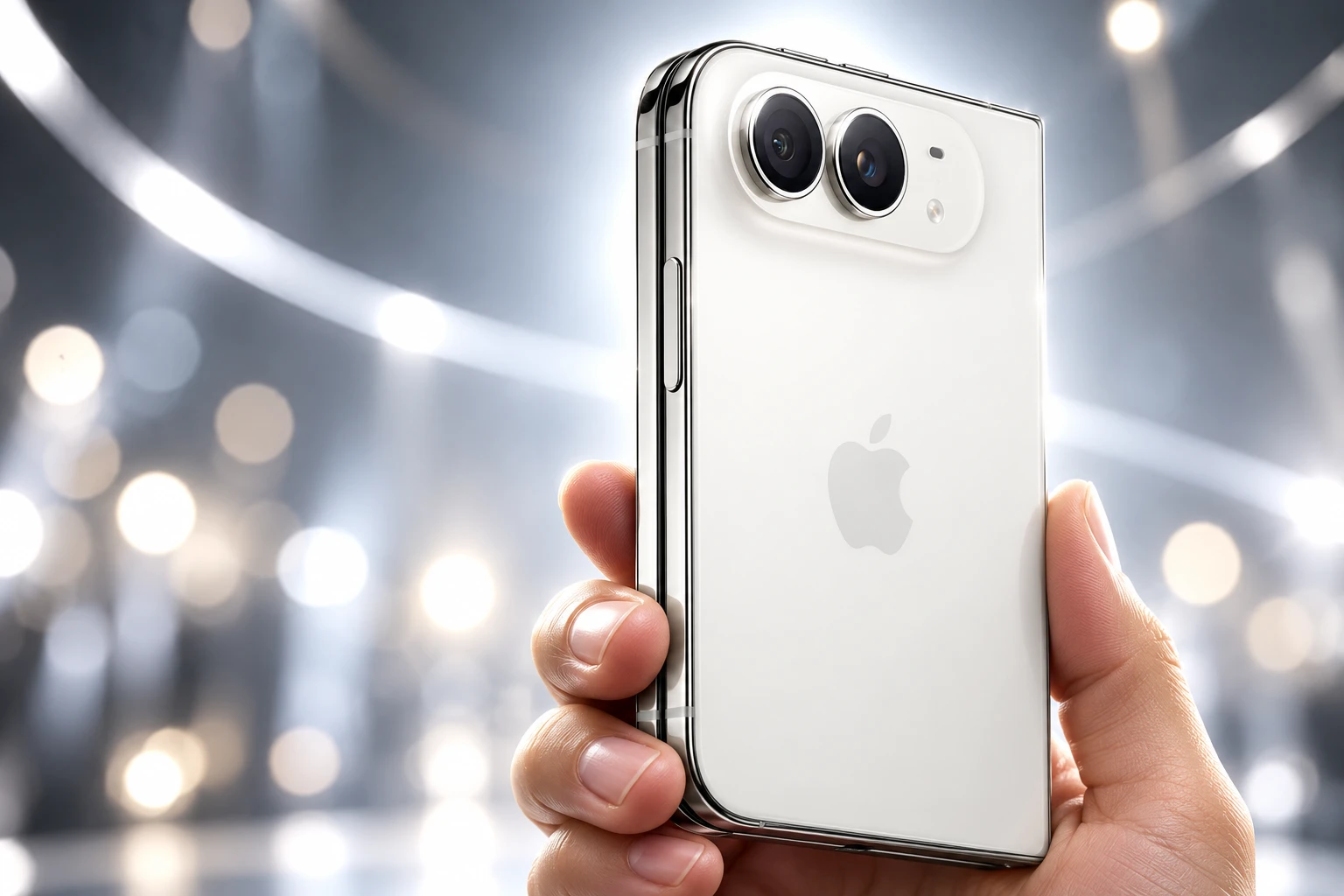
Apple has begun pulling iPhone Duo delivery dates forward for some existing pre-orders, while its own U.S. store still quotes January 25 for anyone placing a new order. The foldable opens with availability beginning Friday, October 23, after pre-orders went live on October 16 and slid into late January within half an hour.
That split is the old Apple constrained-launch script, not a sudden flood of extra phones. People already in the queue are getting the buffer back. The catalog date for new buyers has barely moved, because the factory still cannot build this device at iPhone speed.
Existing Orders Jump Ahead; New Ones Still Wait Until January
YouTuber Matt Gonzalez ordered a Star White 512GB Duo and watched a December window become November 20 to 30. On Apple’s U.S. pre-order thread, two buyers who had December 1 to 8 are now looking at November 16 to 23. A Canadian order quoted January 26, 2027 later showed November 17 to 24.
ORDERS THAT MOVED, AND ONE THAT SLIPPED
- Star White 512GB: Gonzalez’s December estimate became November 20 to 30.
- Two U.S. tickets: December 1 to 8 became November 16 to 23, a 15-day pull on the start date.
- Japan, December 3 to 10: One buyer’s estimate flipped to October 24, a day after launch.
- Reddit tickets: December 2 to 9 became November 17 to 24; two January 25 orders jumped to November 24 and November 16 to 23.
- The miss: One November 30 estimate moved the other way, to December 7.
Ray Wong said his feed filled with Japanese users whose November and December quotes had snapped to October 23, the launch date. One T-Mobile pre-order showed a ship date of October 22, which would land on launch day if next-day delivery holds. Those launch-day stamps are the loudest screenshots, and they are also the ones most likely to be wrong. One buyer said an Apple Store staffer called the October 23 change a system error, which Wong treated as a store-level comment, not a corporate one.
The quieter pattern is the one that keeps showing up in the United States: one to four weeks shaved off a winter window, not a nationwide reset to Friday. Plenty of tickets have not moved at all. A November 2 to 9 order placed at 8:01 a.m. Eastern, one minute after the U.S. store opened, is still a November 2 to 9 order for some of those early buyers.
Apple’s U.S. store still quoting January 25 for every color and every storage size. A few regional Apple sites show January 22, three days better than the January 25 stamp the U.S. catalog posted on October 16, and still a winter wait. The phones that are moving belong to people who already paid.
The Same Buffer Apple Used on iPhone X
Apple has run this sequence before. When iPhone X pre-orders opened on October 27, 2017, launch-day delivery was gone in about four minutes. Seventeen minutes in, Gene Munster’s checks showed two-to-three-week waits on almost every U.S. model, and those waits stretched to five or six weeks as the morning went on. First units still shipped ahead of the November 3 launch, and some later tickets improved after the opening crush was counted.
Developer David Barnard described the same machine on October 16, while Duo dates were still sliding.
Apple does seem to under-promise then over-deliver on pre-order dates. It seems like their system is set up to quickly start showing later arrival dates, then once the dust has settled, they go back and reallocate.
David Barnard, developer, on X
That under-promise then over-deliver on dates read is what the Duo screenshots look like three days later. Apple posts a date far enough out that it will not have to apologize, then quietly feeds finished units into tickets it already holds. Forum regulars offered the same three explanations this week: canceled scalper orders, in-store stock shifted to home delivery, and a pause until the first-day rush could be measured. The third one is the habit. The first two are how you find extra units inside a small pile.
FROM THE UNVEILING TO THE DATE JUMPS
- September 9, 2026: Apple unveils iPhone Duo, with pre-orders set for October 16 and first availability on October 23.
- September 17, 2026: A person close to Foxconn’s supply chain puts final assembly yield slightly above 60 percent.
- October 11, 2026: Chief Operating Officer Sabih Khan visits the Zhengzhou campus that is assembling the phone.
- October 16, 2026: Pre-orders open at 5 a.m. Pacific. Within 30 minutes the U.S. store shows January 25 on every model. Apple calls demand “nothing short of extraordinary.”
- October 19, 2026: Existing orders in Japan and the U.S. start moving up by weeks. A two-per-customer cap is confirmed on the U.S. site.
- October 23, 2026: Launch day. A second group of 28 countries and regions follows on October 30.
iPhone 14 Pro went the other way in 2022, with some launch-day promises slipping by two or three weeks after checkout. The Duo’s opening week looks like iPhone X, not that scramble. The promise was already winter. The surprise is that some of winter is being walked back.
Why the Apple Store Still Quotes January
If the line had broken open, the public date would have moved with the private ones. It has not. The Duo is Apple’s first foldable, a 5.4-inch outer sheet that opens to a 7.6-inch inner display, and it is being built on a process Foxconn has not run at iPhone volume. The outer screen is 90 percent of the iPhone 18 Pro’s area in a body Apple compared to a passport. The inner sheet is 50 percent larger than iPhone 18 Pro Max. Both share the same aspect ratio, so software can scale instead of jumping layouts. A precision hinge made of more than 100 parts has to hold that inner panel flat, then close on a magnet array without chewing the fold.
THE SUPPLY MATH BEHIND JANUARY 25
- Starting price: $1,999 for 256GB, then $2,199, $2,599, and $3,199 for 512GB, 1TB, and 2TB.
- Assembly yield: Slightly above 60 percent at Foxconn as of September 17, with a mature line still six months to a year away under Apple’s current standard.
- 2026 stocking target: About 6 to 8 million units, against 20 to 30 million for a typical Pro cycle.
- Purchase cap: Two Duos per Apple customer once the cart hits three.
Jeff Pu at GF Securities cut his 2026 shipment guess from 7 million to 6 million in mid-September, citing hinge limits. Neil Shah at Counterpoint Research put under 6 million Duo units in 2026, with 5 to 6 million as the upper end once the lag from factory to truck is counted. Shah’s notes said foldable OLED approval slipped into late June, hinge and display durability work was still running in July, and limited set production only started in late August. Hinge supply stayed uneven into the September ramp. Unmet demand, he wrote, should spill into early 2027 because these buyers are unlikely to jump to another brand’s foldable just to skip the wait.
Khan’s October 11 stop at Zhengzhou was meant to show the line was busy. He said the team was expanding output under Apple’s usual quality bar. That visit and the later date bumps can both be true. Extra good units get assigned to names already on the list. The empty catalog date stays up so Apple does not sell another winter of promises it cannot keep.
The phone’s $1,999 opener sits $100 under the iPhone 18 Pro Ultra’s $2,099 price in the same fall lineup, which is a lot of money to park on a ticket that still says January on Apple.com. Listings for confirmed pre-orders appeared on eBay at as much as $5,000 the day the store melted, which is what a 60 percent line and a $1,999 floor do in the same afternoon.
Carriers and Best Buy Are Weeks Ahead of Apple
The other tell is that Apple is not the fastest place to buy a Duo if you have not ordered yet. A snapshot of live U.S. estimates on October 20 shows carriers and Best Buy beating the January 25 catalog by a month or more, as long as you will take a locked phone. Walmart is showing nothing.
IPHONE DUO SHIP DATES ON OCTOBER 20
| Model | Apple | AT&T | T-Mobile | Verizon | Best Buy | Walmart |
|---|---|---|---|---|---|---|
| Star White 256GB | Jan. 25 | Dec. 2 | Dec. 29 to Jan. 6 | Dec. 4 | Dec. 14 | Out of stock |
| Star White 512GB | Jan. 25 | Dec. 2 | Dec. 9 to 22 | Dec. 4 | Nov. 10 | Out of stock |
| Night Sky 256GB | Jan. 25 | Dec. 2 | Dec. 9 to 22 | Dec. 11 | Dec. 14 | Out of stock |
| Night Sky 512GB | Jan. 25 | Dec. 2 | Nov. 25 to Dec. 8 | Dec. 11 | Nov. 10 | Out of stock |
AT&T’s December 2 date is the same across those four models. Best Buy’s November 10 window is only on the 512GB phones and requires an AT&T or Verizon lock. T-Mobile is the spread: Star White 256GB still sits at December 29 to January 6, while Night Sky 512GB, 1TB, and 2TB show November 25 to December 8. Verizon clusters in early and mid-December, with Night Sky 1TB out at December 18.
On October 16, at least one buyer who abandoned an Apple trade-in cart and reordered through T-Mobile ten minutes later kept an October 23 delivery. Carrier pools are separate from Apple’s online pile, which is why a locked Night Sky can beat an unlocked one by two months on the same day. It is also why a U.S. Apple Store ticket that already says November is the one most likely to move again, and a fresh Apple.com order is not.
UK Apple pages have been showing January 22, with Carphone Warehouse quoting November 12 on Star White 256GB and the big carriers talking in weeks rather than a Friday. The geography changes. The shape does not: the vendor that took the first-day flood is the slowest to quote a new ship date, and the smaller allocated pools move first.
Apple Now Stops Carts at Two Phones
On October 19 and 20 the U.S. store started blocking a third Duo at checkout. The notice reads, “A maximum of 2 iPhone Duo can be purchased per customer. Please adjust the total quantity of iPhone Duo in your order before checking out.” The same warning appeared on Apple’s sites in the United Kingdom, Japan, and Spain, and it did not matter which storage size sat in the cart. China, Singapore, and Hong Kong had already listed a two-unit cap in the open. The U.S. page stayed quiet until the cart hit three.
Some Reddit buyers say they checked out four phones on October 16. Others say they were already capped at two. Apple has not said when the U.S. limit switched on. It has used the tool before, including on iPhone 5 in 2012, and it is the blunt way to stop a $1,999 device from leaving the store in stacks bound for a $5,000 listing.
That cap is also a plausible source of the date jumps. If Apple is killing bulk tickets, those serial numbers go back into the pool and land on orders that were sitting in November and December. Tech accounts framed it as fraud checks feeding launch-day U.S. deliveries. The replies under that claim were more modest: one person got off January 25 and still missed October 23. Quantity limits and canceled carts can move a date by weeks without ever restocking the storefront. They do not create a second factory.
No Walk-In Duo Stock on Launch Day
Apple Store employees said they have been told to warn people off coming in for a Duo on Friday without a pickup ticket. The guidance is that walk-in stock is unlikely, and that stores will have units out so customers can handle the hinge. Apple’s site has also told shoppers to check back on October 24 for pickup, which is the day after launch, not a promise of a pile on the table.
John Ternus, who became chief executive on September 1 and unveiled the phone eight days later, called iPhone Duo the most transformational change to iPhone since the original. The hardware is a 7.6-inch inner canvas, an A20 Pro chip, dual batteries, and a grade-5 titanium shell with IP68 sealing. Demand on October 16 matched that pitch. Apple said it was “nothing short of extraordinary,” and that it was working to get the product into customers’ hands as quickly as possible. The January 25 catalog date is still how that sentence looks to anyone who was not in the store at 5 a.m. Pacific.
Friday will sort the screenshots from the boxes. Japanese tickets that still say October 23 will either ding a delivery van or snap back. U.S. orders that moved into mid-November will either charge a card or sit. The people standing in line without a reservation will be told, again, that the phone on the table is for looking.

Bulk Scotch Still Faces Full Duty After India’s UK Deal

Typhoon Champi Loops Off Taiwan and Still Injures 527

PM Modi Opens Chinmaya’s AI Guru and Asks for Unity

Mahim Police Hold a JeM Suspect on Enmity Charges

Gold Falls Below $4,000 as Hormuz Oil Hits $117

The iPhone 18 Pro Max Splits Apple’s Fall in Two

OpenAI Calls GPT-6 Astra AGI Then Locks Its Exploits

Clancy Juror Says the Holdout Never Cited Evidence

Trump Claims Hormuz Control as Oil Holds Near $96

Russia Closes the Goethe-Institut Berlin Tried to Save

 NEWS2 months ago
The iPhone 18 Pro Max Splits Apple’s Fall in Two
- NEWS2 months ago
OpenAI Calls GPT-6 Astra AGI Then Locks Its Exploits
- NEWS1 month ago
Clancy Juror Says the Holdout Never Cited Evidence
- BUSINESS2 months ago
Trump Claims Hormuz Control as Oil Holds Near $96
- LIFESTYLE2 months ago
Russia Closes the Goethe-Institut Berlin Tried to Save
- AUTO2 months ago
Volkswagen’s Job Cuts Leave Four Plants Without Cars
- NEWS2 months ago
Dyson Puts Nurovi Robots on Sale Without the UV Flagship
- NEWS2 months ago
The Lincoln’s 286-Day War Cruise Ends at a Thai Pier