
BUSINESS
Alberta Votes to Remain and Leaves a 24.2 Percent Bloc
Alberta referendum voters rejected a split 75.8% to 24.2%, a remain win that still counted a separatist floor and left Carney an energy tab.

Alberta referendum voters chose to remain in Canada 75.8 percent to 24.2 percent, according to unofficial Elections Alberta figures. The October 19 ballot did not ask anyone to leave. It asked whether the province should start legal steps toward a later binding contest, and that minority is now a counted bloc inside Premier Danielle Smith’s own party.
Prime Minister Mark Carney called the result a choice for Canada and then pointed straight at pipelines, trade, and Alberta oil. Smith, who put the question on the ballot while saying she would vote to stay, still has to govern the people who wanted the next vote.
75.8 Percent Voted to Remain in Canada
Elections Alberta’s dashboard, last updated at 6:56 a.m. on October 20, showed 1,370,075 votes for remaining a province of Canada and 438,314 for starting the constitutional process toward a binding separation referendum. That is 1,808,389 ballots counted on Question 10, with 4,397 of 5,586 voting areas in, a reporting share the office labeled 78 percent.
QUESTION 10, UNOFFICIAL
| Option | Votes | Share |
|---|---|---|
| Remain a province of Canada | 1,370,075 | 75.8% |
| Start the legal process toward a binding separation vote | 438,314 | 24.2% |
| Total counted | 1,808,389 | 100% |
The unofficial Question 10 count was taken first, by design. Official results are due Thursday, October 29. Across all 10 questions, the same snapshot listed 9,912,780 valid votes, because each question had its own ballot and Question 10 was the only one near a full count.
CBC and CTV both projected a remain win late on October 19. More than 100 polling stations opened late on voting day and had to stay open longer, which pushed the first dump of numbers into the night. Elections Alberta had said before the vote that it expected turnout above 80 percent of about 3.1 million eligible voters. More than 1.3 million people had already voted in advance or by special ballot before centres opened Monday, 43 percent of those eligible.
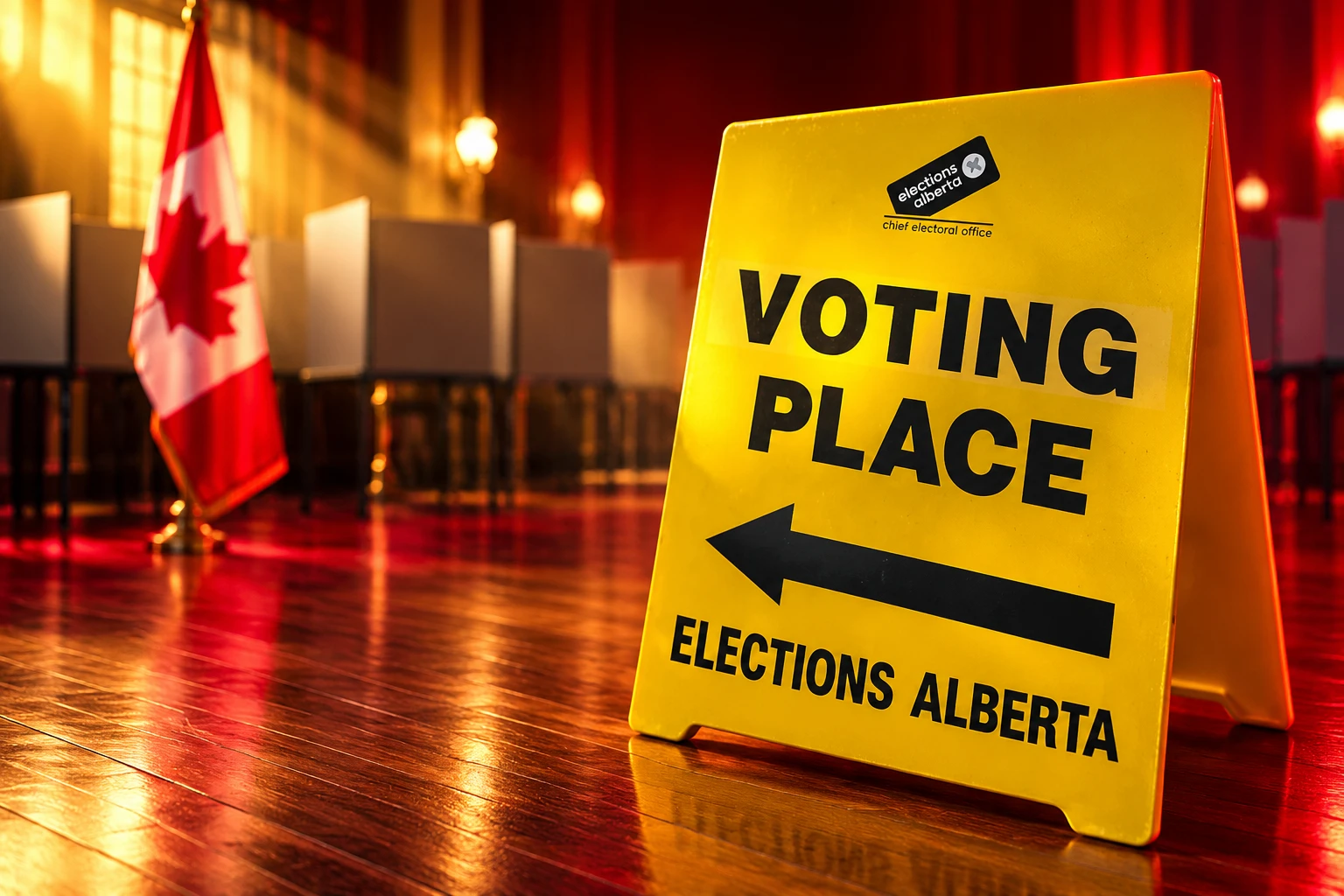
The Ballot Never Asked Albertans to Leave
Question 10, set by Order in Council 160/2026, read: “Should Alberta remain a province of Canada, or should the Government of Alberta commence the legal process required under the Canadian Constitution to hold a binding provincial referendum on whether or not Alberta should separate from Canada?”
Option 1 was “Alberta should remain a province of Canada.” Option 2 was the process vote. There was no minimum turnout. The result does not bind the government in law, though Smith has said her cabinet will respect what Albertans marked.
A win for Option 2 would not have taken Alberta out of Confederation. It would have told Edmonton to start the legal work toward a later, binding contest, including the federal and First Nations steps a second vote would require. Smith had already said that if remain won, she would not hold another independence referendum as long as she was premier.
Dave Malka, 59, of Edmonton, asked why the province spent money on what he called a “referendum on a referendum” instead of health care. With U.S. President Donald Trump threatening Canada, he said, “It seems to be happening at the absolute worst time when we should be united; instead we’re fighting among ourselves.”
How Two Petitions Landed on the October Ballot
Smith did not invent the fight. Two citizen petitions forced her hand, then a court delayed one of them, and she put a rewritten question on a ballot that already had nine other items.
HOW THE QUESTION GOT ON THE BALLOT
- May 21, 2026: Smith tells the province she will add a remain-or-process question to the October 19 referendum after a judge stalls a separatist petition on First Nations consultation grounds.
- October 13 to 17, 2026: Advance voting runs in each electoral division.
- October 19, 2026: Voting day, 9 a.m. to 8 p.m., with late-opening stations held open longer.
- October 20, 2026: Unofficial Question 10 results show remain at 75.8 percent. Smith says she will speak at 6:45 p.m.
- October 29, 2026: Elections Alberta is due to publish official results.
In that May 21 address, Smith said a judge had found the Stay Free Alberta citizen petition unconstitutional for lack of consultation with a First Nation, a ruling she called a misreading of the duty to consult. She said her government would appeal, and that the wait could run many months. Between the Forever Canadian petition for a remain vote and the Stay Free Alberta petition for a leave vote, she said, about 700,000 Albertans have signed asking to be heard.
“It’s time to have a vote, understand the will of Albertans on this subject, and move on,” she said. She also said, “I support Alberta remaining in Canada,” and that this was how she would vote, and how her United Conservative Party caucus and government would vote.
Thomas Lukaszuk, a former Alberta deputy premier who led the Forever Canadian campaign, told supporters after the count, “We are a solid country that’s united from coast to coast to coast.”
Smith’s first public line on the unofficial numbers came on her own account in the small hours of October 20.
Thank you, Alberta!
I’m very pleased to see the initial results from Elections Alberta show widespread support for remaining in Canada. Albertans have voted for a stronger Alberta in a united Canada.
Thank you to all Albertans who took time to vote on these critically important… pic.twitter.com/a3Tk7T7k8H
— Danielle Smith (@ABDanielleSmith) October 20, 2026
She wrote that Albertans had “voted for a stronger Alberta in a united Canada,” and that she would address the province live at 6:45 p.m. on October 20 on the results then available “and where our province goes from here.” Replies on that post clustered on a single demand from the remain side: resign. They argued she split the province for a fight she claimed she did not want.
Separatist Parties Once Drew 1 or 2 Percent
Former premier Jason Kenney has said separatist parties used to take 1 percent or 2 percent of the vote. Anger over Covid-19 rules, he said, helped pull activists into a cause that later put independence on lawn signs. The 24.2 percent who backed Option 2 is not a government, and it is not 1995 Quebec. It is also not 2 percent.
Jeff Rath of the Alberta Prosperity Project had said he would be thrilled if 30 percent backed starting the process. The unofficial share came in short of that target and still orders of magnitude above the old party scores. Keith Wilson, another separatist leader, said the first dump would move, “but it is fair to say that at least a quarter of Albertans feel that Alberta needs to be treated better.”
Rural ridings ran hotter for Option 2 than Edmonton and Calgary. During the night, the process option led in at least one northwestern rural riding, Central Peace-Notley, while city counts stayed with remain. Dustin Degenhardt, a voter in Wainwright, put the grievance in colonial language. “Alberta has essentially been treated as, you know, a colony,” he said after voting. “They want to take and take and take from us, and not return anything.”
Alberta has been a province since 1905 and holds among the world’s largest proven oil reserves, usually ranked fourth. That resource math, and a long fight with Ottawa over pipelines, production caps, and federal transfers, is the ground under the 24.2 percent. It is also the ground under Carney’s thank-you.
Rath’s Path Through the Governing Party
At an Alberta Prosperity Project watch party in an Edmonton restaurant, the room went quiet as the first remain numbers hit the broadcast. Rath did not concede the movement. He moved the fight from the ballot to the UCP.
The next phase for us moving forward is an institutional phase where we move forward to take control back of our party, which is the United Conservative Party of Alberta. And we will form government. Period.
Jeff Rath, Alberta Prosperity Project, Edmonton watch party
He has called for Smith to be ousted as UCP leader and warned the party could split, with a new pro-independence vehicle as one end of that split. Mitch Sylvestre, the group’s chief executive, told the same room that separatists now have to “get involved in government.” Rath has also said, of the campaign year, “As far as I’m concerned we’ve already won.”
That is the squeeze on Smith. Remain voters treat the referendum as a bill she should not have run. Option 2 voters treat her remain vote as a betrayal. She wrote the question as an A-or-B choice so both petition camps would get a mark on paper. She got the remain result she said she wanted, and she got a measured minority that now has a list of UCP constituency associations to work.
One of her own caucus members, Red Deer-South MLA Jason Stephan, said before voting day that he had marked the separation-process option. Smith’s line through the campaign was “a strong and sovereign Alberta within a united Canada.” The 24.2 percent is the part of that sentence that no longer fits inside the party without a fight.
What Carney Now Has to Deliver
Carney grew up in Edmonton and spent the week before the vote in Calgary, Edmonton, and Red Deer, telling crowds not to treat Question 10 as a cheap message to Ottawa. “This is not poker,” he said. In Edmonton on October 16 he said, “Vote like Canada’s future depends on it, because it does.”
His written statement on October 20, issued from Ottawa, treated the unofficial remain win as settled enough to spend.
On October 19, Albertans made a clear choice. They chose unity, to build together, and to take care of each other. Above all, Albertans chose Canada.
Mark Carney, Prime Minister of Canada, October 20 statement
The next paragraph is the invoice. He said Canada is securing new trade partners, fast-tracking nation-building projects, and “unleashing our full potential as a global energy superpower with Alberta at its core.” In Calgary he had already named the Pacific Link oil pipeline and said it would create more than 140,000 jobs. He also talked up a new major-projects office headquartered there, plus housing money, high-speed rail, and $8 billion in defence spending in Alberta over the next decade.
Smith, in May, had listed what she said she had already pulled out of Ottawa: federal electricity rules gone, the oil and gas production cap scrapped, new lines of nearly a million barrels a day toward the United States, and a million-barrel-a-day pipeline to the British Columbia coast on track for permitting by September 2027. She said Carney’s Liberals had “adopted most of Alberta’s positions on energy and resource development,” and that this was why remain was the rational vote. The 24.2 percent is the share that did not buy the timing.
The money fight under the flags is older than this ballot. Finance Canada’s 2026-27 tables show Alberta receiving $9.2 billion in major federal transfers and nothing from the $27.16 billion equalization program. Alberta still receives Canada Health Transfer and Canada Social Transfer dollars. It does not receive equalization, and that blank line is the one Option 2 organizers put on pamphlets.
Trump’s tariffs and his talk of making Canada a 51st state gave Carney a unity argument that Liberal leaders do not usually get in Alberta. Separatist organizers had also gone looking for a hearing in Washington. Carney’s bet is that a remain vote plus a west-coast pipe plus new buyers outside the United States will drain the grievance faster than Rath can drain the UCP.
Nine More Questions Are Still Incomplete
Question 10 was the camera shot. Smith’s actual ask of remain voters was to mark Yes on the other nine, which she framed as a mandate to push Ottawa on immigration and provincial power. Those ballots were still being counted on October 20, with far fewer votes posted than on Question 10.
THE OTHER NINE QUESTIONS
- Questions 1 to 4: More provincial control over immigration levels, limits on who can use provincially funded programs, a 12-month wait for some supports, and fees for health care and schools for people without permanent status.
- Question 5: Proof of citizenship to vote in a provincial election.
- Question 6: Provinces, not Ottawa, choosing King’s Bench and appeal court judges.
- Question 7: Abolishing the appointed federal Senate.
- Question 8: Opting out of federal programs in provincial areas without losing the federal cash.
- Question 9: Provincial law taking priority over federal law where jurisdiction overlaps.
Early tallies on those incomplete counts had Yes ahead on the five immigration and voting questions. The four constitutional questions were closer, and Question 8 was the one item with No ahead in the same snapshot. None of those shares is a finished result. Smith said on October 20 that her evening remarks would cover “all referendum questions for which results are available.”
The remain landslide on Question 10 lets Carney say Albertans chose Canada. The unfinished nine are the lever Smith wanted for a fight she prefers to independence: immigration levels, courts, the Senate, and the right to keep federal money while walking away from federal programs. Rath’s people will treat 24.2 percent as a membership drive. Smith has to walk into a television address with a remain win, a party that includes the losing side, and a prime minister whose thank-you is a pipeline schedule.
Official numbers still come on October 29. Until then the province has a 75.8 percent remain result, a 24.2 percent process vote, and a governing party that both camps now want to take away from the premier who put the question on the paper.

Bulk Scotch Still Faces Full Duty After India’s UK Deal

Typhoon Champi Loops Off Taiwan and Still Injures 527

PM Modi Opens Chinmaya’s AI Guru and Asks for Unity

Mahim Police Hold a JeM Suspect on Enmity Charges

Gold Falls Below $4,000 as Hormuz Oil Hits $117

The iPhone 18 Pro Max Splits Apple’s Fall in Two

OpenAI Calls GPT-6 Astra AGI Then Locks Its Exploits

Clancy Juror Says the Holdout Never Cited Evidence

Trump Claims Hormuz Control as Oil Holds Near $96

Russia Closes the Goethe-Institut Berlin Tried to Save

 NEWS2 months ago
The iPhone 18 Pro Max Splits Apple’s Fall in Two
- NEWS2 months ago
OpenAI Calls GPT-6 Astra AGI Then Locks Its Exploits
- NEWS1 month ago
Clancy Juror Says the Holdout Never Cited Evidence
- BUSINESS2 months ago
Trump Claims Hormuz Control as Oil Holds Near $96
- LIFESTYLE2 months ago
Russia Closes the Goethe-Institut Berlin Tried to Save
- AUTO2 months ago
Volkswagen’s Job Cuts Leave Four Plants Without Cars
- NEWS2 months ago
Dyson Puts Nurovi Robots on Sale Without the UV Flagship
- NEWS2 months ago
The Lincoln’s 286-Day War Cruise Ends at a Thai Pier










