
BUSINESS
Trump’s Diesel Deal With Putin Turns Heat on Zelenskyy
Washington licensed Russian diesel through April 2027 after an Iran-war fuel shock, then blamed Volodymyr Zelenskyy for blocking a Ukraine settlement.

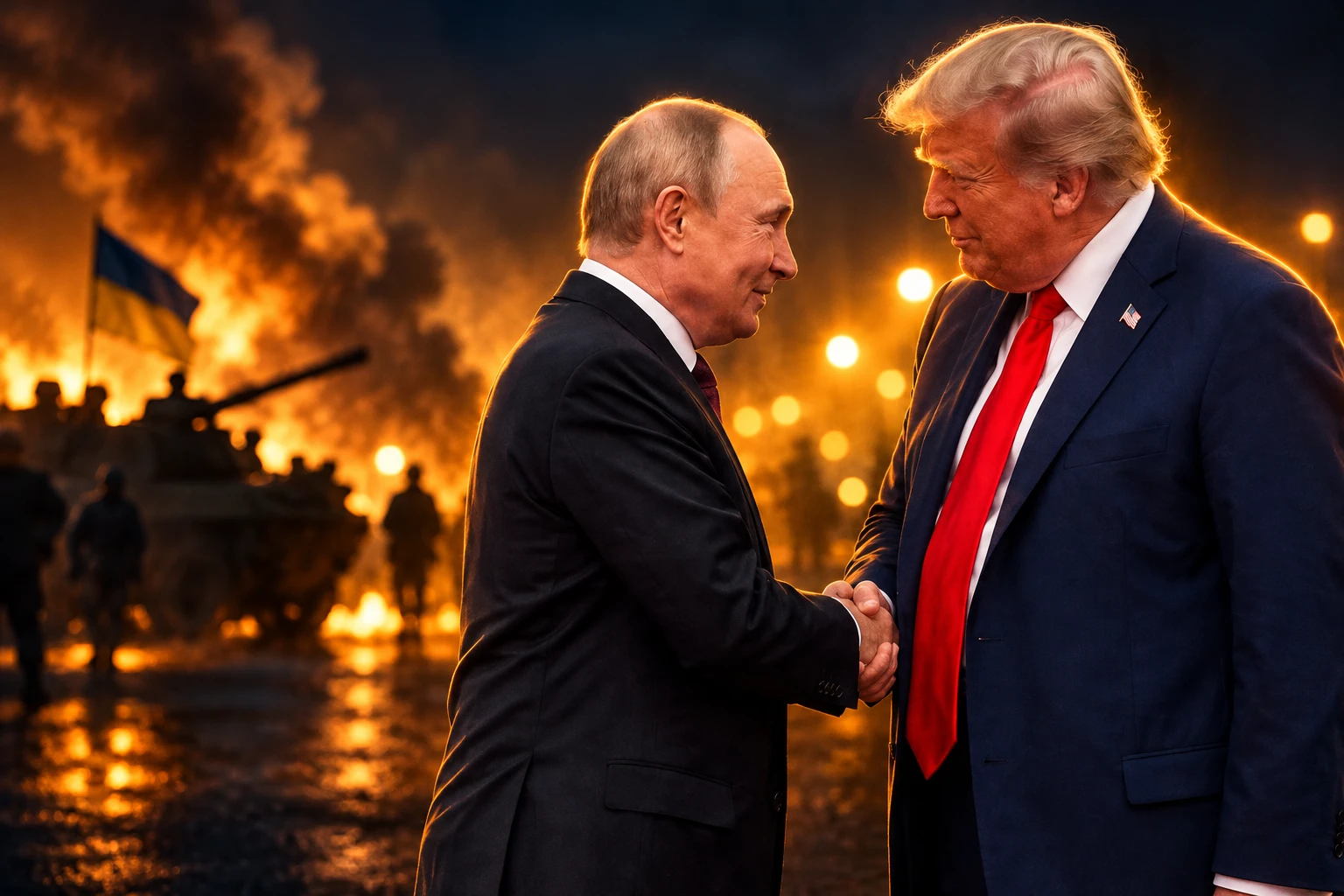
President Donald Trump said Saturday that Vladimir Putin wants a Ukraine settlement, after Washington licensed Russian diesel through April 2027 to ease a fuel shock from the Iran war. He told reporters that Volodymyr Zelenskyy was the one blocking a deal, and that Ukraine should hold an election it has not been able to stage since 2022.
The peace talk followed the fuel talk. On Friday, October 9, Trump and Putin spoke for 90 minutes, Russia pledged diesel to world markets, and the US Treasury opened a window for those barrels that runs into next spring.
Russia Gets a Diesel License Through April 2027
Trump wrote that the call was “highly successful” and that Russia would “immediately supply over 300,000 Tons of Diesel Fuel to the American and Global Marketplace,” then 500,000 tons in November and 1,000,000 tons after that. A further 3,000,000 tons would follow “based on the condition of their Diesel Refineries,” which Ukrainian drones have been hitting for months. If every step arrives, the ladder sums to 4,800,000 tonnes. The first slice is about 2.25 million barrels.
The same afternoon, OFAC Director Bradley T. Smith signed General License No. 135. The order authorizes the sale of Russian diesel through April 7, 2027, at 12:01 a.m. eastern daylight time, including import into the United States. Frozen accounts of the Central Bank, the National Wealth Fund, and the Ministry of Finance stay off limits. Other Russian assets in American banks remain frozen. The October 9 Russia-related general license is the legal switch behind Trump’s post.
THE DIESEL TRUMP SAID PUTIN WOULD RELEASE
| Step | Volume | When |
|---|---|---|
| First cargoes | More than 300,000 tonnes | Immediate, from the October 9 call |
| November lift | 500,000 tonnes | During November |
| Follow-on | 1,000,000 tonnes | “Immediately thereafter” |
| If plants can run | 3,000,000 tonnes | Tied to damaged Russian refineries |
Russian Deputy Prime Minister Alexander Novak said Moscow would start lifting its own diesel export cap ahead of schedule so those volumes can move. Kremlin aide Yuri Ushakov, describing a “very substantive and friendly” call, said neither president wanted to hang up first and that they cut the line “simultaneously.” Putin still played down any quick return to three-way peace talks.
$6.28 Diesel and a Closed Strait of Hormuz
The waiver is a midterm instrument. AAA put the US average at $6.28 a gallon on Thursday, October 8, about 70% above the level when the United States and Israel opened the Iran war on February 28. Farmers, truckers, and grocery freight feel that number first, and November 3 is the date Republicans have to defend the House and Senate.
THE FUEL SHOCK BEHIND THE WAIVER
- Pump price: AAA’s national diesel average was $6.28 a gallon on October 8.
- The jump: That reading sits about 70% above the February 28 start of the Iran war.
- The chokepoint: Tehran has largely shut the Strait of Hormuz, a passage that in peacetime carried about 20% of the world’s oil and gas.
- The other squeeze: Russia’s own diesel export cap, in place from mid-July after Ukrainian strikes, took a second stream off the water.
Wood Mackenzie has already mapped how those hits stacked. US diesel exports had risen 340,000 barrels a day over six months against the 2025 average, filling gaps left by the Hormuz closure and by the mid-July Russian diesel export ban. EIA figures showed US distillate stocks at 107.9 million barrels by September 11, the lowest for that point in the year since 1982. Trump had already pushed allies to tap emergency reserves and widened access to tax-exempt red-dyed diesel. Prices did not come down. Russian barrels were the next lever, and they came with a political price in Kyiv.
Why Trump Ordered Ukraine Off the Refineries
A US official with direct knowledge of the talks said Trump moved on the Putin deal after Zelenskyy ignored six American requests to stop striking Russian oil refineries. Those hits hurt Moscow’s budget. They also tightened the same diesel pool American farmers are buying from, which is why the White House stopped treating Ukraine’s energy war as cost-free.
THE REFINERY STANDOFF
- Washington’s ask: Halt strikes on Russian diesel plants, with no wait for a Russian concession, because the attacks were lifting US fuel costs.
- Kyiv’s offer: Stop hitting those plants if Russia stops hitting Ukrainian power stations, an energy ceasefire Zelenskyy has called a possible first step.
- Trump’s line: “Do what you want. Don’t hit refineries. There’s plenty of targets. Don’t hit refineries.” He said Zelenskyy “went out and he hit,” then added, “He better damn well stop.”
Fuel prices now sit above the refinery campaign in US politics. Keep hitting the plants that set the pump price, and the argument in Washington becomes whether intelligence and weapons should still follow. That is the trade Zelenskyy is being forced to make, and it is not the trade he put on the table.
Kyiv’s Team Sat in Miami as the Waiver Landed
While Trump was on the phone with Putin, a Ukrainian delegation was in Florida for two days of talks with Steve Witkoff, the president’s envoy, and Jared Kushner. The sessions ran about eight hours on Friday. The Americans told the Ukrainians that Trump was expected to speak with Putin and lift diesel sanctions, a US official said. National security advisers from Britain, France, and Germany, plus NATO and EU officials, were in the orbit of those meetings. Witkoff later called the session productive and said issues had been lined up “ahead of the next US meeting with Russia.”
Zelenskyy did not treat that as process. He told journalists the Florida trip was being used to mask a separate bargain with the man who launched the war.
I believe our team is simply being used as a smokescreen, and that is definitely not fair. It is definitely not the way partners should act. And, in my view, unfortunately, it is a weak decision by strong partners.
Volodymyr Zelenskyy, President of Ukraine, remarks to journalists, October 9, 2026
On X he was sharper still. “Gifts to Putin will not bring peace or any benefit to the civilised world,” he wrote. “Russia will ‘repay’ the diesel with further terror and perfidy.” Allowing petroleum sales, he said, was “an investment in a war that must be ended, not prolonged,” and any easing of sanctions without a lasting de-escalation deal was “an obvious weakness.” He said he could not tell whether the new revenue would run to millions or billions, only that it would go “toward the war against people, against Ukraine, against all of us.”
Europe Holds the Line as Zaporizhzhia Is Hit
EU foreign policy chief Kaja Kallas refused to follow the waiver. “Russian strikes killed over 80 Ukrainian civilians in two days,” she posted. “Suspending sanctions on Russian diesel provides Moscow with more revenues to wage war. This is not the time to ease pressure on Russia, and Europe won’t.” EU foreign ministers were due on Monday, October 12, to approve what officials described as the largest sanctions package since the full-scale invasion, adding names to the blacklist. The European Commission, answering the diesel move, called for a truce that would cover infrastructure on both sides.
Saturday’s war calendar gave Kyiv its exhibit. A Russian strike on Zaporizhzhia killed 20 people, including three children, and a 6-year-old girl was among the dead when part of an apartment block came down. Zelenskyy tied the barrage to the waiver: Russia, he said, had said thank you for the lifted diesel sanctions by dropping glide bombs on residential buildings. Hours after Trump’s announcement, Ukrainian drones also hit fuel infrastructure in Russia’s Rostov region, including the Yug Rusi oil-loading terminal, a reminder that Kyiv had not accepted the new targeting rules.
Senate Democrats, including Chuck Schumer, Jeanne Shaheen, and Elizabeth Warren, called the diesel bargain a betrayal of Ukraine, of European allies, and of US security. Analysts watching cargoes were colder. Jim Mitchell of Wood Mackenzie called the extra stream “clearly not a fix, but another stream to aid a very tight diesel market.” The first 300,000 tonnes is a few days of slack in a market that moves tens of millions of barrels of diesel and gasoil a day. The politics are larger than the molecules.
Martial Law Still Bars a Ukrainian Election
Trump folded a legitimacy attack into the fuel fight. “I think he should have an election and he could have settled this thing many times,” he said. Later on Saturday he went further: “I suggest they get a new leader who can make a deal because he could have made many deals, but for some reason he never does.” He added, “I think it’s time for Ukraine to get a new president.”
Ukrainian law does not give Zelenskyy a switch to flip. Martial law has been in force since February 24, 2022. Article 19 of the Martial Law Act bans presidential, parliamentary, and local elections, and national referendums, while that regime lasts. The Verkhovna Rada has extended martial law 20 times. The latest decree, No. 596/2026 of July 13, approved the next day as Law No. 4928-IX, runs 90 days from 5:30 a.m. on August 2, which lands at 5:30 a.m. on October 31, 2026. Zelenskyy’s original five-year term ended in May 2024; the constitution keeps a sitting president in office until a newly elected successor takes the oath, so the vacuum Putin likes to describe is not the legal one in Kyiv.
WHAT THE ELECTION BAN ACTUALLY COVERS
- The statute: Martial law bars presidential elections until the regime is lifted, not merely postponed by a president’s choice.
- The clock: The 20th extension expires at 5:30 a.m. on October 31, unless parliament votes again.
- The continuity rule: The president keeps his powers until a new one is sworn, which is why Kyiv rejects claims that the office went vacant in 2024.
- Zelenskyy’s own warning: On August 23 he called wartime elections a “huge risk” and “a tsunami for the country that will split Ukraine.”
Putin has said Ukraine would need to lift martial law and vote, and that Zelenskyy would have “zero chances.” Trump’s Saturday riff lands on that same file. It is a demand that collides with a statute written for invasion, not with a politician who simply refuses to schedule a poll.
Putin Leaves the Call With Fuel and a US Complaint
The Kremlin said most of the 90 minutes went to Ukraine, and that the two men also touched Iran and bilateral business. Putin, after seeing Iranian President Masoud Pezeshkian in Turkmenistan, passed Tehran’s view on the Iran war to Trump. Ushakov said Russian forces still held the initiative and that Ukrainian long-range strikes would not change the front. Trump then told reporters Putin “would like to see a settlement, strongly,” and that “Russia would like to make a deal… but for whatever reason, Mr. Zelenskyy does not want to make a deal.”
THE WEEKEND THAT REORDERED THE TALKS
- October 9, 2026: Trump and Putin talk for 90 minutes. OFAC issues General License No. 135. Ukrainian negotiators are in Miami with Witkoff and Kushner. Zelenskyy calls the waiver a smokescreen and a weak decision.
- October 10, 2026: Trump says Ukraine needs a new president and must stop hitting refineries. Russia strikes Zaporizhzhia, killing 20 people, including three children. Kallas says Europe will not ease diesel sanctions. Novak starts lifting Russia’s export cap.
- October 11, 2026: No walk-back from Washington. Ukraine has kept hitting Russian fuel sites, including in the Rostov region, and the license still runs to April 7, 2027.
Witkoff and Kushner have been described as looking at trips to Moscow and Kyiv in the week of October 12, carrying ideas the Miami meetings were supposed to test. Putin has already said he does not see three-way talks returning soon. The diesel window does not need those talks to function. It is in force, it pays into Russian export accounts the United States spent years trying to dry up, and it tells Kyiv that American pump prices now set the limits of the refinery war.
Trump still says the man in the Kremlin wants a settlement. The document Treasury posted on October 9 is a fuel waiver. Zelenskyy’s charge is that the second fact will decide the first.

Bulk Scotch Still Faces Full Duty After India’s UK Deal

Typhoon Champi Loops Off Taiwan and Still Injures 527

PM Modi Opens Chinmaya’s AI Guru and Asks for Unity

Mahim Police Hold a JeM Suspect on Enmity Charges

Gold Falls Below $4,000 as Hormuz Oil Hits $117

The iPhone 18 Pro Max Splits Apple’s Fall in Two

OpenAI Calls GPT-6 Astra AGI Then Locks Its Exploits

Clancy Juror Says the Holdout Never Cited Evidence

Trump Claims Hormuz Control as Oil Holds Near $96

Russia Closes the Goethe-Institut Berlin Tried to Save

 NEWS2 months ago
The iPhone 18 Pro Max Splits Apple’s Fall in Two
- NEWS2 months ago
OpenAI Calls GPT-6 Astra AGI Then Locks Its Exploits
- NEWS1 month ago
Clancy Juror Says the Holdout Never Cited Evidence
- BUSINESS2 months ago
Trump Claims Hormuz Control as Oil Holds Near $96
- LIFESTYLE2 months ago
Russia Closes the Goethe-Institut Berlin Tried to Save
- AUTO2 months ago
Volkswagen’s Job Cuts Leave Four Plants Without Cars
- NEWS2 months ago
Dyson Puts Nurovi Robots on Sale Without the UV Flagship
- NEWS2 months ago
The Lincoln’s 286-Day War Cruise Ends at a Thai Pier










