BUSINESS
Qualcomm Job Cuts Put the 2027 Mix-Shift on Payroll
Qualcomm will start November job cuts with no published total, using performance reviews to recut skills for a 2027 shift away from phones.

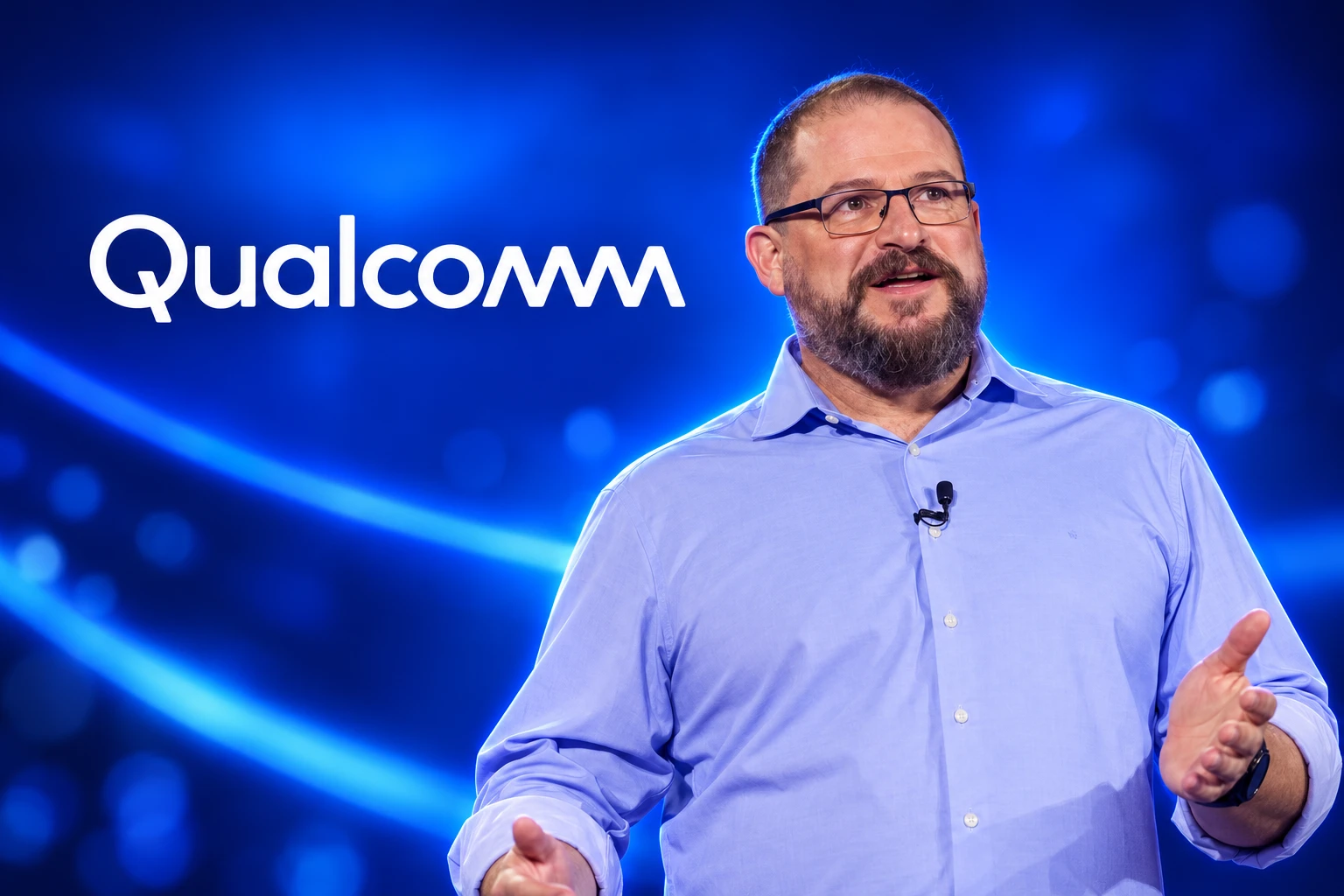
Qualcomm will start telling staff in November that their jobs are gone, and CEO Cristiano Amon’s Monday memo did not say how many. He called it a performance-focused reduction after yearly reviews. The same note said the company now needs different skills as it grows beyond phones.
Notices are due to begin in November 2026. Qualcomm had approximately 52,000 workers worldwide on September 28, 2025, and it has not named the teams, the cities, or the size of the cut.
A Memo With No Headcount
Amon sent the note to staff on Monday, October 19, 2026. He said the cuts would build “a stronger performance culture” and deal with cases where the company “has consistently fallen short of expectations.” He also told managers to weigh business priorities, organizational needs, and each person’s skills.
As we have expanded the business, so have the competencies and skills we require. We must have the right people in the right roles so they can perform at their best and the company can continue to succeed.
Cristiano Amon, President and CEO, staff memo on October 19, 2026
That pairing is the whole design. A performance review can remove people who missed goals. A skills test can remove people whose goals sat in last year’s business. Qualcomm has not said which of those tests will decide more of the names.
HOW MANAGERS ARE TOLD TO CHOOSE
- Yearly reviews: The cut follows the annual employee review cycle, and notices start in November.
- Missed expectations: Amon said the company would address cases where it had consistently fallen short.
- Business priorities: Managers are also to weigh what the company now wants to fund.
- Skills and expertise: The memo says the competencies Qualcomm needs have grown with the business.
The company has not published a total, a country list, or a team list, and it has not put a public comment on the memo. Most of the 52,000 people on the books at fiscal year-end 2025 were full-time. They worked in more than 200 locations across 38 countries, and the annual report says the large majority sit in engineering or technical jobs, with voluntary turnover of about 6% that year.
People who still work there were already treating the note as a large action on Monday, before any figure existed to argue with. A former Qualcomm engineer said he had assumed a top-tier chip employer would be safe. Some later write-ups filled the blank with “thousands.” The memo itself still does not.
Handset Chips Fell 20% in the June Quarter
The skills line is easier to read against the July 29, 2026 results for the quarter ended June 28. Total sales were $9,947 million, down 4% from $10,365 million a year earlier. Non-GAAP earnings per share were $2.21, down 20% from $2.77. Amon said quarterly revenue landed at the high end of guidance “despite a challenging memory and supply environment.”
Inside the chip unit, the mix had already moved. Combined automotive and IoT sales grew 28% from a year earlier, and automotive posted its 23rd straight quarter of double-digit growth. Phones still paid most of the chip bill, but that line was the one in reverse.
QCT SALES IN THE JUNE QUARTER
| Line | Q3 fiscal 2026 | Q3 fiscal 2025 | Change |
|---|---|---|---|
| Handsets | $5,086 million | $6,328 million | down 20% |
| Automotive | $1,588 million | $984 million | up 61% |
| IoT | $1,830 million | $1,681 million | up 9% |
| Total QCT | $8,504 million | $8,993 million | down 5% |
Handsets were still about 60% of QCT sales in that quarter, even after handset chips fell 20 percent. Auto plus IoT made up the rest of the chip book. Licensing (QTL) added $1,278 million, down 3%.
Two separate phone problems sit under that 20% drop. Memory prices have made handsets more expensive in large markets, and several Android brands have been working off inventory. On the July 29 call, management also said Qualcomm’s share of the new iPhone cycle would come in materially below the 20% it had earlier modeled, with Apple product revenue expected to fall about 50% from the September quarter to the December quarter.
Akash Palkhiwala, the chief financial officer and chief operating officer, told analysts the extra non-handset growth in fiscal 2027 is meant to “replace total Apple product revenues in 2026.” Fiscal 2027 Apple sales were already expected to land below a prior guide of about $2 billion. In fiscal 2025, Apple, Samsung, and Xiaomi each accounted for 10% or more of Qualcomm’s consolidated sales, so a faster Apple step-down is not a rounding error.
Guidance for the fourth fiscal quarter was $9.7 billion to $10.5 billion of revenue and $2.05 to $2.25 of non-GAAP earnings per share. Inventories on the June 28 balance sheet were $8,379 million, up from $6,526 million at the September 28, 2025 year-end. That stockpile is one reason a phone-chip company can miss its old headcount mix even when the new businesses are growing.
Qualcomm Added 3,000 People While It Kept Cutting
The workforce numbers do not show a company in retreat. They show a company that has been taking people out of some groups while adding them in others. Headcount was about 51,000 at the end of fiscal 2022, 50,000 in 2023, and 49,000 in 2024, then 52,000 on September 28, 2025, a rise of about 3,000 in one year.
In the same stretch Qualcomm kept booking severance. Restructuring charges were $712 million in fiscal 2023, substantially all severance, then $107 million in fiscal 2024 and $39 million in fiscal 2025. The Form 10-Q for the quarter ended June 28, 2026 records $68 million of restructuring and restructuring-related charges in that quarter and $97 million across the first nine months of fiscal 2026, “substantially all of which related to severance costs.” Nothing was booked in the first fiscal quarter, $29 million in the second, and $68 million in the third, so the spending was rising as the year went on.
Nine-month fiscal 2026 charges already exceed the whole of fiscal 2025. That is the cost of a rolling cull, not of a one-day announcement. Because those charges are booked when a plan is committed and told to the people in it, the third-quarter jump means more decisions were being taken, not only older packages being paid out.
THE CUTS THAT SHOWED UP BEFORE THE MEMO
- October 2023: Files California notices covering 1,258 jobs in San Diego and Santa Clara, including 1,064 in San Diego, with exits around mid-December.
- September 10, 2024: Files notices for 226 San Diego jobs, effective November 12, 2024.
- January 9, 2025: Files a notice for 50 workers on Morehouse Drive, effective March 10, 2025.
- April 2 and April 8, 2026: Files 20 San Diego notices covering 105 jobs, 67 of them effective May 26 and 38 effective June 8.
- July 29, 2026: Reports $97 million of severance-related charges for the first nine months of fiscal 2026.
- October 19, 2026: Amon sends the performance-focused reduction memo, still with no headcount.
- November 2026: Notifications to affected staff are due to begin.
The April 2026 round is the tell. Twenty separate California filings for 105 people, each naming a building, is how a company records small, address-level cuts rather than a named programme. A performance-focused global memo that also withholds the total fits that habit. It lets Qualcomm move people without ever putting a round on the whiteboard.
Morehouse Drive Has Taken the Repeated Hits
Almost every public U.S. notice in this sequence is a California filing, and almost all of those are San Diego. Morehouse Drive, the street on the headquarters campus, appears in the 2023, 2024, 2025, and 2026 packets. Five of the April 2026 notices used Morehouse Drive addresses again, alongside buildings on Pacific Center, Lusk, McKellar, Campus Point, and Sorrento Valley.
The 2023 California round was the one large event. Later rounds have been much smaller: 226, then 50, then 105. Engineering titles have taken a heavy share in the San Diego packets that name jobs, including senior roles in earlier years. That does not prove the November notices will land on the same desks. It does show where Qualcomm has been willing to cut when it files in the United States.
San Diego is still the company’s home, and it is still a large local employer. A global memo means Hyderabad, Bengaluru, Shanghai, and other sites can be in the pool even when they never appear in a California notice. Qualcomm has been adding office space in India, including a 256,000-square-foot Bengaluru lease at Constellation Business Park, and its Hyderabad campus is already its largest office outside the United States. The memo does not say those sites are spared. It also does not say they are the target.
If you work in a phone-chip group whose roadmap just shrank, the review form is now doing two jobs. It scores last year’s work, and it asks whether that work still matches the budget. Those are not the same question, and only one of them is about how hard you worked.
What the Amazon Warrant Requires of the Workforce
On July 29, Amon pointed staff and investors at the same destination. He said Qualcomm was “well positioned to execute on the vision we outlined at our recent Investor Day, with total non-handset revenues growing to $40 billion by fiscal 2029,” nearly double the target shared in November 2024. He said year-over-year growth in non-handset sales, including data center, should accelerate from 24% in fiscal 2026 to greater than 60% in fiscal 2027.
Palkhiwala put numbers under that. He said the forecast includes data-center revenue of $5 billion in fiscal 2027 and $15 billion in fiscal 2029, with non-handsets at more than 50% of QCT sales in fiscal 2027 and about two-thirds in fiscal 2029. That is a chip-mix claim, not a claim that phones vanish from the company. It is still a different hiring list than the one that built Snapdragon modems for iPhones and Android flagships.
FISCAL TARGETS OUTSIDE PHONES
- $40 billion: Non-handset revenue target by fiscal 2029, nearly double the November 2024 figure.
- Greater than 60%: Expected year-over-year growth in non-handset sales in fiscal 2027, up from 24% in fiscal 2026.
- $5 billion: Data-center revenue target for fiscal 2027, rising to $15 billion in fiscal 2029.
- More than half of QCT: Share of chip sales Qualcomm expects from businesses other than handsets in fiscal 2027.
The people who can hit those figures do not come from a generic engineering pool. On September 8, 2026, Qualcomm announced a multi-generation collaboration with Amazon on customized silicon for AWS AI inference and on optical links up to 1.6 terabits per second. A securities filing showed Amazon’s investment arm received a warrant for up to 25 million Qualcomm shares at $161.26, with 3.75 million shares vested at issuance and the rest tied to orders and purchases that can reach $60 billion, expiring September 3, 2036. Revenue from that work is due in the December quarter, Qualcomm’s fiscal first quarter of 2027.
The product list is specific. Qualcomm is selling AI 200 rack-level inference cards with Hexagon NPU silicon and 768 GB of LPDDR per card, with commercial availability in 2026, and an AI 250 follow-on that uses near-memory computing. It completed the acquisition of Modular Inc, which it described as an open software foundation for generative and agentic AI. It also has a separate multi-generation data-center CPU agreement with Meta. Automotive, already $1,588 million in the June quarter, has a raised exit run rate of about $7 billion for fiscal 2026 and a lead-compute deal with BMW.
Server inference, 1.6T optics, auto cockpit compute, and industrial IoT are not the same resume as a 5G modem for a mid-tier Android phone. Amon’s “right people in the right roles” sentence is the HR version of that product map. If the 2027 mix-shift lands on time, the memo is a skills cull timed to reviews. If data-center revenue slips, the same memo is a cost cut that never had to print a number.
Notifications Begin in November With Results Still Due
Fiscal 2026 ended in late September. The next quarterly report, covering that fourth quarter, is due in November, the same month notices start. Apple’s faster step-down was already expected to show up from fiscal fourth quarter 2026 into the December quarter. Staff will learn who is leaving while investors learn whether the phone hole is as wide as July implied.
WHAT WE KNOW
- The vehicle: A performance-focused reduction after annual reviews, with notices due to begin in November 2026.
- The headcount base: About 52,000 full-time, part-time, and temporary workers on September 28, 2025.
- The money already spent: $97 million of severance-related charges in the first nine months of fiscal 2026.
- The mix Qualcomm sold: Non-handset chip sales to pass half of QCT in fiscal 2027, with data-center revenue targeted at $5 billion that year.
WHAT IS UNCONFIRMED
- The size: No job-cut total, share of staff, or dollar saving has been published.
- The map: No team, site, or country list has been released, including whether San Diego again takes the U.S. share.
- The test: Qualcomm has not said how much of each decision is a review score versus a skills or priority match.
- The hiring offset: It has not said how many roles it still plans to add in auto, IoT, and data center as others leave.
Until those four blanks close, the November letters are a private event with a public story attached. Affected staff are due to hear then. The memo still does not say how many will.

Bulk Scotch Still Faces Full Duty After India’s UK Deal

Typhoon Champi Loops Off Taiwan and Still Injures 527

PM Modi Opens Chinmaya’s AI Guru and Asks for Unity

Mahim Police Hold a JeM Suspect on Enmity Charges

Gold Falls Below $4,000 as Hormuz Oil Hits $117

The iPhone 18 Pro Max Splits Apple’s Fall in Two

OpenAI Calls GPT-6 Astra AGI Then Locks Its Exploits

Clancy Juror Says the Holdout Never Cited Evidence

Trump Claims Hormuz Control as Oil Holds Near $96

Russia Closes the Goethe-Institut Berlin Tried to Save

 NEWS2 months ago
The iPhone 18 Pro Max Splits Apple’s Fall in Two
- NEWS2 months ago
OpenAI Calls GPT-6 Astra AGI Then Locks Its Exploits
- NEWS1 month ago
Clancy Juror Says the Holdout Never Cited Evidence
- BUSINESS2 months ago
Trump Claims Hormuz Control as Oil Holds Near $96
- LIFESTYLE2 months ago
Russia Closes the Goethe-Institut Berlin Tried to Save
- AUTO2 months ago
Volkswagen’s Job Cuts Leave Four Plants Without Cars
- NEWS2 months ago
Dyson Puts Nurovi Robots on Sale Without the UV Flagship
- NEWS2 months ago
The Lincoln’s 286-Day War Cruise Ends at a Thai Pier