
NEWS
Pixel 11 Pro AI Gains Come With RAM and Battery Tradeoffs
Google’s Pixel 11 Pro, XL and Fold bring Tensor G6 2nm power and HiLight LEDs, but AI-driven memory costs cut base RAM while batteries shrink.

Google opened pre-orders today for the Pixel 11 Pro, Pixel 11 Pro XL and Pixel 11 Pro Fold, all built around the Tensor G6, the first smartphone chip from TSMC’s 2nm process, and a new rear HiLight LED array. Sales begin August 20. Base storage jumps to 256GB across the line, yet the Pro models start at 12GB of RAM instead of last year’s flat 16GB, and battery cells shrank on the XL and Fold even as Google promises longer life through efficiency.
The same AI wave that funds Gemini Intelligence and the G6’s bigger TPU also drove memory prices higher, forcing the tradeoff buyers will notice first. Higher storage floors, trimmed base RAM on the slabs, and leaner cells on two Pros all trace back to that cost pressure. Software efficiency is now asked to cover ground that raw capacity once held.
HiLight Brings Back the Notification LED
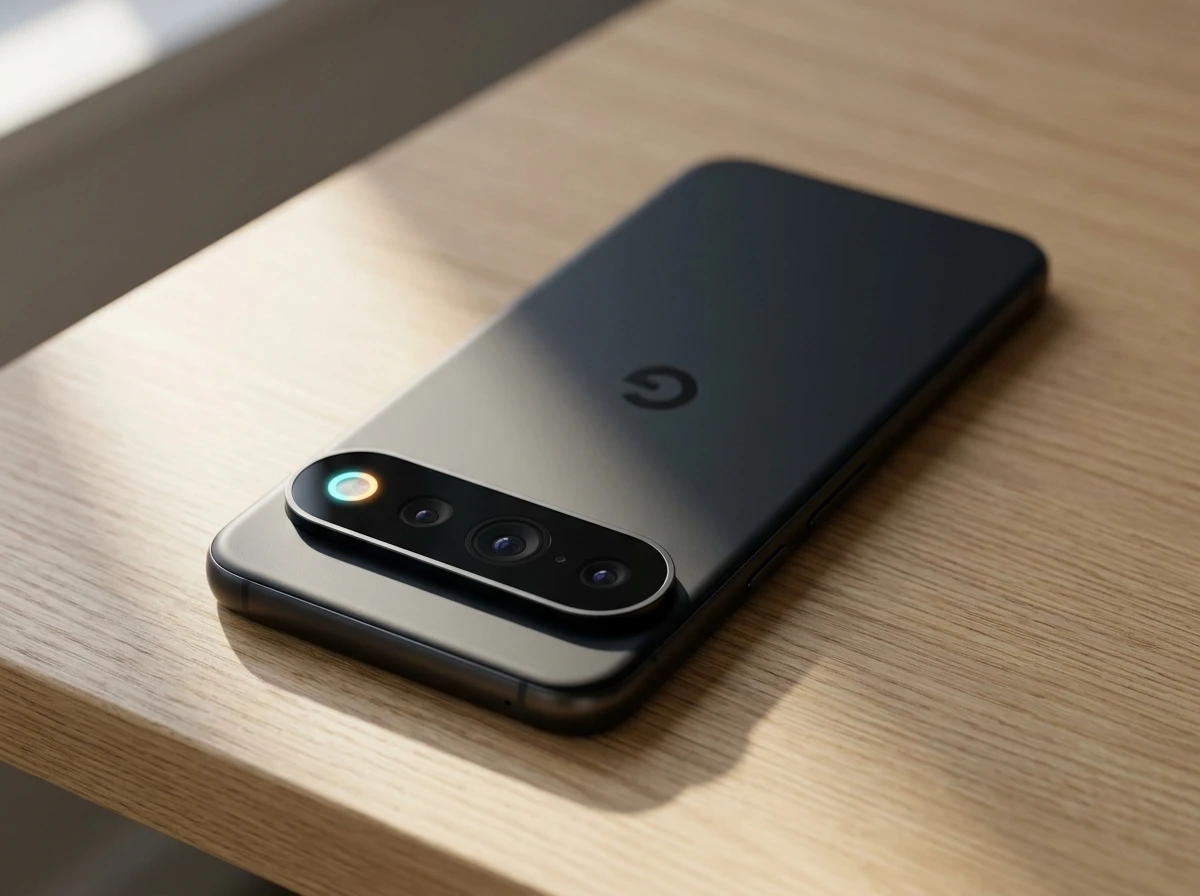
Notification LEDs faded once always-on displays took over. Google is testing whether AI makes the idea useful again. On the Pro, Pro XL and Pro Fold, a multicolored LED ring sits beside the rear camera flash. When the phone lies face-down, it activates.
- Custom colors for incoming calls from preferred contacts
- Distinct glow patterns while Gemini listens, thinks or responds
- Planned later support for messages from favorite contacts
Google’s product post says HiLight glows for Gemini and calls so users stay informed without flipping the phone. The base Pixel 11 skips the feature. Earlier teases called a similar light Pixel Glow; the earlier Pixel Glow teaser details already pointed to a tiny RGB circle replacing the old thermometer sensor.
At launch the feature set is narrow. Crowd reaction on X treats it as a clever novelty that still needs more notification types to matter daily. The face-down trigger keeps the ring quiet when the display is already visible, which limits battery draw and avoids redundant alerts. Until favorite-message support arrives, the LED mainly serves callers and Gemini sessions.
That narrow brief still fits Google’s wider bet: on-device intelligence should surface status without demanding full attention. Whether the ring becomes habit or gimmick depends on how quickly the promised message hooks land after launch.
Tensor G6 Wins the 2nm Race
Tensor G6 is Google’s second chip after leaving Samsung foundries and the first phone SoC out of TSMC’s 2nm lines. That puts Pixel ahead of the next iPhone and Snapdragon flagships by roughly a month.
- 25% faster web browsing versus Tensor G5
- 15% quicker app launches
- 3.5× faster on-device AI tasks at up to 3.5× lower energy
- Titan M3 security chip adds post-quantum encryption for secure boot
A vapor chamber cools the die. Google pairs the hardware with Gemini Intelligence, a more capable on-device and cloud Gemini experience that also heads to watches later. A commissioned Counterpoint AI privacy scorecard ranked Pixel’s agentic AI experience highest for privacy protection among major flagships tested.
The efficiency numbers are load-bearing. Without them the smaller batteries look like clear regressions. The 3.5× AI speed gain at up to 3.5× lower energy is the figure Google needs reviewers to reproduce under mixed use, not only in synthetic bursts.
Post-quantum encryption on the Titan M3 extends the security story beyond ordinary secure boot. Combined with the privacy ranking, it gives Google a concrete reply when buyers ask whether on-device agents expose more than they protect.
Cameras and Displays Stay the Pro Focus
The slab Pros share the same rear trio and selfie module. The Fold runs a lighter camera set.
| Model | Main | Telephoto | Ultrawide | Selfie | Display |
|---|---|---|---|---|---|
| Pixel 11 Pro | 50MP 1/1.3″ OIS | 48MP 5× periscope OIS | 48MP AF | 42MP AF | 6.3″ LTPO 120Hz, 3600 nits |
| Pixel 11 Pro XL | 50MP 1/1.3″ OIS | 48MP 5× periscope OIS | 48MP AF | 42MP AF | 6.8″ LTPO 120Hz, 3600 nits |
| Pixel 11 Pro Fold | 48MP 1/1.56″ | 10.8MP 5× | 10.5MP AF | dual 10MP | 6.5″ cover + 8.0″ inner, 3600 nits |
Google calls the Pro main sensor its best yet and says the redesigned telephoto gains 30% more light sensitivity. Tensor G6 enables 120× Pro Zoom on the slabs and faster Night Sight captures (up to 4.5× quicker). The camera bar is 40% thinner than earlier base Pixels, reducing desk wobble. New anti-scratch coating doubles resistance on the Pro glass. All models ship with Android 17 and seven years of OS, security and Pixel Drop updates.
These phones are designed for Gemini Intelligence to deliver time-saving, personal help and include new camera experiences that will help you better capture the moment in your authentic style.
Spencer Boone and Akash Rathi, Pixel product managers, wrote that in the official launch post.
Shared glass and coating work across the Pro and Pro XL keeps the photography pitch simple: pick size, not sensor grade. The Fold’s lighter stack trades peak zoom reach and main-sensor size for the folding form, then leans on Super Zoom to 30× plus Magic Capture and Camera Looks to close the gap in software.
Seven years of updates stretch the camera investment. Buyers who keep a handset through multiple software generations get longer runway for Night Sight, zoom processing and Gemini-linked capture tools to improve after the hardware ships.
Smaller Cells, Bigger Efficiency Promise
Battery capacity moved the wrong direction on two of the three Pros.
- Pixel 11 Pro: 4,850mAh, 30W wired, 25W Qi2.2 / Pixelsnap
- Pixel 11 Pro XL: 5,115mAh (down from 5,200mAh last year), 45W wired
- Pixel 11 Pro Fold: 4,806mAh (down from 5,015mAh), 30W wired, 25W Qi2.2
| Model | Capacity | Change vs last year | Wired charge |
|---|---|---|---|
| Pixel 11 Pro | 4,850mAh | Not stated | 30W |
| Pixel 11 Pro XL | 5,115mAh | Down from 5,200mAh | 45W |
| Pixel 11 Pro Fold | 4,806mAh | Down from 5,015mAh | 30W |
| Pixel 11 (base) | 4,985mAh | Larger than the Pro | Not highlighted |
Google still claims over 24 hours of endurance on the Fold and pins longer real-world life on G6 power efficiency, a weak spot for the Pixel 10 Pros. The XL can deliver a claimed 15 hours of use from a 15-minute charge with the 45W adapter. Base Pixel 11 actually carries a larger 4,985mAh cell than the Pro. X users immediately noted the irony: AI memory demand raised costs, RAM dropped on base Pro configs, and cells shrank while marketing leaned harder on software intelligence.
The XL’s 45W path is the clearest hardware offset to its smaller cell. Fast top-ups matter more when the pack itself is leaner. The Fold keeps the same full-day rating Google advertised last year even with fewer milliamp-hours, so the G6 efficiency story has to carry that promise in daily mixed use.
The Fold Gets Thinner and Tougher
The Pixel 11 Pro Fold keeps IP68 and gains a gearless hinge, ceramic cover glass and a glass-fiber composite back Google describes as nearly impossible to crack. Official numbers put it almost 10% lighter and about 1mm thinner than the prior Fold, with thinner bezels and 20% brighter panels. Cover screen grows slightly to 6.5 inches; the inner panel stays 8.0 inches. It always ships with 16GB of RAM even at 256GB storage.
Camera hardware trails the slab Pros, but Super Zoom reaches 30× and new software tools such as Magic Capture and Camera Looks arrive. Fold-specific extras include optimized bubbles for multitasking and a sign-to-text feature developed with the Deaf community. Compared with the Galaxy Z Fold8 battery and price positioning, Google’s cell is smaller yet the company still promises the same full-day rating it advertised last year. The nearly 10% lighter Pro Fold design is the clearest hardware win in the trio.
Always-on 16GB at every storage tier removes the slab Pro’s base-RAM compromise for Fold buyers. The thinner, lighter shell and tougher materials are the tangible reasons to pay the Fold premium; the camera gap remains the tangible reason some will still choose a slab.
Prices Climb With the Storage Floor
Every model now starts at 256GB. That alone lifts entry prices; Google also added roughly $100 on several SKUs.
| Model | 256GB | 512GB | 1TB |
|---|---|---|---|
| Pixel 11 | $899 (12GB) | $1,019 (12GB) | – |
| Pixel 11 Pro | $1,099 (12GB) | $1,219 (16GB) | $1,449 (16GB) |
| Pixel 11 Pro XL | $1,299 (12GB) | $1,419 (16GB) | $1,649 (16GB) |
| Pixel 11 Pro Fold | $1,899 (16GB) | $2,019 (16GB) | $2,249 (16GB) |
Pro colors are Canyon, Olive, Fog and matte Obsidian. The Fold offers Olive and Obsidian. Buyers get six months of Google AI Pro on the Pro models. Early store offers have included up to $250 off for some sign-ups, plus trade-in value. Pre-orders are live on the Google Store and partners; devices ship or hit shelves August 20.
Who feels the tradeoffs most? Photographers who want the full 16GB and largest batteries must step up storage tiers. Fold buyers pay a premium for the thinner body and always-on 16GB while accepting a weaker camera stack. Efficiency claims will decide whether the smaller cells become a footnote or a lasting complaint once reviews land.
The 512GB step is now the practical door to 16GB on the Pro and Pro XL. That bundles more flash with the memory ceiling rather than selling RAM as a standalone upgrade, which keeps the price ladder simple but raises the spend required for the fuller configuration.
How Configuration Choices Stack for Buyers
The lineup no longer offers one clean “max everything” path at the lowest Pro price. Storage, RAM, battery and camera strength move together in uneven ways.
- Slab Pro 256GB configs: 12GB RAM, shared top camera stack, mid-size cells
- Slab Pro 512GB and 1TB configs: 16GB RAM unlocked, same cameras, same cells
- Pro Fold every tier: 16GB RAM locked in, lighter cameras, thinner tougher body
- Base Pixel 11: 12GB RAM, no HiLight, larger cell than the Pro, lower entry price
Photographers who need both the full sensor set and 16GB are steered toward higher storage on the Pro or Pro XL. Fold buyers never face the 12GB floor, yet they accept the lighter rear cameras and dual 10MP selfies in exchange for the hinge, dual displays and durability materials.
The base Pixel 11’s larger 4,985mAh cell undercuts the idea that every step up the range automatically means more battery. It also skips HiLight, so the LED remains a Pro-tier marker rather than a family-wide feature.
Efficiency Claims Face the Review Cycle
Google’s pitch ties longer life to G6 efficiency after two Pros shipped with smaller cells and after the Pixel 10 Pros drew fire for power use. That sets a clear test for independent reviews once units leave the embargo.
- August 20: retail availability and the first unrestricted endurance runs
- Mixed-use tests: web, apps, and on-device AI against the 25%, 15%, and 3.5× claims
- Fold full-day check: whether the 4,806mAh pack still clears the over-24-hour line
- XL charge test: whether 15 minutes at 45W truly yields the claimed 15 hours
If the efficiency numbers hold, the capacity cuts read as deliberate engineering. If they miss, the smaller packs and the 12GB base RAM will dominate early buyer complaints. HiLight’s narrow launch feature set is a softer risk; missing message types can arrive later, while battery behavior is judged in the first week.
Six months of Google AI Pro on the Pro models gives software another window to prove value after purchase. The seven-year update clock then keeps that software path open long after the launch debate over milliamp-hours fades.
Frequently Asked Questions
What does the Pixel 11 Pro HiLight LED actually do at launch?
It lights in custom colors for preferred-contact calls when the phone is face-down and shows distinct patterns while Gemini is listening, thinking or speaking; message notifications for favorites are promised later but not shipping day one.
How much RAM do the Pixel 11 Pro models include?
Base 256GB Pro and Pro XL units ship with 12GB; 512GB and 1TB configurations rise to 16GB. The Pro Fold includes 16GB on every storage tier, including 256GB.
What are the official US starting prices for the Pixel 11 Pro lineup?
Pixel 11 Pro starts at $1,099 for 256GB, Pro XL at $1,299 for 256GB, and Pro Fold at $1,899 for 256GB; higher storage tiers cost more and unlock the full 16GB RAM on the slabs.
Is the Tensor G6 really the first 2nm smartphone chip?
Yes. Multiple reports and Google’s positioning confirm Tensor G6 is the first phone SoC fabricated on TSMC’s 2nm process, ahead of Apple’s next A-series and the following Snapdragon and Dimensity flagships.
How long will Google support the Pixel 11 series with updates?
All Pixel 11 models receive seven years of OS, security and Pixel Drop updates from launch.

-
 TECH1 year ago
Where Garmin Watches are Made and How They are Assembled
-

 AUTO3 months ago
Tesla’s Roadster Is ‘a Few Weeks Away,’ Says Its Chief Designer
-
 NEWS10 years ago
Samsung Releases Galaxy Note7 TV Ad as Reddit AMA Leaks Specs
-
 NEWS10 years ago
Android 7.0 Nougat Rolls Out To Nexus Devices With New Emoji, Features
-
 FINANCE9 years ago
Cardano Price Surges as ADA Enters the Crypto Top Ten List
-
 NEWS10 years ago
Pre-Order the First Camera Made for Facebook Live Streaming Video
-
 FINANCE1 year ago
Binance Suspends Trading and Withdrawals for a System Upgrade
-
 FINANCE9 years ago
RChain Price Jumps Nearly 150% to a New All-Time High of $2.03