NEWS
Asif Invokes the Mecca Pact After Houthi Strikes
Eleven years after parliament kept Pakistan out of Yemen, Khawaja Asif says a new Mecca pact would take effect if Houthi fire keeps hitting Saudi soil.

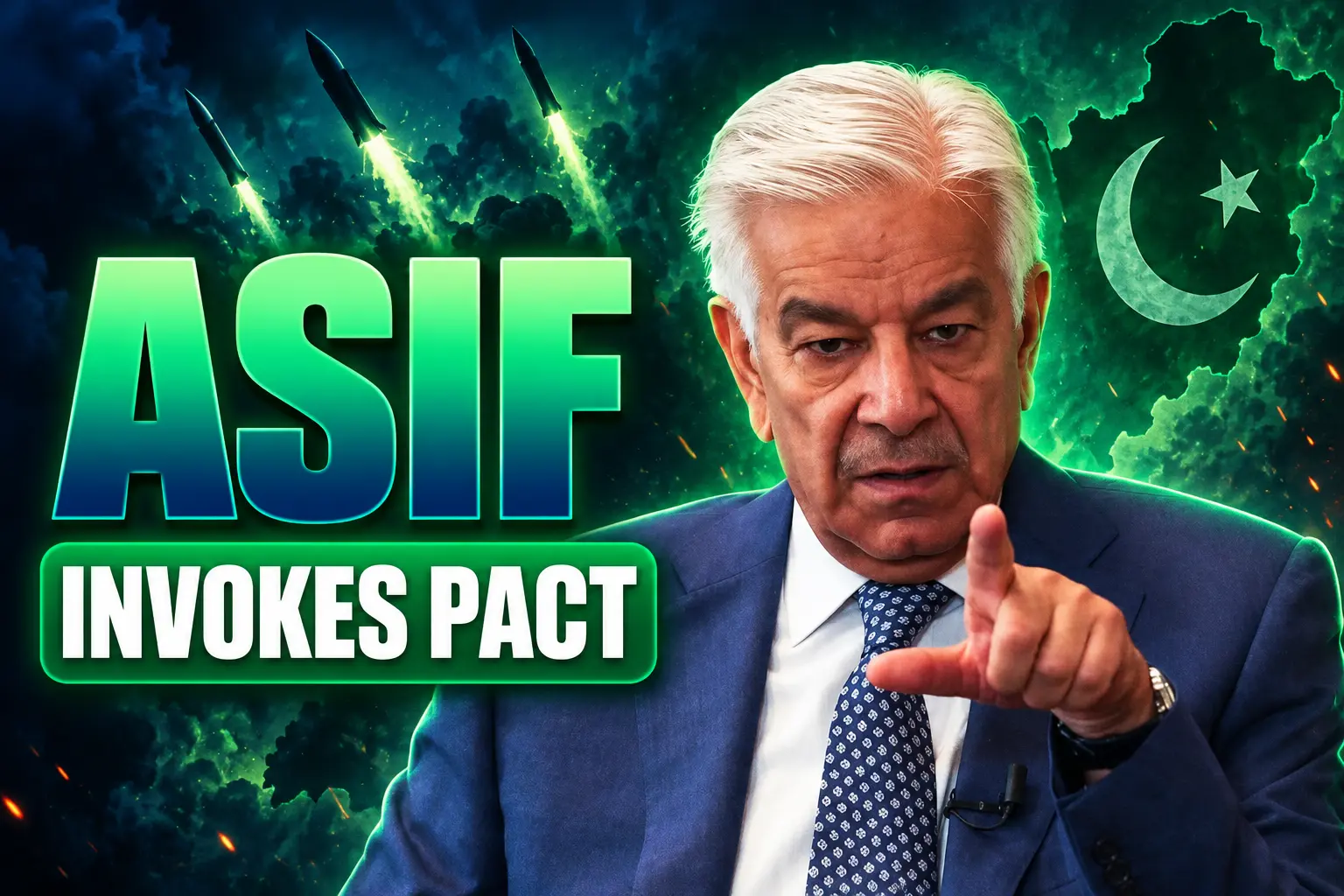
Pakistan’s defence minister said a 32-day-old pact with Saudi Arabia and Turkey would take effect if the Yemen war spills onto Saudi soil. Khawaja Asif spoke hours after Houthi missiles and drones hit four southern Saudi cities, wounded 73 people, and forced a halt at energy sites.
He is the same minister who, in April 2015, took a Saudi request for jets, ships and troops to a joint sitting of parliament and watched the house vote to stay out of the Yemen war. The exception written into that vote, a promise to stand with the kingdom if its soil or holy sites were threatened, is the clause he is now reading through a new treaty.
Asif Says Spillover Would Switch the Pact On
On the night of 8 September 2026, host Shahzeb Khanzada asked Asif whether the Makkah Defence Alliance could be brought into force after the day’s raids. Asif said yes, and he left little room around the answer.
This is a joint defence pact. And unprovoked aggression or spillover of whatever is happening in Yemen into Saudi Arabia, definitely, the pact will become operational; there should be no doubt in this.
Khawaja Asif, defence minister, on Geo News
“We are bound by the terms and conditions of this pact and we will honour them in case there is a need,” he said. Asked whether Riyadh had been in touch, he said he was not aware of any engagement, then repeated that Pakistan “is bound to react under the pact.”
He called the deal defensive. If one member is attacked, he said, all three “will respond in kind.” He added that this is a trilateral pact, “but even if it were bilateral, we would have responded.” He also said he hoped the situation would “come under control and die down,” and that the Houthis should grasp that exporting Yemen’s war could bring the clauses into force. “They should keep this in mind.”
He described the Houthis as non-state actors and said Yemen’s government had already answered them. There is sympathy for Iran across the Muslim world, he said, “but exploitation of a bilateral dispute by non-state actors, I believe they are doing it at their own peril.”
Prime Minister Shehbaz Sharif condemned “the cowardly attack by Houthis targeting civilian and energy facilities,” and said Pakistan stood with King Salman, Crown Prince Mohammed bin Salman, and the Saudi people. The Foreign Office, in PR 239/2026, called the raids a flagrant violation of Saudi sovereignty and backed the kingdom’s right, under the UN Charter, to defend its territory, people and assets.
🔊PR No.2️⃣3️⃣9️⃣/2️⃣0️⃣2️⃣6️⃣
Pakistan Strongly Condemns the Reprehensible Attacks against the Kingdom of Saudi Arabia
🔗⬇️ pic.twitter.com/L0ZyfwsBKj
— Ministry of Foreign Affairs – Pakistan (@ForeignOfficePk) September 8, 2026
Parliament Already Drew This Line in 2015
Asif did not come to this argument as a new man in the job. In April 2015 he was already defence minister. Saudi Arabia had asked Islamabad for fighter jets, warships and ground troops for Operation Decisive Storm, the campaign launched on 26 March 2015 after the Houthis seized Sanaa and pushed toward Aden. Asif led a civil-military team to the kingdom, then opened a joint sitting on 6 April.
Five days of argument followed. Lawmakers feared a long war, a fight with Iran’s partners, and a bill Pakistan could not pay. On 10 April 2015 the house adopted a unanimous resolution. Clause 8 said Pakistan should “maintain neutrality in the Yemen conflict so as to be able to play a proactive diplomatic role to end the crisis.” Clause 10, the exception Asif is now standing on, said that if Saudi territorial integrity were violated, or if the two holy mosques were threatened, Pakistan would “stand shoulder to shoulder with Saudi Arabia and its people.”
The house would not even let Asif read the final text. Finance Minister Ishaq Dar, now deputy prime minister and foreign minister, presented it instead. Asif had told reporters outside the chamber that the kingdom and the holy sites were not then under threat. That was the political bargain: no Pakistani offensive in Yemen, and a promise if Saudi soil itself was hit.
THEN AND NOW
| Point | 10 April 2015 | 7 August 2026 |
|---|---|---|
| Instrument | Unanimous parliamentary resolution | Treaty signed by three governments |
| Yemen fighting | Stay neutral | Not named as a theatre |
| Attack on Saudi soil | Stand shoulder to shoulder | Attack on one is an attack on all |
| Who decided | Joint sitting after five days of debate | Heads of government; full text unpublished |
| Third party | None | Turkey |
| Asif’s role | Opened the debate as defence minister | Same office, now citing a treaty |
The 2026 text hardens the 2015 exception into treaty language and adds Ankara. It does not, in any public clause, send Pakistani brigades into Yemen. That is why Asif can say the pact is not “aggressive in nature” and still warn the Houthis that a spillover onto Saudi territory would bring it into force. The old red line is the new trigger.
What the Makkah Accord Requires
The public commitment is one sentence. An armed attack on Pakistan, Saudi Arabia or Turkey is to be treated as an attack on all three, and the three states say they will deepen defence work around that pledge. The full treaty has not been released, so the trigger, the form of aid, and any automaticity remain undefined in public.
Leaders signed the Makkah Joint Defence Agreement on 7 August 2026 at Al-Safa Palace in Mecca after a summit styled the Makkah Al-Mukarramah Summit for Joint Defence. Crown Prince Mohammed bin Salman, President Recep Tayyip Erdoğan and Prime Minister Shehbaz Sharif put their names to it. The official joint statement says the deal is meant to strengthen collective deterrence, and that an attack on one treated as an attack on all is the core rule. It also provides for broader defence cooperation. The Pakistani release is PR 204/2026.
Ishaq Dar, in a message to the nation, said the Makkah Accord is “defensive in nature” and “not directed against any country.” He tied the attack-on-one clause to the inherent right of individual and collective self-defence under Article 51 of the UN Charter, not to NATO’s treaty. Turkey is already a NATO member; this second promise sits beside that one and does not, on the public record, create a standing joint force, a common budget, or an integrated command.
The pact builds on the Strategic Mutual Defence Agreement signed by Pakistan and Saudi Arabia on 17 September 2025 at Al-Yamamah Palace in Riyadh, which already said any aggression against either country would be treated as aggression against both. A senior Saudi official then called that bilateral deal “a comprehensive defensive agreement that encompasses all military means.” Asif later said Pakistan’s capabilities would be “made available” to the kingdom, then said nuclear weapons were “not on the radar.” Saudi diplomat Rayed Krimly, after the Mecca signing, said the trilateral text was not linked to nuclear ambitions and was not a sectarian bloc.
HOW THE ALLIANCE WAS BUILT
- 17 September 2025: Pakistan and Saudi Arabia sign the Strategic Mutual Defence Agreement in Riyadh, with an attack-on-either clause.
- 7 August 2026: Pakistan, Saudi Arabia and Turkey sign the Makkah Joint Defence Agreement at Al-Safa Palace.
- 31 August 2026: Foreign ministers, defence ministers and military chiefs meet in Istanbul, name the grouping the Makkah Defence Alliance, and place a secretariat in Saudi Arabia.
- 8 September 2026: Houthi missiles and drones hit four Saudi cities; Asif says the pact can become operational if the war spills over.
In Istanbul the three governments issued PR 231/2026. They agreed to set up a secretariat in the kingdom, headed by a secretary general, with the first secretary general from Pakistan for three years. They also pledged joint work on defence industry, technology and production. Turkish Foreign Minister Hakan Fidan said the alliance was designed to grow beyond the founders once its institutions were in place. Egypt had been mentioned around the signing and did not join. The UAE did not join either.
Houthi Missiles Hit Four Saudi Cities
The raids came early on Tuesday, 8 September 2026. Maj. Gen. Turki al-Malki, spokesman for the Saudi-led coalition in Yemen, said the Houthis struck “civilian and economic facilities” in Abha, Khamis Mushait, Jazan and Najran. He put the wounded at 73, including women and children, called the wave a dangerous escalation, and said the coalition would answer it.
The Houthi military spokesman said the group had fired ballistic missiles and drones at Saudi Aramco sites in Abha, Najran and Jazan, and at an air base in Khamis Mushait. Other Houthi claims named Abha International Airport and King Khalid air base. The group presented the operation as payback for a Saudi strike on a prison in Jawf province, in northern Yemen, a day earlier.
Saudi Arabia’s energy ministry said several energy sites and installations were hit, that fires broke out, and that some operations were halted while crews worked the blazes. It did not name the plants. Jazan is home to a refinery rated at 400,000 barrels a day, among the kingdom’s largest, and had already been struck more than once after the Houthis threatened Saudi oil flows in July. Facilities around Abha and Najran feed the domestic grid more than the export system.
WHAT TUESDAY HIT
- Abha: Houthi claims included Aramco facilities, the international airport, and a power-plant storage site; satellite images later showed smoke over an Aramco bulk plant.
- Jazan: Claims focused on Aramco and the large coastal refinery, which had been taken off line after earlier raids.
- Najran: Aramco distribution sites that mainly serve local demand.
- Khamis Mushait: An air base, according to both the coalition and the Houthis.
Brent crude moved toward $100 a barrel as traders priced a wider war. The strikes landed on a second front for Riyadh while a larger fight, opened on 28 February 2026 when the United States and Israel struck Iran, has already squeezed traffic through the Strait of Hormuz. The Houthis have, in parallel, gone after Red Sea shipping, including a Saudi-linked supertanker last month.
Riyadh did not wait on the new alliance. After the morning raids it hit targets in Taiz and Marib provinces and in the Jubah district east of Sanaa. The Saudi foreign ministry said the kingdom would “take all necessary measures to defend its sovereignty.” That is the self-defence track Islamabad’s own statement endorsed.
THE SNAPSHOT
- Age of the pact: 32 days from the Mecca signing to the 8 September raids.
- Casualties named: 73 wounded, per the Saudi-led coalition.
- Cities named: four, all in the south near Yemen.
- Refinery at risk: Jazan, 400,000 barrels a day.
Riyadh Has Not Asked Islamabad to Move
The missiles already landed. The pact did not move. Asif’s warning is about a further spillover, which is a way of saying Tuesday, in Islamabad’s telling, was not the trigger. He has not described a request, a joint staff talk, or a force package. He has described a legal duty and a hope that the shooting fades.
That gap is not a secret in the region. Once a treaty says an attack on one is an attack on all, every subsequent raid becomes a test of whether the sentence is a deterrent or a press line. Saudi Arabia has taken more than one Houthi strike since 7 August. The alliance still has no published war plan for this exact case: a non-state group, armed by Iran in Riyadh’s account, firing from Yemen into the kingdom’s south.
Asif tried to hold both ideas at once. The pact could “serve as a deterrent,” he said, and the three countries “did not need to respond to aggression with aggression,” even as he said they would respond in kind if a member were attacked. He reminded viewers that the Yemen war has run since 2014 and that he visited at the time. “At that time too, we helped Saudi Arabia,” he said, pointing to long ties and “the sanctity” of Saudi land.
Help, in 2015, stopped short of the offensive the Saudis had asked for. Help on 8 September 2026, so far, is a condemnation, a restated duty, and political cover for whatever Riyadh does itself.
WHAT WE KNOW
- The clause: An armed attack on one signatory is to be regarded as an attack on all three, per the 7 August joint statement.
- The interview: Asif said the pact would become operational if unprovoked aggression or a Yemen spillover hit Saudi Arabia.
- The contact: He said he was not aware of any engagement with Riyadh after the raids.
- The Saudi reply: The kingdom struck back in Yemen the same day, without announcing a request under the new alliance.
WHAT IS UNCONFIRMED
- The treaty text: Specific triggers, required aid, and any exclusion for a member that starts a fight have not been published.
- A formal request: No public claim that Riyadh has asked Islamabad or Ankara to activate the pact.
- Nuclear cover: Officials deny the Mecca text is a nuclear pact; last year’s bilateral phrasing about “all military means” was never spelled out.
Until a request arrives, the alliance’s first live file is a warning. That may be what Riyadh wants: a Pakistani voice on television, aimed at Sanaa, without Pakistani aircraft over Yemen. It may also be all Islamabad can offer while it tries to keep a separate channel open to Tehran.
The Third Signature Belongs to Ankara
Asif spoke as if the duty were Pakistan’s to explain. Turkey signed the same page. Fidan spent 31 August in Istanbul selling the alliance as regional ownership, a secretariat, and a door left open to new members. He said attempts to import solutions from outside the region had failed. He did not, in any statement that followed Tuesday’s raids, say whether drone and missile fire on Jazan counted as the armed attack the treaty names.
That silence matters because the grouping is not a Pakistani-Saudi bilateral with a guest. It is a three-state claim. If only one capital talks about activation, the other two can treat the clause as political cover. Ankara already has NATO’s Article 5 on its books and a defence industry that the Mecca text is supposed to plug into Saudi money and Pakistani manpower. A Houthi war in the Saudi south is not the fight those factories were built for, and Fidan has been careful not to name an enemy.
Pakistan will hold the secretary general’s chair for the first three years, which puts Islamabad in the room where the alliance’s habits get written. It does not put Pakistani troops on the Yemen border unless someone asks, and unless Islamabad says yes. Asif’s own phrasing still waits on “need.”
Asif Still Hopes Diplomacy With Iran Holds
The same interview that threatened to switch the pact on also kept a door open to Iran. Asif said he would “not abandon hope” that talks between the United States and Iran could still work. He described a stalemate that was “better than that,” and said there was “indirect engagement.” Pakistan, he said, walks a tightrope because it has “brotherly relations” with countries on both sides.
That is the part of 2015 that never left. The house then feared a sectarian slide and a break with Tehran. The house now has not been called back to vote. The treaty was signed by the prime minister in Mecca, institutionalised by ministers in Istanbul, and explained on television by the defence minister after the missiles flew. The public clause is harder than the 2015 resolution. The caution in Asif’s mouth is the same caution: honour the kingdom, do not own the Yemen war, hope the fire dies down.
He even sketched a wider villain. Israel, he said, would want the conflict to continue and Gulf states to be drained, and he claimed Israel was “profiting off of it.” That is his charge, not a documented ledger, and it sits beside the narrower fact he was asked about. Houthi missiles hit Saudi energy sites. A 32-day-old pact says that is an attack on Pakistan and Turkey too. Riyadh has not placed the call. Asif says the call would be answered. The last time this question came to him, parliament answered for him, and the answer was no, except if Saudi soil itself was crossed. Soil has been crossed. The new paper is still in the folder.

Police Tighten the Ring Around Gyanesh Kumar’s House

Ravi Shankar Calls Hanuman Ansh a Slap to Big Spenders

Microsoft Puts Nvidia in the Surface Laptop Ultra Flagship

Adult Fires on an Armed Juvenile at Longmont Dollar Tree

Jordan Absorbs Iranian Missiles Aimed at Parked US Jets

The iPhone 18 Pro Max Splits Apple’s Fall in Two

OpenAI Calls GPT-6 Astra AGI Then Locks Its Exploits

Russia Closes the Goethe-Institut Berlin Tried to Save

Trump Claims Hormuz Control as Oil Holds Near $96

Volkswagen’s Job Cuts Leave Four Plants Without Cars

 NEWS1 month ago
The iPhone 18 Pro Max Splits Apple’s Fall in Two
- NEWS1 month ago
OpenAI Calls GPT-6 Astra AGI Then Locks Its Exploits
- LIFESTYLE1 month ago
Russia Closes the Goethe-Institut Berlin Tried to Save
- BUSINESS1 month ago
Trump Claims Hormuz Control as Oil Holds Near $96
- AUTO1 month ago
Volkswagen’s Job Cuts Leave Four Plants Without Cars
- NEWS1 month ago
Clancy Juror Says the Holdout Never Cited Evidence
- BUSINESS1 month ago
Japan’s 3 Percent Yield Reprices Government Debt Worldwide
- NEWS1 month ago
Dyson Puts Nurovi Robots on Sale Without the UV Flagship