
AUTO
Mahindra BaaS Drops Electric SUVs Into the Rs 12 Lakh Filter
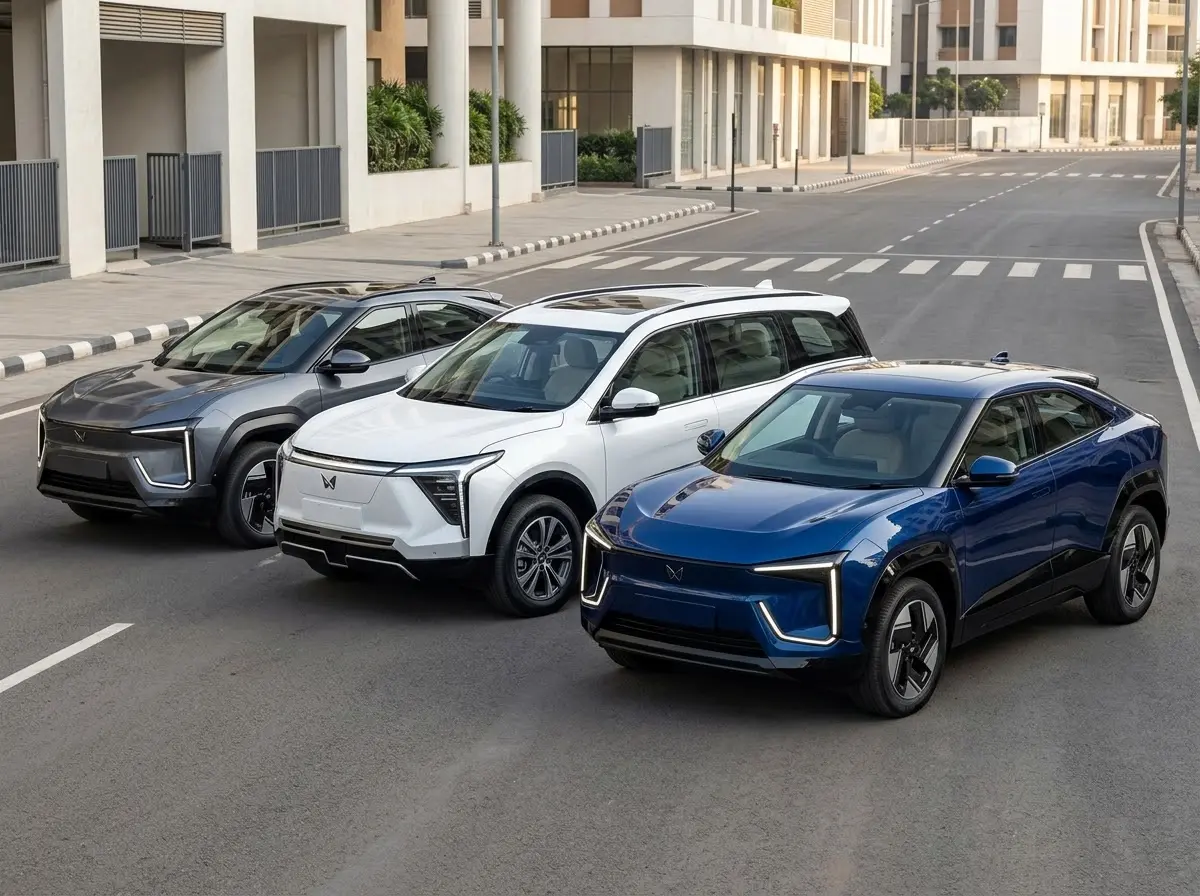
Mahindra extends Battery-as-a-Service across BE 6 Sporteq, XEV 9S and XEV 9e, cutting advertised prices by roughly Rs 8 lakh and putting big-battery EVs in the.

Mahindra has extended Battery-as-a-Service across its full Electric Origin SUV range, cutting the advertised starting price of the XEV 9S to Rs 12.65 lakh, the XEV 9e to Rs 13.90 lakh and the BE 6 Sporteq to Rs 11.45 lakh ex-showroom. The battery is financed separately at an effective Rs 3.75 per km.
That move places 59 kWh to 79 kWh electric SUVs inside the same initial budget filter many buyers use for mid-size petrol and diesel cars. The programme is dual financing, not a true rental or swap scheme, and historical take-up on similar offers has stayed low.
The practical effect is a wider first-screen comparison. Shoppers who once stopped at conventional family SUVs now see large-battery electric options listed in the same opening band, even before they decide how to fund the pack itself.
The New Entry Prices Across the Range
Under BaaS the vehicle price excludes the battery pack. Buyers arrange two loans, one for the body and one for the pack. Mahindra quotes a starting battery EMI of Rs 6,975 that equates to Rs 3.75 per km when calculated on 60 km of daily use and a set down payment.
The company first introduced the structure with the BE 6 Sporteq in mid-August. On 28 August 2026 it rolled the same terms out to every variant of the XEV 9S and XEV 9e as well.
Full-price reference points remain higher. Autocar India lists the XEV 9S from Rs 20.65 lakh and the XEV 9e from Rs 21.90 lakh without the battery separation. The advertised BaaS cut therefore lands near Rs 8 lakh on the entry trims.
| Model | BaaS Start (ex-showroom) | Typical Full Start | Battery Rate |
|---|---|---|---|
| BE 6 Sporteq | Rs 11.45 lakh | Rs 19.45 lakh | Rs 3.75/km |
| XEV 9S | Rs 12.65 lakh | Rs 20.65 lakh | Rs 3.75/km |
| XEV 9e | Rs 13.90 lakh | Rs 21.90 lakh | Rs 3.75/km |
Prices exclude wall charger, road tax, insurance and statutory levies. Battery EMI rises or falls with pack size, down payment and tenure. The offer is for personal use only.
That near Rs 8 lakh gap between BaaS start and full start is the figure most likely to change a filter click. The body loan alone lands in a band many households already accept for petrol or diesel SUVs of similar size, while the pack loan is presented as a separate monthly line.
Higher trims keep the same split. The gap narrows in percentage terms as the vehicle price rises, yet the dual structure still lets Mahindra publish an entry number far below the full-pack list for every variant on the three nameplates.
How the Dual Finance Structure Works
Mahindra’s own pages stress that BaaS is a finance product from partner lenders, not a pay-per-use subscription. The monthly battery payment stays fixed even if actual monthly kilometres differ from the 1,860 km illustration.
Key practical points include:
- Separate EMIs for vehicle and battery, each approved by the financier.
- Effective usage cost quoted at Rs 3.75 per km for communication only.
- Charging, maintenance and repairs sit outside the battery EMI.
- Finance approval remains at the lender’s discretion and subject to its terms.
The official BaaS variant price tables show higher trims and larger packs still receive the same structure. A top XEV 9S Pack Three Above 79 kWh, for example, lists at Rs 19.95 lakh under BaaS. An XEV 9e Pack Three 79 kWh sits at Rs 20.50 lakh.
Mahindra said the earlier BE 6 Sporteq launch drew strong customer response and that the expansion follows that feedback. The company positions the dual structure as a way to lower the capital outlay while giving buyers control over monthly outflow.
Because the battery EMI is fixed, a driver who covers far fewer than 1,860 km in a month still pays the same instalment. A driver who covers more does not see the battery line rise. The Rs 3.75 per km figure is therefore a communication device built on the 60 km daily illustration, not a meter that tracks real distance.
Two credit decisions run in parallel. A buyer can clear the vehicle loan and still carry the pack loan, or clear both on similar schedules, depending on the tenures each lender sets. Interest rates and exact tenures vary by partner and are not fixed in the public quotes, so the showroom conversation turns quickly from the headline body price to the combined monthly load.
Larger Packs Now Sit Inside Lower Budget Filters
The second-order effect is the filter change. Car shoppers usually start with a price band rather than a powertrain choice. A buyer scanning Rs 12-15 lakh can now see a 59 kWh XEV 9S claiming 521 km MIDC range or a BE 6 Sporteq claiming around 557 km alongside conventional mid-size SUVs.
Even the 70 kWh and 79 kWh packs, once locked behind higher full prices, appear inside those initial filters under BaaS. Claimed MIDC figures reach 679 km on the larger XEV 9S packs and 656 km on the XEV 9e 79 kWh.
Hindu Business Line noted the absolute Rs 8 lakh shift is the largest advertised entry reduction among major Indian makers using similar schemes. It moves the conversation from “small EV versus small ICE” to “large-battery electric SUV versus family petrol SUV” at the first screen.
That shift matters because pack size and claimed range are no longer hidden behind a full-price wall at the first pass. The same INGLO-platform batteries that define the range’s long-distance pitch now clear the same opening budget gate as many ICE family cars.
| Model and pack context | Claimed MIDC range |
|---|---|
| XEV 9S, 59 kWh | 521 km |
| BE 6 Sporteq | around 557 km |
| XEV 9e, 79 kWh | 656 km |
| XEV 9S, larger packs | 679 km |
Once a shopper opens the listing, the choice between dual finance and full-pack finance can still run either way. The filter win happens earlier, when the body-only number keeps the model visible.
What Other Brands Charge for Battery Separation
BaaS is no longer rare. MG introduced it first with the Windsor. Tata, Maruti, Kia, Toyota and others followed with their own dual or rental structures.
Comparative entry examples from mid-2026 lists include Tata Punch EV from roughly Rs 6.49 lakh plus Rs 2.6 per km, MG Comet from Rs 4.99 lakh plus Rs 3.2 per km, and higher models such as the MG Hector Tomahawk EV around Rs 13.99 lakh under its scheme. Upfront savings on those cars typically range Rs 2-5.5 lakh depending on pack and brand.
| Example model | Advertised entry shape | Notes on saving or rate |
|---|---|---|
| Tata Punch EV | from roughly Rs 6.49 lakh + Rs 2.6/km | Lower per-km quote on a smaller car |
| MG Comet | from Rs 4.99 lakh + Rs 3.2/km | City car entry with mid-pack rate |
| MG Hector Tomahawk EV | around Rs 13.99 lakh under scheme | Higher model under battery separation |
| Mahindra Electric Origin SUVs | Rs 11.45-13.90 lakh body start + Rs 3.75/km | Near Rs 8 lakh headline cut on big SUVs |
Mahindra’s Rs 8 lakh headline reduction on its bigger SUVs stands out in absolute size. The per-km rate of Rs 3.75 sits in the middle of the pack; some smaller cars quote lower, some larger ones higher.
Parth Jindal of JSW MG has said only about 5-7 percent of MG buyers currently choose the battery subscription route. Most still finance the full vehicle once they reach the showroom. The advertised low number functions mainly as a magnet.
Rival schemes therefore teach the same lesson Mahindra is now applying across three SUVs. The published body price pulls traffic. The finance mix after the test drive often reverts to a single full-pack loan. Absolute cut size, not only the per-km rate, is what lets the Electric Origin models stand apart from the smaller cars that pioneered the idea.
The Real Take-Up Rate Behind the Ads
That low conversion rate is the quiet fact behind every BaaS headline. Separating the battery lets a maker publish a dramatically lower vehicle price and pull in shoppers who previously filtered the model out. Once inside, conventional full-pack finance remains available and often preferred.
Mahindra’s expansion therefore does more than offer a new ownership path. It resets the advertised competitive set for its Electric Origin range. The BE 6 Sporteq, XEV 9S and XEV 9e now appear in the same first-pass budget as many ICE family cars while still carrying the larger batteries and longer claimed ranges that define the INGLO platform.
The BE 6 SPORTEQ launch with first BaaS offer in mid-August already listed the 59 kWh Pack One at Rs 11.45 lakh under the scheme. Extending the same dual structure to the two larger models completes the portfolio move.
If only a single-digit share of buyers finally signs the battery loan, the campaign can still succeed on traffic and consideration. The 5-7 percent MG reference shows how wide the gap between click and contract can be. Mahindra’s bet is that the same pattern, applied to larger SUVs with an Rs 8 lakh headline cut, is worth the wider net.
The August Rollout Completes the Portfolio
The dual-finance offer did not arrive on all three nameplates at once. It moved in two clear steps that now cover the full Electric Origin SUV set.
- Mid-August: Mahindra introduced BaaS with the BE 6 Sporteq, listing the 59 kWh Pack One at Rs 11.45 lakh under the scheme.
- 28 August 2026: The same terms extended to every variant of the XEV 9S and the XEV 9e.
That sequence matters for how the range is read as a whole. The BE 6 Sporteq trial gave the company a first read on customer response before the two larger models joined. Feedback from that launch, the company said, supported the wider rollout.
With the August step complete, a shopper can compare body-only starts across BE 6 Sporteq, XEV 9S and XEV 9e without leaving the dual-loan frame. Entry figures of Rs 11.45 lakh, Rs 12.65 lakh and Rs 13.90 lakh now sit on one sheet, each paired with the same Rs 3.75 per km communication rate.
Portfolio coverage also keeps trim-level shopping inside one finance story. A buyer who steps from an entry pack to a Pack Three 79 kWh option still sees BaaS body prices, such as Rs 19.95 lakh on the top XEV 9S and Rs 20.50 lakh on the XEV 9e Pack Three, rather than falling off the programme.
What Shoppers Weigh After the First Filter
Clearing the budget screen only starts the decision. Once a buyer is in the showroom, the dual path and the full-pack path compete on monthly arithmetic, tenure comfort and lender approval, not only on the advertised body price.
Points that tend to shape that second stage include:
- Combined EMI of vehicle loan plus battery loan versus one full-pack EMI.
- Down payment size on each contract and how it changes the battery line.
- Lender discretion on approval for one or both loans.
- Personal-use limit on the BaaS offer and the separate cost of a wall charger.
Charging hardware stays outside either loan story. Mahindra continues to sell 7.2 kW and 11.2 kW chargers as add-ons, and home-wallbox costs remain a separate line alongside road tax, insurance and levies.
The Rs 3.75 per km quote helps frame the battery instalment against daily use, yet it does not replace a full monthly budget check. Households that already think in instalments may find the split easier to accept. Households that want one closure date and one NOC path may still prefer to finance the pack with the vehicle.
In that light the low historical take-up rate and the wide advertised cut can coexist. The cut does the discovery work. The take-up rate records how many buyers keep the split after they have run the numbers both ways.
Ownership After the Loans End
Once both loans are cleared the buyer owns the vehicle and the battery under standard terms. Warranty on the high-voltage pack for first private owners has been lifetime on earlier Mahindra Electric Origin models, dropping to 10 years or 200,000 km on subsequent ownership. BaaS does not alter that core warranty according to the company FAQ framework.
Transfer or sale before full repayment follows the financiers’ rules. Missed EMIs and total-loss cases are handled under the dual contracts. Interest rates and exact tenures vary by partner and are not fixed in the public quotes.
Charging infrastructure and home-wallbox costs remain separate. Mahindra continues to sell 7.2 kW and 11.2 kW chargers as add-ons.
Because ownership lands in the same place after full repayment, the dual route is mainly a timing and cash-flow choice. The lifetime first-owner pack warranty frame stays attached to the product line rather than to the finance product, which keeps long-term cover comparable whichever path a buyer picks at signing.
Early sale or transfer is the more complex case. Two contracts mean two sets of discharge rules before a clean title passes, and total-loss handling must close both lines. Those mechanics sit with the partner lenders and are why approval terms matter as much as the headline body price.
The net result for the market is simple. Mahindra has used dual financing to place three large-battery electric SUVs inside the price band that previously belonged mostly to ICE vehicles of similar size. Whether most buyers ultimately take the battery loan or the full-pack loan matters less than the fact that the models now clear the first budget screen. The Mahindra Electric Origin SUV range site carries the current variant tables and the dual-loan clarification for anyone ready to compare the two paths.

-
 TECH1 year ago
Where Garmin Watches are Made and How They are Assembled
-
 AUTO3 months ago
Tesla’s Roadster Is ‘a Few Weeks Away,’ Says Its Chief Designer
-
 NEWS10 years ago
Samsung Releases Galaxy Note7 TV Ad as Reddit AMA Leaks Specs
-
 NEWS10 years ago
Android 7.0 Nougat Rolls Out To Nexus Devices With New Emoji, Features
-
 FINANCE9 years ago
Cardano Price Surges as ADA Enters the Crypto Top Ten List
-
 NEWS10 years ago
Pre-Order the First Camera Made for Facebook Live Streaming Video
-
 FINANCE1 year ago
Binance Suspends Trading and Withdrawals for a System Upgrade
-
 FINANCE9 years ago
RChain Price Jumps Nearly 150% to a New All-Time High of $2.03