
NEWS
iPhone 18 Pro Leaks Point to a Bigger Battery That Barely Grows
Leaked iPhone 18 Pro specs show a barely bigger battery, a thicker body and higher costs, reversing the thin phone bet Apple made with the iPhone Air.

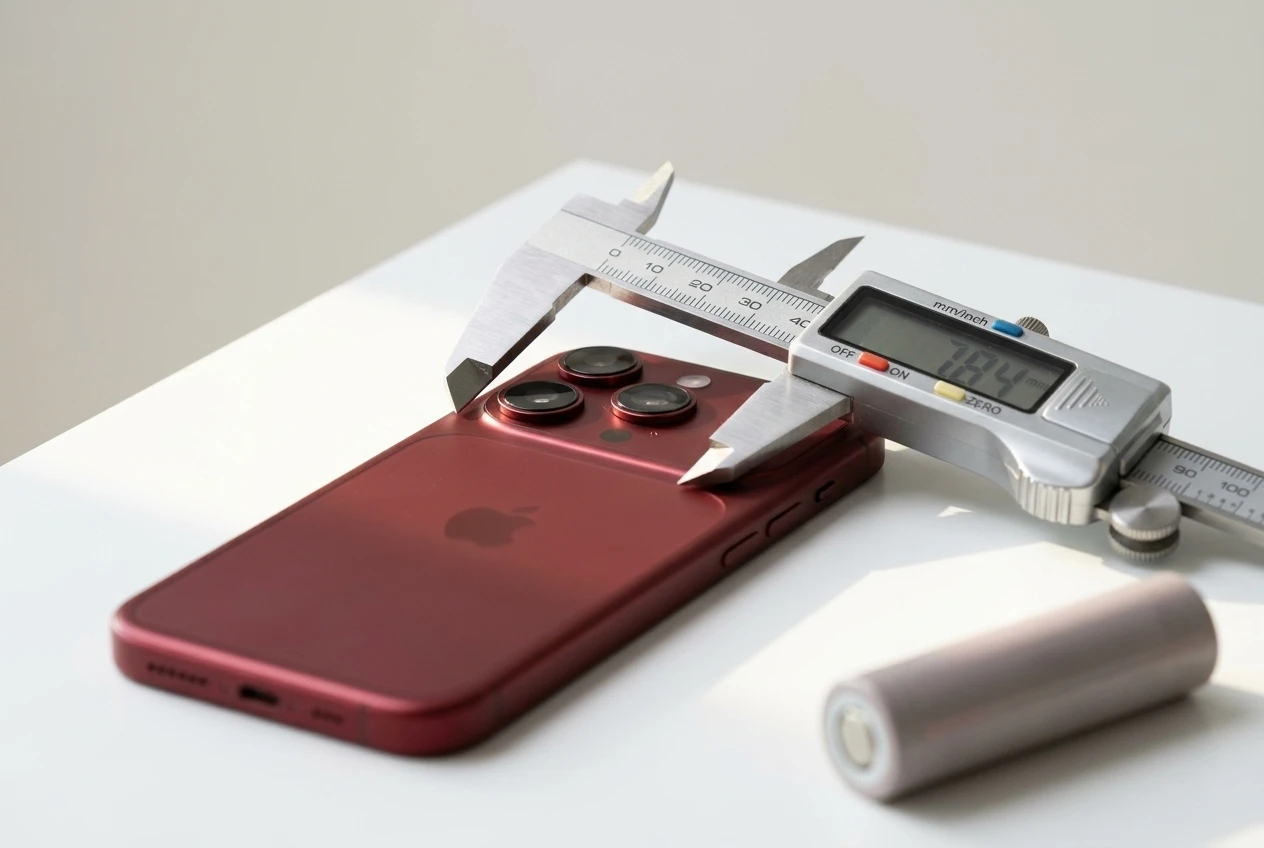
Apple’s iPhone 18 Pro is shaping up as a bigger, heavier phone built around a battery that barely grows, according to the latest supply chain leaks. Reports point to a new Dark Cherry finish, a 2 nanometer A20 Pro chip and camera upgrades, though Apple has confirmed none of it.
The numbers now leaking out are more modest than the headlines suggest. Battery capacity on the Pro Max is tipped to rise by roughly 2 percent. The body carrying it is expected to grow thicker and heavier, and separate cost analyses now point to a higher price tag this fall.
A Dark Cherry Finish Leads a Quiet Redesign
The most talked about leak is cosmetic. Multiple reports describe a Dark Cherry option, a deep and muted red said to replace the Cosmic Orange finish currently sold on the iPhone 17 Pro. A Macworld contributor reported that a trusted source had specifically identified the shade for the new lineup.
Alongside Dark Cherry, leakers expect the Pro models to come in three more finishes.
- Light Blue, a pale tone carried over from earlier leaks
- Silver, the lineup’s neutral, reflective option
- Dark Grey, tipped to replace the standard black finish
Apple could still trim the list before production locks in. The company has introduced a new signature color with almost every Pro generation, which is part of why the swap draws so much attention months before launch.
Structurally, little is expected to change. The flat edge frame and triple rear camera arrangement are tipped to carry over, with a cleaner two tone finish around the camera housing and a camera module that grows slightly to fit upgraded hardware.
Camera and Display Hold Steady, Mostly
The rear camera system is expected to keep its triple 48 megapixel setup rather than add resolution. Leakers instead point to upgraded sensors and processing meant to improve low light shots, video recording and how quickly the phone captures an image.
Some leaks go further, describing a variable aperture main camera that could widen or narrow depending on the light. Others describe the Dynamic Island shrinking by as much as 35 percent as Apple reportedly moves part of the Face ID sensor stack under the display, though other leakers put the reduction closer to 25 to 30 percent.
Screen sizes are not expected to move. The iPhone 18 Pro is tipped to keep a 6.3 inch display, with the Pro Max continuing at 6.9 inches.
The Battery Barely Grows
Battery capacity is where the leaks get interesting, because the gains are smaller than the marketing framing implies. One widely cited leaker known for a mixed track record put the US iPhone 18 Pro at 4,288 mAh, up from 4,252 mAh on the iPhone 17 Pro. A separate Weibo based leaker pegged the Pro Max at 5,100 to 5,200 mAh, up from 5,088 mAh on the iPhone 17 Pro Max.
| Model | Prior Battery (US) | Leaked Battery (US) | Approximate Change |
|---|---|---|---|
| iPhone 17 Pro to iPhone 18 Pro | 4,252 mAh | 4,288 mAh | Under 1% |
| iPhone 17 Pro Max to iPhone 18 Pro Max | 5,088 mAh | 5,100 to 5,200 mAh | About 2% |
PhoneArena’s own testing ranks the current iPhone 17 Pro 96th for battery life among phones it has tested over the past two years, with a composite score of 6 hours and 42 minutes. A cell that grows by roughly 2 percent will not move that ranking much on its own, which is why most of the expected runtime improvement is pinned on chip efficiency rather than a bigger can of chemistry.
Apple already knows what a small battery costs it in reviews. CNN’s testing of the iPhone Air flagged its short runtime as a defining weakness of that design just months after launch.
Why the Pro Line Is Putting On Weight
Leaker Ice Universe says the extra battery could make the iPhone 18 Pro Max about 0.25 millimeters thicker and 7 grams heavier than its predecessor. That is not a huge jump on paper. It is a notable reversal for a company that spent the past year selling thinness as the headline feature of its lineup.
Apple is reportedly sticking with an aluminum frame rather than returning to titanium, and dummy units show the camera plateau on the Pro Max growing from around 11.23 millimeters to 11.54 millimeters. That change is tied more to the rumored variable aperture mechanism than to the battery itself, according to leak trackers, with the rest of the body staying about the same thickness.
Apple’s own recent history shows why a few grams matters to how a phone gets reviewed. Weighing only 17.1% more than the iPhone Air, the standard iPhone 17 already showed how little separates a thin phone from a regular one once a case goes on, according to Tom’s Guide testing.
TSMC’s Priciest Node Yet
The other headline component is the A20 Pro chip, expected to be built on TSMC’s 2 nanometer process, a jump from the 3 nanometer node used since 2023. Reports point to a 15 percent CPU boost and roughly 30 percent better efficiency over the current A19 Pro, gains Apple is expected to lean on heavily since the physical battery barely grew.
That performance comes at a price. Early rumors pegged 2 nanometer wafers rising by as much as 50 percent over 3 nanometer pricing, but wafer prices rising 10 to 20 percent instead is what later supply chain reporting settled on, putting 2 nanometer wafers around $30,000 against roughly $25,000 to $27,000 for current 3 nanometer production.
Market research firm Counterpoint Research estimates the bill of materials for a 1TB iPhone 18 Pro Max will rise by nearly $300 compared with the iPhone 17 Pro Max. Memory is the biggest single driver of that increase, with NAND flash alone projected to exceed $250 on the 1TB model. The shift to a 2 nanometer chip is described as the second largest contributor, ahead of camera and display changes.
The iPhone Air Already Paid This Price
None of this happens in a vacuum. Apple’s iPhone Air, released to fanfare over its thinness, has spent months absorbing criticism over exactly the tradeoff the Pro line now appears to be correcting.
The trade-off between that impressively thin design and the compromised battery life is a dealbreaker for heavy users.
Tech reviewer Mark Ellis wrote that after living with the iPhone Air for months. He had planned to carry the phone for a full year. He lasted two months before switching back to a Pro Max.
AppleInsider’s own three month test found the Air holding about 20 percent charge by 8 p.m., after coming off the charger 12 hours earlier during a day of heavy photo taking, calls and streaming. That is the exact profile of use a Pro buyer expects a phone to survive without a second thought.
None of the iPhone 18 Pro leaks describe anything close to the Air’s compromises. But the direction is unmistakable: a Pro lineup that never needed to sacrifice battery for shape is nonetheless getting thicker and heavier the same year the company’s thinnest phone took the brunt of that exact criticism.
What Will the iPhone 18 Pro Cost?
Component costs and retail prices are not the same thing, and analysts are not close to agreement on where either one lands. Apple CEO Tim Cook has already told the Wall Street Journal that “Unfortunately, price increases are unavoidable” given pressure across the memory chip market.
- Counterpoint Research expects an average $200 retail increase, weighted toward high storage tiers rather than a flat hike across the lineup.
- TechInsights estimates Apple may need up to $270 more per unit to protect margins, implying a starting price between $1,299 and $1,369, up from the iPhone 17 Pro’s $1,099.
- JPMorgan projects a far smaller impact, roughly a 5 percent rise in base model component costs to near $540, citing savings from Apple’s in house C2 modem.
- IDC revised its own forecast to a $100 to $200 increase for Pro and Pro Max models after Apple’s June price hikes on other products.
That last point matters. On June 25, Apple raised prices on 14 products, including every Mac and iPad model, the Apple TV, HomePod, HomePod mini and Vision Pro, blaming a memory supply shortage tied to AI data center demand. iPhone, Apple Watch and AirPods pricing was left untouched in that round. Analysts widely expect the iPhone 18 Pro to be next.
Apple’s iPhone 18 Pro and Pro Max are expected to launch in September alongside the company’s first foldable iPhone, with the standard iPhone 18 reportedly held back until spring 2027.
Frequently Asked Questions
When Will the iPhone 18 Pro Actually Launch?
Leaks point to a September 2026 debut alongside Apple’s first foldable iPhone. The standard iPhone 18 is reportedly being held back until spring 2027, splitting Apple’s usual single fall launch into two separate windows for the first time.
What Is Gate All Around Transistor Technology?
It is the transistor design TSMC is introducing with its 2 nanometer node, wrapping the gate material around all sides of the channel instead of three sides. TSMC has said the approach can deliver a 10 to 15 percent performance boost or a 25 to 30 percent cut in power use compared with its current 3 nanometer process, depending on how a chipmaker tunes it.
Has Apple Already Raised Prices on Other Products in 2026?
Yes. On June 25, Apple raised prices on 14 products, including every Mac and iPad model, the Apple TV, HomePod, HomePod mini and Vision Pro, citing a memory chip shortage. iPhone, Apple Watch and AirPods pricing was left unchanged in that round, which analysts widely expect to change with the iPhone 18 Pro.
What Exact Colors and Shades Are Tied to the Leaks?
Leakers have attached specific Pantone reference codes to each rumored finish: Dark Cherry as Pantone 6076, Light Blue as Pantone 2121, Silver as Pantone 427C and Dark Grey as Pantone 426C. Apple has a history of trimming colors before production, so the final lineup could still change.
How Reliable Are These iPhone 18 Pro Leaks?
It varies by source. Analysts like Ming-Chi Kuo and Jeff Pu have long running, largely accurate records on Apple’s supply chain, while at least one leaker cited for battery figures has what AppleInsider describes as only a mixed track record. Treat exact numbers as estimates until Apple confirms anything.

-
 TECH1 year ago
Where Garmin Watches are Made and How They are Assembled
-

 AUTO3 months ago
Tesla’s Roadster Is ‘a Few Weeks Away,’ Says Its Chief Designer
-
 NEWS10 years ago
Samsung Releases Galaxy Note7 TV Ad as Reddit AMA Leaks Specs
-
 NEWS10 years ago
Android 7.0 Nougat Rolls Out To Nexus Devices With New Emoji, Features
-
 FINANCE9 years ago
Cardano Price Surges as ADA Enters the Crypto Top Ten List
-
 NEWS10 years ago
Pre-Order the First Camera Made for Facebook Live Streaming Video
-
 FINANCE1 year ago
Binance Suspends Trading and Withdrawals for a System Upgrade
-
 FINANCE9 years ago
RChain Price Jumps Nearly 150% to a New All-Time High of $2.03