NEWS
GPT-Image 2 Bakes EU AI Act Compliance Into Every Pixel It Ships

OpenAI’s gpt-image-2 went live on April 21, 2026, and it arrives with three features that together rewire the economics of commercial image production: 99 percent character-level text accuracy across Latin, CJK, Hindi and Bengali scripts; entity persistence across up to eight panels from a single prompt; and a C2PA-compliant invisible watermark baked at generation rather than added in post. The model ships natively inside ChatGPT, Codex and the API with no separate billing tier.
The launch lands a little over three months before Article 50 of the EU AI Act takes force on August 2, 2026, the date that obliges every provider of synthetic image, audio, video or text content to mark outputs in a machine-readable format. OpenAI’s timing is not coincidence. It is moat-building dressed as compliance.
The 99 Percent Tell That Just Closed
Typography was the last reliable visual giveaway in AI-generated commercial imagery. Mangled menu boards. Garbled book spines. UI mockups with letters that dissolved on close inspection. That tell is, for practical purposes, gone.
OpenAI’s launch documentation puts character-level text accuracy at roughly 99 percent across Latin, Chinese, Japanese, Korean, Hindi and Bengali scripts, with above-95 percent rendering in more than a dozen languages. Independent benchmarks back the claim: the Artificial Analysis text-to-image leaderboard places gpt-image-2 at an Elo of 1,332, ahead of Midjourney v7, FLUX.2 max and Google’s Nano Banana 2.
For comparison, Midjourney v7 still hovers near 30 percent character-level text accuracy on the same external tests. That is the gap an art director will feel inside an afternoon.
Why It Matters for Branded Work
Packaging mockups, retail signage, product UI shots and infographic drafts were the categories where studios kept a human in the loop simply to fix lettering. Sam Altman framed the leap directly during the launch livestream, calling Images 2.0 “a huge step forward; this is like going from GPT-3 to GPT-5 all at once.”
Why the Watermark Lands Three Months Before Brussels
Every gpt-image-2 output ships with a C2PA Content Credentials manifest, the open provenance standard now backed by more than 6,000 members including Adobe, Microsoft, Sony, Intel, the BBC and the major camera manufacturers. The signature is cryptographically bound to the model output and is paired with imperceptible pixel-level marks, the multi-layered approach the European Commission’s draft Code of Practice on AI-Generated Content recommends.
Post-processing watermarks strip on a JPEG re-save. Infrastructure-level marks survive most compression, resizing and re-upload cycles. That distinction is the entire reason regulators were skeptical of voluntary industry pledges in 2024 and 2025.
Compliance is now a feature you cannot turn off. For startups building on the API commercially, the watermark functions as both a legal shield against a Brussels enforcement action and a business constraint, because every output is permanently traceable to the API key that produced it. A marketing agency cannot wash an output and pretend it was shot in studio.
“Images 2.0 is a huge step forward; this is like going from GPT-3 to GPT-5 all at once,” Sam Altman, chief executive of OpenAI, said at the launch livestream.
The $500 to $2,000 Sketch Round Now Costs 21 Cents
Pre-visualisation and concept art are the immediate casualties. Studios pitching animation projects or game environments have spent the last decade paying freelancers $500 to $2,000 per round for the exploratory sketches that feed senior creative decisions. Per-image, gpt-image-2 lists at roughly $0.006 at low quality, $0.053 at medium and $0.211 at high quality at 1024 by 1024 resolution, based on OpenAI’s published API token rates of $5 per million text input tokens, $8 per million image input tokens and $30 per million image output tokens.
That is not a margin compression. It is an order-of-magnitude reset.
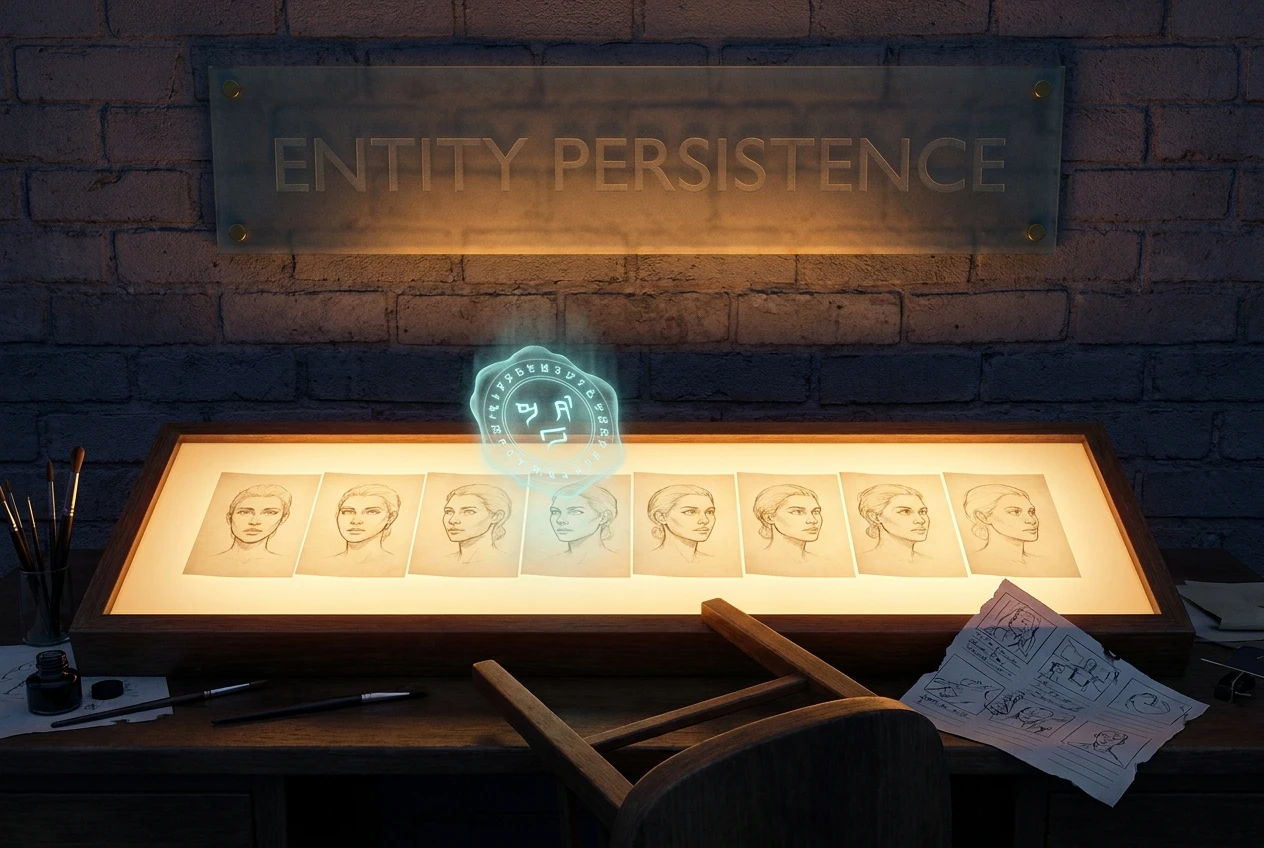
The math was already brutal before this release. Industry surveys put enterprise AI art tooling at $500 to $1,000 per month for an indie studio handling 5,000 assets, against $100,000 to $200,000 for a comparable freelance run, a saving of roughly 94 to 97 percent. Eight-panel entity persistence, with consistent characters and props across a sequence, removes the last technical reason a director would commission a junior artist for a storyboard pass.
Who Survives the Cut
- Senior art directors. Franchise-defining stylistic vision and final-mile quality control still need a named human in the credits.
- Hybrid technical artists. The roles emerging at GDC 2026 panels combine Houdini, Unreal, prompt engineering and basic data work in one job description.
- Junior concept artists. The volume layer that used to feed senior decisions is the layer the model targets most precisely.
The mood inside studios reflects it. According to the Game Developers Conference 2026 developer survey, 52 percent of game developers now view generative AI negatively, up from 30 percent a year earlier. One veteran concept artist, quoted in Aftermath’s reporting on AI inside game studios, described the technology as “an overwhelmingly negative and demoralizing force in my own personal workplace, no question about it.”
Where the Arena Numbers Show the Gap
The Arena Elo gap is the largest single-release jump the leaderboard has tracked. OpenAI’s release notes claim a +242 Elo lead over Google’s Nano Banana 2. External tracking from Artificial Analysis pegs the absolute gap a touch smaller, but still places gpt-image-2 ahead of every closed and open-weight competitor on text rendering, single-image editing and multi-image consistency.
| Model | Arena Elo (Apr 2026) | Text Accuracy | Multi-image Consistency |
|---|---|---|---|
| gpt-image-2 | 1,332 | ~99% | 8 panels, native |
| GPT Image 1.5 | 1,270 | ~95% | 4 panels |
| FLUX.2 max | 1,205 | ~70% | Limited |
| Midjourney v7 | 1,180s range | ~30% | Style-locked, not entity-locked |
Midjourney still wins on artistic stylisation in several aesthetic categories, a position its designer-heavy user base will defend. For commercial workflow use cases, the leaderboard now belongs to OpenAI.
How the Stack Locks Developers In
The deepest competitive feature of gpt-image-2 is not any single capability. It is the unified context across the rest of OpenAI’s stack.
A coding agent inside Codex can drop an image into a conversation, reason about its content using the same model that generated it, and ship a revised version in the same session without a separate orchestration layer. Marketing tools built on the Responses API inherit that chain automatically. A standalone tool, even a better-tuned one, has to rebuild that plumbing every time.
Bundling is the moat. The bet is that capability sitting inside an existing workflow is stickier than the best standalone tool, and the early adoption curve since April 21 supports it. Runway and Pika now face the same question on the video side: temporal coherence across still and moving image is the next merge, and gpt-image-2’s architecture is already pointed at that integration.
Frequently Asked Questions
When did gpt-image-2 launch and where can developers access it?
OpenAI released gpt-image-2 on April 21, 2026. The model is available through the OpenAI API under the identifier gpt-image-2 and is also live inside ChatGPT and Codex with no separate subscription tier. Public API access for all developers opens in early May 2026.
How much does gpt-image-2 cost per image?
At 1024 by 1024 resolution, gpt-image-2 costs roughly $0.006 per image at low quality, $0.053 at medium and $0.211 at high quality, based on OpenAI’s posted token rates of $5 per million text input tokens, $8 per million image input tokens and $30 per million image output tokens. Cached image inputs drop to $2 per million tokens.
What is C2PA and why does it appear in every gpt-image-2 output?
C2PA is the Coalition for Content Provenance and Authenticity, an open standard backed by Adobe, Microsoft, Sony, Intel, the BBC and the major camera manufacturers, with more than 6,000 organisational members as of 2026. Every gpt-image-2 image carries a cryptographically signed C2PA Content Credentials manifest, allowing a verifier to confirm the file was generated by an OpenAI model.
Does gpt-image-2 satisfy the EU AI Act?
The native C2PA marking and pixel-level watermark together are designed to satisfy Article 50 of the EU AI Act, which requires AI-generated images, video, audio and text to be detectable as artificially generated in a machine-readable format. Article 50 becomes enforceable on August 2, 2026, and the Commission’s final Code of Practice is expected in June 2026.
What is entity persistence in gpt-image-2?
Entity persistence is the model’s ability to keep characters, objects and brand colour palettes consistent across up to eight images generated from a single prompt. A three-paragraph creative brief can produce a coherent storyboard in which the same face, costume and props recur across every frame, a capability that did not exist at this quality level in late 2025.
The animation pipeline that survived the first wave of generative tools assumed humans would stay in the loop wherever continuity, lettering or rights provenance mattered. As of late April 2026, gpt-image-2 has stripped two of those three assumptions and turned the third into a sales pitch. Whether the resulting industry looks more like film post-production in 2010 or stock photography in 2015 will depend on how quickly studios rewrite the contracts they signed before April 21.

-
 TECH1 year ago
Where Garmin Watches are Made and How They are Assembled
-
 AUTO3 months ago
Tesla’s Roadster Is ‘a Few Weeks Away,’ Says Its Chief Designer
-
 NEWS10 years ago
Samsung Releases Galaxy Note7 TV Ad as Reddit AMA Leaks Specs
-
 NEWS10 years ago
Android 7.0 Nougat Rolls Out To Nexus Devices With New Emoji, Features
-
 FINANCE9 years ago
Cardano Price Surges as ADA Enters the Crypto Top Ten List
-
 NEWS10 years ago
Pre-Order the First Camera Made for Facebook Live Streaming Video
-
 FINANCE1 year ago
Binance Suspends Trading and Withdrawals for a System Upgrade
-
 FINANCE9 years ago
RChain Price Jumps Nearly 150% to a New All-Time High of $2.03