
NEWS
Prairie Farmers Push Back on Agentic AI as Adoption Sits at 1.8%

“Agentic AI” took center stage at the World Agri-Tech Innovation Summit in San Francisco on March 17 and 18, 2026, with organizers branding the gathering the start of an “agentic age” where software stops giving advice and starts making calls. On Prairie farms in Saskatchewan and Manitoba, that pitch landed differently. Statistics Canada pegged AI use in agriculture, forestry, fishing and hunting at 1.8% in the second quarter of 2025, the lowest of any sector it tracks. Two senior agronomists working those fields told reporters the same week that disease forecasting may soon get an AI handoff. Fertility, seeding, and yield calls? Those still belong to the farmer.
What ‘Agentic’ Actually Means in a Combine Cab
Agentic AI is software that takes action, not just software that suggests it. In agriculture that distinction matters because the cost of a wrong “action” can be a missed spray window, a burned-up nitrogen pass, or a whole field of corn.
Ranveer Chandra, chief technology officer of agri-food at Microsoft Research and host of the summit’s opening session, framed the question cleanly: “What does it mean for farmers to have a digital assistant or be managing a set of agents that are doing work for them?” Chandra collected the 2026 Franz Edelman Award at INFORMS in April for the analytics work behind that pitch.
What Microsoft Has Already Shipped
Microsoft’s Project FarmVibes routes satellite imagery through a model called SpaceEye that recovers cloud-blocked pixels. A second model, DeepMC, makes short-term predictions for temperature, humidity, wind speed, and soil moisture at field scale. The open-source toolkit runs on a stack the company calls FarmVibes.Connect, FarmVibes.Edge, and FarmVibes.Bot. None of those modules pulls a planter, opens a valve, or fires a sprayer. They feed advice to the person who does.
The 1.8% Number That Conference Slides Skipped
The gap between summit rhetoric and shop-floor reality is steep. Industry projections that 60% of Canadian farms would use AI sustainability tools by the end of 2025 sit far above the federal floor of 1.8%.
Rural connectivity is part of the story. Only 78.5% of rural Canadians had access to high-speed internet as of 2025. A quarter section that drops signal at the back fence cannot run an autonomous agent at all. The agentic pitch needs bandwidth before it needs trust, and the bandwidth isn’t there yet.
Where AI Already Earns Its Five Bushels
The clearest paying use case landed three weeks before the summit. Pioneer launched its Fungicide Timing Solution on February 25, 2026, an AI model that predicts corn disease onset at the field level and flags the optimal spray window.
Reza Rasourpour, a Corteva Agriscience vice president, told the San Francisco audience the system delivered “upwards of five to 10 bushels per acre improvement when that fungicide application happens at the right time.” Pioneer’s own field data put the gain at 5 bu/A versus standard grower timing and 10 bu/A versus untreated checks. The bundle ties together the Granular Insights timing model, Pioneer corn genetics, and a new three-mode-of-action fungicide called Forcivo. None of it takes the rig out of the operator’s hands.
The Three Barriers Nobody at the Mic Wanted to Solve
One of the few summit voices willing to name the obstacles out loud was Shail Khiyara, CEO of SWARM Engineering. In a session most wire summaries skipped, Khiyara argued the agriculture conversation has stayed too narrow.
“Everyone wants to talk about AI. But not enough people are talking about agentic AI or decision intelligence, which is where the real transformation is beginning.” – Shail Khiyara, CEO, SWARM Engineering
He flagged three obstacles between glossy demos and the back forty:
- Data quality. Farm-level inputs are noisy, incomplete, and rebuilt every season.
- Trust and governance. Farmers want to know why a model picked something, not just what it picked.
- The imagination gap. Veteran operators carry decades of judgment that, in Khiyara’s words, is “rarely structured, codified, or scalable.”
His clearest case study was operational, not agronomic. A Peruvian berry producer coordinating around 10,000 seasonal workers compressed planning cycles from months to minutes using agentic systems. That is the kind of agentic deployment shipping today. Coordination and logistics. Not in-season biology.
Why Fertility Decisions Stay With the Agronomist
Rob Warkentin, a Saskatchewan-based private agronomist, drew the line more sharply than anyone on stage. “AI is a great fit when it comes to things like disease,” he said. “But maybe not so much on fertility recommendations.”
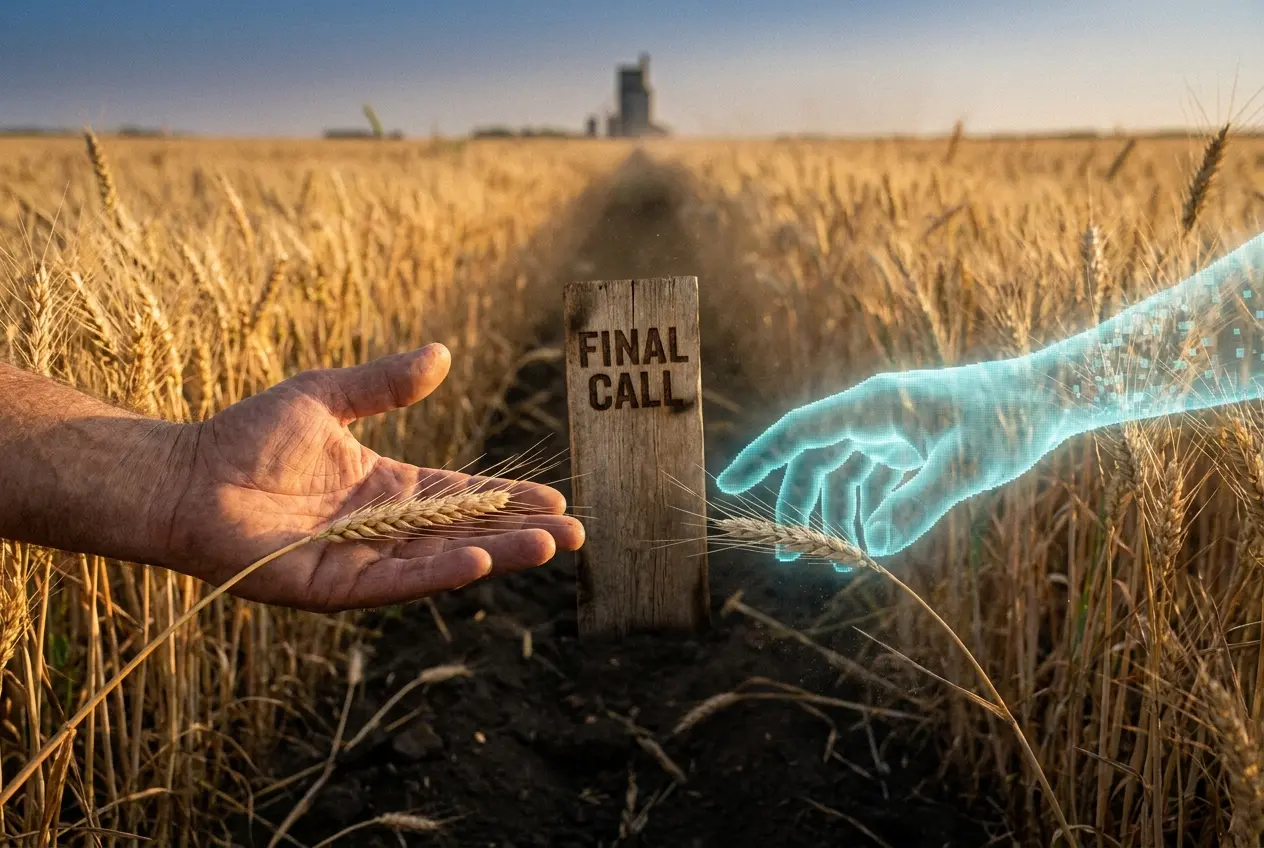
The reason is the cost of being wrong. A missed disease window costs single-digit bushels. A miscalibrated nitrogen call can dent yield and soil for years. Even when farmers trust their agronomist, Warkentin added, “they still want to have the final say.” The trust an AI agent would need to earn isn’t the trust of a calculator. It’s the trust of a person who has walked the same quarter section every May for fifteen years.
The Small-Data Counterpunch From St. Jean Baptiste
Brunel Sabourin, co-owner of Antara Agronomy in St. Jean Baptiste, Manitoba, has built a nationally recognized practice doing the opposite of what the agentic age promises. Antara won first place in Agribusiness Services at Manitoba Ag Days’ Innovation Showcase for an updated peer-group benchmarking service called Insights 2.0, which compares farms inside a tight local radius instead of across continent-scale datasets.
“The biggest overarching challenge that I see is being able to capture all of the variability in a field and being able to make proper decisions with that,” Sabourin said. He uses AI heavily, just for the lower-rung work: drafting reports, sorting benchmarking files, testing variable relationships that would have taken weeks by hand. “Agronomy is an art as much as it is a science,” he said. The art part stays human.
What the Summit Crowd Didn’t Hear
The roughly 1,700 attendees who packed the San Francisco agenda on March 17 and 18 heard a steady drumbeat that agentic AI was inevitable. They heard less about the field-level constraints that have left Canadian agriculture’s federal adoption number stuck below two percent.
The clearest tell came from how the practitioners on stage drew their own boundaries. Disease forecasting, yes. Seasonal labor coordination, yes. Replacing the farmer’s call on fertility, seed timing, and harvest decisions: not yet. Even the most enthusiastic vendors quietly accept that the agent ends at the cab door.
For now the Prairie verdict is quiet but unanimous. The combine still answers to the person in the seat, and the AI agent rides shotgun.

-
 TECH1 year ago
Where Garmin Watches are Made and How They are Assembled
-

 AUTO3 months ago
Tesla’s Roadster Is ‘a Few Weeks Away,’ Says Its Chief Designer
-
 NEWS10 years ago
Samsung Releases Galaxy Note7 TV Ad as Reddit AMA Leaks Specs
-
 NEWS10 years ago
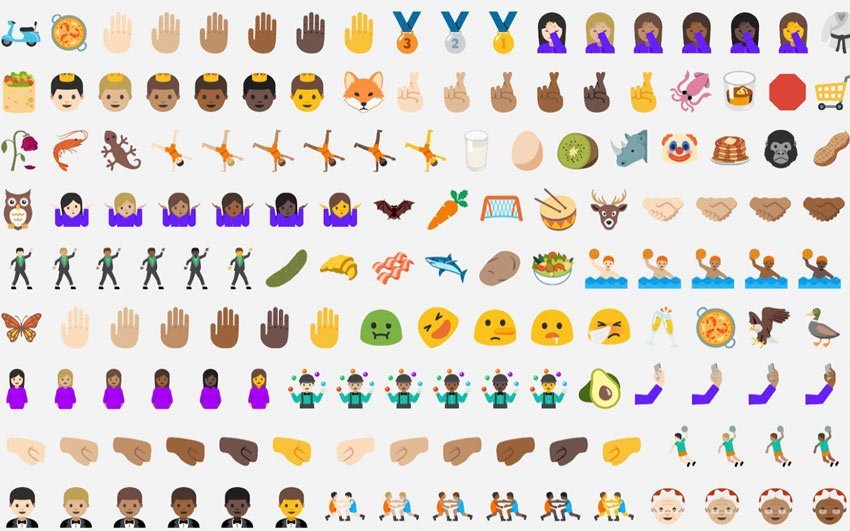
Android 7.0 Nougat Rolls Out To Nexus Devices With New Emoji, Features
-
 FINANCE9 years ago
Cardano Price Surges as ADA Enters the Crypto Top Ten List
-
 NEWS10 years ago
Pre-Order the First Camera Made for Facebook Live Streaming Video
-
 FINANCE1 year ago
Binance Suspends Trading and Withdrawals for a System Upgrade
-
 FINANCE9 years ago
RChain Price Jumps Nearly 150% to a New All-Time High of $2.03