
HEALTH
FSSAI Red Hexagon Labels Set to Force Packaged Food Reformulation
After Supreme Court pressure FSSAI tables red hexagonal front-of-pack labels for high sugar salt fat packaged foods.

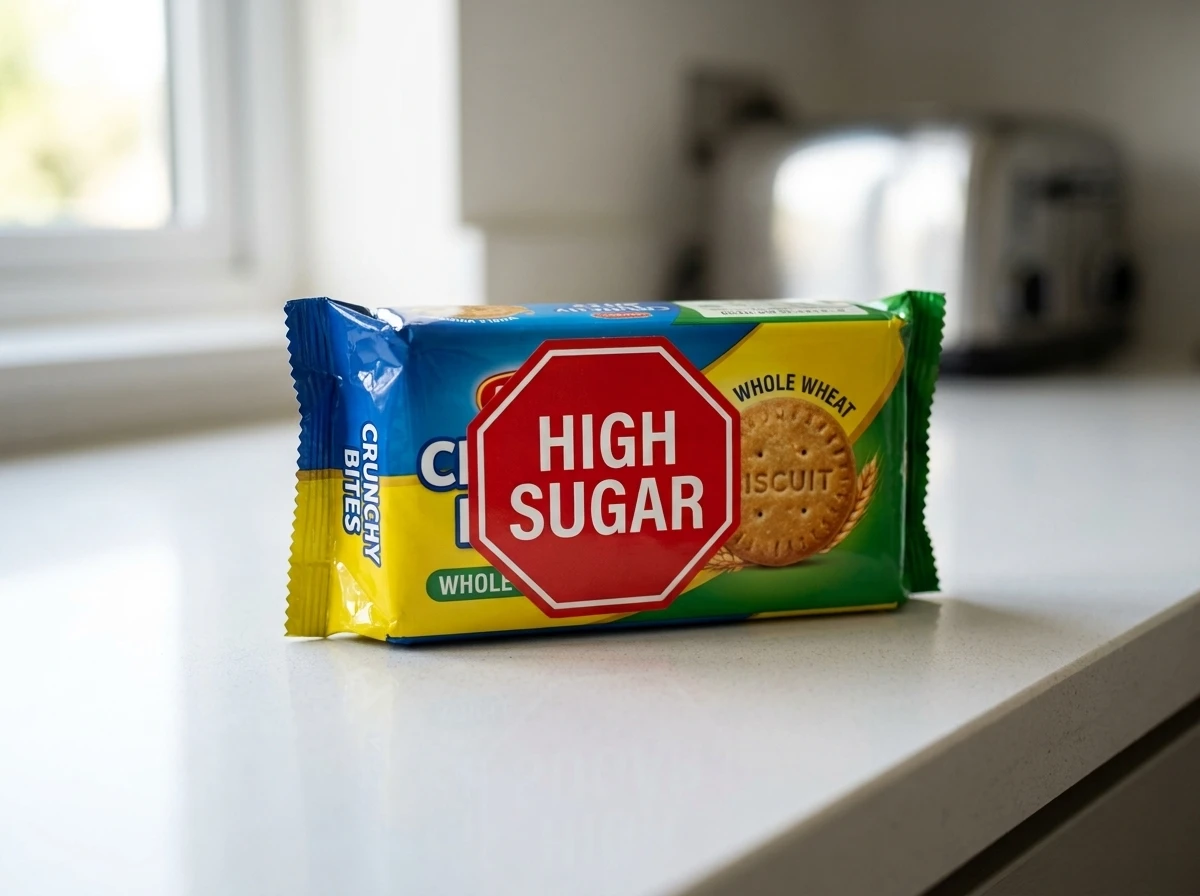
The Food Safety and Standards Authority of India has proposed red hexagonal warning labels on the front of packaged foods high in added sugar, salt or saturated fat, placing the plan before the Supreme Court in a six-page compliance affidavit on Friday.
The labels would appear on products exceeding thresholds for any two or more of those nutrients and carry clear declarations such as High Fat, High Sugar, High Salt or Highly Sweetened Beverage. Thresholds draw from the ICMR-NIN Dietary Guidelines for Indians 2024. The move follows a sharp Supreme Court rebuke and aims especially at children and other vulnerable buyers.
The affidavit marks a clear shift from earlier filings that favoured only numerical daily-limit tables on the back of packs. Those tables left ordinary shoppers to interpret percentages alone. The red hexagon is meant to reverse that gap with a single glance cue on the front face of the pack.
What the Red Hexagon Proposal Contains
FSSAI described the labels as pictorial, simple, prominent and easily comprehensible. The red hexagon sits one font point larger than the back-of-pack nutrition table. Phase one covers products high in two or more nutrients plus specified sweetened beverages. Phase two extends the rule to products high in any single nutrient.
The regulator said the phased approach gives industry time to reformulate recipes while protecting the right to information. Single-ingredient foods and those inherently rich in fat, sugar or salt stay exempt. The affidavit lists ghee, edible oil, salt, sugar, jaggery and honey among them. Those items remain under other labelling rules.
- Phase I: high in two or more nutrients of concern, plus listed sweetened beverages
- Phase II: high in any one of the specified nutrients
- Exemptions: single-ingredient and inherently high items such as ghee, oils, pure sugar and honey
- Display: red hexagon with matching High declaration, larger font than nutrition table
The size rule matters in crowded aisles. A hexagon larger than the nutrition table cannot be missed when a shopper reaches for a snack. Matching High declarations remove any doubt about which nutrient triggered the mark.
Advocate Rajiv Shankar Dwivedi, counsel for petitioner 3S And Our Health Society, said the decision is not totally satisfactory and that the group will file a rejoinder after public comments.
Public comments will test whether the two-nutrient trigger in phase one is strict enough. The petitioner has already signalled that the current draft leaves room for products high in only one nutrient of concern to escape the first wave of labels.
Supreme Court Forced the Reversal
Just two weeks earlier a bench of Justice J.B. Pardiwala and Justice K. Vinod Chandran had criticised FSSAI for dropping interpretive warning labels in favour of a numerical table of daily recommended limits. The court asked whether the regulator was succumbing to food-industry pressure and whether India should remain underdeveloped by rejecting international standards.
Should India remain an underdeveloped country? The world should know India is concerned about the health of its citizens, more particularly children.
Supreme Court bench of Justices J.B. Pardiwala and K. Vinod Chandran
The bench warned that a judicial order would follow if authorities failed to act. It stressed citizen health, especially for children drawn to packaged snacks. The PIL by the Kerala-based NGO seeks mandatory front-of-pack warnings for high-fat, sugar and salt foods. Earlier FSSAI affidavits had proposed only back-of-pack style numbers, which the court found hard for ordinary buyers to use.
The sequence of pressure is short and public. Industry meetings in March favoured softer cues. The regulator then leaned toward numerical tables. The bench rejected that path and tied national reputation to child health. The Friday affidavit answers that warning with a concrete design.
- March: Major firms meet the regulator and oppose colourful warning symbols
- Weeks before the affidavit: Bench criticises the shift to numerical daily-limit tables
- Friday: FSSAI files the six-page compliance affidavit proposing red hexagons
That timeline leaves little space for further delay without inviting the judicial order the bench already flagged.
Industry Had Pushed Back Hard
Reuters reporting showed that major firms including Coca-Cola and groups linked to Nestlé opposed colourful warning labels in a March meeting with the regulator. Executives called symbols simplistic and ineffective, preferring portion-control advice. One Coca-Cola India executive said it was “very simplistic” to think a symbol would change diets for people who skip ingredient lists. Industry estimates put nearly 80 percent of the more than $100 billion packaged food and beverage market in the high-fat-sugar-salt category, meaning most packs could turn red.
Yet the same companies already use interpretive or traffic-light labels in many European markets. Maggi noodles sold in Britain carry red high-salt warnings even when made in India. Fanta formulations differ sharply: the Indian version carries far more sugar and artificial dye that triggers warnings in Europe. Public anger after those details surfaced, plus court pressure, reversed FSSAI’s earlier retreat.
The contrast is hard to miss. Products made in India already carry stronger front warnings once they leave for stricter markets. The same factories can adjust recipes when the destination demands it. The affidavit now brings that demand home.
- Nearly 80 percent of the packaged food and beverage market falls in the high-fat-sugar-salt category
- Market size exceeds $100 billion
- European packs of the same brands already carry interpretive or traffic-light marks
- Indian Maggi and Fanta formulations differ from those sold under warning rules abroad
Portion-control advice, the industry preference, still requires a shopper to read and calculate. A red hexagon does not. That difference drove both the court rebuke and the public reaction once cross-market formulation gaps became known.
Thresholds Drawn From ICMR 2024 Guidelines
The proposal ties “high” status to the threshold criteria for HFSS foods per 100g in the ICMR-NIN guidelines. Those guidelines flag foods prepared with excessive added fat, sugar or salt and link regular ultra-processed intake to diabetes, hypertension and heart disease. ICMR has said unhealthy diets account for 56.4 percent of India’s disease burden.
| Nutrient (per 100 g/ml) | Solids threshold | Liquids threshold |
|---|---|---|
| Added sugar | 3 g | 2.0 g |
| Salt (sodium) | 625 mg | 175 mg |
| Added fat | 4.2 g | 1.5 g |
| Energy (kcal) | 250 | 70 |
Solids use roughly 5 percent energy from added sugar and 15 percent from added fat as cut-offs. Liquids use higher relative sugar limits because of natural sugars in juices and milk. Products crossing two or more lines in phase one get the red hexagon.
The per-100 g and per-100 ml base keeps comparisons fair across pack sizes. A small snack and a family pack face the same density test. Energy caps sit alongside the three nutrient caps so a dense product cannot hide behind a modest sugar or salt number alone.
Phase one still requires two or more crossings before the hexagon appears. A product high only in salt, for example, waits for phase two. That staging is the main lever industry receives for staged reformulation.
Chile’s Stop Signs Show What Follows
Chile introduced black octagonal “high in” stop-sign labels in 2016. Studies later found households bought far less of the flagged nutrients. One evaluation of phase two showed Chile households bought 37 percent less sugar, 22 percent less sodium, 16 percent less saturated fat and 23 percent fewer calories from labelled products. Sugary-drink purchases fell nearly 25 percent in the first 18 months. Industry compliance reached 94 percent. Companies reformulated: the share of the food supply needing warnings dropped from 71 percent to 53 percent by the strictest phase.
| Measure | Change after labels |
|---|---|
| Sugar purchased from labelled products | 37 percent less |
| Sodium purchased | 22 percent less |
| Saturated fat purchased | 16 percent less |
| Calories from labelled products | 23 percent fewer |
| Sugary-drink purchases (first 18 months) | nearly 25 percent lower |
| Industry compliance | 94 percent |
| Share of supply needing warnings | 71 percent down to 53 percent |
Parents reported children refusing packs with multiple stop signs. The Indian proposal uses a red hexagon instead of a black octagon and starts with a two-nutrient trigger, yet the logic is the same. Clear front warnings change both shopping and recipes.
The Chilean drop in the share of products needing warnings shows reformulation at scale is possible once the label carries commercial cost. Compliance above 90 percent also shows that industry can meet a clear rule when the design is fixed and enforced.
How Reformulation Becomes the Commercial Goal
Once a red hexagon marks the majority of packs in a more than $100 billion market, avoiding that mark turns into a product goal. Reformulation under the ICMR thresholds lets a brand keep shelf presence without the warning. Multinationals already run dual recipes for Europe and India; aligning the Indian recipe with the stricter one is an operational choice they have made before.
Smaller domestic firms face the same thresholds with fewer overseas reference recipes. Their path is longer, yet the phase-one two-nutrient trigger still grants time. Phase two narrows that window by catching single-nutrient excesses.
Exemptions for ghee, edible oil, salt, sugar, jaggery and honey keep whole ingredients outside the hexagon system. The pressure concentrates on multi-ingredient packaged foods and the listed sweetened beverages, the same segment that dominates the high-fat-sugar-salt share of the market.
Chile’s experience supplies the commercial lesson already on record. When the share of products needing warnings fell from 71 percent to 53 percent, the change came from recipe work, not from shoppers alone. Indian firms now face a similar incentive structure once the hexagon is notified.
Why Children Sit at the Centre of the Case
The Supreme Court bench returned again and again to children drawn to packaged snacks. The PIL frames the same group as the core beneficiary of mandatory front warnings. Back-of-pack numerical tables failed that test because children and hurried parents rarely pause to parse daily-limit percentages.
A red hexagon one font point larger than the nutrition table meets the child at eye level on the shelf. Multiple hexagons on a single pack, once phase two arrives, compound the signal the way multiple Chilean stop signs did when parents saw children refuse those packs.
ICMR’s link between regular ultra-processed intake and diabetes, hypertension and heart disease supplies the health stakes. Unhealthy diets already account for 56.4 percent of the disease burden. Front warnings cannot rewrite that burden alone, yet they alter the first point of choice where a child or parent decides what enters the basket.
The Highly Sweetened Beverage declaration sits inside the same child-focused logic. Drinks with high added sugar are easy to consume quickly and repeatedly. Flagging them on the front face closes a gap that ingredient lists on the reverse never reached.
Shoppers, Children and the $100 Billion Market
FSSAI said the system will help informed choices, particularly among children. Obesity and diabetes projections already alarm health researchers; one Lancet-linked estimate sees hundreds of millions of Indians overweight or obese by mid-century. Back-of-pack tables rarely get read. A red hexagon visible at a glance changes that.
For makers the second-order effect is costlier. Reformulation to stay under thresholds preserves shelf space without the warning. Avoiding the label becomes a commercial goal. Multinationals already reformulate for stricter markets abroad; India will now demand the same. Smaller domestic firms face the same pressure but with less global experience.
Shoppers gain a uniform cue across brands and categories. The hexagon does not rank products as good or bad beyond the nutrient thresholds already set by ICMR. It simply marks density above the cut-offs for sugar, salt, fat or energy. That narrow task matches what the court demanded when it rejected hard-to-use numerical tables.
The affidavit is still only a proposal. Final regulations need notification, public consultation and likely further court scrutiny. The petitioner plans a rejoinder. Yet the direction is set: after years of delay and lobbying, front-of-pack warnings are coming, and the packaged-food aisle will look different once they do.

-
 TECH1 year ago
Where Garmin Watches are Made and How They are Assembled
-

 AUTO3 months ago
Tesla’s Roadster Is ‘a Few Weeks Away,’ Says Its Chief Designer
-
 NEWS10 years ago
Samsung Releases Galaxy Note7 TV Ad as Reddit AMA Leaks Specs
-
 NEWS10 years ago
Android 7.0 Nougat Rolls Out To Nexus Devices With New Emoji, Features
-
 FINANCE9 years ago
Cardano Price Surges as ADA Enters the Crypto Top Ten List
-
 NEWS10 years ago
Pre-Order the First Camera Made for Facebook Live Streaming Video
-
 FINANCE1 year ago
Binance Suspends Trading and Withdrawals for a System Upgrade
-
 FINANCE9 years ago
RChain Price Jumps Nearly 150% to a New All-Time High of $2.03