BUSINESS
Adani’s Mumbai Rebuild Puts International Slots in Play
Adani still plans a 5 million passenger cut at Mumbai from summer 2027, a squeeze that would feed international flights into Navi Mumbai.

Adani-controlled Mumbai International Airport Ltd told airlines on October 19 that it will still cut about 5 million passengers a year from the summer 2027 timetable.
Carriers may move international flights to Navi Mumbai International Airport, suspend them until Terminal 1 reopens by 2030, or look elsewhere. The Airline Operators Committee says it has not agreed to give up Mumbai slots.
Adani Leaves Airlines Three Ways Out of Mumbai
The latest note from Mumbai International Airport Ltd, sent on October 19, answers a committee letter that rejected any one-sided cut in slots or any forced move of international flying. MIAL pointed back to an October 13 session and said each airline is free to set its own summer 2027 plan.
In that note the operator put the capacity problem in one line. “As we explained in the meeting on October 13, approx 5 million passengers per year capacity needs to be restricted at the Mumbai airport from S27 schedule,” MIAL wrote. S27 is the summer 2027 season, which starts on March 28, 2027.
THE CHOICES MIAL PUT IN WRITING
- Relocate: Move some or all international operations to Navi Mumbai International Airport.
- Suspend: Park those Mumbai services until Terminal 1 is rebuilt and open again by 2030.
- Go elsewhere: Find another airport, or drop the flights for the rebuild years.
MIAL also said talks with its Airport Operations Control Centre are voluntary, and that joining a planning call is not the same as agreeing to the cut. The Airline Operators Committee had already warned that one-on-one meetings must not be read as consent for the whole group.
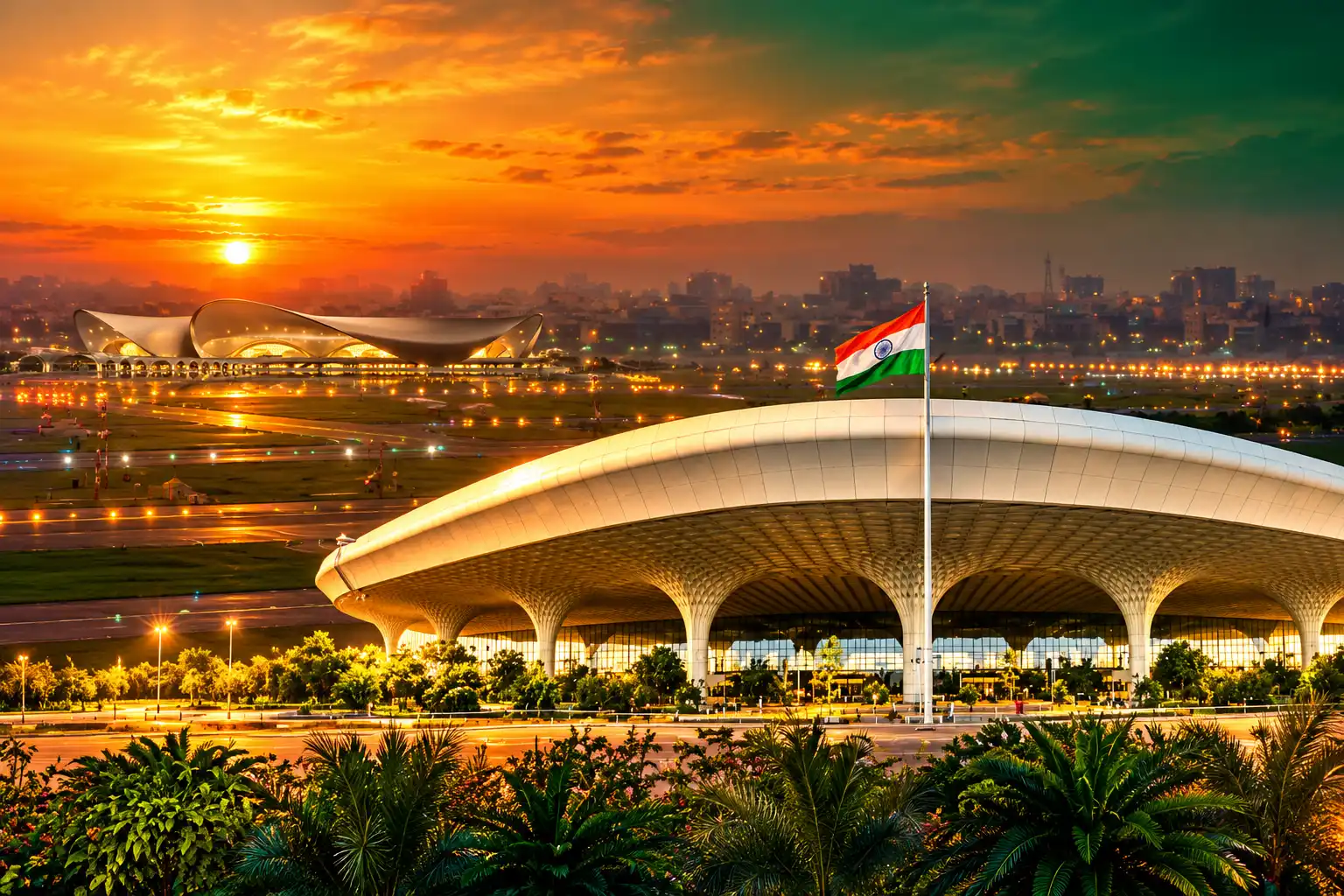
The Same Group Runs Both Airports
That menu only makes sense if Navi Mumbai is a genuine second home. It is, on paper. It is also the other airport in the same group.
Adani Airport Holdings Ltd controls Mumbai International Airport Ltd, which operates Chhatrapati Shivaji Maharaj International Airport. A CRISIL rating note on the new airport describes Navi Mumbai International Airport Ltd as a 74 percent subsidiary of Mumbai International Airport, with the City and Industrial Development Corporation of Maharashtra holding the rest. India Ratings, in a January 2026 note, set out the same chain: Adani Airport Holdings owns 74 percent of MIAL, and MIAL owns 74 percent of the Navi Mumbai company.
So the “choice” is to stay in a shrinking Mumbai, sit out until 2030, or take the flying to a field the same owner is still filling. Alok Anand, chief executive of aircraft lessor adviser Acumen Aviation, put it bluntly after the October 19 note. “Both Mumbai airports are run by Adani, so telling airlines to cut 5 million passengers at Mumbai or move to Navi Mumbai isn’t much of a choice,” he wrote. T1 does need rebuilding, he added, but Mumbai slots are hard to replace, and airlines are right to ask for the capacity numbers first.
Passengers did not move on their own after the new airport opened. A construction squeeze at the old one would move them anyway, which is why the argument is not only about concrete.
Airlines Treat Mumbai Slots as Historic Rights
A slot is the right to use the runway, stands and terminal at a set time. At a jammed airport those times are the scarce asset, and Mumbai is one of the tightest in India.
The Airline Operators Committee has told the operator to stick to the Ministry of Civil Aviation’s May 2013 slot rules and to the International Air Transport Association’s Worldwide Airport Slot Guidelines. It has asked for capacity studies, traffic figures and a written case for taking international flying out of Terminal 2, and it says carriers will not accept a transfer to Navi Mumbai or a cancellation of Mumbai slots without that paper.
The 2013 rules, which India aligned with IATA practice, give an airline historic precedence on a series of slots if it can show it operated them under the 80 percent use-it-or-lose-it rule in the last matching season. IATA’s own primer is colder still about property. A slot, it says, is a permission to use airport capacity, not ownership of part of the airport, and an independent coordinator, not the airport company, should hand those permissions out.
That last point sits under this fight. In India the joint-venture operator at Mumbai has long run slot allocation with the Airports Authority of India. MIAL says it will keep and restore historic Mumbai slots once Terminal 1 is open by 2030. Airlines hear a multi-year hole in a right they planned fleets, crews and sales around, at an airport that is not the one being torn down.
The flights MIAL first marked for removal sit at Terminal 2, the international hall. Terminal 1 is the domestic building due for demolition. The operator’s logic is that T2 must absorb T1’s displaced domestic load, so international flying has to leave. The second effect is obvious: those international services, if they fly at all, land at Navi Mumbai.
Navi Mumbai Still Has One International Route
Navi Mumbai International Airport opened to passengers on December 25, 2025, after Prime Minister Narendra Modi inaugurated the first phase. Phase 1 is built for 20 million passengers a year, with a long-term plan of 90 million across later terminals. Road time between the two airports is still 70 to 90 minutes, and the planned Metro Line 8 link is not in service.
International flying from the new field has barely started. Air India Express began a thrice-weekly Abu Dhabi service on July 15, 2026. October 2026 schedules still show that UAE link as the only foreign country on the board, against dozens of domestic cities.
NAVI MUMBAI’S INTERNATIONAL SHELF
- Phase 1 size: 20 million passengers a year, with a full build planned at 90 million.
- Foreign network now: Air India Express to Abu Dhabi, three flights a week, in a list of 52 destinations in two countries.
- The bait: a 100 percent discount on landing fees for new international flights, plus cash vouchers meant to cover the extra user development fee.
Those sweeteners are the tell. If airlines had wanted the new runway for long-haul work, they would already be there. They stayed at Sahar, and the new airport filled up with domestic flying instead.
Essa Sulaiman Ahmad, Emirates’ senior vice-president for commercial operations for West Asia and the Indian Ocean, said as much in New Delhi on October 14. Asked whether the airline would move a share of its Mumbai flying, he did not hedge.
The airport is not ready. At an airport, you will require a facility for catering. You will require a facility, for example, for cargo warehousing. You will require those elements. Until it gets fully built into an ecosystem, I think it’s going to be difficult for any of the airlines to shift there.
Essa Sulaiman Ahmad, Senior Vice-President, Commercial Operations, West Asia and Indian Ocean, Emirates
He also said Emirates is already using its full bilateral rights into India, so a new airport does not, by itself, create extra flying. People at Navi Mumbai later said the field already handles cargo and has a kitchen that can scale, and that Emirates plates much of its India-UAE catering in Dubai. Air France-KLM has separately objected to splitting an international operation across two airports.
Which Carriers Would Lose the Most Departures?
The first written plan, sent as MIAL prepared the winter season that runs from October 25, 2026 to March 27, 2027, asked 46 airlines to mark flights for a pause from October 25. The pool was 265 of 770 weekly international departures at Terminal 2. The Ministry of Civil Aviation then told the operator to slow down and work up a shared plan.
On October 13, Jeet Adani, director of airports at Adani Airport Holdings, and Arun Bansal, the holding company’s chief executive, met the Airline Operators Committee. A MIAL spokesperson said they promised to respect historic slots and not to disturb the winter timetable. The 265-flight list is still the only public map of who would move first if summer 2027 follows the same arithmetic.
THE FIRST CUT BY AIRLINE
| Airline | Weekly international departures at Mumbai | Marked to move |
|---|---|---|
| IndiGo | 224 | 74 |
| Air India | 100 | 33 |
| Akasa Air | 32 | 11 |
| Emirates | 28 | 10 |
| Etihad Airways | 28 | 10 |
| Air India Express | 21 | 7 |
| British Airways | 21 | 7 |
| All 46 airlines | 770 | 265 |
IndiGo would take the heaviest hit in raw flights. Gulf and European carriers would lose a similar share of thinner Mumbai lists, which is how a city-side long-haul bank turns into a split operation across the harbour.
Only the North Hall Comes Down in 2027
Adani Airport Holdings set out the rebuild on October 3. Mumbai airport handles about 55 million passengers a year. About 5 million of those, or 9 percent, would be taken offline in the first phase, leaving 91 percent of traffic in place. Terminal 1 now handles 15 million passengers a year and is meant to handle 20 million after the work, a 33 percent lift.
Bansal said only the north section of Terminal 1B, about one-third of Terminal 1, comes down first, and that talks with airlines on the hall’s future have run since 2020. He said the plan went to the Airports Economic Regulatory Authority and into the approved tariff order. He also tied the timetable to safety in a 60-year-old building.
91% of Mumbai Airport’s passenger traffic will remain unaffected even as we undertake redevelopment of the age-old infrastructure that was in urgent need of repairs. Only the North Section of Terminal 1B, which accounts for around one-third of T1 of Mumbai Airport’s capacity, is being demolished in Phase 1 to minimise passenger inconvenience and operational disruption. The transition to Navi Mumbai Airport is temporary and does not represent a permanent shift of Mumbai Airport traffic.
Arun Bansal, Chief Executive, Adani Airport Holdings Ltd, company statement, October 3, 2026
He added that waiting longer could hurt safety and convenience, and that Navi Mumbai’s opening is what lets Mumbai rebuild in stages instead of shutting the whole domestic hall.
THE ROAD TO SUMMER 2027
- December 25, 2025: Navi Mumbai International Airport starts commercial flights, with IndiGo’s Bengaluru service as the first arrival.
- July 15, 2026: Air India Express opens the first international passenger route, to Abu Dhabi.
- August 2026: MIAL begins talks on moving about a third of Mumbai’s international flying as part of the Terminal 1 rebuild.
- October 3, 2026: Adani Airport Holdings says the north hall of Terminal 1B will be demolished from January 2027 and that 5 million passengers a year will be taken offline.
- October 6, 2026: The civil aviation ministry meets the operator and airlines and tells MIAL to build a shared plan rather than push the October 25 shift.
- October 13, 2026: Jeet Adani and Arun Bansal freeze winter slots and point the work to summer 2027.
- October 19, 2026: MIAL restates the 5 million passenger cap for S27 and the three options for airlines.
- January 2027: Demolition of the north hall is due to start.
- March 28, 2027: The summer 2027 season starts, the first timetable MIAL says must absorb the cut.
- By 2030: MIAL says Terminal 1 will be open again and historic Mumbai slots will be restored.
That calendar is why the committee keeps asking for hall-by-hall counts. A winter freeze does not explain how Terminal 2 takes Terminal 1’s domestic load unless international slots leave first, and it does not explain how a right frozen until 2030 still counts as historic under an 80 percent use test.
October 28 Turns on Capacity Data
A follow-up meeting is set for October 28. Airlines still want the Terminal 1 timetable, the capacity of each hall, and a path that is not a straight transfer of international flying. The committee has said it will not treat private talks as a group yes.
WHAT WE KNOW
- Winter flying: Historic international slots at Mumbai stay in place through March 27, 2027.
- Operator position: MIAL still plans to restrict 5 million passengers a year from the summer 2027 season.
- Rebuild slice: The north hall of Terminal 1B is due down from January 2027, with historic slots promised back by 2030.
- Common owner: Adani Airport Holdings controls both Mumbai and Navi Mumbai airports.
WHAT IS UNCONFIRMED
- Which flights move: No airline has agreed a summer 2027 transfer list.
- Slot law in a long gap: It is not settled how historic rights survive several seasons of non-use if the 80 percent test is applied strictly.
- Wide-body banks: Emirates and others still dispute whether Navi Mumbai can support full international handling, whatever the passenger terminal looks like.
- Ministry endgame: Civil aviation officials have forced talks, not a verdict, if the October 28 meeting deadlocks again.
The winter timetable stays where it is. On October 28 the two sides meet again, and MIAL has already said the 5 million passenger restriction still stands.

Bulk Scotch Still Faces Full Duty After India’s UK Deal

Typhoon Champi Loops Off Taiwan and Still Injures 527

PM Modi Opens Chinmaya’s AI Guru and Asks for Unity

Mahim Police Hold a JeM Suspect on Enmity Charges

Gold Falls Below $4,000 as Hormuz Oil Hits $117

The iPhone 18 Pro Max Splits Apple’s Fall in Two

OpenAI Calls GPT-6 Astra AGI Then Locks Its Exploits

Clancy Juror Says the Holdout Never Cited Evidence

Trump Claims Hormuz Control as Oil Holds Near $96

Russia Closes the Goethe-Institut Berlin Tried to Save

 NEWS2 months ago
The iPhone 18 Pro Max Splits Apple’s Fall in Two
- NEWS2 months ago
OpenAI Calls GPT-6 Astra AGI Then Locks Its Exploits
- NEWS1 month ago
Clancy Juror Says the Holdout Never Cited Evidence
- BUSINESS2 months ago
Trump Claims Hormuz Control as Oil Holds Near $96
- LIFESTYLE2 months ago
Russia Closes the Goethe-Institut Berlin Tried to Save
- AUTO2 months ago
Volkswagen’s Job Cuts Leave Four Plants Without Cars
- NEWS2 months ago
Dyson Puts Nurovi Robots on Sale Without the UV Flagship
- NEWS2 months ago
The Lincoln’s 286-Day War Cruise Ends at a Thai Pier