
BUSINESS
The Supreme Court Closes Ram Mandir Donation CBI Pleas
The Supreme Court ended CBI pleas over Ram Mandir donation theft, sending eight counting staff to trial and leaving the trust’s books off the table.

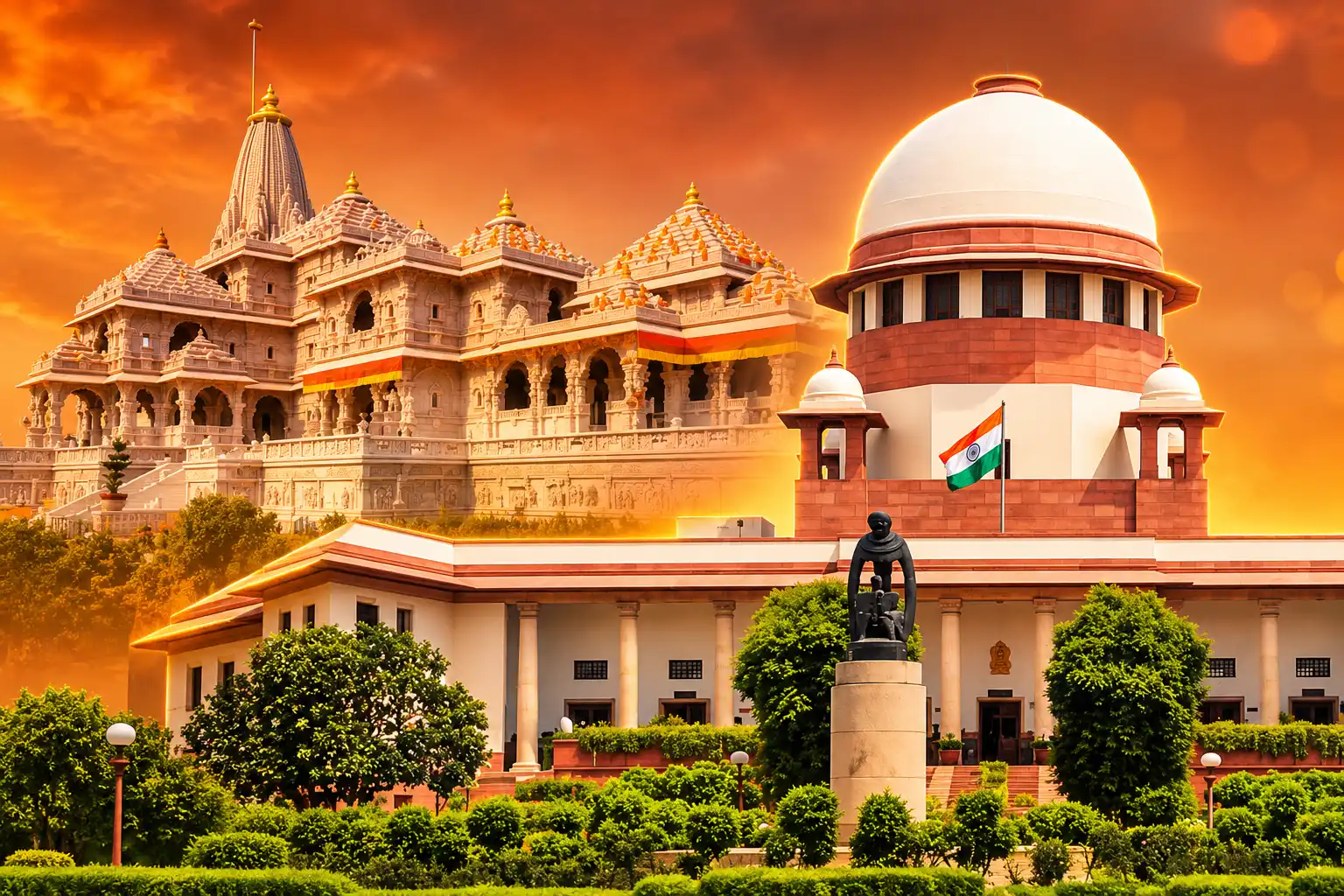
The Supreme Court on November 2 closed pleas for a CBI inquiry into Ram Mandir donation theft after Uttar Pradesh said a chargesheet had been filed. A bench of Chief Justice of India Surya Kant and Justices Joymalya Bagchi and V. Mohana directed the judicial magistrate to proceed, and said it had expressed no opinion on the merits.
The writs had asked for a court-watched probe of the Shri Ram Janmabhoomi Teerth Kshetra Trust and an audit of its books. What remains is a theft trial of eight counting-room staff, with the petitioners told they may assist as victims of a crime.
The Supreme Court Will Not Watch This Trial
Solicitor General Tushar Mehta, for the state, told the bench that the Special Investigation Team found the money was taken while donations were being counted. “Individuals who were counting have taken the money,” he said. He added that some of the accused put cash into property and bank deposits, and that an audit had found artefacts and chadhavas intact.
Mehta gave one sale deed as an example. The paper showed Rs 15 lakh while the property was worth around Rs 50 lakh, and he said the gap was paid in cash from temple funds. “We have the figure,” he told the court, without reading a total into the order.
The order recorded a status report from Uttar Pradesh that the chargesheet had been filed, then disposed of the writ petition and connected matters. Liberty went to the writ petitioners to assist the magistrate “on the same premise as the law enables a victim of crime to assist the court.” The bench added a line that no prejudice should follow, because it had not spoken on merits.
We will now direct the Court to proceed in the matter. And we will grant you people also liberty wherever necessary, to continue to assist the court…it’s not simpliciter case of an accused versus state. It’s a case where some element of public interest is also involved. Therefore, we will grant you, as the law permits victims of a crime, to assist the court.
Chief Justice of India Surya Kant, Supreme Court of India, November 2 hearing
The audio-video feed of the hearing stayed off for a long stretch because some of the petitioners appeared in person. A case about public offerings was therefore argued, and the CBI door closed, without a full public record of the exchange.
The same bench also declined a fresh plea by Kameshwar Nath, appearing for a body styled the Ramjanmabhoomi Case Trust, that sought a panel to test whether the standing temple sits on the land decided in the 2019 title case. He was told to go to a civil court.
105 Removals, Eight Names, Rs 79.85 Lakh
The SIT told the court it had found 105 instances of unauthorised removal or concealment of currency in the donation-counting room at the Pilgrim Facilitation Centre inside the temple. That 105 is the removal count. The chargesheet also logs many occasions on which the same men helped one another hide cash, which is a separate tally and not a second theft total.
Avinash Shukla, also called Shani, is shown taking cash on 85 occasions. Manish Kumar Yadav is shown on 16, Karunesh Pandey on two, and Ramashankar Mishra and Lavkush Mishra on one each. Those five figures add to 105. Anukalp Mishra, described by police as the organiser, is logged helping 56 times. Karunesh Pandey is logged helping 68 times and Lavkush Mishra 52 times.
Investigators recovered Rs 79.85 lakh they link to the alleged theft from seven of the eight accused, and none from counting-room in-charge Subhash Srivastava. Avinash Shukla’s recovery also included USD 1,121, with silver and gold jewellery. Police say they traced bank deposits and property in the names of accused men and relatives, including a house listed at about Rs 55 lakh in Anukalp Mishra’s father’s name, land worth Rs 22.52 lakh in Lavkush Mishra’s wife’s name, and Rs 20.91 lakh spent building on that land. Those purchases will have to be proved as temple money in court.
THE EIGHT ACCUSED
| Accused | Alleged role | Cash recovered | CCTV removals |
|---|---|---|---|
| Anukalp Mishra | Alleged organiser | Rs 16.82 lakh | Assisted 56 times |
| Avinash Shukla | Counting staff | Rs 20.39 lakh | 85 |
| Karunesh Pandey | Moved boxes and counted | Rs 18.07 lakh | 2 |
| Lavkush Mishra | Counting staff | Rs 14.25 lakh | 1 |
| Ramashankar Mishra | Counting staff | Rs 7.32 lakh | 1 |
| Manish Kumar Yadav | Counting unit | Rs 2 lakh | 16 |
| Ram Shankar Yadav (Tinnu) | Hundi keys; former driver to the then general secretary | Rs 1 lakh | Not in the removal tally |
| Subhash Srivastava | Counting in-charge | None | Present when cash was taken, per the chargesheet |
The chargesheet, nearly 70,000 pages with annexures, more than 100 case diaries and statements of nearly 190 witnesses, was filed on September 23 before the anti-corruption court in Ayodhya. It invokes theft and criminal breach of trust under the Bharatiya Nyaya Sanhita and offences under the Prevention of Corruption Act. Sanction to prosecute six of the eight under that Act was granted on September 19.
SIT officers told the court they found no pilferage once counted cash moved from the temple to the banks. They also physically checked 803 valuable articles that had software receipts and 86 articles that did not, and reported no mismatch, including silver bricks and other offerings the trust had already said were safe.
What the Petitioners Asked For
The batch before the court was not a private complaint about eight employees. Advocate Narendra Kumar Goswami, in W.P.(C) 790/2026, sought a CBI probe and a Comptroller and Auditor General audit of the trust. Advocates Ajay Kumar Rai and Dinesh Kumar Yadav asked for a CBI-led multi-disciplinary team into the trust’s administration. Rashtriya Janata Dal MP Sudhakar Singh, from Buxar, sought a court-watched CBI transfer, a forensic audit of donations and assets, and an order that the trust publish audited statements and donation records. Hindu Dharma Parishad filed a connected plea. Notice had gone to the Union government, Uttar Pradesh and the trust.
WHAT THE WRITS SOUGHT
- CBI control: A Central Bureau of Investigation inquiry under the Supreme Court’s eye, in place of the state SIT.
- Trust audit: A CAG or independent forensic audit of donations, bank trails, valuables and assets from the trust’s start.
- Public accounts: Publication of audited financial statements and donation records on the trust’s site.
- Oversight: In Singh’s plea, a temporary committee of retired judges and financial experts over the trust’s money and administration while the probe ran.
None of those prayers is in the November 2 order. The forensic auditor the court had added to the SIT in July fed a chargesheet against eight men. The CAG was not brought in. The trust was not directed to post its books. Returning stolen cash, if a court later accepts that story, would still leave the 105 CCTV removals to be tried; it would not answer the audit demand the writs were built on.
Champat Rai Enters the Case as a Witness
The trust formed on 5 February 2020 after the 2019 title judgment, with 15 members nominated around a government core, still holds the temple. Champat Rai, then general secretary and a Vishva Hindu Parishad vice-president, and trustee Anil Mishra submitted resignations in late June, which treasurer Swami Govind Dev Giri confirmed. The trust said it was shocked and hurt, that silver bricks and jewellery handed over by devotees were safe with records, and that it had lodged an FIR on the SIT’s interim report. Krishna Mohan, the trust member who signed that complaint, later became interim general secretary.
Neither Rai nor Mishra was named in the FIR. The first SIT, set up on June 13 under Lucknow Divisional Commissioner Vijay Vishwas Pant with Inspector General Kiran S and finance special secretary Neel Ratan, later flagged gross lapses at the trust and still cleared the two former office-bearers. They are listed as prosecution witnesses. The chargesheet cites Rai confirming he received a video of cash found in a counting-room bathroom and was shown CCTV the next day.
Ram Shankar Yadav, known as Tinnu, had been tied to the trust since 2020 as Rai’s former driver. Investigators say he held keys to several hundis, against the written drill, and that he got relative Manish Kumar Yadav a job in the counting unit. Anukalp Mishra, they say, helped put Lavkush Mishra, Karunesh Pandey and Avinash Shukla on the counting roster in 2025. Srivastava, a retired banker, ran the room. Counting staff told police he had said frisking was unnecessary because everyone was known.
LAPSES THE FIRST SIT FLAGGED
- CCTV retention: Footage of counting was kept for 45 days, against a 180-day rule in the 2025 standard operating procedures.
- Frisking: Staff were not searched on the way in or out, though pocketless clothing and random checks had been written down.
- Hundi keys: Tinnu Yadav held keys to donation boxes that the drill did not give a former driver.
- Orders: Work ran on verbal instructions, with no written split of roles at the tables.
Mehta told the bench that recorders hold 45 days of video but that investigators went further back through bank accounts and property. When the Chief Justice asked about the future, Mehta said measures had been taken. The trust already runs a portal for authenticated online donation receipts with mobile checks. This case is about cash that never reached that trail, counted by hand in the Pilgrim Facilitation Centre.
How Cash Left the Counting Room
Samajwadi Party leader Tej Narayan Pawan Pandey put the row into public view on June 7 with a claim of large-scale siphoning. The state formed the first SIT on June 13 at the trust’s request. Inside the temple, staff had already grown suspicious. On June 4, Rs 2.25 lakh was found in a counting-room bathroom after checks began at the gate, and a video of that cash went to Rai.
Messages recovered from the phones of Anukalp Mishra, Avinash Shukla and Lavkush Mishra, police say, discuss where to keep bundles, and how to hide, exchange or move them. The chargesheet treats those chats with call records, CCTV and witnesses as proof they acted together. Preliminary viewing of footage from April 27 to June 5 had already shown staff hiding notes in clothes, pockets and shoes.
FROM THE FIRST ALLEGATION TO THE ORDER
- June 4, 2026: Rs 2.25 lakh is found in a bathroom of the counting room after gate checks start.
- June 7, 2026: The public allegation of siphoned offerings is made; the trust asks the state to inquire.
- June 13, 2026: Uttar Pradesh constitutes the first SIT.
- June 25, 2026: An FIR is registered at Ram Janmabhoomi police station on Krishna Mohan’s complaint.
- June 26, 2026: All eight accused are arrested and later sent to judicial custody.
- July 13, 2026: The Supreme Court issues notice on the writs and asks for an SIT status report.
- July 27, 2026: The court notes the reconstituted team under IG Kiran S, with Ayodhya SSP Gaurav Grover, and records that a forensic auditor will sit with the SIT.
- September 21, 2026: Mehta says the chargesheet will be filed within two days, before the 90-day default-bail clock from the first arrest runs out, and the court lets public-spirited persons send suggestions to the trial court.
- September 23, 2026: The chargesheet is filed in Ayodhya, on day 90 if June 26 counts as day one.
- November 2, 2026: The Supreme Court disposes of the writs and ends its watch.
IG Kiran S headed the reconstituted team that wrote the chargesheet. The first SIT’s August report had already called out lapses and cleared Rai and Mishra. The second team’s job, as the court framed it in July, was a fair and speedy investigation of the same facts. It delivered eight accused and a counting-room theory, not a restatement of the trust’s full ledger.
Victim Rights Without a CBI File
Calling the petitioners victims is the part of the order that will actually operate in Ayodhya. Under the Bharatiya Nagarik Suraksha Sanhita, a victim may engage an advocate to assist the prosecutor, with the court’s permission, and a represented victim is entitled to the police report and accompanying papers. The Chief Justice’s “not simpliciter” line puts devotee money into that frame. It does not make the petitioners a second prosecutor, and it does not reopen CBI.
That is a thinner right than the one they filed for. Assist means secondary to the public prosecutor. The magistrate can limit questions, and the state still drives the case. The forensic auditor’s work sits inside a chargesheet the petitioners did not write. If they want a wider look at the trust, they will have to do it from the well of a trial court that has been told, in terms, that the Supreme Court has no view on merits.
Uttar Pradesh gets what it came for. The SIT stays a state team. The CBI stays out. The trust, which asked for the first inquiry and then lost two office-bearers, is not in the dock. Eight men who counted cash are. That split is the whole of the November 2 result, and it is why a public-interest theft now looks, on paper, like an employees’ case with extra standing for the people who tried to federalise it.
A Public-Interest Theft Before a Magistrate
The judicial magistrate in Ayodhya now has a chargesheet that runs to tens of thousands of pages, CCTV of 105 cash removals, phone chats about bundles, recoveries of Rs 79.85 lakh, and a Supreme Court order that both invites the original petitioners in and forbids anyone from reading that invitation as a hint on guilt. Champat Rai will be a witness. The trust’s published accounts, which Sudhakar Singh asked to have posted, are still not part of the direction.
The men who counted the hundis will have to answer the videos. The institution that set the rules they broke is not on the charge sheet. That is the case the magistrate has been told to try in accordance with law.
Disclaimer: This article is news reporting and analysis of a Supreme Court order and of a pending criminal case. It is informational only and is not legal advice, nor an opinion on the guilt or innocence of any accused person. Readers who wish to act on any right discussed here, including victim participation in a trial, should consult a qualified criminal lawyer admitted to practice in the relevant court. Names, charges, recoveries and case status are those set out in the court order, the chargesheet and official statements available on November 2, 2026, and may change as the trial proceeds.

ADNOC Ship Hit in Hormuz Leaves One Crew Missing

SpiceJet’s Rs 5,500 Crore Plan Follows a Rescue That Failed

Hasina’s Return Fight Sets Fire to Yunus’s Bank

Bancroft Recants the 2018 Inquiry and Names the Team

Adhikari Ties the Saffron Saree Row to School Licences

Clancy Juror Says the Holdout Never Cited Evidence

The iPhone 18 Pro Max Splits Apple’s Fall in Two

OpenAI Calls GPT-6 Astra AGI Then Locks Its Exploits

Trump Claims Hormuz Control as Oil Holds Near $96

Russia Closes the Goethe-Institut Berlin Tried to Save

 NEWS2 months ago
Clancy Juror Says the Holdout Never Cited Evidence
- NEWS3 months ago
The iPhone 18 Pro Max Splits Apple’s Fall in Two
- NEWS3 months ago
OpenAI Calls GPT-6 Astra AGI Then Locks Its Exploits
- BUSINESS3 months ago
Trump Claims Hormuz Control as Oil Holds Near $96
- LIFESTYLE3 months ago
Russia Closes the Goethe-Institut Berlin Tried to Save
- AUTO3 months ago
Volkswagen’s Job Cuts Leave Four Plants Without Cars
- NEWS3 months ago
Dyson Puts Nurovi Robots on Sale Without the UV Flagship
- BUSINESS2 months ago
US Destroys Five Iranian Tankers as the Shock Hits Jordan










