
BUSINESS
Cao Recoded Repair-Bin Tomahawks After Iran Burned a Third
Hung Cao told senators the Navy recoded Code Echo and Foxtrot munitions for Iran after a 57-missile budget met a thousand-round war.

Acting Navy Secretary Hung Cao told senators at his confirmation hearing on November 17 that the Navy recoded Code Echo and Code Foxtrot munitions and fired them in the Iran war. He compared the step to wetting stale bread and running it in a microwave for 15 seconds.
He did not say how many rounds got new codes, how old they were, or how many were Tomahawk cruise missiles. Senators had asked him about Tomahawk stocks, production, and a war he already called a strain on the fleet.
What Code Echo and Foxtrot Mean
Cao, a retired Navy captain and former explosive ordnance officer, told the Senate Armed Services Committee a lot of the munitions used in Operation Epic Fury had been Code Echo and Code Foxtrot. “They were Code Echo, Code Foxtrot, which means they’re expired,” he said. Then the Navy changed the codes and shot them.
Those letters are not scrap tags. Army ammunition condition codes, which match the Defense Logistics Agency supply codes cited after the hearing, put Echo and Foxtrot on the repair path. Echo is unserviceable limited restoration, work that is supposed to be cheap and local, often on packing, marking, or the outside of the round. Foxtrot is unserviceable and reparable, the bin for overhaul, reconditioning, or swapping major parts.
AMMUNITION CONDITION CODES ON THE REPAIR PATH
- Code Echo: Unserviceable with limited restoration, usually exterior work done where the stock sits.
- Code Foxtrot: Unserviceable and economically reparable, the lane for overhaul or component replacement.
- Code Hotel: Unserviceable and condemned, the point at which a round is pulled for destruction rather than return to issue.
Ordnance practice treats Echo and Foxtrot as work orders. Condemned stock is Code Hotel. Using a round while it can still be restored, rather than waiting until it has to be blown in place, is how a magazine is supposed to be managed. Recoding a line in a database is not the same as finishing that work.
Cao never told senators how many Echo and Foxtrot rounds were inspected, repaired, or simply relabeled. A cruise missile that needs a new seal, a fuze check, or a fuel service is not a loaf of bread. Changing the code does not, by itself, prove every seeker, engine, and warhead met the original spec on the day it left the tube.
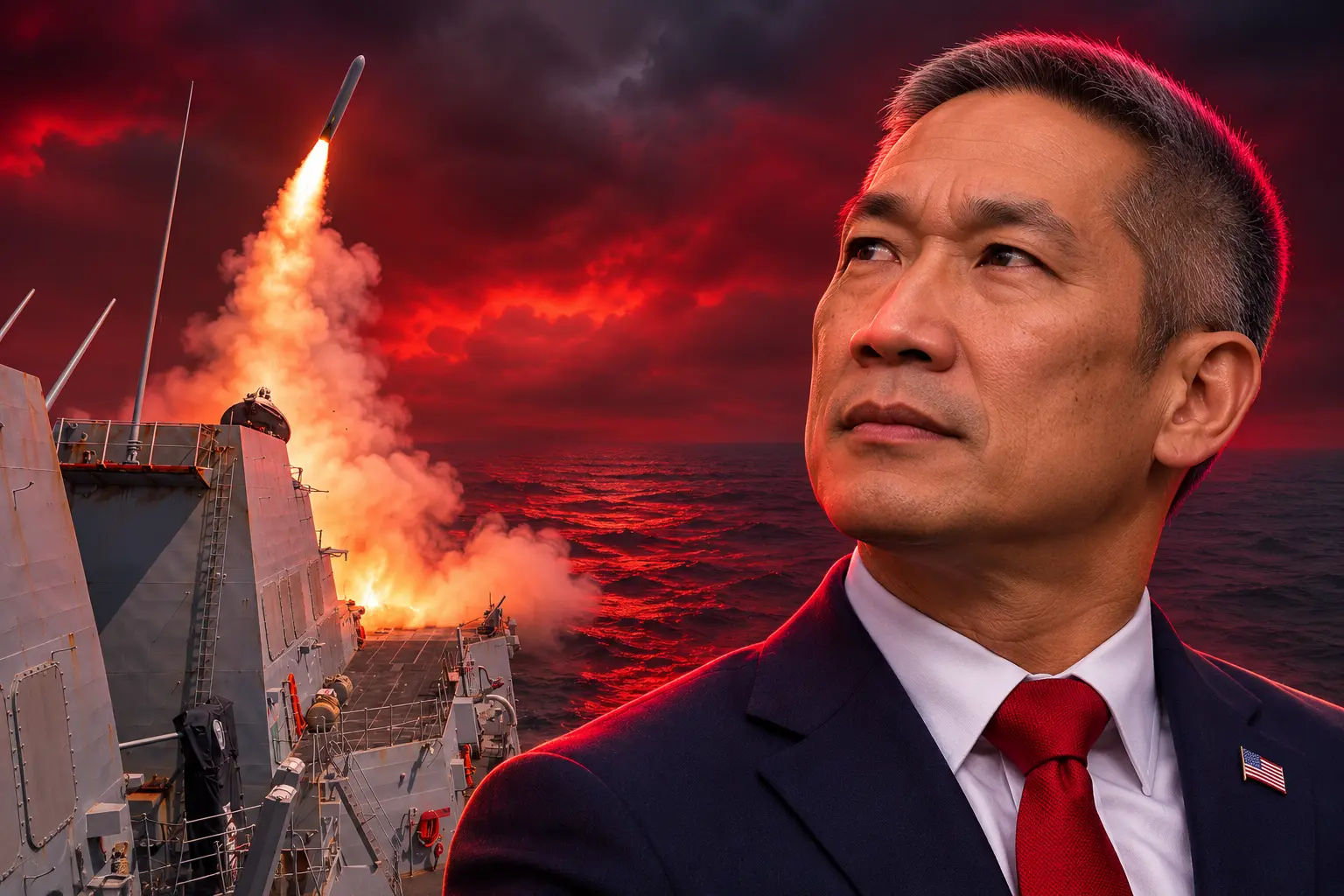
A Third of the Prewar Magazine Went Into Iran
Mark F. Cancian and Chris H. Park, writing for the Center for Strategic and International Studies after the opening air campaign, put the pre-ceasefire Tomahawk bill in one table. They estimated a prewar stock of about 3,100 Tomahawks, 1,000+ rounds expended, a unit cost of $2.6 million from fiscal 2026 budget documents, and a 47-month delivery clock once money is voted.
KEY MUNITIONS AT THE IRAN CEASEFIRE
| Missile | Estimated prewar stock | Estimated use in the Iran war | Delivery time (months) |
|---|---|---|---|
| Tomahawk | 3,100 | 1,000+ | 47 |
| JASSM | 4,400 | 1,100+ | 48 |
| Patriot | 2,330 | 1,060-1,430 | 42 |
The Tomahawk row is about a third of the prewar magazine. Cancian and Park recorded more than 850 Tomahawks in the first month, then a climb past 1,000 by the time the 39-day air and missile campaign paused. They counted more than 13,000 targets in that opening stretch, with cheaper short-range bombs taking more of the load once Iranian air defenses were down.
Ships cannot reload Tomahawks at sea. A destroyer that empties the cells that hold them has to leave station and steam to a port that can fill them, and a guided-missile submarine can carry up to 154. Cancian and Park wrote that the United States still had enough missiles to keep fighting Iran, and that the shortage that lasts for years is a future war, especially in the Western Pacific.
In a later look at the same stocks, they again put Tomahawk use at roughly one-third of the prewar pile and said a new flare-up with Tehran could lean on cheaper bombs. They also said that switch may not be available against a great power.
The Fiscal 2026 Request Was 57 Tomahawks
Before the war, the Navy’s fiscal 2026 request asked for 57 Tomahawks, including Maritime Strike Tomahawk rounds bought in large part with supplemental money. The year before, the service had bought 20 of the anti-ship variant. Budget papers put the minimum sustaining rate for that variant at 90 a year.
The opening campaign used more Tomahawks than 17 years of that 57-round request. Cao told senators that when he was in uniform the line made 125 Tomahawks a year, and that output is now well above 60 every month. He also said the United States is about 4,000 tons short of rocket propellant every year, which is the powder problem sitting behind every production chart.
Sen. Jack Reed, Democrat of Rhode Island, asked whether the Navy was sacrificing quality for quantity and said the munitions burned in the war will take years to recover. Sen. Deb Fischer, Republican of Nebraska, was the senator who pulled Cao onto stockpiles in the first place. Cao denied a quality trade, then described the recode.
Christmas Strikes in Nigeria Left Four Warheads Intact
The recode method did not begin with Iran. An official familiar with the December 25, 2025, raid on Islamic State targets in Nigeria said the same condition-code change was applied to Tomahawks fired that night from a ship in the Gulf of Guinea.
THE NIGERIA ROUNDS AND THE HEARING
- December 25, 2025: Sixteen Tomahawks are fired in the Christmas Day raid.
- Early January 2026: Four warheads are found intact, in an onion field in Jabo, in and near Offa, and in a forest in Zugurma.
- November 17, 2026: Cao describes recoding Echo and Foxtrot munitions for Epic Fury; an official ties the same method to the Nigeria shots.
Four intact warheads out of 16 is a 25 percent dud rate on that raid. Arch Macy, a retired Navy officer who worked on the Tomahawk program, said the round that hit a building in Offa may have had a mechanical problem, and that the three found in fields and forest could be navigation failures or rounds ordered to crash. Digital forensics professor Hany Farid reviewed photographs of the four warheads and said he saw no sign they had been faked.
Cao did not tell senators whether any recoded round in Iran failed to detonate. He also did not say whether the Nigeria sixteen had gone through the full depot overhaul or only a code change.
Japan Still Waits for 400 Promised Tomahawks
Cancian and Park wrote that Japan has been told its deliveries of 400 Tomahawks may slip because of the Iran war. A Japanese destroyer had already been modified to launch them. Holding those rounds back hits a partner that is trying to field a longer-range punch against China, which is the fight U.S. stockpile planners keep saying they are building toward.
Cao offered senators the opposite picture. He said the war had set China back on its heels because the U.S. services were fighting together. The CSIS arithmetic still runs the other way: even before Iran, the Tomahawk pile was judged too small for a peer war, and burning about a third of it made that gap worse.
Allies are in the same queue. Fiscal 2027 Tomahawk Mods funding, as compiled from Navy budget justification papers, supports 404 recertified all-up rounds, 54 under a multiyear option and 350 in the following year, with 150 converted to Block Va maritime-strike missiles and 35 to Block Vb with a new warhead. Recertification is the planned second life, not a wartime shortcut.
A Seven-Year Contract Meets a 47-Month Queue
Block IV and Block V Tomahawks are built with a 30-year service life and a 15-year recertification cycle. The depot pass is supposed to test critical parts and replace what has aged out, including mechanical and electrical gear, fuzes, the Armed Firing Device, and, for submarine rounds, the MK 45 capsule. That is the opposite of a 15-second microwave.
In January 2026 the Navy added $380.8 million to a Raytheon contract to recertify and modernize Block IV missiles to Block V, with work in Tucson, Arizona, and Boulder, Colorado, running through April 2029. Recertification at that pace is a factory job measured in years, which is why a code change in a war can outrun the depot.
On August 17, 2026, the Department of War announced a $22.9 billion seven-year contract with Raytheon, an RTX business, to push Tomahawk output above 1,000 missiles a year. Cao said the money would speed deliveries “at unprecedented speed.” Under Secretary of War for Acquisition and Sustainment Michael P. Duffey said RTX had answered a call to expand munitions production. Raytheon President Phil Jasper said the company was putting money into workers, suppliers, and plants. RTX said it had already delivered three times as many Tomahawks in the first half of 2026 as in the same stretch of 2025.
THE PRODUCTION MATH CAO PUT ON THE RECORD
- Career rate: 125 Tomahawks a year when Cao was in uniform.
- His November claim: well above 60 every month now.
- Contract target: more than 1,000 a year under the seven-year award, covering more than 7,000 new, recertified, and modernized rounds.
- Propellant gap: about 4,000 tons of rocket propellant short each year, by Cao’s own count.
The CSIS delivery clock is still 47 months from appropriation through the last round in a lot. A contract signed in August 2026 does not restock a magazine that was opened on February 28. Near-term deliveries stay low because earlier orders were small, which is the quiet half of Cao’s bread line.
Cao Needs a Waiver and the Fleet Is Tired
I came from a poor family. Things like bread don’t expire. You just rub some water on, microwave for 15 seconds, and it’s good to go. And so for some of these munitions, we recoded them, and so we’re able to shoot off the expired munitions.
Hung Cao, acting secretary of the Navy, Senate Armed Services Committee
The rest of the hearing was about the people and ships carrying that magazine. Democrats pressed Cao on eight suicide attempts aboard the USS Abraham Lincoln and on the Lincoln’s long stretch at sea. He said the war launched with Israel in February had put a strain on the Navy, blamed an undersized fleet for long deployments, and told Sen. Tim Kaine he had no excuse for slow notice when a submarine’s command team was fired.
Cao has been acting secretary since April, after Defense Secretary Pete Hegseth removed John Phelan. President Donald Trump nominated him for the permanent job. He retired from the Navy in 2021, so he needs a waiver of the seven-year cooling-off rule from both the Senate and the House. He can keep serving in an acting role without that waiver because he was already confirmed as Navy undersecretary in 2025. Democrats take the Senate in January, which is the calendar sitting on the waiver.
He still has not said how many Echo and Foxtrot rounds went downrange, or how many of them were Tomahawks. The 57-round request, the 1,000-plus expended, the 47-month queue, and the 4,000-ton propellant hole are the figures he did put on the table, and they are the reason the repair bins were open.

ADNOC Ship Hit in Hormuz Leaves One Crew Missing

SpiceJet’s Rs 5,500 Crore Plan Follows a Rescue That Failed

Hasina’s Return Fight Sets Fire to Yunus’s Bank

Bancroft Recants the 2018 Inquiry and Names the Team

Adhikari Ties the Saffron Saree Row to School Licences

Clancy Juror Says the Holdout Never Cited Evidence

The iPhone 18 Pro Max Splits Apple’s Fall in Two

OpenAI Calls GPT-6 Astra AGI Then Locks Its Exploits

Trump Claims Hormuz Control as Oil Holds Near $96

Russia Closes the Goethe-Institut Berlin Tried to Save

 NEWS2 months ago
Clancy Juror Says the Holdout Never Cited Evidence
- NEWS3 months ago
The iPhone 18 Pro Max Splits Apple’s Fall in Two
- NEWS3 months ago
OpenAI Calls GPT-6 Astra AGI Then Locks Its Exploits
- BUSINESS3 months ago
Trump Claims Hormuz Control as Oil Holds Near $96
- LIFESTYLE3 months ago
Russia Closes the Goethe-Institut Berlin Tried to Save
- AUTO3 months ago
Volkswagen’s Job Cuts Leave Four Plants Without Cars
- NEWS3 months ago
Dyson Puts Nurovi Robots on Sale Without the UV Flagship
- BUSINESS2 months ago
US Destroys Five Iranian Tankers as the Shock Hits Jordan










