
BUSINESS
SpiceJet’s Rs 5,500 Crore Plan Follows a Rescue That Failed
SpiceJet voted to raise Rs 5,500 crore after a 2024 rescue at Rs 61.60 left it at 0.6% share and a Rs 9.97 Z-stock.

SpiceJet’s board approved a plan to raise up to Rs 5,500 crore (about $611 million) on November 18 and voted to lift authorised capital to Rs 7,500 crore. The stock closed at Rs 9.97 on the BSE, up 4.95%, and locked at the 5% circuit.
The last big cheque, a Rs 3,000 crore qualified institutional placement priced at Rs 61.60 on September 20, 2024, is now down 84%. This vote is the size of the hole that round did not fill.
Rs 3,000 Crore at Rs 61.60 Did Not Hold
The Fund Raising Committee allotted 487,012,986 shares at Rs 61.60 two years ago, including a premium of Rs 51.60 on a Rs 10 face value. More than 80 institutions took paper. The stock that closed at Rs 9.97 on November 18 is 84% below that issue price, three paise under par, and trades only on the BSE in the Z group, where every order must settle by delivery and the daily move is capped at 5%.
Ajay Singh’s promoter group added more equity after that placement. Spice Healthcare converted 13.14 crore warrants at Rs 29.84 in a promoter warrant conversion of Rs 294.09 crore on March 18 and 19, 2025, lifting the group’s holding from 29.11% to 33.47% at the time. On November 18, 2025, a year to the day before this board vote, the airline completed a share allotment to Carlyle Aviation Partners of 10,41,72,634 shares at Rs 42.32 and said that removed Rs 442.25 crore, or $50 million, of liabilities.
THE MONEY THAT CAME IN BEFORE THIS VOTE
- September 20, 2024: Allots 487,012,986 shares at Rs 61.60 in a Rs 3,000 crore qualified institutional placement.
- March 19, 2025: Converts 13.14 crore promoter warrants at Rs 29.84 for Rs 294.09 crore.
- November 18, 2025: Allots 10.42 crore shares at Rs 42.32 to Carlyle Aviation Partners and takes $50 million of liabilities off the books.
- February 12, 2026: Files CARE Ratings reports on those issues for the quarter ended December 31, 2025, with no extra board comment.
- April 2026: CareEdge Ratings cuts the long-term bank rating to B+, citing losses, a weak financial state, and tight cash.
CARE Ratings monitoring reports on those issues recorded negative operating profit in FY25 and a negative profit after tax in the first half of FY26. FY25’s headline profit, the monitor said, came from other income on lease restructuring, not from flying. The company had also shifted QIP money away from new-fleet induction toward general use and creditor settlement. The next ask is larger than the last institutional issue, at a sixth of the price.
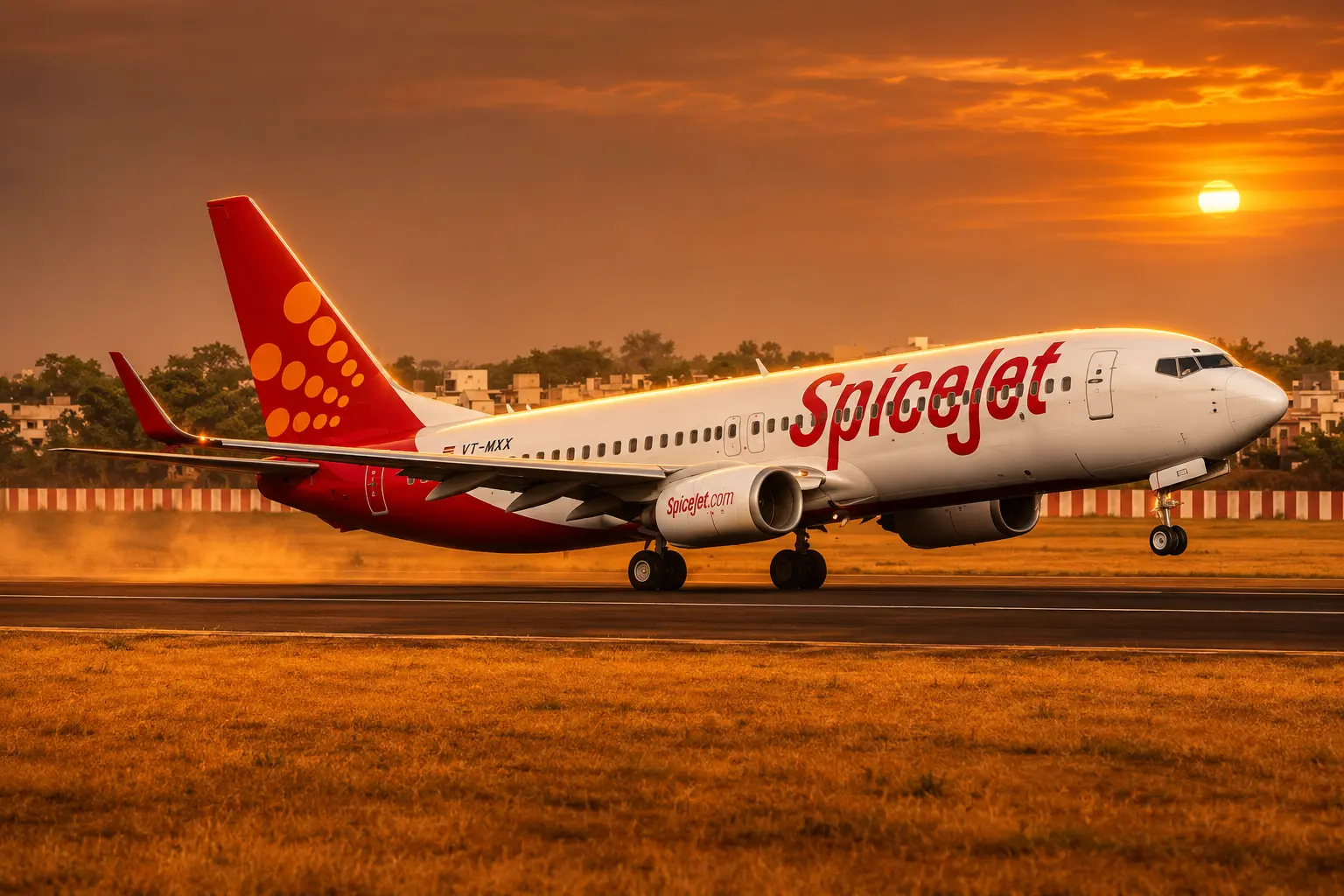
Authorised Capital Jumps to 750 Crore Shares
The board sat from 10:00 a.m. to 2:30 p.m. on November 18 after a prior notice of the November 18 meeting that had already flagged a fresh capital proposal. Management told directors it was in talks with potential new investors and named none of them. Directors told management to close those talks fast.
The ceiling is Rs 5,500 crore in one or more tranches. The paper can be equity, non-convertible debt with warrants, other convertible securities, or a mix, issued through a qualified institutional placement, a rights issue, a preferential allotment, a private placement, or any other route the law allows. Shareholders and regulators still have to say yes. The memorandum of association has to change with the capital limit.
WHAT THE BOARD PUT ON THE TABLE
- The ceiling: Up to Rs 5,500 crore, in one or more tranches, subject to approvals.
- The paper: Equity, non-convertible debt with warrants, other convertibles, or a mix.
- The routes: Qualified institutional placement, rights issue, preferential allotment, private placement, or any other method the law permits.
- The headroom: Authorised capital from Rs 2,000 crore (200 crore shares of Rs 10) to Rs 7,500 crore (750 crore shares of Rs 10), a 3.75-fold increase.
Company secretary Chandan Sand had already shut the trading window on November 13. The airline said geopolitical disturbances, airspace curbs, and aviation turbine fuel prices that it said had more than doubled were squeezing operations. Those are the firm’s reasons. The operating file underneath is thinner than a revival deck.
The Raise Is Larger Than the Company
SpiceJet’s market value at the Rs 9.97 close was Rs 1,521.52 crore, which implies 152.61 crore shares. Rs 5,500 crore is 3.61 times that value and 1.30 times the Rs 4,218.5 crore of total debt reported as of March 2025, of which Rs 3,329.3 crore was lease payments. A company that small cannot take a cheque that large as equity unless it is allowed to print a lot more shares, which is what the jump to 750 crore authorised shares is for.
TWO RAISES, TWO PRICES
| Item | September 2024 QIP | November 2026 plan |
|---|---|---|
| Amount | Rs 3,000 crore, allotted | Up to Rs 5,500 crore, not yet raised |
| Price | Rs 61.60 a share | Not set |
| Shares involved | 487,012,986 new shares | Headroom up to 750 crore authorised shares of Rs 10 |
| Where it trades | Listed, then a long slide | BSE only, Z group, 5% circuit |
| Value now | Down 84% to Rs 9.97 | Ask is 3.61 times the Rs 1,521.52 crore market value |
The last disclosed shareholding, for the quarter ended March 31, 2026, put promoters Ajay Singh, Ajay Singh HUF, Kalpana Singh, and Spice Healthcare at 24.19%. Mutual funds held 1% and foreign portfolio investors 2%. Some 4.3 lakh small holders owned 18.99%, and a little over 4,000 larger public holders owned 28.6%. The company has not filed a later pattern. NSE trading is already suspended. BSE has set December 7 as the date for overdue financial results, with a possible trading halt on December 10 if those numbers do not arrive. The March quarter, the year ended March 2026, and the June and September quarters are all still out. The last printed loss was Rs 262 crore in the December quarter of FY26, after Rs 621 crore in the quarter before that.
September Traffic Fell Below Star Air
Directorate General of Civil Aviation figures for September 2026 put SpiceJet at 0.6% of domestic passengers, down from 1.2% in August and 3.9% in January, and below regional carrier Star Air at 0.7%. The airline carried 73,000 domestic passengers in September against 592,000 in January. In July 2014 it held 20.9% of the domestic market.
IndiGo took 65.4% in September and the Air India group 26.8%, or 92.2% of the 11.823 million passengers carried by domestic airlines that month, a 6.49% year-on-year drop in the market as a whole. Akasa Air held 5.6%. SpiceJet’s slice of a smaller pie halved in a month.
SEPTEMBER 2026 OPERATING FILE
| Metric | SpiceJet | Comparison |
|---|---|---|
| Domestic share | 0.6% | Star Air 0.7%; IndiGo 65.4%; Air India group 26.8% |
| Passengers carried | 73,000 | 592,000 in January |
| Cancellation rate | 20.29% | Industry 1.15%, about 17.6 times higher |
| On-time performance | 16.6% | Down from 56.8% in January |
| Flights late by over 2 hours | 39.36% | Industry 1.19%; was 7.2% in January |
| Passengers delayed | 35,956 | IndiGo 30,619, on a far larger network |
Civil aviation minister Ram Mohan Naidu said in September that the DGCA was running operational and financial scrutiny of SpiceJet, with passenger convenience and safety as the stated priorities. The Centre had also extended Rs 150 crore under the Emergency Credit Line Guarantee Scheme. A cancellation rate of 20.29% is not a fuel-price story alone. It is what a nine-aircraft operation looks like when the rest of the fleet is not in the air.
Who Still Has Not Been Paid?
A half-yearly filing with the corporate affairs ministry on October 30 showed SpiceJet still owed small businesses Rs 63.03 crore for more than 45 days in April to September 2026, which is 51.3% of Rs 122.93 crore due to that class of vendor. The Micro, Small and Medium Enterprises Development Act, 2006, requires payment in 45 days, with compound interest at three times the Reserve Bank of India bank rate after that. On-time payments were Rs 54.77 crore. Some 7,660 invoices, 85.4% of the lot, sat unpaid past 45 days, the highest such share in at least two years. The repeated explanation on the overdue lines was that the invoice arrived late.
THE QUEUE THE NEW CAPITAL WOULD MEET
- Small vendors: Rs 63.03 crore already past the 45-day legal clock, across 7,660 invoices.
- Lessors: Three of 12 aircraft were grounded as of November 12 because rent was not being paid.
- Staff: Two company employees said some salaries had been outstanding for more than four months.
- Passengers: Cancelled sectors through mid-November were still producing refund chases, including on a Patna-Pune flight dated November 19.
- Fuel companies: Elara Capital’s Abhinil Dahiwale said those bills were being paid, which is why tickets could still be sold.
Dahiwale said the airline is not insolvent, and that rising vendor dues, cancellations, complaints, and late salaries point to strain. He said it needs investors and cash to put operations in order. SpiceJet also faces insolvency petitions from lessors and older claims involving former promoter Kalanithi Maran and KAL Airways. The Rs 5,500 crore ceiling, if it arrives, does not land in an empty account. It lands in a queue.
Winter Capacity Was Supposed to Arrive Already
On November 12, nine of SpiceJet’s 12 aircraft were flying. That snapshot came after the airline said in early September it had closed leases with three operators for 20 aircraft, 15 Boeing and five Airbus including the higher-capacity A321, on wet and damp terms, with induction from mid-October to mid-November and a target of around 200 daily flights in the winter schedule. Mid-November was the end of that window. The November 12 count did not show a 20-jet step-up.
Chief business officer Debojo Maharshi had said the 20 aircraft would add frequencies and seats through winter and the next summer peak, and that the aim was around 200 daily flights, built in a measured way. An earlier target, spoken in February, had been more than 300 flights a day. Wet and damp leases put crew and upkeep with the lessor, which is how a cash-tight airline adds seats without buying hulls. They also expire. Capacity that is rented in for a season is not the same as a rebuilt fleet, and the last QIP already showed how little of a large raise can end up on new metal once lessors, tax dues, and grounded jets are paid.
The live passenger file matches that thin metal. SpiceJet told the public on November 10 that its helpline had intermittent faults, then said on November 12 that the numbers were working around the clock. Callers still said the line did not connect, and refunds from festive cancellations were still being chased days later. A capital vote does not rebook a cancelled sector.
Ajay Singh Still Needs the Shareholder Vote
Singh, chairman and managing director, put the usual recovery language on the statement.
We believe this fundraise will provide an important opportunity to rebuild the airline, strengthen its operations and restore the brand. We are conscious of the challenges ahead, but we have a clear plan and are focused on putting the necessary building blocks in place. Our priority is to execute that plan with discipline and restore SpiceJet’s position as a strong and competitive airline.
Ajay Singh, Chairman and Managing Director, SpiceJet statement, November 18, 2026
Shares rallied 30% over six sessions to that Rs 9.97 close, which is what a 5% Z-group circuit looks like when buyers show up for a headline. The paper is still 84% below the Rs 61.60 the last institutions paid. Existing holders, many of them the 4.3 lakh small accounts in the March file, will have to approve an authorised capital that can multiply the share count several times over before a rupee of the Rs 5,500 crore is in the bank. The last rescue bought time, paid old bills, and left SpiceJet at 0.6% of the market with nine aircraft in the air. This vote prices that remainder.
Disclaimer: This article is news reporting and analysis of a board decision and of operating and market figures drawn from company filings, exchange records, and regulator data. It is informational only and is not investment advice, a solicitation to buy or sell SpiceJet or any other security, or a recommendation on whether the proposed capital issue will close. Readers who are considering any action in the stock, in a rights or preferential issue, or in related instruments should consult a SEBI-registered investment adviser or other qualified financial professional who can review their own position. Share prices, market-share figures, fleet counts, unpaid dues, and the status of shareholder and regulatory approvals reflect the sources as dated in this piece and can change as new filings and results appear.

ADNOC Ship Hit in Hormuz Leaves One Crew Missing

SpiceJet’s Rs 5,500 Crore Plan Follows a Rescue That Failed

Hasina’s Return Fight Sets Fire to Yunus’s Bank

Bancroft Recants the 2018 Inquiry and Names the Team

Adhikari Ties the Saffron Saree Row to School Licences

Clancy Juror Says the Holdout Never Cited Evidence

The iPhone 18 Pro Max Splits Apple’s Fall in Two

OpenAI Calls GPT-6 Astra AGI Then Locks Its Exploits

Trump Claims Hormuz Control as Oil Holds Near $96

Russia Closes the Goethe-Institut Berlin Tried to Save

 NEWS2 months ago
Clancy Juror Says the Holdout Never Cited Evidence
- NEWS3 months ago
The iPhone 18 Pro Max Splits Apple’s Fall in Two
- NEWS3 months ago
OpenAI Calls GPT-6 Astra AGI Then Locks Its Exploits
- BUSINESS3 months ago
Trump Claims Hormuz Control as Oil Holds Near $96
- LIFESTYLE3 months ago
Russia Closes the Goethe-Institut Berlin Tried to Save
- AUTO3 months ago
Volkswagen’s Job Cuts Leave Four Plants Without Cars
- NEWS3 months ago
Dyson Puts Nurovi Robots on Sale Without the UV Flagship
- BUSINESS2 months ago
US Destroys Five Iranian Tankers as the Shock Hits Jordan










