
NEWS
Meta Buys Tens of Millions of AWS Graviton Cores in CPU Pivot

Meta Platforms signed a multi-year, multi-billion-dollar agreement with Amazon Web Services on April 24, 2026 to deploy tens of millions of Graviton5 CPU cores for agentic AI, making the social media company one of AWS’s largest Graviton customers worldwide. The pact adds Arm-based CPU capacity alongside Meta’s in-house MTIA accelerators, Nvidia and AMD GPUs, and roughly $48 billion in recent commitments to neocloud operators CoreWeave and Nebius.
It is also the clearest sign yet that the AI build-out is no longer a pure GPU story.
For more than two years, the conversation around AI infrastructure has centered on Nvidia’s Hopper and Blackwell accelerators, the rooms full of liquid-cooled racks, and the gigawatts of power needed to train ever-larger frontier models. The Meta-AWS deal points somewhere else. Squarely at the CPU.
What the Meta-AWS Graviton agreement actually covers
The agreement gives Meta access to tens of millions of Arm-based Graviton5 cores running inside AWS data centers, with room to expand as Meta’s agent workloads grow. Each Graviton5 chip integrates 192 Neoverse V3 cores on a 3 nanometer process, with 600 MB of total cache and DDR5-8800 memory support, according to Amazon’s Graviton5 launch detail published in December 2025.
Neither company has disclosed a fixed dollar amount or end date, beyond confirming the contract spans multiple years and represents a multi-billion-dollar commitment. Reuters and CNBC have separately characterized the value as in the low single-digit billions. Neither party has confirmed those figures.
In a statement carried on the official Meta newsroom post detailing the partnership, Santosh Janardhan, Meta’s Head of Infrastructure, framed the deal as deliberate diversification rather than a swap.
“Diversifying our compute sources is a strategic imperative. AWS has been a trusted cloud partner for years, and expanding to Graviton allows us to run the CPU-intensive workloads behind agentic AI with the performance and efficiency we need at our scale,” Janardhan said.
That single sentence carries the entire thesis. No single chip architecture, in Meta’s view, can efficiently serve every workload.
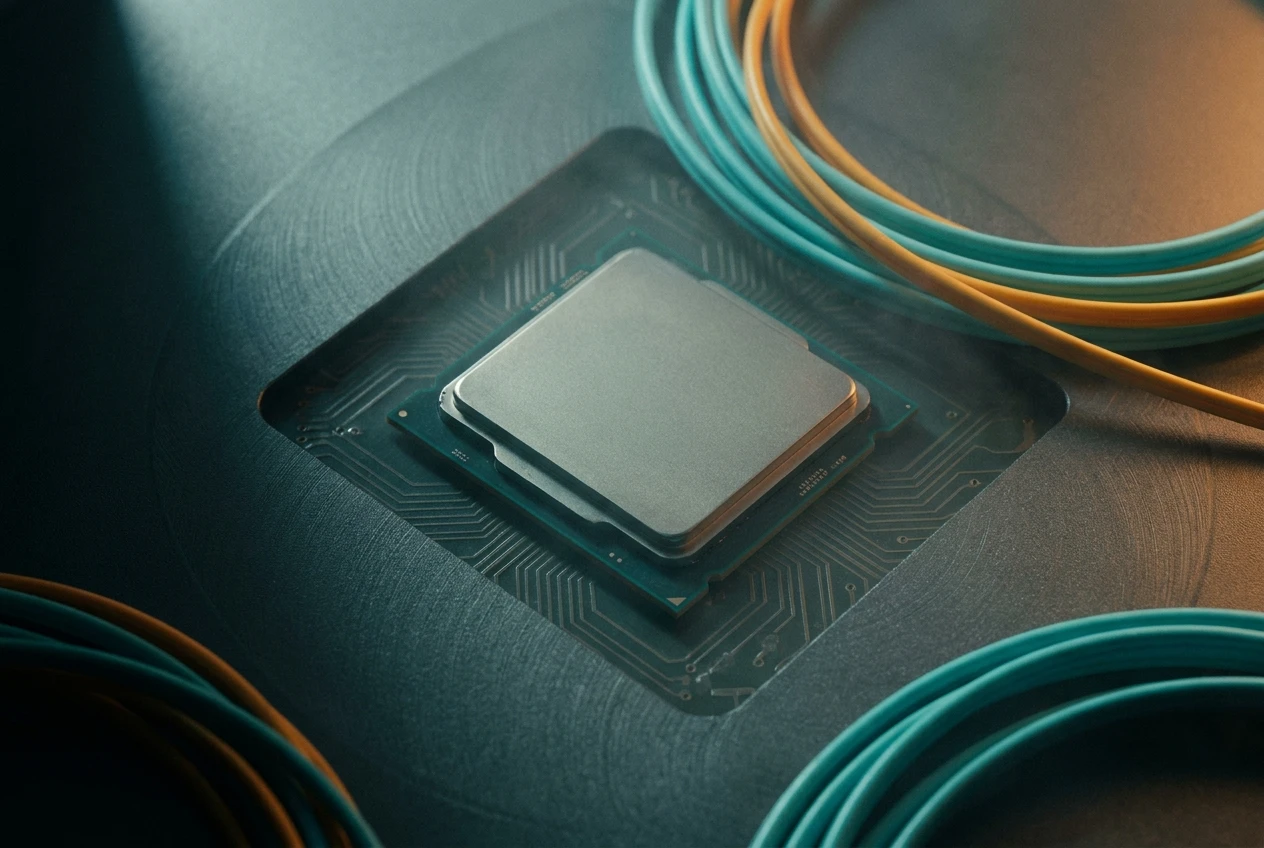
Why CPUs suddenly matter for agentic AI
Agentic AI is rewriting the math of data center silicon. Where classical large-language-model training was dominated by GPU matrix multiplication, agent workloads, things like tool use, retrieval, multi-step planning, real-time search, and code execution, run heavily on CPUs that orchestrate calls, manage memory, and route data between services.
A November 2025 study, Towards Understanding, Analyzing, and Optimizing Agentic AI Execution: A CPU-Centric Perspective, found that CPU-bound tool processing can account for up to 90.6% of total latency in some agentic workflows, and dynamic CPU power can reach 44% of total dynamic energy during large-batch agent runs. The CPU, in other words, is often the bottleneck rather than the GPU.
That has changed the ratio at which hyperscalers buy chips. TrendForce analysts now expect CPU to GPU ratios in agentic AI deployments to compress from the historical 1:4 or 1:8 toward 1:1 or 1:2. AWS itself flagged the same shift in November 2025 when it announced an OpenAI partnership giving the lab access to “tens of millions of CPUs” alongside its Nvidia clusters. For Meta, the math points in one direction: more CPU, faster.
How this fits Meta’s $115 billion to $135 billion capex year
Meta has guided to 2026 capital expenditures of $115 billion to $135 billion, nearly double the $72.2 billion recorded in 2025, according to the company’s fourth quarter and full year 2025 earnings release. CFO Susan Li told analysts on the February 4, 2026 call that the majority of expense growth in 2026 would come from infrastructure costs, including third-party cloud spend and depreciation on owned data centers.
The Graviton deal lands inside a 90-day stretch in which Meta has stitched together a far larger compute portfolio than at any point in its history.
In February 2026, Meta committed to additional AMD MI355X capacity. In March, the company unveiled four new generations of MTIA accelerators, with the MTIA 300 already deployed and MTIA 400, 450, and 500 to follow at six-month intervals. On April 9, 2026 it expanded its CoreWeave contract by $21 billion through 2032. Days later, on April 14, it agreed to deploy 1 gigawatt of custom 2 nanometer MTIA silicon co-designed with Broadcom. The Nebius deal, valued at up to $27 billion over five years, was confirmed in early April. Then came Graviton.
Set side by side, the picture is striking. Meta is building four parallel compute supply chains at once.
| Partner / Program | Type of Compute | Disclosed Value | Term |
|---|---|---|---|
| AWS Graviton5 | Arm CPU cores | Multi-billion | Multi-year |
| Broadcom MTIA | Custom 2nm AI chip | Multi-billion (1 GW) | Multi-year |
| CoreWeave | Nvidia GPU cloud | $21 billion expansion | Through 2032 |
| Nebius | Nvidia GPU cloud | Up to $27 billion | 5 years |
| In-house MTIA | Inference accelerators | Internal capex | Ongoing |
What the deal does for AWS and the server CPU market
For Amazon, the Meta agreement is the second time in six months that a Magnificent Seven peer has publicly handed AWS a multi-billion-dollar Graviton or Trainium order. Andy Jassy, Amazon’s CEO, told analysts on the February 5, 2026 earnings call that AWS chip revenue including Graviton and Trainium had crossed $10 billion on an annualized basis, with Graviton growing more than 50% year over year and running across 90% of AWS’s top 1,000 customers.
AWS in Q4 2025 grew 24% to $35.6 billion in revenue, the fastest pace in 13 quarters. The unit’s order backlog hit $244 billion, up 40% year over year. The Meta contract is expected to land inside that backlog rather than show up as immediate revenue, smoothing AWS’s growth profile into 2027 and 2028.
The implications spread well beyond Seattle. Intel and AMD have spent two decades dominating x86 server CPUs in hyperscale data centers. With Meta now joining the list of Arm-based Graviton anchor tenants alongside SAP, Pinterest, Snap, and Adobe, the addressable market for x86 server silicon shrinks at the very moment CPU demand is expanding fastest. Intel and AMD raised list prices on select server CPUs in late Q1 2026, citing supply tightness. The Meta-AWS pact will not loosen that bind.
A multi-architecture stack, not a single chip bet
The clearest read of Meta’s recent moves is that no single supplier or architecture will own the company’s compute future. The same diversification logic showed up earlier this year when Mark Zuckerberg’s team rolled out Muse Spark, the first model out of Meta Superintelligence Labs, on a mixed Nvidia-and-MTIA training cluster.
Meta runs Nvidia GPUs for frontier training inside CoreWeave and Nebius. It runs custom MTIA silicon for Reels and Ads inference. The company is co-developing 2nm MTIA chips with Broadcom for the next four generations. And as of this week’s filing it runs Arm-based Graviton5 CPUs at AWS for agent orchestration.
For investors watching NasdaqGS:META, the question is whether that diversification mutes or magnifies risk. CFRA analyst Angelo Zino, in an April 24, 2026 client note, called the AWS partnership “incrementally positive for unit economics” because Graviton’s price-performance edge, AWS claims up to 40% over leading x86 chips, lowers the marginal cost of running agentic features inside Instagram, WhatsApp, and Meta AI.
Meta shares closed at $675.03 on April 24, 2026, up 23.28% over the prior 30 trading days, and roughly 20% below the consensus analyst price target of $855.11. The CPU pivot is one piece of a much wider big-tech AI capex race that has redrawn the cash flow profile of every hyperscaler.
The kicker: an AI build-out that no longer fits on one slide
A year ago, a chart of Meta’s AI infrastructure could be drawn on a napkin. Nvidia GPUs, MTIA, done. As of April 2026, that chart needs five rows, four partners, and a column for cores rather than just chips. The same shift is visible at street level: roughly half of the AI-themed billboards now lining San Francisco’s freeways sell infrastructure rather than apps.
The Graviton agreement does not change Meta’s ad business, its earnings cadence, or the timing of Meta Superintelligence Labs’ next model release. What it changes is the assumption that Meta’s AI infrastructure spend flows mostly through GPU vendors. A meaningful slice now flows through Arm-designed CPU silicon, fabricated by TSMC in Taiwan, and rented by the core out of AWS regions in Virginia, Oregon, and Dublin.
Meta’s next earnings call is scheduled for April 29, 2026. Wall Street will be listening for one number above all others: how many of those tens of millions of Graviton cores Meta has already turned on.

-
 TECH1 year ago
Where Garmin Watches are Made and How They are Assembled
-

 AUTO3 months ago
Tesla’s Roadster Is ‘a Few Weeks Away,’ Says Its Chief Designer
-
 NEWS10 years ago
Samsung Releases Galaxy Note7 TV Ad as Reddit AMA Leaks Specs
-
 NEWS10 years ago
Android 7.0 Nougat Rolls Out To Nexus Devices With New Emoji, Features
-
 FINANCE9 years ago
Cardano Price Surges as ADA Enters the Crypto Top Ten List
-
 NEWS10 years ago
Pre-Order the First Camera Made for Facebook Live Streaming Video
-
 FINANCE1 year ago
Binance Suspends Trading and Withdrawals for a System Upgrade
-
 FINANCE9 years ago
RChain Price Jumps Nearly 150% to a New All-Time High of $2.03