
FINANCE
RBI Chief Downplays Credit Risk as India’s Gold Loans Double
RBI Governor Malhotra called inflation a supply blip and credit growth safe, even as gold loans jumped 105% and MSME lending neared microfinance-bust levels.

Reserve Bank of India Governor Sanjay Malhotra says the current bout of inflation and a fast-expanding credit market pose no immediate threat to India’s economy. In a Doordarshan interview this week, he called elevated prices a supply problem and waved off concern over lending that is now growing at 18% overall, with gold loans and small-business credit running far hotter than that.
His tone was measured throughout. But the Reserve Bank’s own Financial Stability Report, published weeks before he sat down with the state broadcaster, already uses sharper language about one of those hot segments than Malhotra did. And the last time a narrow slice of Indian credit grew this fast, the RBI gave a similarly calm answer, right before bad loans in that segment nearly doubled.
Malhotra Tells Doordarshan Elevated Prices Are Supply-Side Noise
Malhotra’s message on inflation was direct.
Inflation is under control though there has been a slight increase now
he told Doordarshan, in comments carried by the state broadcaster’s interview and picked up across Indian financial media on July 17. He described the recent uptick as tied to specific sectors rather than broad demand, and framed the central bank’s approach as more granular than a single headline number. On monetary policy, Malhotra said the RBI looks beyond headline consumer price inflation and closely monitors its composition, including core inflation and the underlying drivers of price pressures, before taking policy decisions, telling the broadcaster the target is headline CPI inflation but the RBI also closely examines its composition and the reasons behind price movements.
Malhotra said inflation control remains the RBI’s primary mandate under the flexible inflation targeting framework, while growth is its secondary objective. He said the two goals are not in opposition, and support each other, noting that stable prices improve economic planning and investment decisions. On growth, he pointed to a strong recent run: India has posted growth above 7% in recent years, including 7.7% last financial year, which he attributed to strong macroeconomic fundamentals. The RBI has projected GDP growth of 6.6% for the current financial year despite various challenges.
He also defended the rupee. The governor said the Indian currency has remained relatively stable compared with its global peers despite recent strength in the US dollar following geopolitical tensions. Malhotra highlighted record gross foreign direct investment inflows of about $95 billion last year, with net FDI in the first two months of the current financial year at around $7 billion.
The Segments Growing Faster Than Everything Else
Malhotra told the broadcaster that credit growth has been in double digits across sectors like agriculture, industry and mortgages, and that there are no concerns with the loan growth. Bank credit growth stood at 18% year on year through June, which he called satisfying and encouraging. But the sector breakdown he gave shows a wide spread, not a uniform boom.
| Segment | Year-on-Year Growth | As Of |
|---|---|---|
| Overall bank credit | 18% | June 2026 |
| Agriculture | 15% | May 2026 |
| Industry | Almost 17% | May 2026 |
| Housing | 11% | May 2026 |
| MSME | 24 to 25% | May 2026 |
| Gold jewellery loans | 105.5% | May 2026 |
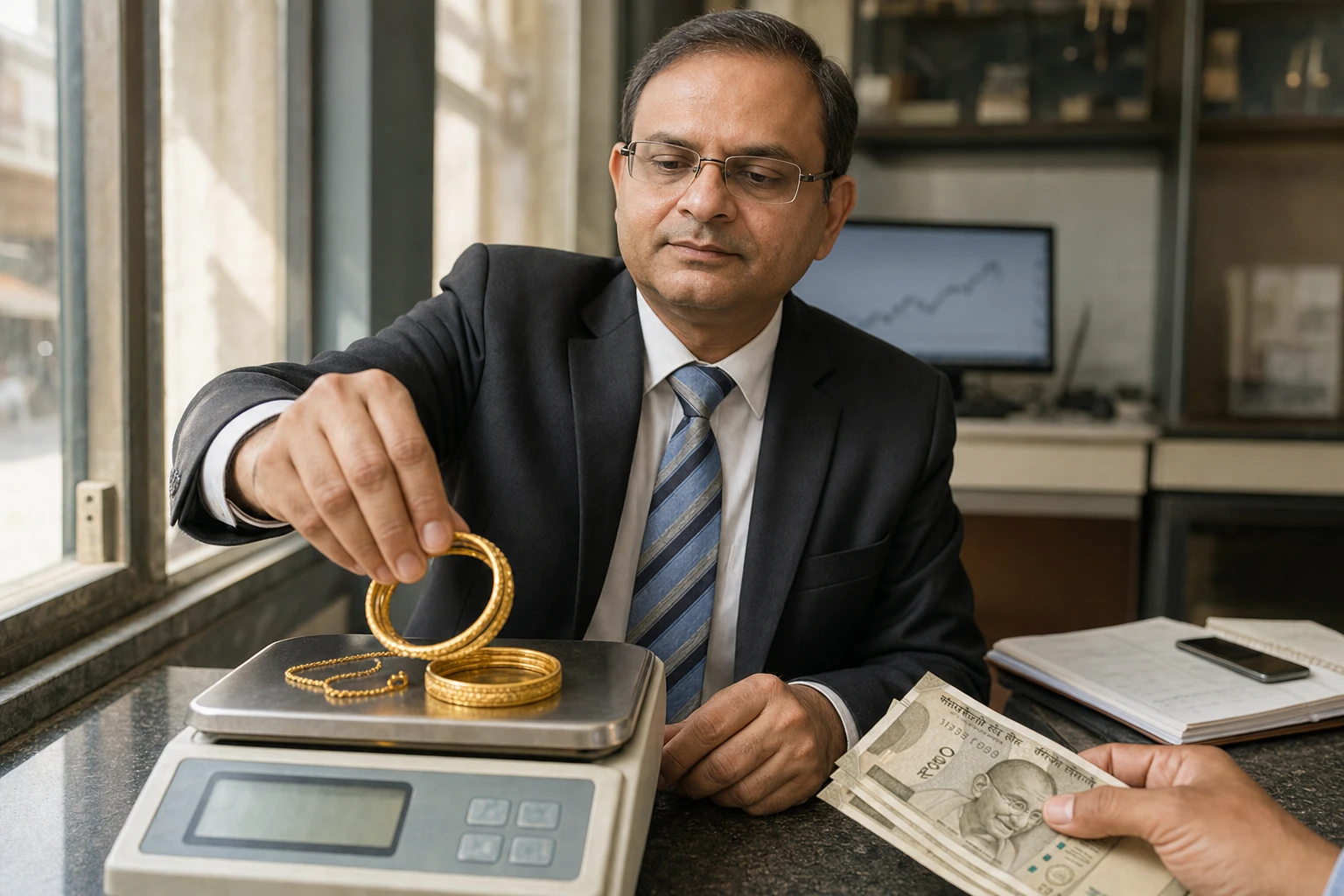
Malhotra gave the sector figures himself: agriculture loan growth at 15% year on year, industry growth almost 17%, housing loans at 11%, and MSME lending at 24 to 25%. He did not give a specific number for gold loans in that interview. Separate RBI sectoral data fills the gap. Loans against gold jewellery rose 105.5% year on year to about Rs 510,000 crore as of May 31, 2026, a pace that sharply outstripped the 15.4% rise in total personal loans. Measured a different way, over a longer stretch, the picture is just as steep. Gold loans have emerged as the largest segment within non-housing retail loans, expanding at a compound annual growth rate of 42.4% since March 2024, nearly double the 23% growth in overall non-housing retail loans, according to the RBI’s own Financial Stability Report.
The Same Reassurance Preceded Microfinance’s Near-Doubling of Bad Loans
Malhotra was not asked directly to compare today’s gold loan and MSME surge to any past episode. But he raised the comparison himself, pointing to microfinance as the cautionary case the RBI is watching for and has not yet seen repeat. The timeline of that earlier episode is worth laying out in full.
- November 2023: The RBI raised the risk weight on consumer credit, including personal loans, from 100% to 125%, in a bid to cool unsecured lending.
- December 2024: Non-performing assets in the microfinance sector crossed Rs 50,000 crore, about 13% of the sector’s gross loan portfolio.
- February 2025: The RBI reversed course, cutting the risk weight on microfinance consumer credit back from 125% to 100% and easing capital rules on bank lending to well-rated NBFCs.
- March 2025: Gross non-performing assets in microfinance surged to 16%, nearly double the 8.8% recorded a year earlier.
- April 2026: The RBI’s Lending Against Gold and Silver Collateral Directions took effect, standardizing loan-to-value limits across banks and NBFCs.
- July 17, 2026: Malhotra tells Doordarshan the RBI does not see immediate distress in the fastest-growing segments of today’s credit market.
The parallel runs deeper than timing. Recalling that NPAs in unsecured personal loans, credit cards and microfinance were rising, Malhotra has said the RBI acted by raising risk weights, which had the intended effect of slowing credit growth in those segments, adding that the RBI has seen a slowdown in credit growth there. From an overall perspective, he said at the time, that stress was not a cause for concern. It is close to the exact language he used on Doordarshan about today’s gold loan and MSME boom, for a different segment, at an earlier point in the same cycle.
The Financial Stability Report Strikes a Sharper Tone
Where Malhotra’s television answers stayed calm, the RBI’s own written analysis is more pointed.
The rapid growth in lending against gold collateral amid elevated gold price volatility merits continued vigilance
the central bank said in its Financial Stability Report, adding that a sustained correction in gold prices could reduce collateral cover, increase borrower stress and lead to higher delinquencies. The report’s data shows why the caution exists. NBFCs almost doubled their gold loan books in FY26, registering a 96.5% year-on-year increase compared with the industry’s overall growth of 54.5%, with gold loans now accounting for 17.4% of NBFCs’ retail loan portfolios, per Elara Securities’ reading of the central bank’s data. The RBI’s stress tests separately flagged concentration risk in the NBFC sector, noting that defaults by a handful of large borrowers could materially weaken the capital positions of some lenders.
Where Gold-Loan Lenders Carry the Exposure
The exposure is not evenly spread. A handful of names carry an outsized share of it.
- Muthoot Finance and Manappuram Finance, India’s two largest listed gold-loan financiers, sit at the center of the NBFC-led expansion the RBI’s report describes.
- Public sector banks have been losing ground in new gold-loan business even as the category grows overall.
- Fintech personal-loan platforms now dominate the smallest loan brackets, with default rates running above those of NBFCs in the same segment.
NBFCs increased their market share of retail gold lending from 28% in the fourth quarter of FY25 to 40% in the fourth quarter of FY26, while public sector banks’ share fell from 41% to 34%, according to Experian data. Meanwhile, NBFCs have lost share in small-ticket personal loans below Rs 50,000, down to 30.7%, as fintech firms took a 56.8% share of that segment, though fintech delinquency runs at 6.4% against 5.7% for NBFCs.
Is India’s Credit Boom Actually Dangerous?
Not yet, by the RBI’s own numbers. Loan-to-value buffers, capital ratios and current asset quality across MSME and microfinance portfolios all look sturdier than they did two years ago, even though growth rates in gold loans and small-business credit are flashing close to the same signal that preceded the last stress episode.
Gross non-performing assets in the MSME portfolio have declined to 5.4%, with the services segment reporting a lower ratio of 3.1%. In microfinance, early-stage stress has eased considerably, with loans overdue between 31 and 180 days falling to 1.8% in March 2026 from 4.4% six months earlier. On gold loans specifically, the cushion looks real. The RBI notes that the average loan-to-value ratio remains below 60%, giving lenders considerable protection if gold prices soften, and only around 6% of gold loan originations come from new-to-credit borrowers, meaning most already have established repayment histories, according to an analysis of the central bank’s stress-test data. At the system level, the RBI’s June 2026 Financial Stability Report puts bank gross NPAs at 1.8% at the end of March 2026, a multi-decade low, projected to rise only to 1.9% by March 2028 under its baseline scenario.
The softer spot is what sits underneath those averages. Household debt reached 45.5% of GDP by September 2025, and non-housing retail loans, the category that includes gold and personal loans, accounted for 58.4% of total household borrowings as of March 2026. That mix, spread across millions of small borrowers rather than concentrated in a few large corporate accounts, is harder for regulators to read early than the bad-loan cycles of the past.
August 3 Is the First Test
The RBI’s six-member monetary policy committee meets August 3 through 5 to review interest rates. The repo rate has stayed unchanged at 5.25% all year. The committee inherits the same tension Malhotra described on Doordarshan: inflation a shade above target, credit booming unevenly, and two specific segments growing at rates the central bank’s own report has already flagged for watching.
Oil adds another variable. India imports around 88% of its crude requirement, and any escalation in prices raises the current account deficit and fuels inflation, with shipping through the Strait of Hormuz already disrupted by the resumed conflict between the US and Iran. Malhotra himself has said the challenges for the economy remain and policymakers need to stay in a wait-and-watch mode. The committee’s decision, whichever way it goes, will be read against a credit book where the fastest-growing pieces are the ones the governor was calmest about.
Frequently Asked Questions
How Much Can Borrowers Get Against Gold Under RBI’s New Rules?
Under the RBI’s tiered loan-to-value framework, borrowers can access 85% of collateral value for loans up to Rs 2.5 lakh, 80% for loans between Rs 2.5 lakh and Rs 5 lakh, and 75% for loans above Rs 5 lakh. The rules took effect in April 2026 and apply across banks and NBFCs.
What Actually Caused the Microfinance Stress Two Years Ago?
Lenders expanded rapidly and sanctioned loans to borrowers who already carried heavy debt, with around 6% of borrowers exposed to four or more lenders at once, while the joint liability group model that underpins microfinance repayment weakened as borrower profiles changed. A GDP slowdown and state-level loan-waiver politics compounded the pressure on repayment.
Why Are Gold Loans Growing So Fast Right Now?
Primarily existing borrowers have used higher gold prices to secure larger loans and roll over existing debt, rather than new customers entering the market. Average ticket sizes have risen accordingly, from about Rs 100,000 in FY24 to roughly Rs 170,000 in FY26, according to Experian’s data on the sector.
What Happens to Gold Loans if Prices Fall?
The World Gold Council’s base case sees gold prices staying range-bound within about plus or minus 5% through the second half of 2026, though a stronger global economy or rising rates could trigger a 5 to 15% correction. The RBI’s loan-to-value buffers are designed to absorb a move of that size without immediately forcing lenders to call in collateral.
Disclaimer: This article is for informational purposes only and does not constitute investment advice; lending and credit data cited are drawn from RBI and industry disclosures accurate as of publication, and readers should consult a qualified financial adviser before making decisions related to gold-backed lending or NBFC securities.

-
 TECH1 year ago
Where Garmin Watches are Made and How They are Assembled
-

 AUTO3 months ago
Tesla’s Roadster Is ‘a Few Weeks Away,’ Says Its Chief Designer
-
 NEWS10 years ago
Samsung Releases Galaxy Note7 TV Ad as Reddit AMA Leaks Specs
-
 NEWS10 years ago
Android 7.0 Nougat Rolls Out To Nexus Devices With New Emoji, Features
-
 FINANCE9 years ago
Cardano Price Surges as ADA Enters the Crypto Top Ten List
-
 NEWS10 years ago
Pre-Order the First Camera Made for Facebook Live Streaming Video
-
 FINANCE1 year ago
Binance Suspends Trading and Withdrawals for a System Upgrade
-
 FINANCE9 years ago
RChain Price Jumps Nearly 150% to a New All-Time High of $2.03