BUSINESS
Lecornu Seats Five Unions and Leaves the Street Outside
Lecornu meets five unions on October 21 about protest security, while lycée groups and Yellow Vests remain outside Matignon ahead of Saturday.

French Prime Minister Sébastien Lecornu meets five unions at Matignon on Wednesday, October 21, and leaves the high school groups that started this crisis off the list. Interior Minister Laurent Nunez sits in. The invitation letter talks about how to protect the freedom to demonstrate, three days before Saturday’s Yellow Vest Act II.
Labor Minister Jean-Pierre Farandou is also due in the room at 10:30. The Saturday marches are being built by Yellow Vest collectives and lycée groups, France’s high school student unions, which asked for this meeting and did not get it. A separate union day is already on the calendar for November 5.
Five Unions Sit at Matignon, the Lycéens Do Not
The unions invited are CFDT, CGT, FO, CFTC and CFE-CGC, the five that French labor law treats as nationally representative. Lecornu’s letter says he wants to discuss “ways and means to guarantee the essential freedom to demonstrate” that “some are trying to divert” with “unacceptable acts.” That is a security agenda, written after a weekend in which marches against the cost of living ended in fires, looting and a death.
CFDT and CGT have already objected to the empty chairs. Lecornu still plans to talk about lycée demands, including timetables, substitute teachers, crumbling buildings and Parcoursup, the university admissions platform, without the student unions in the room. Those groups have been asking for Matignon since early October, after a video call with the education ministry that they walked out of.
WHO IS IN THE ROOM, AND WHO IS NOT
- Invited: CFDT, CGT, FO, CFTC and CFE-CGC, with Nunez and Farandou beside the prime minister.
- Not invited: lycée unions that have been blocking schools since mid-September and called Saturday’s follow-up with the Yellow Vests.
- On the calendar: political parties at Matignon on Thursday, October 22, a session Jean-Luc Mélenchon, the France Unbowed candidate, said his side would attend and wreck.
- Still marching: Yellow Vest Act II on October 24, then a union day on November 5 that the labor confederation has not pulled.
President Emmanuel Macron, in a Sunday night address, said he wanted talks with unions, parties, local officials and lawmakers. The first of those talks is this one, and it is built around the people who can still schedule a strike in November, not the people who filled Place de la République on Saturday.
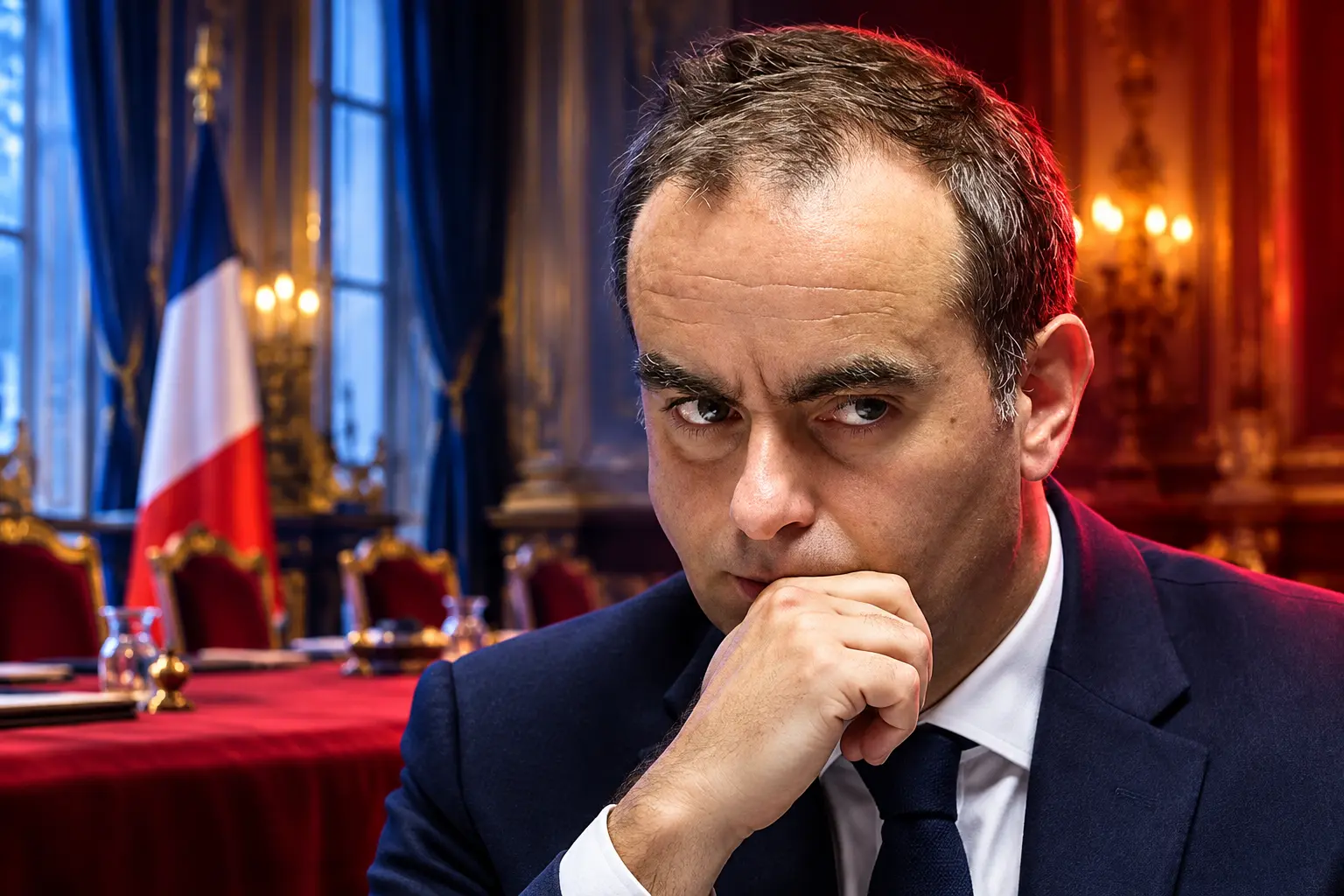
Saturday’s Act II Is Treated as a Police Problem
Yellow Vest groups have framed October 24 as Act II, with a third act listed for the following Saturday, October 31. One of the slogans in circulation is that Macron must go and make way for the people. High school organizations are in that call. They are not in Wednesday’s meeting.
Lecornu told the National Assembly the force for Saturday “will be massive,” and the army is set to back up the police. Paris has already banned people from carrying petrol or gas cans, after fires at shops and public buildings. Partial curfews covered Place de la République and the Les Halles district from 11pm to 6am, with gathering bans around the Champs-Élysées and stations. Prefectures in Lyon, Lille, Nice, Marseille and Bordeaux ran their own night limits, some of them on minors only.
THE DATES THAT SPLIT THE MOVEMENT
- Mid-September 2026: lycée blockades spread over missing teachers, packed classes and buildings that need repair.
- October 7, 2026: Lecornu says the government’s first school decisions will come at the end of October, and he orders diesel released from stocks.
- October 17, 2026: nationwide marches mix students, unions, farmers and Yellow Vest groups; rioting follows on the edges.
- October 18, 2026: Nunez offers to resign; Macron refuses; looting continues in parts of Paris.
- October 21, 2026: five unions go to Matignon; lycée organizers stay outside.
- October 24, 2026: Yellow Vest Act II and student marches, with a larger police and army presence promised.
- November 5, 2026: inter-union strike day, still listed by CGT, CFDT, FO, Unsa and FSU.
The sequence does the political work the letter will not say out loud. Saturday is being handled as public order. November is being handled as industrial relations. The people who started the school revolt sit in neither column on Wednesday morning.
Why 60,000 Officers Lost Control of the Weekend
Interior Minister Laurent Nunez said about 60,000 police and gendarmes were on duty on Saturday, October 17, and he admitted they lost control in several cities. The ministry counted 550,000 marchers across 110 processions, including 110,000 in Paris. Organizers put the national figure higher. Authorities had planned for 70,000 to 140,000 people.
That gap is the operational fact behind the new promises. France went in light, then watched small groups peel off the crowds to loot and burn. Grégory Joron, national secretary of the Un1té FO police union, said many cities were understaffed against the smash-up crews. Nunez called it a lack of anticipation. Macron kept him in the job anyway.
HOW SATURDAY COMPARED WITH EARLIER DEPLOYMENTS
| Event | Officers | Official crowd |
|---|---|---|
| Cost-of-living marches, Oct. 17, 2026 | 60,000 | 550,000 |
| Bloquons Tout, Sept. 10, 2025 | 80,000 | 200,000 |
| Yellow Vests, second weekend, 2018 | 75,000 | More than 100,000 |
| Yellow Vests, Dec. 8, 2018 | 89,000 | Not given for that day |
| Pension marches, 2023 peak | At most 13,000 | 1 million to 3.5 million |
The 2023 pension processions were huge and mostly stewarded by unions. Saturday was closer to the Yellow Vest pattern, built online and mixed with school blockades, and the force was smaller than the one sent against a 200,000-person day in September 2025. France has about 28,000 officers trained specifically for crowd work, CRS and mobile gendarmes. Once the marches fragmented, that specialist pool was not enough.
On Saturday in some major cities, you couldn’t look shopkeepers in the eye after hundreds of shops had been looted and tell them we hadn’t lost control.
Laurent Nunez, interior minister, after the weekend unrest
Justice Minister Gérald Darmanin said more than 2,330 people were taken into custody over the weekend, 70 percent of them adults. He later put the number jailed for violence or damage at 149, with more than 800 sent before the courts. The interior ministry said almost 1,000 police and gendarmes were hurt. One protester died after a cardiac arrest in Paris.
CGT, which marched and then condemned the force used on its own stewards, said there were nearly 800,000 people in the streets and that the government had to answer the social list without delay. That turnout figure is the organizer count. It is not the ministry’s.
The Limoges Fire Now Has a Watchlist Suspect
The image that stuck is the town hall in Limoges, a listed building from 1883 whose roof and belfry came down in the fire. Anti-terror police were brought in. A 34-year-old man on the S-list, France’s national security watchlist, was arrested by the RAID unit in Val d’Issoire, about 30 miles from the city, and described as an ultra-left militant. Prosecutors have said arson of that kind, by a dangerous means and in an organized group, can bring up to 20 years. Ten other people in Limoges were jailed for looting a shop.
Lecornu has accused ultra-left groups of an “insurrectionary plan” tied to the presidential timetable. Lawmakers from across a fractured parliament agreed on Tuesday, October 20, to open an inquiry covering intelligence, tactics and whether the government was ready. Nunez offered his resignation on Sunday, October 18, after saying the police had lost control. Macron rejected it, which is why the same minister is at Matignon for a conversation about how to keep future marches legal.
United States, Chinese and German advisories went out after the weekend pictures. Lecornu has not ruled out a state of emergency, and he has said the local curfews looked sufficient for now. He also said money would be set aside for damaged districts and recovered from those who did the damage, a pledge that collides with a budget he is already struggling to pass.
French 10-Year Yields Hover Near a 24-Year High
In 2018, when Yellow Vest roundabouts blocked the country, Macron could buy calm with tax cuts and wage measures worth about $11 billion. That option is not on the table in the same way. Investors have been selling French debt for weeks over the deficit, and the riots added another shove.
The 10-year OAT yield was 4.96 percent on Tuesday, October 20, after Monday’s jump, close to an early-October print of 4.9937 percent that was the highest since July 2002. The gap over German Bunds was 152.50 basis points on Tuesday. It had touched 158.67 basis points earlier in October, the widest since November 2011. Jim Reid of Deutsche Bank said the protests would not make it easy for buyers to feel comfortable holding OATs. Analysts at Goldman Sachs asked whether European sovereign risk could start to look like the crisis of 15 years ago.
THE FISCAL TRAP BEHIND THE CURFEWS
- Interest bill: the finance ministry expects debt service next year above €90 billion ($100 billion), more than planned spending on defense or on schools.
- Debt stock: public debt at 119% of output, with no stable majority to cut it.
- Budget effort: Lecornu’s plan still aims at about €54 billion of tightening, the figure unions cite when they say the squeeze falls on services.
- Next test: Moody’s is due to review France’s rating on Friday, October 23, while Saturday’s marches are still being policed.
A minority government cannot spend its way out of a lycée revolt and still convince the bond market it will hit a 3 percent deficit path. That is why Wednesday’s script is order first, concessions later, and why “later” is now tied to an end-of-October school package that students already treat as too vague.
An Ifop Survey Hands the First Round to Le Pen
Ifop-Fiducial, polling 1,928 people from the evening of October 17 through October 19 for LCI, Le Figaro and Sud Radio, put Marine Le Pen at 34% to 38% of first-round votes depending on who else runs. In the main lineup she is on 34 percent, with Mélenchon on 15 percent, and Raphaël Glucksmann and Édouard Philippe on 12 percent each. The runoff tests have her at 68 percent against Mélenchon and 56 percent against Philippe, her tightest matchup.
Le Pen called the unrest a “wake-up call” that exposed a “profound crisis” of authority. Macron said those who sought to bring down the republic would be held to account. Mélenchon, speaking after the looting, told viewers not to listen to Lecornu, who he said was using “the same method of letting conflicts rot” that the state used on the Yellow Vests. He condemned the Limoges fire as a crime and still blamed the government for the mess.
WHERE EXPERTS DISAGREE
- Matignon: Lecornu says ultra-left groups ran an insurrection plan on the edge of otherwise ordinary marches.
- CGT: the confederation calls the state’s handling a “strategy of chaos” and says peaceful marchers and union stewards were hit.
- Mélenchon: he says the method is delay and decay, and that Nunez and Lecornu specialize in organized disorder.
The poll does not need anyone to win the argument. Disorder of this scale, six months before a presidential first round, moves votes toward the candidate who campaigns on restored order, and it keeps Mélenchon in the second-round math that the center has been trying to occupy.
The November 5 Strike Is Still on the Union Calendar
CGT’s federal bureau, after the weekend, kept the pressure on wages, prices and public services and again listed a national strike on November 5 with CFDT, FO, Unsa and FSU. That date is the one Matignon can still bargain over. It is also the date CGT has used for a “convergence” with the youth movement the prime minister did not invite.
Lecornu said in mid-October that violence had touched 200 of 3,700 lycées, often with people coming from outside, and that this was a public-order problem as well as a school one. The end-of-October decisions he promised on October 7 have not yet been published. Until they are, the student unions have no reason to treat Wednesday as theirs.
Thursday’s party session at Matignon will be louder and less useful. Saturday’s Act II will test whether a larger force, with soldiers in support, can hold streets that 60,000 officers did not. November 5 remains the unions’ own day, which is why they were the ones asked to come in and talk about the freedom to march.

Bulk Scotch Still Faces Full Duty After India’s UK Deal

Typhoon Champi Loops Off Taiwan and Still Injures 527

PM Modi Opens Chinmaya’s AI Guru and Asks for Unity

Mahim Police Hold a JeM Suspect on Enmity Charges

Gold Falls Below $4,000 as Hormuz Oil Hits $117

The iPhone 18 Pro Max Splits Apple’s Fall in Two

OpenAI Calls GPT-6 Astra AGI Then Locks Its Exploits

Clancy Juror Says the Holdout Never Cited Evidence

Trump Claims Hormuz Control as Oil Holds Near $96

Russia Closes the Goethe-Institut Berlin Tried to Save

 NEWS2 months ago
The iPhone 18 Pro Max Splits Apple’s Fall in Two
- NEWS2 months ago
OpenAI Calls GPT-6 Astra AGI Then Locks Its Exploits
- NEWS1 month ago
Clancy Juror Says the Holdout Never Cited Evidence
- BUSINESS2 months ago
Trump Claims Hormuz Control as Oil Holds Near $96
- LIFESTYLE2 months ago
Russia Closes the Goethe-Institut Berlin Tried to Save
- AUTO2 months ago
Volkswagen’s Job Cuts Leave Four Plants Without Cars
- NEWS2 months ago
Dyson Puts Nurovi Robots on Sale Without the UV Flagship
- NEWS2 months ago
The Lincoln’s 286-Day War Cruise Ends at a Thai Pier