
NEWS
US Strikes Kill 11 in Iran After a Hormuz Wedding
Iran says US strikes killed 11 people, including guests at a Hormuz-coast wedding, a civilian toll now running ahead of Washington’s IRGC target list.

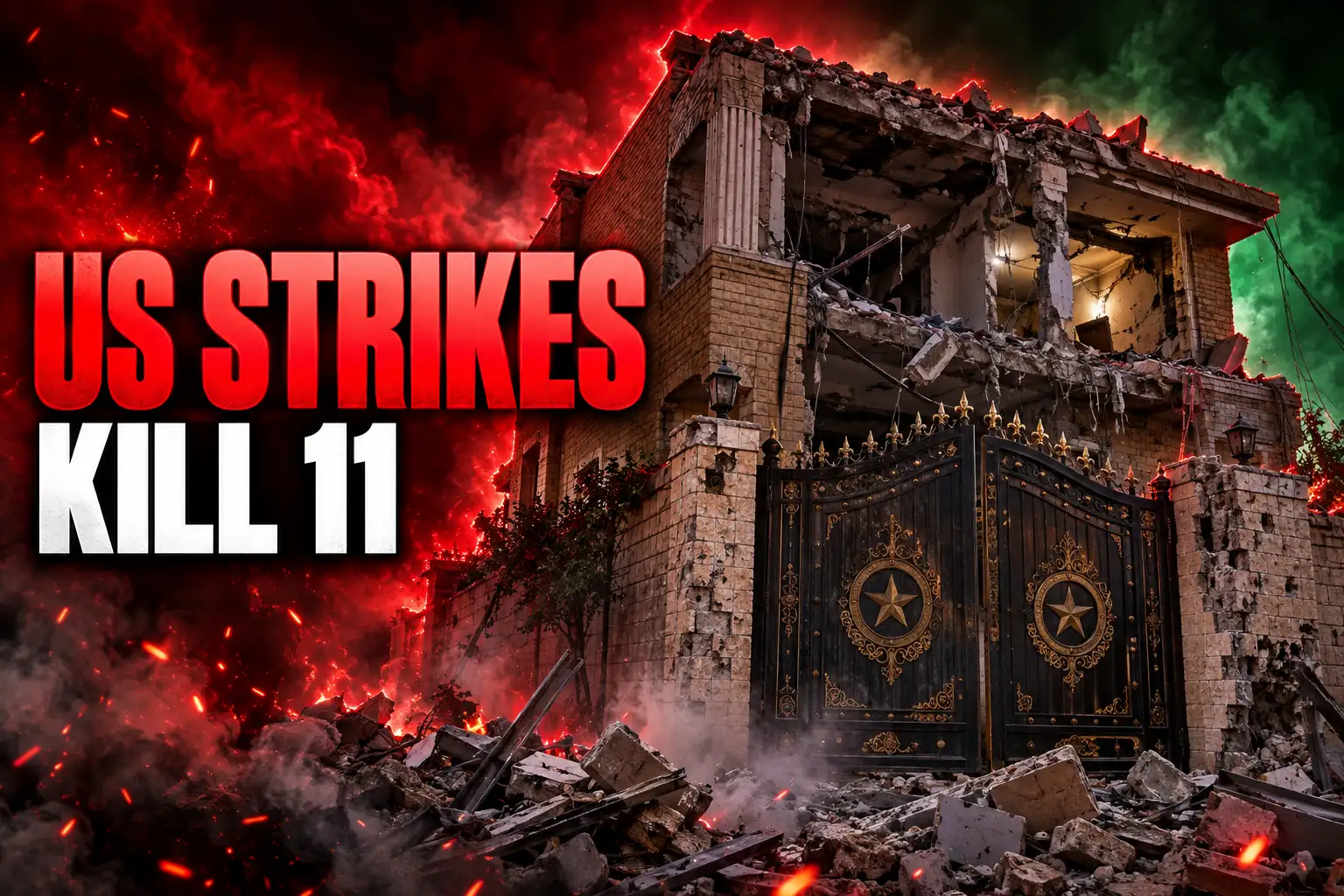
Iran said Wednesday that American strikes had killed 11 people, seven in Khuzestan and four at a wedding on the Hormuz coast. The tally, issued through state media, added a night attack on three sites around Ahvaz and Aghajari to a Tuesday strike that the Iranian Red Crescent said sent shrapnel through a house party in Kuhestak, in Sirik county.
US Central Command said the same wave hit Islamic Revolutionary Guard Corps air defenses, radar, boats, mine gear, and radio sites after attempted attacks on shipping and on American troops. It has not said what, if anything, it meant to hit in Kuhestak.
Eleven Dead After Strikes Hit Khuzestan and Sirik
Khuzestan Deputy Governor Valiollah Hayati said last night’s missiles left 7 people dead and eight wounded at three locations around Ahvaz and Aghajari. That account, carried Wednesday, is the inland half of the 11. Iranian state television had earlier spoken of two points around those cities and promised more detail later.
The coastal half is the wedding. On Tuesday the Iranian Red Crescent said shrapnel from a US missile hit a residential home in Kuhestak where a celebration was under way, killing 4 people, including a child, and wounding more than 50. Hormozgan Deputy Governor Ahmad Nafisi had first told state television that two people were dead. Mehr News and Fars later identified a four-year-old among the dead.
THE TWO CONFIRMED TOLL SITES
| Place | Dead | Wounded | Iranian source |
|---|---|---|---|
| Khuzestan, around Ahvaz and Aghajari | 7 | 8 | Valiollah Hayati, deputy governor |
| Kuhestak wedding, Sirik county | 4 | More than 50 | Iranian Red Crescent, Tuesday |
Provincial officials in Hormozgan later raised the wedding figures. Nafisi put the dead at five and the wounded at 68. Sirik County Governor Reza Shahidiyan told state radio that 63 people were wounded, 50 of them women and children, and that all had been taken to a hospital in nearby Minab in stable condition. The Wednesday total of 11 still used the Red Crescent’s four.
Health official Hossein Kermanpour wrote that the dead included a child and that electricity and telephone service were down. Iranian media also reported explosions in Bandar Abbas, on Qeshm Island, and in Jask, Chabahar, Konarak, and Asaluyeh, without a full casualty list for those towns.
What the United States Says It Hit
CENTCOM said US forces began striking IRGC targets at 12 p.m. Eastern Time on Tuesday, 1600 GMT, after recent attempted attacks on commercial shipping in the Strait of Hormuz and on American service members in the region. The command said it had completed a wave against air defense sites, radar systems, maritime assets and facilities, mine-laying gear, and communications sites, and that more than 50,000 US troops remain in West Asia.
THE TARGET CLASSES CENTCOM NAMED
- Air defenses: Sites the command grouped with radar covering coastal approaches to the strait.
- Maritime kit: Boats, facilities, and other waterfront assets it tied to the IRGC.
- Mine-laying gear: The hardware Washington says Iran tried to put back into the strait.
- Communications: Radio and other links listed in the same Tuesday wave.
President Donald Trump wrote that the United States was “striking Iranian Targets near the Strait of Hormuz,” called the strikes “large and powerful,” and said they answered “the Iranians’ failed attempt at adding sea mines to the Strait, which currently has no mines (They have been completely removed or detonated!),” plus eight missiles at a US base in Jordan that he said were “all successfully knocked down.” He warned that if Iran hit back, it would be struck “again at a much harder and higher level.”
https://x.com/CENTCOM/status/2094826294466810366
Navy Captain Tim Hawkins, speaking for CENTCOM, said the command was aware of Iranian reports from Sirik and that “the US military never targets civilians, unlike the IRGC.” Washington has not identified a military aimpoint in Kuhestak.
The Wedding House in Kuhestak
Kuhestak sits in Sirik county on the northern shore of the strait, the same coastline the United States has been bombing to stop IRGC boats and mines. The Red Crescent described shrapnel hitting a house mid-celebration. Footage released by the group showed walls and windows blown out and debris on the ground, plus children under treatment.
The IRGC said the strike had “turned the wedding celebration of a young and respectable Sunni couple into a mourning by bombing a residential house in Sirik and reducing it to dust and blood,” and that nearly 70 people were hit, with four, including a child, killed. Naming the couple as Sunni puts the dead on a register Gulf publics can read without a map.
The United States’ catalogue of atrocities against the nation of Iran is now complete: a residential home in Kuhestak, Sirik, was brutally attacked tonight while families were celebrating a wedding. More than 50 innocent men, women and children were martyred or wounded.
Esmaeil Baqaei, Foreign Ministry spokesperson, on X
Baqaei, in the same post, folded Kuhestak into a catalogue of atrocities against Iranians that he said already ran through Minab, Lamerd, and Qeshm Island, and through “strikes on military targets that were dressed in deceptive justifications.” He added that “Iran will respond to these savage crimes with firmness.” Ebrahim Azizi, who chairs the National Security and Foreign Policy Commission in Iran’s parliament, called the wedding strike a repeat of Minab and Lamerd and said it would not go unpunished.
WHAT WE KNOW
- The house: The Iranian Red Crescent said shrapnel from a US missile hit a home hosting a wedding in Kuhestak, Sirik county, on Tuesday.
- The first toll: The same group put the dead at four, including a child, and the wounded at more than 50.
- The US line: CENTCOM listed IRGC coastal targets and, through Hawkins, said it does not target civilians.
WHAT IS UNCONFIRMED
- The aimpoint: No US statement has said what, if any, IRGC site in Kuhestak was the intended target.
- The later counts: Nafisi’s five dead and 68 wounded, and Shahidiyan’s 63 wounded, have not been reconciled with the Red Crescent’s first report.
- The weapon: Iran’s embassy in Switzerland wrote that four women and children killed died after three missiles, with six of 68 wounded in critical condition; that missile count is the embassy’s claim, not a verified munition identification.
A four-year-old dead at a Sunni wedding on the Hormuz shore is a simpler fact to move than a list of radar vans. That is why the Kuhestak house, not the Khuzestan sites, is the image this round will leave behind, including in capitals that host American aircraft and ships.
Khuzestan’s Hits Sit off the Strait
Ahvaz and Aghajari are not on the strait. Hayati’s three locations pull Tuesday’s map inland into Khuzestan, a southwestern province whose geography is the head of the Gulf, not the Hormuz bottleneck CENTCOM keeps naming. The command’s public list still read as a coastal IRGC problem: air defenses, radar, boats, mines, radios. It did not name Ahvaz.
Iranian media reported the Khuzestan missiles after the CENTCOM announcement, in the same night as the Hormozgan blasts. Hayati gave no breakdown of who the seven dead were, soldier or civilian, and no function for the three sites. Until that is filled in, the inland dead sit in the same 11 as the wedding guests, with less of a story attached, which is why they will be easier for Washington to ignore and easier for Tehran to fold into a single civilian file.
The Institute for the Study of War mapped strikes across southern Iran between the afternoon of August 31 and 3 p.m. Eastern Time on September 1, the window that covers the Sunday hits on Larak Island and the start of the Tuesday wave. Khuzestan’s night toll arrived after that clock.
Missiles Aimed at Bases Hosting US Troops
The IRGC said it answered the US wave, and specifically the Sirik house, with missiles and drones at American sites in Jordan, Kuwait, Bahrain, and Erbil in Iraq. Trump had already said eight Iranian missiles at a Jordan base were knocked down in the earlier round. Overnight, the fight moved onto the countries that host the aircraft.
WHERE IRAN SAID IT FIRED BACK
- Aqaba, Jordan: The IRGC said it launched ballistic missiles at a US Marine site; Jordan’s armed forces said they intercepted 13 ballistic missiles, destroyed 10, and saw three fall in remote areas.
- Ali Al Salem, Kuwait: The IRGC claimed a missile and drone strike on a US commander’s headquarters, housing, and drone pads, and said American personnel were killed; neither the US nor Kuwaiti militaries have confirmed those deaths.
- Bahrain and Erbil: Iranian statements also listed US sites in Bahrain and in Erbil, Iraq, among the return fire.
The Houthi foreign ministry in Sanaa, which most governments do not recognize, said it stood with Tehran and warned countries that host US forces they would face “repercussions.” IRGC statements addressed Kuwaitis directly, saying the fire was aimed at the American presence rather than at Kuwait, and called for those forces to leave.
Sardar Mohebi, an IRGC spokesperson, wrote that the United States would face “severe punishment” and “will regret its new attacks.” The return fire is how Tehran tries to make the wedding a military event, not only a humanitarian one, by putting the cost onto the same Gulf platforms Washington uses to keep hitting the Iranian shore.
Oil Jumps as Hormuz Traffic Stays Thin
The strait that used to carry about a fifth of the world’s seaborne oil is the reason these towns are in the target folder. Iran has, in practice, shut much of that traffic since the war opened. Tuesday’s fighting sent the oil desk back to that fact.
TUESDAY’S OIL MOVE
- Brent settle: $94.65 a barrel, up $4.16, or 4.6 percent, the highest close since July 24.
- WTI settle: $90.22 a barrel, up $4.46, or 5.2 percent, the highest close since July 23.
- Wednesday morning: Brent was at $95.40 by 0345 GMT, up 75 cents; WTI was at $90.66, up 44 cents.
- Hormuz crossings: Kpler counted about five vessels, excluding container ships, on Tuesday, after 10 on Monday, seven on Sunday, and nine on Saturday.
Trump has tried, for weeks, to shift from air strikes toward squeezing Iran’s economy. The Tuesday wave, sold as a reply to mines and to shots at US troops, put explosives back on the same waterway that pricing depends on. A wedding in Kuhestak does not move a futures contract by itself. A night of strikes along the strait, with Iran firing at the bases that police it, does.
A Pattern Along the Southern Coast
Baqaei tied Kuhestak to Minab and Lamerd, towns he says were hit on the first day of the war, and to Qeshm Island. Those earlier death counts are Iranian claims, and they have not been independently settled here. The Qeshm house from late July is the one with physical forensics attached.
CIVILIAN SITES IRAN TIES TO US STRIKES
- February 28, 2026: The war opens with US-Israeli strikes that kill Supreme Leader Ayatollah Ali Khamenei; Baqaei says a school in Minab and a sports hall in Lamerd are among the sites hit that day.
- July 31, 2026: A bomb hits a family house in the Chah-Tangu neighborhood of Qeshm City; Iranian officials name the dead as Zahra Jafari, taxi driver Qeysar Jafari, and their two-year-old son Sina. Former US Army explosives technician Trevor Ball, an analyst at Armament Research Services, said the crater, at least 30 feet wide, matches a 2,000-pound Mark-84.
- September 1, 2026: Shrapnel hits a wedding house in Kuhestak, Sirik county, on the same strait shore.
Six months and five days after February 28, the United States is still flying a “limited, precise” campaign against IRGC mine crews and radar on a coast where those crews live next to wedding halls. Hawkins can say the military does not target civilians. The Red Crescent can count four dead in a house party, and Hayati can add seven more inland. The gap between those sentences is now the story the region has in its hands. Power was back in Qeshm county by Wednesday morning. In Minab, Shahidiyan said, the wounded from the wedding were stable.

Police Tighten the Ring Around Gyanesh Kumar’s House

Ravi Shankar Calls Hanuman Ansh a Slap to Big Spenders

Microsoft Puts Nvidia in the Surface Laptop Ultra Flagship

Adult Fires on an Armed Juvenile at Longmont Dollar Tree

Jordan Absorbs Iranian Missiles Aimed at Parked US Jets

The iPhone 18 Pro Max Splits Apple’s Fall in Two

OpenAI Calls GPT-6 Astra AGI Then Locks Its Exploits

Russia Closes the Goethe-Institut Berlin Tried to Save

Trump Claims Hormuz Control as Oil Holds Near $96

Volkswagen’s Job Cuts Leave Four Plants Without Cars

 NEWS1 month ago
The iPhone 18 Pro Max Splits Apple’s Fall in Two
- NEWS1 month ago
OpenAI Calls GPT-6 Astra AGI Then Locks Its Exploits
- LIFESTYLE1 month ago
Russia Closes the Goethe-Institut Berlin Tried to Save
- BUSINESS1 month ago
Trump Claims Hormuz Control as Oil Holds Near $96
- AUTO1 month ago
Volkswagen’s Job Cuts Leave Four Plants Without Cars
- BUSINESS1 month ago
Cable Stocks Fall as UltraTech Copies the Paints Playbook
- BUSINESS1 month ago
Japan’s 3 Percent Yield Reprices Government Debt Worldwide
- NEWS1 month ago
Dyson Puts Nurovi Robots on Sale Without the UV Flagship