
NEWS
The Pentagon Fired Its War Planner and Publicized His Tests
Hegseth fired Lt. Gen. Brett Sylvia after three polygraphs, then officials publicized the tests, a move lawyers say may break privacy law and weaken any trial.

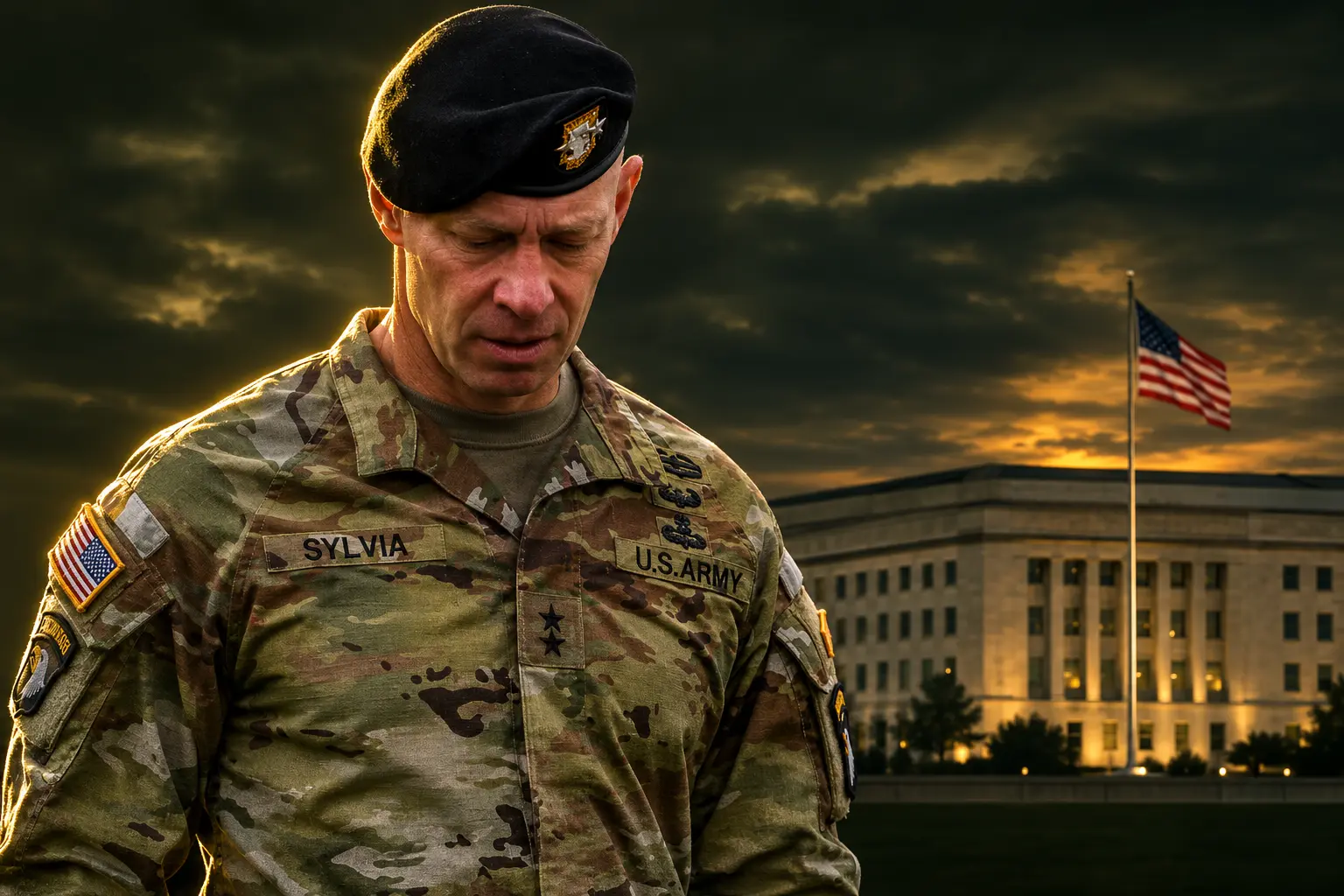
Defense Secretary Pete Hegseth removed Lt. Gen. Brett Sylvia from the Joint Staff’s top planning post on Oct. 28. A Pentagon official then said the three-star had failed three polygraph tests in a leak inquiry and that the file had gone to the Justice Department.
The Joint Staff had just thanked him for 32 years. Then it pulled the thanks. Lawyers who defend troops say the public polygraph dump may have broken federal privacy law and damaged any court-martial before anyone filed a charge.
The Joint Staff Took Back Its Thanks
Sylvia held the J5 job, director for strategy, plans and policy, reporting to Gen. Dan Caine, the chairman of the Joint Chiefs. That office is supposed to strategies, plans, and policy recommendations for the chairman, so the president and other national leaders get military advice with combatant-command views and risk built in.
A Joint Staff spokesperson first said the chairman and the Joint Force extended “deepest gratitude to Lt. Gen. Brett Sylvia and his family for their 32 years of distinguished service to our nation,” and wished them well. Within a day the same staff said that, “upon further review, we determined that the statement did not appropriately reflect the full circumstances.”
He is the second officer Hegseth has pushed out of that chair. Lt. Gen. Joseph McGee, the previous J5 director, was forced to retire in October 2025 after months of tension with Hegseth and Caine. No replacement for Sylvia has been named.
THE FORTY-EIGHT HOURS AFTER THE FIRING
- October 28, 2026: Hegseth removes Sylvia from the J5 post. The Joint Staff thanks him for 32 years and wishes his family well.
- October 29, 2026: Sean Parnell, the chief Pentagon spokesman, posts a statement that names no one, cites an Air Force Office of Special Investigations probe, and says the matter has gone to Justice. The Joint Staff withdraws its thanks. President Donald Trump, asked about the firing, says, “She’s got problems. She’s going to have big problems,” and adds, “We’re very much looking for leakers.”
- October 30, 2026: Military-defense lawyers say the decision to publicize polygraph results from a personnel file may violate the Privacy Act of 1974 and, if a court-martial were coming, would look like unlawful command influence.
Parnell’s on-record post never used Sylvia’s name. An anonymous official had already filled in the blanks for friendly outlets the night before, calling the conduct “severe” and saying “urgent action was needed and could not wait another second.”
The Department of War has zero tolerance for the intentional, unauthorized disclosure of classified information. Anyone who compromises sensitive national security information puts the lives of our Warriors at risk and undermines every military operation that keeps our country…
— Sean Parnell (@SeanParnellASW) October 29, 2026
The spokesman wrote that classified information “is not personal property” and that leaking it “for personal, political or professional gain is a betrayal.” He closed, “We vowed to find you, and we meant it.” The next problem was that someone in the building had just found a polygraph file and handed it to the press.
A Polygraph File the Pentagon Usually Hides
The official said Sylvia failed three tests about sharing classified material on the Iran war, the Russia-Ukraine war, and other topics. The same account said that after the Pentagon made journalists walk with escorts inside the building, Sylvia met reporters outside in order to leak. The official offered no documents, no dates, and no names of those reporters.
Polygraph charts live in personnel-security and counterintelligence files. Those files are the sort of records agencies refuse to release under the Freedom of Information Act. Brad Moss, a Washington lawyer who handles security-clearance cases, said the Privacy Act bars public release of that kind of personal information from government files without the person’s consent, and that courts have treated spoken disclosures as violations too.
It defies belief to see the leaking of Privacy Act-protected information of an employee in order to accuse that same employee of themselves being accused of unauthorized leaks.
Brad Moss, national security lawyer, to CBS News
Cody Harnish, a former Army judge advocate who now defends service members, was blunter. “This is a Privacy Act violation,” he said. “Secretary Hegseth cannot sign off on the Pentagon not following the statute.” Harnish added that the statement also revealed a pending counterintelligence investigation, a Justice referral, and a finding of “severe misconduct” in a case the department still called open.
Frank Rosenblatt, a retired Army lawyer and president of the National Institute of Military Justice, did not agree that the Privacy Act was broken. He aimed at the tests themselves. “This unreliable junk information is being allowed to stand in for like actual evidence that he’s done something,” he said. Polygraph results are not admissible in court. The count of failed tests is a press fact, not a trial fact.
The Pentagon did not answer questions about the Privacy Act. Sylvia did not answer calls, texts, emails, or a LinkedIn note on accounts that appear to be his.
Why the Case Went to Civilian Court
Parnell said “this matter, along with others,” had been referred to the Justice Department “for potential further legal action.” A referral is a handoff. It is not an indictment, an arrest, or a court-martial charge, and none of those has been announced.
Harnish’s further point sits under that choice. If the department wanted a court-martial, he said, the public statement is “clear proof of Unlawful Command Influence.” Military appeals courts have called that kind of command pressure the mortal enemy of military justice. Presidents and defense secretaries can commit it. Once a secretary’s team has told the country a named three-star failed three tests and committed “severe misconduct,” a military judge has to ask whether a panel can still hear the case cleanly.
WHAT THE PUBLIC FILE LEFT EXPOSED
- The privacy problem: Polygraph results sit in protected systems of records, and a verbal dump to reporters can still break the Privacy Act.
- The command problem: A public verdict of severe misconduct, issued while the probe is open, is the fact pattern lawyers cite for unlawful command influence.
- The evidence problem: The tests cannot be walked into a courtroom, so the number three does not become proof.
- The forum problem: Justice can still charge a soldier under civilian statutes, but the referral itself is not a charge, and a military trial is now harder to start without a fight over influence.
Even among people who want a prosecution, the instinct is a military dock, not a civilian one. The Pentagon went the other way after putting the test results in public, which is the move that makes a court-martial uglier. Civilian court does not magically make a polygraph admissible either. What the dump did well was political. It told a base looking for leakers that the department had found one, before a prosecutor had to stand up and prove it.
Two Pentagon Accounts of One Firing
The official story and the building’s other story do not match. Two Pentagon sources confirmed that the firing was tied to the polygraph sessions and disputed the claim that Sylvia leaked classified information. Separate accounts described him as having spoken with at least one journalist on the Joint Staff and as having denied sharing sensitive or classified material. Colleagues were described as stunned, and some of them questioned the narrative Hegseth’s team was pushing.
A later account of an internal inquiry, still unverified in public, described a recorded admission, meetings with two reporters over about a year, and notes taken from a classified Ukraine report. That version also raised the failed-test count. The Pentagon’s own on-record voice never adopted those extras. Parnell named no one and released no report.
HOW THE TWO VERSIONS DIVERGE
| Point in dispute | Pentagon official | Other officials and accounts |
|---|---|---|
| Polygraph tests | Failed three, leak questions | Firing tied to the tests |
| Classified leaks | Iran war, Ukraine war, other topics | Two officials said that claim is false |
| Contact with reporters | Met them outside after escort rules | Talked to a journalist and denied sharing classified material |
| Legal status | Justice referral, “severe misconduct” | No charge announced |
Sylvia came to the Joint Staff from command. He led the 101st Airborne Division at Fort Campbell, Kentucky, until May 2025, and he had already been the J5’s vice director. His awards include six Bronze Stars, one of them for valor, and a Purple Heart from wounds in combat. The official biography that listed that record was taken down after the firing.
The same official who accused him of leaking also said he was not a “central planner” on the Iran war. That work, the official said, belongs to U.S. Central Command and Adm. Brad Cooper. The denial was doing two jobs at once: cutting Sylvia out of the war he was accused of discussing, and keeping the operational chain with Cooper, Hegseth, and Caine.
The Aides Who Were Fired and Then Hired
Hegseth has treated leaks as a loyalty test since he took the building. Last year he dismissed three senior aides, Dan Caldwell, Darin Selnick, and Colin Carroll, and accused them of leaking classified information. He said on Fox News that he had moved before the investigation finished, that “once a leaker, always a leaker,” and that if they were cleared, “fantastic,” but he did not think it would be “a good day” for them.
None of the three was charged. Caldwell later joined the Office of the Director of National Intelligence. In a joint statement issued as they left, the three said they were “incredibly disappointed by the manner in which our service at the Department of Defense ended” and that unnamed officials had “slandered our character with baseless attacks on our way out the door.”
The polygraph habit predates Sylvia. Hegseth’s team tested people around the secretary in 2025 until the White House told them to stop, after a senior adviser complained about being targeted. A 2025 draft from Deputy Defense Secretary Steve Feinberg would have put random polygraphs and new nondisclosure rules on more than 5,000 people in the secretary’s office and the Joint Staff. In September 2026, during the Iran war, investigators pulled in some of the highest-ranking officers over news stories about thin munitions stocks. Hegseth has also been on the other end of a leak fight, after a March 2025 Signal chat among senior officials reached a journalist.
More than 20 generals, admirals, and civilian defense leaders have been fired, forced out, or otherwise left since Hegseth arrived. Almost none of those departures came with a public case file. Sylvia’s did, and the file was a polygraph score.
The contrast is ugly in a simple way. Political aides accused of leaking walked into other jobs and never saw a charging document. The officer who wrote plans for the chairman got named, tested, fired, and referred. If the classified-leak claim is true, the rank is no shield. If the claim is the weaker of the two Pentagon stories, the building just did to a Purple Heart three-star what it would not finish doing to the secretary’s own staff.
The Planning Shop Has No Named Director
On Oct. 29, the same day Parnell posted and the Joint Staff took back its thanks, Cooper briefed Trump on Iran strike options, with Hegseth and Caine in the room. Combatant commanders do not make that trip for small talk. The J5 is not CENTCOM, and the official was careful to say so. It is the shop that is supposed to put Cooper’s war next to every other demand on the force and tell the chairman what the risk looks like.
The Joint Staff’s strategy directorate page now lists Rear Adm. Frederic C. Goldhammer as vice director for strategy, plans, and policy. It does not name a director. In a normal handoff the vice director covers the gap until the president nominates a new three-star and the Senate confirms. That is a holding pattern, not a plan.
WHAT WE KNOW
- The personnel action: Hegseth removed Sylvia from the J5 post on Oct. 28, and Parnell said an Air Force OSI investigation led to a Justice referral.
- The public accusation: A Pentagon official said Sylvia failed three polygraphs and leaked classified Iran and Ukraine material to journalists.
- The record: Six Bronze Stars, one for valor, a Purple Heart, command of the 101st Airborne, and 32 years in uniform.
WHAT IS UNCONFIRMED
- A charge: No complaint, indictment, or court-martial specification has been announced.
- The admission: An internal report has been described as capturing a recorded confession; other officials said the leak claim is not true, and the report has not been released.
- A successor: No new J5 director has been named.
Media rules inside the Pentagon have tightened under Hegseth, with escorts in the halls and the press office treated as a classified space. The official’s own leak story depends on those rules. It says the escort policy pushed a three-star into parking-lot meetings, which is a neat morality play and a hard thing to try in court without the journalists, the dates, and the documents.
Justice can still bring a case. Sylvia can still be silent. The tests can still sit in a file that, by statute, is not supposed to be a press release. What the department cannot do is put the thanks back on the record, or put a named director back in the chair it emptied the week the Iran options went to the president.
Disclaimer: This article is news reporting and analysis of a personnel action and a criminal referral. It is informational only and is not legal advice, a finding of guilt, or a prediction of charges. Readers who need advice about military justice, the Privacy Act, or a leak investigation should consult a qualified military or civilian defense lawyer. Names, dates, and case statuses reflect public statements and reporting available on the dates given and can change if prosecutors file, decline, or transfer the matter.

ADNOC Ship Hit in Hormuz Leaves One Crew Missing

SpiceJet’s Rs 5,500 Crore Plan Follows a Rescue That Failed

Hasina’s Return Fight Sets Fire to Yunus’s Bank

Bancroft Recants the 2018 Inquiry and Names the Team

Adhikari Ties the Saffron Saree Row to School Licences

Clancy Juror Says the Holdout Never Cited Evidence

The iPhone 18 Pro Max Splits Apple’s Fall in Two

OpenAI Calls GPT-6 Astra AGI Then Locks Its Exploits

Trump Claims Hormuz Control as Oil Holds Near $96

Russia Closes the Goethe-Institut Berlin Tried to Save

 NEWS2 months ago
Clancy Juror Says the Holdout Never Cited Evidence
- NEWS3 months ago
The iPhone 18 Pro Max Splits Apple’s Fall in Two
- NEWS3 months ago
OpenAI Calls GPT-6 Astra AGI Then Locks Its Exploits
- BUSINESS3 months ago
Trump Claims Hormuz Control as Oil Holds Near $96
- LIFESTYLE3 months ago
Russia Closes the Goethe-Institut Berlin Tried to Save
- AUTO3 months ago
Volkswagen’s Job Cuts Leave Four Plants Without Cars
- NEWS3 months ago
Dyson Puts Nurovi Robots on Sale Without the UV Flagship
- BUSINESS2 months ago
US Destroys Five Iranian Tankers as the Shock Hits Jordan










