
NEWS
Apple’s Record Quarter Leaves the Foldable on Backorder
John Ternus’s first Apple earnings print hit $114.5 billion, but iPhone Duo is still on backorder and holiday margins are already guided lower.

Apple posted $114.5 billion in September-quarter revenue on November 2, up 12 percent, in John Ternus’s first earnings report as CEO. iPhone sales were $57.6 billion, a September-quarter record, and they did not include the foldable.
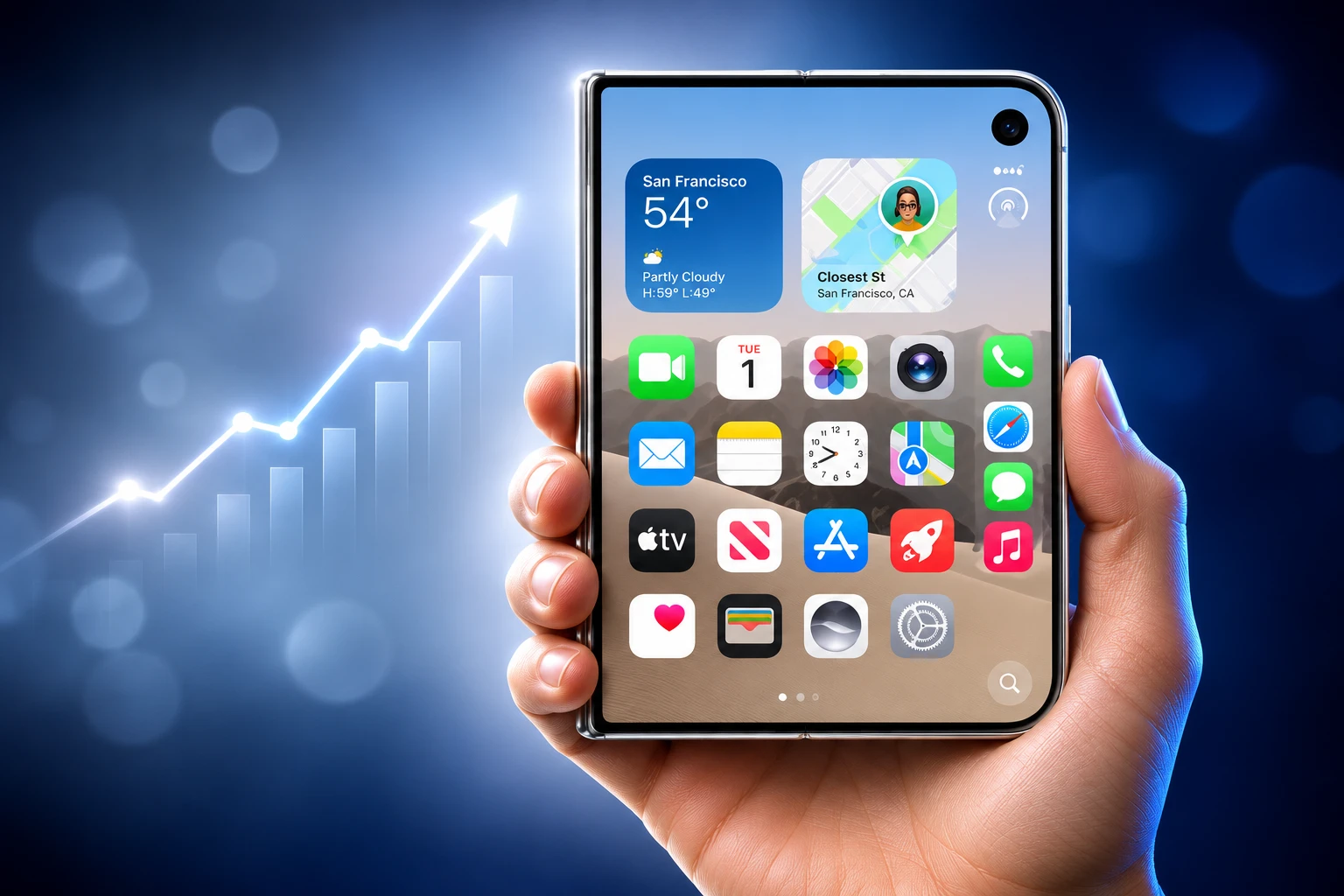
The iPhone Duo, which Ternus called the most transformational iPhone since the original, went on sale October 23 at $1,999 and is still listed for late January 2027.
A Record Quarter Without Its Star Product
Apple’s newsroom put a September quarter revenue record of $114.5 billion on the board for the three months ended September 26, with diluted earnings of $2.10 a share, up 14 percent. Net income was $30.7 billion. The year closed at $479 billion in sales, which Ternus and CFO Kevan Parekh both called Apple’s best fiscal year.
Ternus took over from Tim Cook on September 1. On the call he said Apple had just completed one of the most prolific launch periods in its history, and he put iPhone Duo at the front of that list. The device did not go on sale until October 23, so every Duo order sits in the December quarter, not in this print.
iPhone 18 Pro and iPhone 18 Pro Max did ship late in the period. Even so, the $57.6 billion iPhone line, up 17 percent from $49.0 billion a year earlier, was built on the rest of the lineup. Goldman Sachs analyst Michael Ng asked why there was no standard iPhone 18. Ternus pointed at Duo and the Pro models and did not give a direct reason.
APPLE Q4 2026 SALES BY CATEGORY
| Category | Q4 2026 | Q4 2025 | Change |
|---|---|---|---|
| iPhone | $57.6 billion | $49.0 billion | up 17% |
| Mac | $10.8 billion | $8.7 billion | up 24% |
| iPad | $6.2 billion | $7.0 billion | down 10% |
| Wearables, Home and Accessories | $8.3 billion | $9.0 billion | down 8% |
| Services | $31.6 billion | $28.8 billion | up 10% |
| Total | $114.5 billion | $102.5 billion | up 12% |
Mac was the other hardware burst, up 24 percent to $10.8 billion on MacBook Neo and MacBook Pro demand, and Parekh said fiscal 2026 was Apple’s best Mac year, with $37.9 billion in sales. iPad fell 10 percent to $6.2 billion on short supply and a hard compare with last year’s A16 iPad. Wearables, Home and Accessories dropped 8 percent to $8.3 billion after Watch SE 3 and AirPods Pro 3 hit in the year-ago quarter, and the new Apple TV 4K, HomePod mini, and HomeView did not ship in this period.
Services reached an all-time high of $31.6 billion, up 10 percent, and $123.3 billion for the year. Greater China revenue rose 21 percent, led by iPhone and Mac. The active installed base passed 2.5 billion devices, and paid subscriptions passed 1.5 billion.
Late January Is Still the Store Date
Apple unveiled a foldable design that starts at $1,999 for 256GB, in star white or night sky, with 512GB, 1TB, and 2TB options. Opened, the inner Super Retina XDR display measures 7.6 inches (7.58 inches as a rectangle) and is 50 percent larger than iPhone 18 Pro Max. Closed, the 5.4-inch outer display (5.36 inches measured) covers 90 percent of the screen area of iPhone 18 Pro. The body is grade 5 titanium.
Preorders opened at 5 a.m. Pacific on October 16. Delivery estimates moved to late January 2027 within hours. The phone went on sale October 23. New Apple Store orders still show that late January window, and executives would not replace it with a date when supply catches demand.
IPHONE DUO FROM PREORDER TO BACKORDER
- October 16, 2026: Preorders open at 5 a.m. Pacific. Delivery estimates for new configurations slide to late January 2027 within hours.
- October 23, 2026: iPhone Duo goes on sale. Early sales all fall in the December quarter, so they are absent from the $57.6 billion iPhone figure.
- November 2, 2026: COO Sabih Khan tells the earnings call the product is constrained and that it is hard to predict when supply and demand will be in balance.
- Late January 2027: The ship window the Apple Store still posts for new orders.
Khan said the company was thrilled with the initial response. “iPhone Duo is constrained as of today,” he said. “The ramp is going well, and we’re working hard to get this revolutionary new product into the hands of our customers as quickly as possible. But at this time, it’s really hard to predict when supply and demand will be in balance.”
Ternus used the same constraint language with interviewers after the release. He also said a very small percentage of units had been returned for display issues and that Apple is replacing them. Apple had already described preorder demand as nothing short of extraordinary. A sellout at $1,999 can mean huge demand, a thin factory start, or both, and the company still has not said how many units it built.
Memory Prices Keep Climbing After the Hikes
The supply story is wider than a hinge and a screen. Ternus put memory at the center of the call, and he did not treat the spike as a one-quarter event.
What we’re seeing with memory pricing right now is unprecedented.
John Ternus, CEO, Apple Q4 2026 earnings call
He said Apple expects even higher memory costs in the December quarter, and that purchase prices keep rising after that as carry-in inventory fades. Manufacturing purchase obligations rose $33 billion from the June quarter to the September quarter, which is the bill for locking more supply. Khan said iPhone, iPad, and Mac were already short in the September quarter because demand met limited output on the advanced nodes used for Apple’s system chips, and that those node limits are easing as more of the lineup moves to 2nm. For December, he said Mac and iPad stay constrained mainly because of memory, after demand ran hotter than Apple planned.
Apple had already moved list prices. Cook said in June that increases were unavoidable, and the company lifted iPad and Mac then. It followed in September on iPhone 16, iPhone 17, iPhone 17e, and iPhone Air. Parekh said Apple “did reluctantly make the decision to change pricing on a number of our products,” and that the finance team is weighing unit revenue and margin over the short and long term.
TechInsights, which tracks mobile DRAM and NAND, has the same direction in component dollars. Around the iPhone 18 launch, a 96Gb LPDDR5 stack (12GB) sat near $165, up about $25 from about $140 in June, with a March 2027 forecast near $183. A 256GB TLC UFS NAND package sat near $82, up about $14 from about $68, with a March 2027 forecast near $92. The firm also finds memory now accounts for more than 30 percent of the bill of materials on a premium phone, and about 60 percent on devices under $400. Average iPhone DRAM, it says, has already moved past 9GB, so adding capacity for on-device AI gets more expensive each quarter the contract price rises.
MOBILE MEMORY PRICES AROUND IPHONE 18
| Component | June 2026 | September 2026 | March 2027 forecast |
|---|---|---|---|
| LPDDR5 96Gb DRAM | about $140 | about $165 | about $183 |
| 256GB TLC UFS NAND | about $68 | about $82 | about $92 |
Those are the same wafers the AI buildout wants. High-bandwidth stacks for data-center accelerators pay more per wafer than phone DRAM, so Samsung, SK hynix, and Micron have pointed more output at servers. Apple is not watching that from the sidelines. On the same call, Ternus sold Siri AI as a new assistant, said the beta opened to U.S. English users in September and added more languages in October, and then warned that memory costs and the cost of running that assistant will hit holiday margin.
One Point of Margin Came From Tariff Refunds
Gross margin was 47.9 percent. About one percentage point of that, and $0.05 of the $2.10 in diluted earnings, came from tariff refunds after the U.S. Supreme Court struck down many of the Trump administration’s tariffs in February. Products gross margin was 37.2 percent, also including that benefit. Services gross margin was 76.0 percent, up 40 basis points from the prior quarter.
Parekh walked the refunds out of the comparison. “When you remove the tariff refunds from both the June and September quarter, both company and products gross margin would be down about one point sequentially, primarily driven by higher memory costs,” he said. “As of the September quarter, we have received the vast majority of the refunds related to tariffs paid.” The June quarter had about two percentage points of help from the same refunds. That was a different period, and a larger one. This quarter’s one point is most of what is left.
Parekh said net income and earnings per share still set September-quarter records even without the refund benefit. Operating cash flow was $28 billion, and Apple returned $28 billion to shareholders, including $24 billion of buybacks and $3.9 billion of dividends. The board set a $0.27 cash dividend, payable November 16 to holders of record November 12. Cash and marketable securities were $137 billion against $80 billion of debt. Operating expenses were $19.2 billion, up 21 percent, with Parekh tying the rise to research and development for artificial intelligence.
Take the refunds away and the 47.9 percent rate is already a memory story. Guide the next quarter at 45 percent to 46 percent, and the padding is gone while the chip bill is still rising.
Who Pays When Data Centers Take the DRAM
Phone buyers are now bidding against data centers for the same output, and Apple has already passed part of that through. The older iPhones that usually get a cut instead got a lift in September. Mac and iPad took their increase in June, then Khan said both stay short in December because memory demand ran ahead of plan. The $1,999 foldable that was supposed to define the launch window is the product customers can least actually hold.
That is a change in who holds the pricing power. For years Apple could squeeze flash and DRAM vendors and still charge a stiff premium for a storage step. The extra 8GB or the bigger NAND NAND package was a high-margin add-on while contract prices were low. Those years also left suppliers less willing to add phone-memory lines. When AI servers absorbed the wafers, the same three memory makers started resetting prices every quarter. Apple still has scale, long contracts, and custom silicon. It no longer sets the floor.
The company is on both sides of the AI invoice. Siri AI needs on-device memory and, for heavier jobs, Private Cloud Compute. Parekh said the mix of on-device and server inference is still early and that the server side carries real cost. Gross margin guidance for December names those Siri AI ramp costs next to memory. Apple is warning about a shortage its own assistant and the wider model boom are feeding.
WHERE THE MEMORY BILL LANDS
- Older iPhones: List prices rose in September on iPhone 16, iPhone 17, iPhone 17e, and iPhone Air, after Mac and iPad moved in June.
- Mac and iPad: Khan said both stay constrained in December, mainly on memory, after demand ran higher than Apple expected.
- iPhone Duo buyers: New orders still show late January 2027, and Khan would not name a date when supply and demand meet.
- Holiday margin: Company gross margin is guided to 45 percent to 46 percent, from 47.9 percent, on higher memory costs and Siri AI ramp costs.
Record sales do not cancel that pass-through. A $114.5 billion quarter with iPhone up 17 percent is evidence the installed base will still pay. It is also evidence that the cost shock is being socialized onto list prices and onto wait times, not absorbed in silence.
The Holiday Guide Already Counts on Shortages
Parekh guided December-quarter revenue up 7 percent to 10 percent, which he said would be Apple’s best revenue quarter ever, and he tied the range to the company’s best view of constrained supply. Services are guided up 8 percent to 9 percent. Gross margin is guided to 45% to 46%, with higher memory costs and Siri AI ramp costs named as the weights. That band is about two points under the 47.9 percent just printed, and it arrives after Parekh said the tariff refunds are largely in.
Ternus listed the holiday stack as iPhone Duo, iPhone 18 Pro and Pro Max, new home hardware, Touch on Mac, and Siri AI. Duo’s first weeks of revenue land in this quarter, if the factory can ship them. Mac and iPad, the two lines Khan flagged for memory limits, are the ones that just posted a 24 percent surge and a 10 percent drop. The guide can still be a record in dollars while the mix is the phones Apple can build, not only the ones it wants to sell.
The Apple Store still lists late January 2027 for new iPhone Duo orders, and Ternus still will not say when that date moves. The first quarter of his tenure is already in the books as a record. The product he used to define it is not.
Disclaimer: This article is news reporting and analysis of Apple’s fiscal fourth-quarter results and related product supply, and it is for information only. It does not constitute investment advice, a recommendation to buy or sell any security, or guidance on whether to purchase any Apple product. Readers should consult a licensed financial adviser or other qualified professional before making investment decisions. Figures, product prices, shipment estimates, and company guidance reflect the sources named in this article as of the dates attached to those figures and may change in later filings or store listings.

ADNOC Ship Hit in Hormuz Leaves One Crew Missing

SpiceJet’s Rs 5,500 Crore Plan Follows a Rescue That Failed

Hasina’s Return Fight Sets Fire to Yunus’s Bank

Bancroft Recants the 2018 Inquiry and Names the Team

Adhikari Ties the Saffron Saree Row to School Licences

Clancy Juror Says the Holdout Never Cited Evidence

The iPhone 18 Pro Max Splits Apple’s Fall in Two

OpenAI Calls GPT-6 Astra AGI Then Locks Its Exploits

Trump Claims Hormuz Control as Oil Holds Near $96

Russia Closes the Goethe-Institut Berlin Tried to Save

 NEWS2 months ago
Clancy Juror Says the Holdout Never Cited Evidence
- NEWS3 months ago
The iPhone 18 Pro Max Splits Apple’s Fall in Two
- NEWS3 months ago
OpenAI Calls GPT-6 Astra AGI Then Locks Its Exploits
- BUSINESS3 months ago
Trump Claims Hormuz Control as Oil Holds Near $96
- LIFESTYLE3 months ago
Russia Closes the Goethe-Institut Berlin Tried to Save
- AUTO3 months ago
Volkswagen’s Job Cuts Leave Four Plants Without Cars
- NEWS3 months ago
Dyson Puts Nurovi Robots on Sale Without the UV Flagship
- BUSINESS2 months ago
US Destroys Five Iranian Tankers as the Shock Hits Jordan










