
BUSINESS
Reliance’s Record Rally Still Leaves the Stock Cheap
Reliance Industries jumped 11.6% in its biggest session since April 2020, yet Nomura cut its target and the stock still screens cheap.

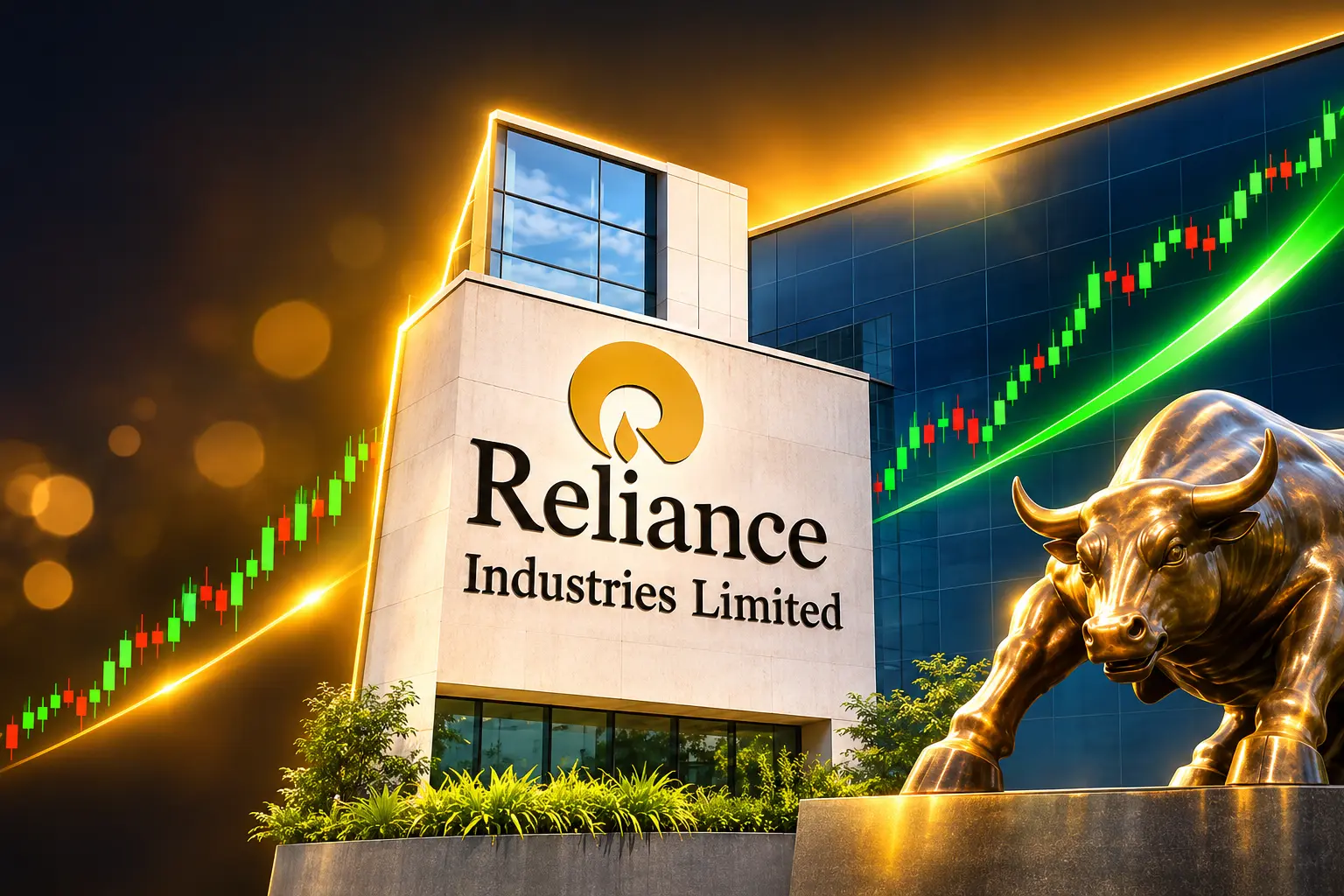
Reliance Industries shares closed at Rs 1,300 on November 2, up 11.60%, the steepest session since April 2020. The move added more than $19 billion in market value, a record one-day gain for an Indian company, and took the group’s market capitalisation near Rs 17.6 lakh crore.
The same session cleared the last sell-equivalent rating on the stock. Nomura still cut its target, and the lowest target on the Street now sits under Monday’s close.
A Record Day That Still Left the Stock Cheap
Friday’s close was Rs 1,164.90. Monday’s Rs 135.10 jump was 11.60%, with the tape tagging as much as 12% in the session. The last move of this size was on April 7, 2020, when the stock closed 11.89% higher at Rs 1,206.40 and printed 12.56% at the high.
Before this session the shares were down more than 20% in 2026, and they had already made a 52-week low on October 13. Jefferies told clients the stock had been trading more than two standard deviations below its long-term average, a reading the house called extremely pessimistic.
WHAT MONDAY’S TAPE PRINTED
- NSE close: Rs 1,300.00, up Rs 135.10, or 11.60%.
- Value added: more than $19 billion, a record one-day gain for an Indian company, with market capitalisation near Rs 17.6 lakh crore.
- Nifty 50: closed at 23,440.80, up 387.70 points, or 1.68%; Reliance added 198 of those points.
- Sensex: rose 1,233 points, or 1.66%; Reliance added 762 of them.
That is 51.1% of the Nifty’s rise and 61.8% of the Sensex’s. Index funds that must own the heavyweight had no choice but to chase. Traders who waited for a dip through Rs 1,260 found that Rs 1,300 was the magnet once that level gave way, and that is exactly where the stock closed.
The O2C Business Did the Heavy Lifting
Results for the quarter ended September 30 came after the close on October 30. The company posted Rs 362,268 crore quarterly revenue ($37.8 billion), up 27.8% year on year, and record EBITDA of Rs 62,409 crore ($6.5 billion), up 23.9%, at a 17.2% margin.
Profit after tax, including the share of associates and joint ventures, hit a new high of Rs 29,550 crore ($3.1 billion), up 33.8%. Profit attributable to owners was Rs 25,548 crore, up 40.6% from Rs 18,165 crore a year earlier, and above the Rs 21,367 crore average of compiled estimates.
Oil-to-chemicals did the work. Segment EBITDA rose 67.9% to a record Rs 25,203 crore from Rs 15,008 crore, and 48.2% from Rs 17,010 crore in the June quarter. O2C revenue was Rs 231,601 crore, up 44.2%. Crude prices rose 40.6%, transportation fuel prices rose 50 to 78%, and most downstream chemical prices rose 25 to 35%.
The company’s multi-decade high crack spreads sat at 3 to 3.7 times the year-ago level in a tight global refining market. Polyester-chain margins rose 33%, with the PX delta up 15% and the PTA delta up 52%. Earnings still took hits from higher crude premiums, freight, special additional excise duty costs and under-recoveries in domestic fuel retail.
Our O2C business delivered a particularly strong performance this quarter, led by tight fuel markets, improved downstream petrochemical deltas and firm domestic demand. Our ability to optimise feedstock sourcing and product placement along with operations across the value chain enabled us to improve margin capture.
Mukesh D. Ambani, Chairman and Managing Director, Reliance Industries media release, October 30, 2026
Jefferies expects those refining conditions to hold through winter, citing damage to refining kit in the Middle East and Russia and low product inventories. Goldman Sachs, which has a Rs 1,840 target, is less sure about the December quarter and flags higher very large crude carrier freight, partly offset if the plants run discounted heavy crude.
Digital services carried the other engine. Segment EBITDA rose 17.7% to Rs 22,223 crore. Jio Platforms’ own accounts showed revenue of Rs 47,485 crore, up 11.3%, and EBITDA of Rs 21,879 crore, up 16.6%, with the margin at 54.1% after a 250 basis-point lift. Jio’s profit rose 13.7% to Rs 8,387 crore. The subscriber base is over 542 million, including 300 million 5G users, with about 9.1 million net adds in the quarter and ARPU at Rs 218.8.
Retail Missed While the Refinery Cleared the Bar
Reliance Retail Ventures did not. Revenue grew 6.4% to Rs 91,716 crore, slowed by the festive calendar moving into the December quarter. EBITDA fell 8.6% to Rs 6,228 crore and the margin dropped 120 basis points to 7.8%. The company pointed to the planned spend on digital commerce, input-cost inflation it absorbed for customers, and that festive shift.
Jefferies said management is still scaling quick commerce and defending share, which means near-term margin pressure even as the house still talks about profitable growth later. The brokerage also noted new stores against a rationalisation of weak ones, so the store count ended lower. Nomura’s line on the quarter was blunt: telecom drove steady growth, and retail was soft on the festive shift and digital commerce spend.
That split is the hole in Monday’s celebration. The print that launched the 11.60% session was a refining windfall plus a solid Jio quarter. The consumer business that still commands the fattest multiples in sum-of-the-parts models went the other way. A large-cap that screens cheap on last year’s conglomerate multiple can stay cheap if the piece investors pay up for keeps missing.
Jefferies Holds Rs 1,710 as Nomura Cuts to Rs 1,560
Both houses kept Buy ratings. They do not agree on what the empire is worth, and the gap is retail and exploration, not the refinery.
BROKERAGE TARGETS AFTER THE Q2 PRINT
| House | Rating | Target (Rs) | From Friday | What changed |
|---|---|---|---|---|
| Jefferies | Buy | 1,710 | 47% from Rs 1,164 | Raised FY27 and FY28 EBITDA estimates by 6% and 2%; O2C at 8x EV/EBITDA, core offline retail at 28x |
| Nomura | Buy | 1,560 | About 34% from Rs 1,165 | Cut from Rs 1,690 as it rolls the base to September 2028; retail multiple 25x from 28x, exploration 5x from 6x, refining 7.5x |
| Goldman Sachs | Buy | 1,840 | 58% from Friday | Q2 EBITDA beat its forecast by 9% on O2C; Nikhil Bhandari kept Buy |
| Avendus Spark | Add | 1,280 | 10% from Friday; 1.5% below Monday’s close | Arun Prasath raised the stock from Reduce, the last sell-equivalent on the sheet |
From Monday’s Rs 1,300 close, Jefferies still implies 31.5% to Rs 1,710, Nomura 20.0% to Rs 1,560, and Goldman Sachs 41.5% to Rs 1,840. Avendus Spark’s Rs 1,280 is now 1.5% under the close. Nomura’s cut from Rs 1,690 is 7.7%, and the house said so in one sentence.
Nomura wrote that it reiterates its Buy rating with a new sum-of-the-parts target of Rs 1,560, versus Rs 1,690 previously, as it rolls the valuation base to September 2028. It still has the stock at 8.7 times estimated FY28 EV/EBITDA and 16.5 times estimated FY28 earnings. Jefferies’ bull case goes to Rs 1,900 if refining stays strong and retail takes share faster. Nomura’s risks run the other way: weaker cracks, slower Jio, softer retail, a slower new-energy ramp.
Jefferies said O2C beat its forecast and the consolidated print beat by 6% on its own EBITDA construct, enough to offset a 6% miss in retail. Nomura said consolidated EBITDA came in 9% above its estimate, with O2C at about Rs 25,200 crore against its Rs 20,300 crore forecast, while retail EBITDA was 10% short. The Street is arguing about multiples on the weak division, not about whether the refinery had a record quarter.
Why Reliance Shares Fell More Than 20% This Year
Jio Platforms listed on October 28 in a Rs 30,188 crore issue, oversubscribed more than 22 times, the largest Indian IPO to date. Reliance’s stake is 64.5% after the fresh issue. Mukesh Ambani called Jio India’s second-largest company and tied the listing to the 1977 Reliance IPO. The September quarter closed before that listing, so the IPO cash is not in these numbers.
A listed Jio was supposed to shrink the holding-company discount. Avendus Spark’s Prasath said Monday’s slide still implied a discount of about 80% on that stake, a gap he expects to move toward 25% to 30% over time. Earlier work around the IPO had put the discount nearer 36%, with 25% described as a more durable level. The listing gave Jio a live price. It did not force the parent to trade in line with it.
THE FOUR DATES BEHIND THE RALLY
- October 13, 2026: The stock makes a 52-week low after a year-to-date drop that Avendus later put at more than 20% heading into November 2.
- October 28, 2026: Jio Platforms lists; the issue raises Rs 30,188 crore at more than 22 times subscription, and Reliance keeps a 64.5% stake.
- October 30, 2026: Q2 results go out after the close, with O2C EBITDA at Rs 25,203 crore and attributable profit at Rs 25,548 crore. Management walks through the numbers on the Q2 FY27 results presentation.
- November 2, 2026: The stock closes at Rs 1,300, up 11.60%, and Avendus Spark raises the last Reduce to Add.
Net debt at the quarter-end was Rs 117,140 crore, or 0.47 times annualised EBITDA, so the discount is not a balance-sheet story. Finance costs did rise 24.2% to Rs 8,481 crore, and tax rose 34.2% to Rs 9,363 crore, with depreciation up 6.2% to Rs 15,315 crore after 5G assets were capitalised. The market’s fight is about how to value a listed telecom subsidiary inside a parent that still owns retail, O2C, oil and gas and new energy.
Such a high holding company discount is unreasonable for a mega-cap and should converge toward 25%-30% over time.
Arun Prasath, analyst, Avendus Spark note, November 2, 2026
Prasath’s upgrade leaves compilations at 32 buy calls and no hold or sell recommendations, the first clean sheet since 2017. He had kept a sell-equivalent rating for most of the past four years. His Rs 1,280 target, dated November 2, was about 10% above Friday’s close and is now 1.5% below Monday’s. The last bear on the sheet blinked, and even he did not chase the new price.
Jefferies still says earnings upgrades and a return of retail growth to the mid-teens could re-rate the stock. That is an admission that Monday priced the refining beat. It did not price a full recovery in the consumer multiple, and it did not close the Jio discount.
What Charts Flag After the Breakout
Virat Jagad, senior technical research analyst at Bonanza, said the session printed a strong bullish candle on heavy volume, took the stock above the 20-day and 50-day exponential moving averages, and pushed RSI above 60. He had flagged descending-channel resistance near Rs 1,255. A hold, in his map, opens Rs 1,346, with Rs 1,250 as support.
Sachin Gupta, vice president of technical research at Choice, put the next major resistance at Rs 1,310, lined up with the 200-day EMA, then Rs 1,365. He has Rs 1,200 as immediate support and Rs 1,150 as the next zone. His RSI reading was 59.96 as the move developed. Those recovery levels were written as the stock was still chewing through the 100-day EMA near Rs 1,263; the close at Rs 1,300 has already done that job.
LEVELS ON THE DAILY CHART
- Session close: Rs 1,300, through the 20-day, 50-day and 100-day EMAs cited by the two desks.
- Upside maps: Rs 1,310 at Gupta’s 200-day EMA, then Jagad’s Rs 1,346 and Gupta’s Rs 1,365.
- Downside maps: Jagad’s Rs 1,250, then Gupta’s Rs 1,200 and Rs 1,150.
Jefferies wants O2C profits to stay high through winter. Goldman Sachs is already trimming that for the December quarter on freight. Retail’s next test is the delayed festive season in Q3, the print Jefferies needs in the mid-teens before it will talk about a full re-rating. New energy is still a FY28 story on Nomura’s clock.
The last sell-equivalent rating on India’s most valuable company is gone. Avendus Spark’s new target of Rs 1,280 now sits below the Rs 1,300 close, while Nomura’s cut to Rs 1,560 and Jefferies’ Rs 1,710 still assume the stock was too cheap at Friday’s price, not that Monday finished the argument.
Disclaimer: This article is news reporting and analysis of Reliance Industries’ November 2 share-price move and of the company’s September-quarter results, and it is for information only. It is not investment advice, a research report, a solicitation, or a recommendation to buy, sell or hold any security, and it does not take account of any reader’s objectives, finances or risk limits. Readers should consult a SEBI-registered investment adviser or research analyst and read the original brokerage notes and company filings before acting. Prices, ratings, targets and financial figures are those published by the named companies and brokerages as of November 2, 2026, and they can change with the next session, the next note, or the next quarter.

ADNOC Ship Hit in Hormuz Leaves One Crew Missing

SpiceJet’s Rs 5,500 Crore Plan Follows a Rescue That Failed

Hasina’s Return Fight Sets Fire to Yunus’s Bank

Bancroft Recants the 2018 Inquiry and Names the Team

Adhikari Ties the Saffron Saree Row to School Licences

Clancy Juror Says the Holdout Never Cited Evidence

The iPhone 18 Pro Max Splits Apple’s Fall in Two

OpenAI Calls GPT-6 Astra AGI Then Locks Its Exploits

Trump Claims Hormuz Control as Oil Holds Near $96

Russia Closes the Goethe-Institut Berlin Tried to Save

 NEWS2 months ago
Clancy Juror Says the Holdout Never Cited Evidence
- NEWS3 months ago
The iPhone 18 Pro Max Splits Apple’s Fall in Two
- NEWS3 months ago
OpenAI Calls GPT-6 Astra AGI Then Locks Its Exploits
- BUSINESS3 months ago
Trump Claims Hormuz Control as Oil Holds Near $96
- LIFESTYLE3 months ago
Russia Closes the Goethe-Institut Berlin Tried to Save
- AUTO3 months ago
Volkswagen’s Job Cuts Leave Four Plants Without Cars
- NEWS3 months ago
Dyson Puts Nurovi Robots on Sale Without the UV Flagship
- BUSINESS2 months ago
US Destroys Five Iranian Tankers as the Shock Hits Jordan










